Daughter only talking to you when she wants something?
Why teens pull away

Updated January 20, 2026 • Medically reviewed by Dr. Emma Dickie
Medically reviewed by Dr. Emma DickieIn this article
Quick summary
- Teens often communicate in short bursts or only when they need something, this is common!
- This behaviour is usually linked to growing independence, sometimes stress, or changing comfort levels
- Understanding the reasons behind it helps reduce frustration or feeling like you’re doing something wrong
Picture this: you feel like you haven’t had an actual conversation with your daughter for months, and then suddenly they pop up while you’re watching TV and start talking…
Only for them to ask for a lift, money, or permission to go to a party.
No “how are you”, or “what have you done today?”
We get it – it can be quite frustrating to experience this as a parent.
But this dynamic is actually super common, and it doesn’t mean that your daughter hates you!
See, teens are balancing a growing need for independence with still relying on parental support, and that tension often shows up in how (and when) they communicate.
They want independence, but they don’t have it, which can create a whole load of frustration for both of you.
So, how do you help your teen open up, and how can you reconnect with them without pushing them away further? Let’s dive in.
Why teens pull away from parents
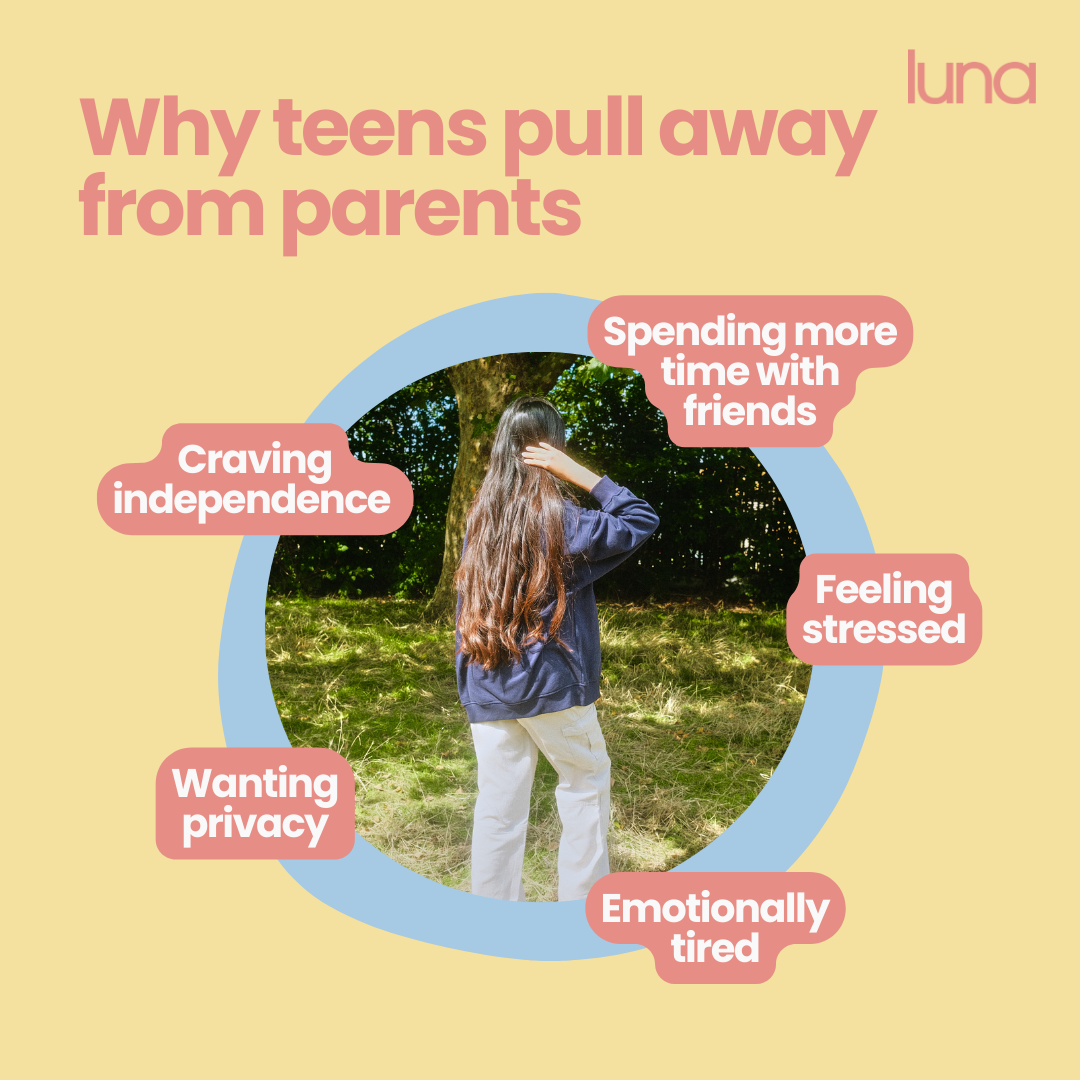
Pulling away is often less about rejection and more about development.
Many teens are focused on building independence, spending more time with friends, and figuring out who they are outside of their family.
They may also feel overwhelmed, stressed, emotionally tired, or unsure how to explain what’s going on inside their head.
Wanting privacy is a normal part of growing up, even if it feels sudden or painful from a parent’s perspective.
How you get your teen to open up
Teens rarely open up on cue.
The more relaxed and pressure-free a conversation feels, the safer it is for them to talk.
Small, casual moments often matter more than big sit-down talks.
A few gentle questions on a car drive or while you're fixing dinner can help your teen open up.
Things you can say include:
- “How was your day? Anything interesting happen?”
- “That show you’re watching looks fun”
- “Want company, or some space right now?”
- “I’m around if you feel like chatting later”
- “You don’t have to talk, I just like being with you”
What not to do when you want them to open up
When communication feels one-sided, it’s tempting to push harder. But that often backfires.
Try to avoid:
- Shaming her for pulling away
- Demanding closeness or long conversations
- Comparing her to siblings or friends
- Taking her distance personally
These reactions can unintentionally reinforce the idea that talking comes with pressure.
How parents can gently reconnect
It’s easy to think the solution is a big heart-to-heart when your teen feels distant.
However, in reality, most teens reconnect through small, steady moments that don’t come with pressure or expectations.
Rebuilding closeness takes time, and it often starts with showing up calmly and consistently, even when conversations feel brief or surface-level.
Small, everyday habits can help:
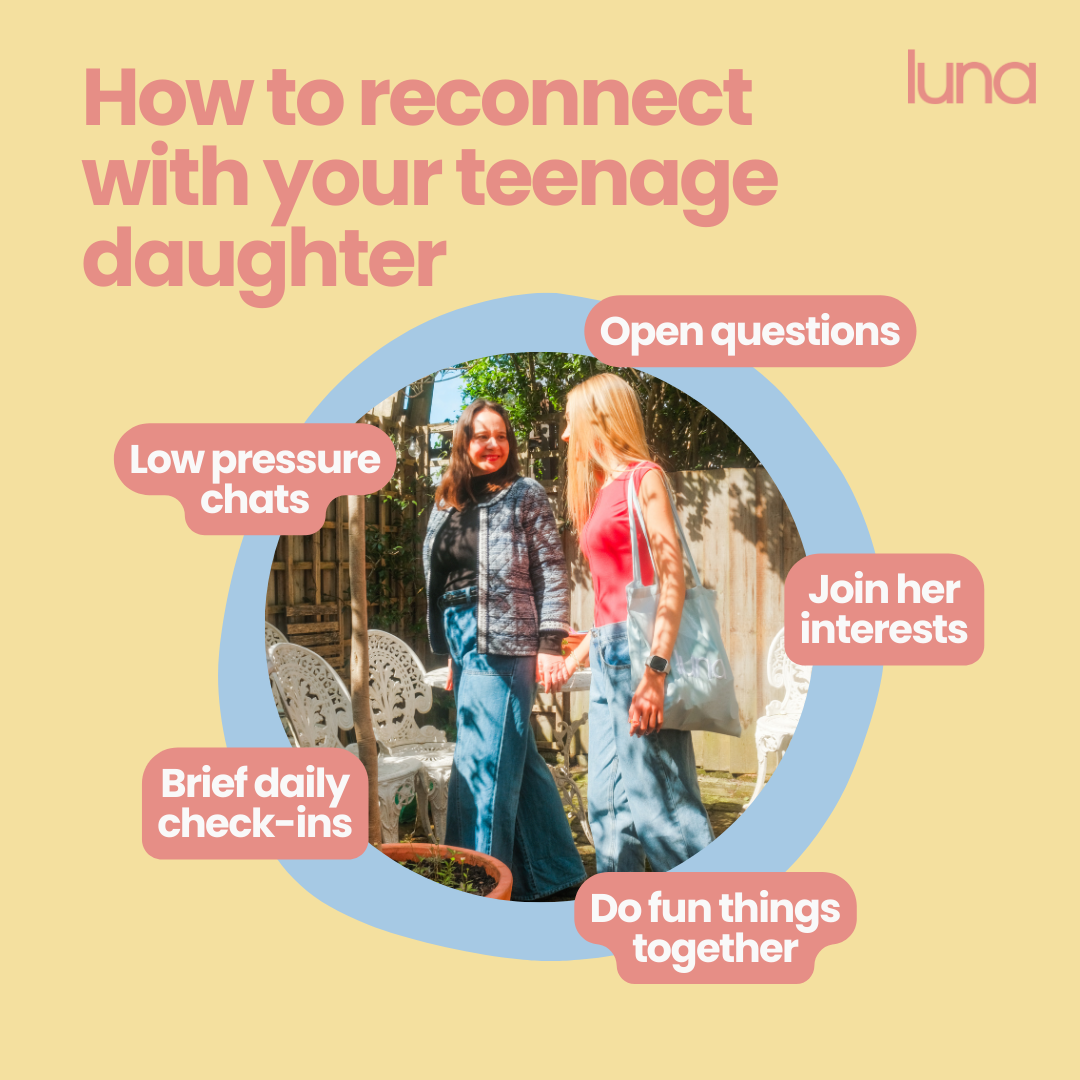
- Start with low-pressure chats
- Ask open, not demanding, questions
- Join her interests instead of pushing yours
- Use brief daily check-ins
- Stay calm during disagreements
- Explore fun things you can do with your teenage daughter
When to consider outside support
Most of the time, teens pulling away is a normal part of growing up.
But sometimes the distance goes deeper than typical teenage moods.
If you notice signs that your daughter is struggling emotionally, avoiding the family completely, or if communication feels impossible, it may be time to reach out for extra help or mental health support.
Signs it could be helpful include:
- She seems consistently depressed or overwhelmed
- There is ongoing, intense conflict
- She avoids the family entirely
- Communication feels completely stuck
- She is showing signs of teenage anxiety
Seeking outside support can give both parents and teens a safe space to be heard, understand each other better, and find strategies to reconnect.
Rebuilding connection, one step at a time
Teens often speak only when they need something because it feels easier and safer during a time of emotional change.
With patience, curiosity, and small daily efforts, everyday connection can return.
And when they're older, things often do return to normal, so this won't be forever!
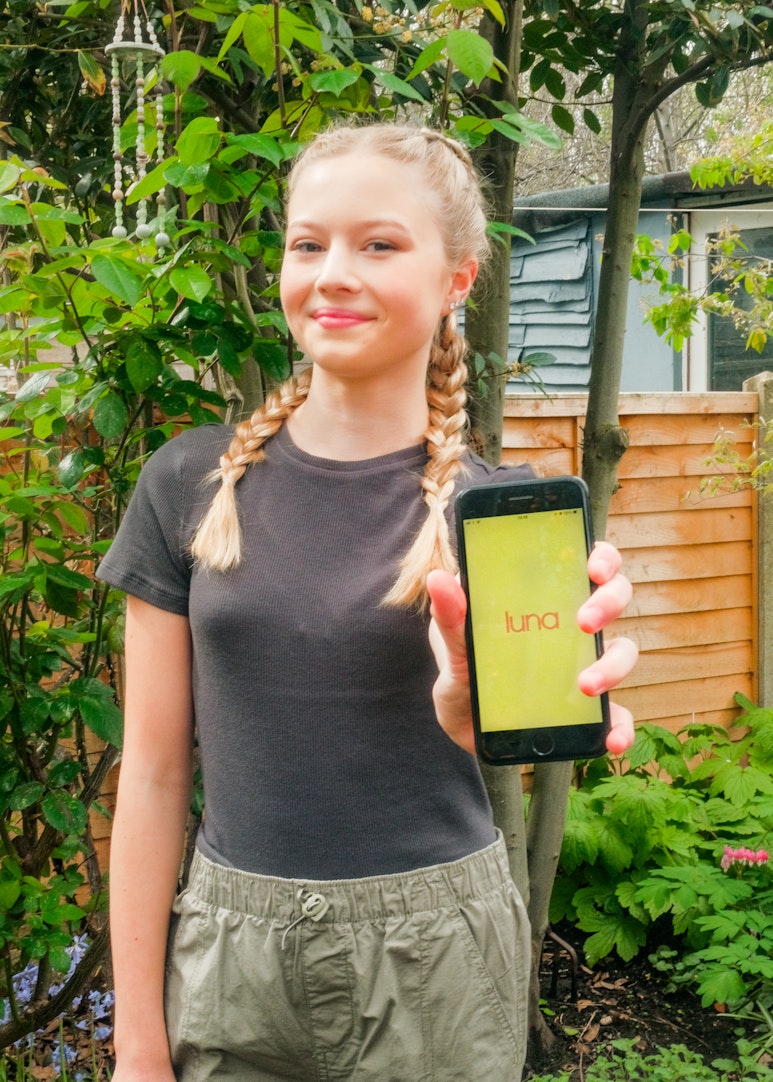
For expert-backed communication tools that support both parents and teens, explore the luna app for guidance you can trust.
How we created this article:
luna's team of experts comprises GPs, Dermatologists, Safeguarding Leads and Junior Doctors as well as Medical Students with specialised interests in paediatric care, mental health and gynaecology. All articles are created by experts, and reviewed by a member of luna's senior review team.
We'd love to keep in touch!
Sign up to our parent newsletter for emails on the latest teen trends, insights into our luna community and to keep up to date
By signing up, you are agreeing that we can use your email address to market to you. You can unsubscribe from marketing emails at any time by using the link in our emails. For more information, please review our privacy statement.