My daughter is scared of growing up
When change feels frightening
Updated June 2, 2026
In this article
In short
Fear of growing up is common and normal in girls aged 10 to 14. Puberty brings rapid, unpredictable change to her body, emotions, and social world all at once.
Pubertal development is directly linked to heightened fear responses in girls. Most of the time, gentle reassurance and open conversation are enough.
If worry is stopping her from eating, sleeping, or doing things she used to enjoy, that is a sign she may need a little extra support.
Why is my daughter scared of growing up?
Puberty is, objectively, a lot to handle. In a short space of time, her body changes, her friendships shift, and she is expected to become more independent while still needing you.
Surges of hormones, combined with body changes, a developing sense of identity, and social pressure, all arrive together in the teenage years.
Research shows that pubertal development directly drives heightened fear responses in adolescent girls, meaning the anxiety she feels is not just in her head; it has a biological basis.
What does "scared of growing up" actually look like?
It can show up differently in different girls. Some become clingy or want to talk endlessly about how things used to be.
Others go quiet, pull away, and refuse to engage with anything that feels grown-up.
Common signs to look out for:
- Refusing to wear age-appropriate clothes or hiding developing body
- Becoming upset when things change, including routines, friendships or her environment
- Saying she wishes she could stay young or go back to childhood
- Showing more anxiety around school, peer pressure or future expectations
- Reverting to younger behaviours such as comfort objects or wanting to be read to
None of these alone signals a problem. Seen together, or if they are affecting daily life, it is worth gently exploring what is going on.
How do I talk to her about it?
It is a good idea to approach these conversations as an ongoing process rather than a formal sit-down talk.
YoungMinds advises that feeling listened to and understood can help a young person relax more than any attempt to fix things quickly.
Try picking a low-pressure moment, like a car journey, and asking open questions. "What feels weird about getting older?" gets further than "Are you okay?"
Resist the urge to reassure her immediately. Let her finish before you respond.
How can I help her feel safer about growing up?
Predictability helps a lot. When her body and social world feel unpredictable, anchoring routines at home give her something stable to hold on to.
Practical ways to help:
- Give her age-appropriate information when talking to your daughter about puberty, in advance rather than after the fact
- Acknowledge her feelings without dismissing them ("that makes sense" goes a long way)
- Let her hold on to some childhood comforts while also gently encouraging small steps forward
- Keep communication channels open without pressuring her to talk
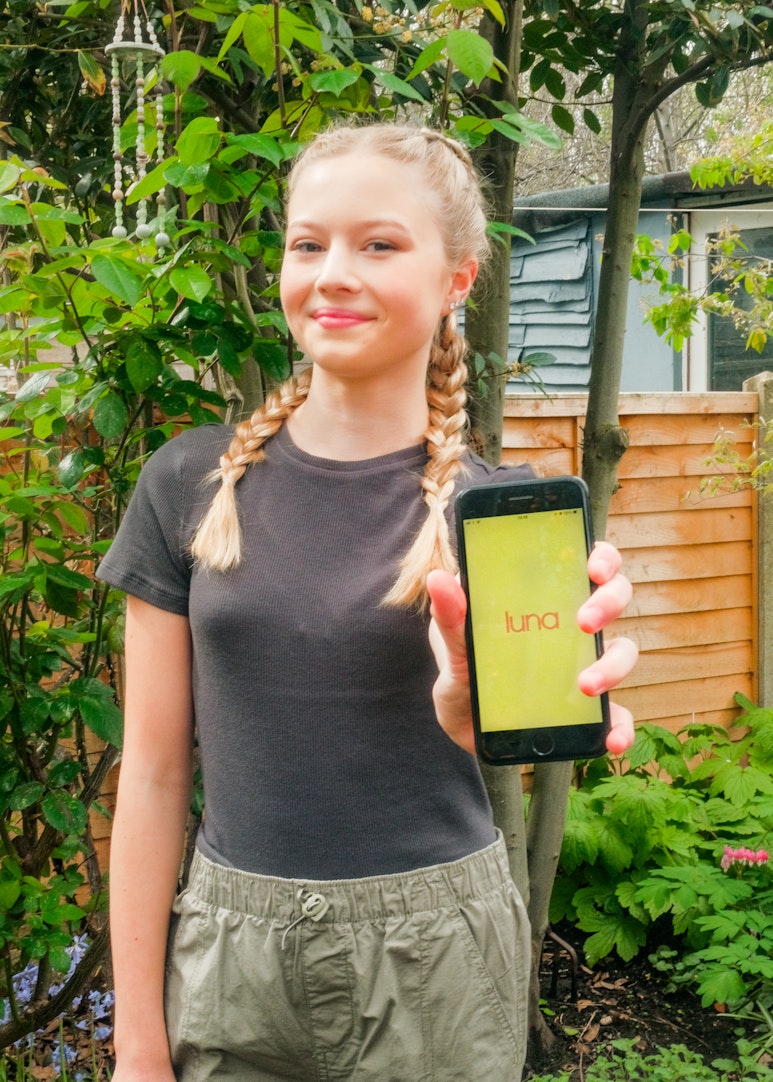
luna's app gives her a private, non-judgmental space to track what is happening to her body, which can reduce some of the fear of the unknown.
When should I be more concerned?
Most fear around growing up resolves with time and reassurance. Anxiety becomes a problem when a young person feels stuck in it, when it starts affecting their daily life, and limits what they feel able to do.
If her worry is stopping her from going to school, eating normally, sleeping, or seeing friends, it is worth talking to a health professional.
A referral to a counsellor or therapist can make a real difference. You may also want to explore free mental health resources for teens for support.
FAQ
Is it normal for girls to be scared of puberty?
Yes, very. Research shows puberty is directly linked to increased fear responses in girls.
The combination of physical change, teen hormonal shifts, and social pressure is a genuinely significant challenge.
Could this be a sign of an anxiety disorder?
It might be, if it is intense or persistent. Seek help if worry is affecting sleep, eating, school attendance, or friendships.
Normal growing-up anxiety tends to come and go rather than building steadily over time.
Should I push her to embrace growing up?
Not directly. Pressure tends to backfire. Quiet, consistent reassurance that change is normal and that you are there for her is more effective than cheerleading her forward.
Will she grow out of it?
Most girls do, especially with a supportive adult who normalises the experience and gives them language for what she is going through.
luna's guides can help give her language for what she is going through.
She does not need to love growing up. She just needs to know that it is manageable, and that you are not going anywhere.
How we created this article:
luna's team of experts comprises GPs, Dermatologists, Safeguarding Leads and Junior Doctors as well as Medical Students with specialised interests in paediatric care, mental health and gynaecology. All articles are created by experts, and reviewed by a member of luna's senior review team.
Sources:
NHS "Coping with your teenager" | 02.06.26
https://www.nhs.uk/mental-health/children-and-young-adults/advice-for-parents/cope-with-your-teenager/YoungMinds "Anxiety" | 02.06.26
https://www.youngminds.org.uk/parent/parents-a-z-mental-health-guide/anxiety/PubMed "A critical review of the empirical literature on the relation between anxiety and puberty" | 02.06.26
https://pmc.ncbi.nlm.nih.gov/articles/PMC2652567/We'd love to keep in touch!
Sign up to our parent newsletter for emails on the latest teen trends, insights into our luna community and to keep up to date
By signing up, you are agreeing that we can use your email address to market to you. You can unsubscribe from marketing emails at any time by using the link in our emails. For more information, please review our privacy statement.