Is it normal to feel sad about your daughter growing up?
Yes. And you're not alone.

Updated July 9, 2026
In this article
- In short
- Why does my daughter growing up make me feel so sad?
- Does feeling sad about my daughter growing up mean something is wrong?
- Why do I feel this grief about my daughter growing up so intensely?
- What actually helps when I feel sad about my daughter growing up?
- When does my sadness about my daughter growing up need more support?
- FAQ
In short
Feeling sad about your daughter growing up is one of the most common and least-talked-about experiences of parenting a teenager.
Research on empty nest syndrome discusses feelings of loss, sadness, loneliness, and changes in parental identity when children become more independent or leave home.
Most parents experience a mix of pride and loss as their child becomes more independent.
Both feelings are valid.
Why does my daughter growing up make me feel so sad?
Because something real is changing.
When she was small, she needed you in ways that shaped your whole day.
As she becomes a teenager, that changes.
She stops reaching for your hand.
She'd rather be in her room.
She handles things without you.
She tells her friends things she used to tell you.
YoungMinds notes that guilt and loneliness are all normal experiences for parents of teenagers, and that these feelings are "completely normal and worth paying attention to."
What you're feeling isn't a flaw.
Does feeling sad about my daughter growing up mean something is wrong?
No.
The bittersweet sadness many parents feel as their children become more independent has been recognised in research on parental identity and wellbeing.
It's rooted in real change: the gradual shift away from a role that was central to your daily life and sense of self.
That's not a red flag.
It's a natural response to something that genuinely mattered.
Research on parental wellbeing identifies "role loss" as one of the key psychological mechanisms behind this: as a child becomes more independent, a parent can feel the edges of a role that has shaped their identity for years beginning to loosen.
That shift can bring real uncertainty, even when everything is going exactly as it should.
It's also worth knowing that many parents feel something like relief alongside the grief.
More time, more space, watching her become her own person.
Both are real, and they often exist at the same time.
Why do I feel this grief about my daughter growing up so intensely?
Several things make the feeling heavier for some parents.
If your identity has been closely built around being her primary carer, if your days have been structured around her schedule, her needs, her presence, the shift will feel bigger.
If your own relationship with your mother was complicated, you may be especially alert to any distance opening up between you and your daughter.
Some parents notice the sadness peaking at specific moments: the first weekend she goes away without you, the first morning you realise she handled something on her own and didn't mention it.
What actually helps when I feel sad about my daughter growing up?
Finding somewhere to put the love.
The NHS recommends five evidence-based steps for mental wellbeing: connecting with others, being physically active, learning new skills, giving to others, and paying attention to the present moment.
What these have in common is that they all move attention outward, towards things that absorb and restore.
This doesn't mean pushing the feeling down.
It means not letting it become the whole story.
Things that parents find genuinely useful:
- Small, regular acts of self-care. Even five or ten minutes of something restorative makes a real difference. A walk, texting a friend, something that has nothing to do with your daughters schedule.
- Shared activities that don't require conversation. Watching a show together, cooking in the same kitchen, existing alongside each other without an agenda. Understanding the living room family vs. bedroom family dynamic can help: low-pressure proximity often works better than planned quality time.
- Telling her what you see in her. Not to fill an emotional gap, but because it lands well. How to tell your daughter you are proud of her has approaches that feel natural rather than heavy.
- Talking to other parents in the same phase. YoungMinds notes that social connection is the most important coping strategy for parents who are struggling. Knowing this is nearly universal can lift something quite quickly.
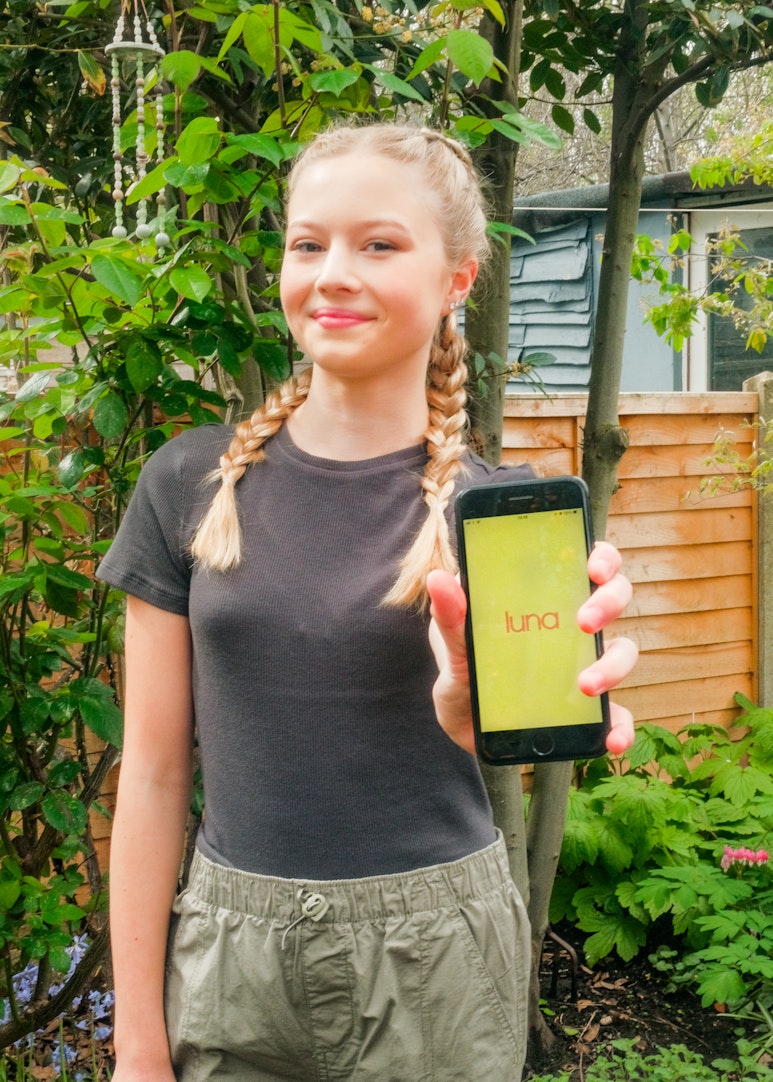
luna gives teen girls a space to track how they're feeling, explore questions about growing up privately, and understand what's happening in their bodies and minds, which can mean less of the emotional weight lands on you to carry alone.
When does my sadness about my daughter growing up need more support?
When it stops being intermittent and starts being constant.
Feeling a pang when she closes a door, or when you find a photo from when she was small, is different from feeling sad most days for weeks.
If the grief has become persistent low mood, if you've lost interest in things you used to enjoy, or if it's affecting your sleep or your ability to function, those are signs worth taking to your doctor.
YoungMinds recommends speaking to your doctor if you're struggling with persistent low mood or anxiety, and makes the point clearly: seeking support for yourself "doesn't make you a bad parent."
The YoungMinds Parents Helpline (0808 802 5544, Monday to Friday) also offers emotional support for parents who are finding things hard, not just those worried about their child.
FAQ
Is it selfish to feel sad about my daughter growing up?
Not at all.
The feeling isn't about wanting to hold her back.
It's about loving a version of your relationship that was real and is now changing.
That's grief, not selfishness, and it's a sign the relationship mattered.
Will this get harder when she leaves for university?
Possibly more intense, but also more defined.
Research on parents' experiences during their children's transition to independence finds that outcomes are genuinely mixed: some parents find it harder than expected, others feel surprised by relief alongside the sadness.
Most adjust.
Building parts of your life that are genuinely yours while she's still at home tends to make that transition easier.
Encouraging independence in your teen has practical ways to do this that feel good for both of you.
What if she notices I'm sad and it worries her?
Being honest if she asks is fine.
Just keep it brief and don't make her feel responsible.
Something like: "I love spending time with you and sometimes I feel a bit wistful about how fast time goes. That's on me, not anything you've done."
Short and light lets her know she hasn't done anything wrong.
Does this mean I'm too emotionally dependent on my daughter?
Not necessarily.
Caring deeply about your relationship with her is not the same as unhealthy dependency.
It's worth paying attention if the sadness is significantly affecting your daily life, or if you find yourself trying to slow her independence down.
But feeling sad about her growing up is a normal part of loving her.
When should I speak to someone about this?
If the low mood has lasted more than two weeks, is happening most days, or is affecting your ability to enjoy your life, speaking to your doctor is a reasonable next step.
YoungMinds Parents Helpline (0808 802 5544, Monday to Friday) also provides support for parents.
How we created this article:
luna's team of experts comprises GPs, Dermatologists, Safeguarding Leads and Junior Doctors as well as Medical Students with specialised interests in paediatric care, mental health and gynaecology. All articles are created by experts, and reviewed by a member of luna's senior review team.
Sources:
Young Minds "Parents' guide to looking after yourself" | Accessed 12.06.26
https://www.youngminds.org.uk/parent/parents-guide-to-looking-after-yourself/NHS "5 steps to mental wellbeing" | Accessed 12.06.26
https://www.nhs.uk/mental-health/self-help/guides-tools-and-activities/five-steps-to-mental-wellbeing/Hartanto A et al. "Cultural contexts differentially shape parents' loneliness and wellbeing during the empty nest period" (2024) | Accessed 12.06.26
https://pmc.ncbi.nlm.nih.gov/articles/PMC11532363/We'd love to keep in touch!
Sign up to our parent newsletter for emails on the latest teen trends, insights into our luna community and to keep up to date
By signing up, you are agreeing that we can use your email address to market to you. You can unsubscribe from marketing emails at any time by using the link in our emails. For more information, please review our privacy statement.