What should your daughter's post-GCSE curfew be?
Let the freedom negotiations begin
Updated September 8, 2026 • Medically reviewed by Dr. Emma Dickie
Medically reviewed by Dr. Emma DickieIn this article
In short
There's no UK law setting a curfew for under-18s, so your daughter's post-GCSE curfew is yours to agree as a family.
The NSPCC recommends setting a curfew whenever teens go out somewhere alcohol might be around, alongside an agreed way home and a plan to stay in contact.
This ensures that they can stay safe while still exploring independence.
Curfews agreed together, rather than imposed, are far easier to keep.
Is there a legal curfew for my daughter in the UK?
No. There's no law that says what time a 16 year old has to be home, so the "right" curfew is whatever works for your family.
The law does have things to say about alcohol, though.
It's illegal for anyone under 18 to buy alcohol, or to ask someone else to buy it for them.
It's legal for an adult to buy a 16 or 17 year old beer, wine or cider with a meal in a pub.
And 5 to 17 year olds can legally drink alcohol at home or on other private premises, which is worth knowing when the post-exam gatherings move to someone's house.
What time should my daughter come home after her GCSEs?
There's no single right time, and anyone who gives you one is guessing.
A curfew that works reflects where she's going, who she's with, and how she's getting home.
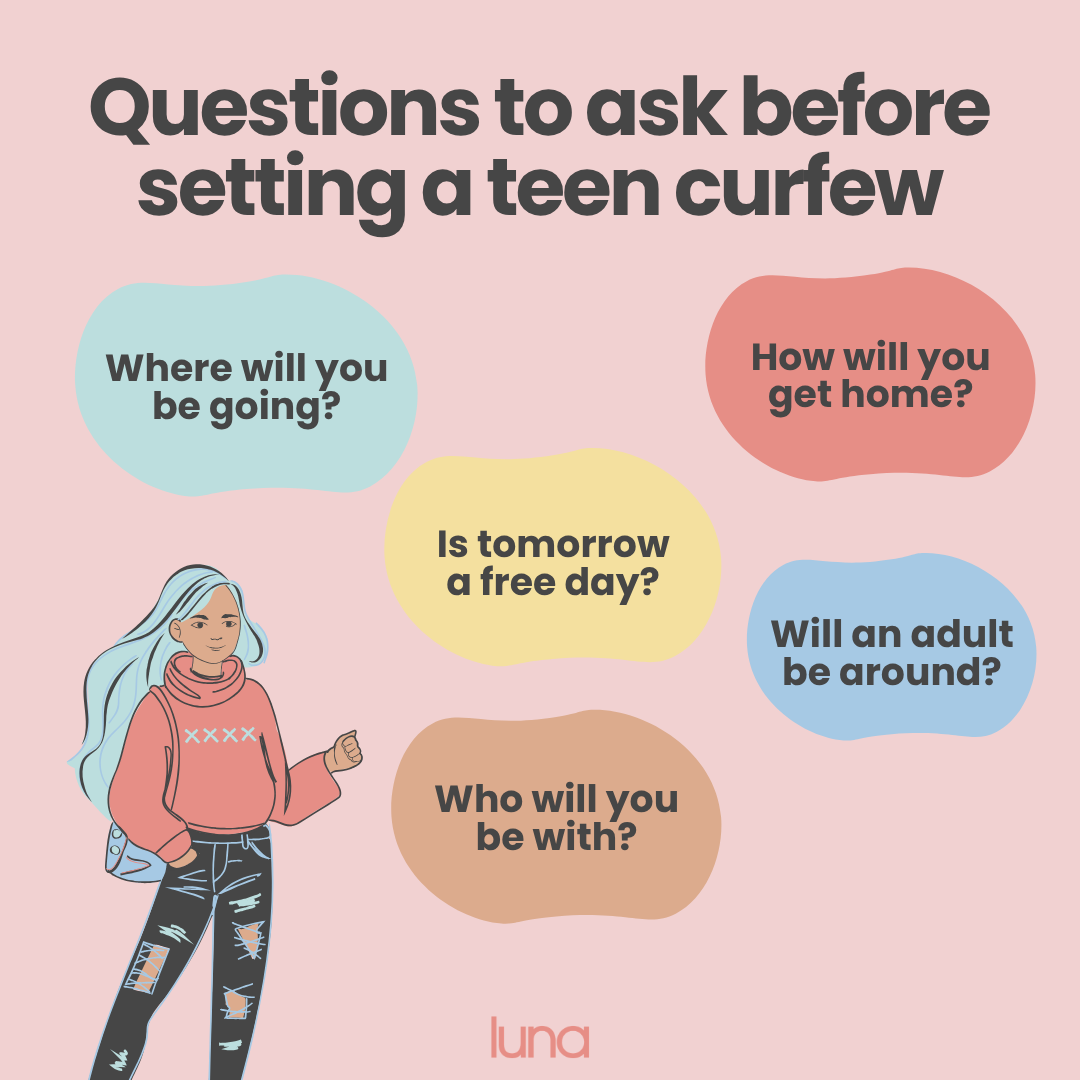
Questions worth asking before naming a time:
- Where she's going, and whether an adult will be around
- Who she's with, and how well you know them
- How she's getting home, and who with
- Whether tomorrow is a free day or an early start
- How she's handled freedom so far
The NSPCC suggests that when teenagers go out somewhere they might be drinking, it helps to set a curfew, agree how they'll get home, keep in contact through the evening and have them eat something substantial before heading out.
That last list matters more than the number on the clock.
A 10pm curfew with no way home is riskier than a midnight one with a lift arranged.
How do I agree a curfew without a row?
Involve her in setting it.
According to YoungMinds, most teenagers push boundaries as they test their independence, so a curfew handed down with no discussion is the one most likely to be broken.
It's a good idea to help teenagers think for themselves rather than lecturing: ask her what time she thinks is fair, what she'd do if her lift fell through, and how she'd handle a friend who's had too much to drink.
It also helps to pick your battles.
Letting the small stuff go means she's still listening when you hold firm on the things that matter.
Some parents find a simple trade works: the curfew extends as the track record builds.
That turns staying out later into something she earns, and encouraging independence in your teen becomes a shared project rather than a tug of war.
What about post-exam parties and alcohol?
The post-GCSE summer is peak party season, and your daughter may be offered alcohol at some point.
Preparing her is more protective than hoping it won't happen.
Conversations the NSPCC suggests having before she goes out:
- What she'd do if someone offered her a drink
- The link between alcohol, anti-social behaviour and sexual activity, and how moderation keeps her safer
- The risk of drinks being spiked, and how to look out for herself and her friends
- What to do if she or a friend becomes unwell or ends up in danger
It's worth knowing the NSPCC's line on what's typical: it's fairly common for teenagers to try alcohol before 18, but it's not normal for them to get drunk regularly, drink alone or depend on it.
If any of that is happening, a doctor can help, and Drinkline offers free confidential advice on 0300 123 1110.
If she'd rather not ask you everything, luna is a judgement-free place where teen girls can ask questions about parties, friendships and staying safe.
Will late nights ruin my daughter's sleep?
Not necessarily, and the summer after GCSEs is actually a forgiving time for it.
During puberty the teenage body clock shifts later, so her natural fall-asleep time is probably between 11pm and midnight anyway.
Most teenagers need 9 to 9.5 hours of sleep a night, and anywhere between 7 and 11 hours counts as normal.
A few late nights won't undo her.
If you want to know what her baseline looks like, here's how much sleep your teen really needs.
FAQs
What's a reasonable curfew for a 16 year old in the summer holidays?
Whatever time you've agreed and she can realistically keep.
Many families set a regular time with a later one for special occasions, and the agreed way home and contact plan matter more than the exact hour.
What should I do if my daughter breaks her curfew?
YoungMinds suggests a warning first, then following through on a consequence you've agreed in advance, then wiping the slate clean.
If lateness turns into leaving without telling you, there's more on what to do if your teen is sneaking out at night.
Should the curfew change when she starts sixth form or college?
Reviewing it every few months works better than setting it once.
As her independence and track record grow, the curfew can grow with them.
Should I wait up until she's home?
That's personal preference, and plenty of parents do.
A message when she leaves and a check-in if plans change can offer the same reassurance without anyone sitting by the door.
The next milestone on the horizon is results day, and luna has quick tips for parents on GCSE results day when you're ready.
And if your daughter wants a space of her own to figure out this new freedom, luna was built for exactly that.
How we created this article:
luna's team of experts comprises GPs, Dermatologists, Safeguarding Leads and Junior Doctors as well as Medical Students with specialised interests in paediatric care, mental health and gynaecology. All articles are created by experts, and reviewed by a member of luna's senior review team.
Sources:
NSPCC "Underage drinking" | Accessed 15.06.26
https://www.nspcc.org.uk/keeping-children-safe/talking-drugs-alcohol/underage-drinking/NHS "Talking to your teenager" | Accessed 15.06.26
https://www.nhs.uk/mental-health/children-and-young-adults/advice-for-parents/talk-to-your-teenager/YoungMinds "Challenging behaviour" | Accessed 15.06.26
https://www.youngminds.org.uk/parent/parents-a-z-mental-health-guide/challenging-behaviour/Evelina London (NHS) "How to sleep well for teenagers" | Accessed 15.06.26
https://www.evelinalondon.nhs.uk/our-services/hospital/sleep-medicine-department/how-to-sleep-well-for-teenagers.aspxWe'd love to keep in touch!
Sign up to our parent newsletter for emails on the latest teen trends, insights into our luna community and to keep up to date
By signing up, you are agreeing that we can use your email address to market to you. You can unsubscribe from marketing emails at any time by using the link in our emails. For more information, please review our privacy statement.