Why your daughter keeps getting lice
How to stop lice from returning
Updated January 20, 2026 • Medically reviewed by Dr. Emma Dickie
Medically reviewed by Dr. Emma DickieIn this article
Quick summary
- Head lice spread through close head-to-head contact and are very common in school-age children – they’re not caused by poor hygiene
- Lice often return when eggs are missed, follow-up treatment is skipped, or close contacts are not checked and treated at the same time
- Successful treatment usually involves careful combing, a repeat treatment, and simple prevention steps – not deep-cleaning the house
Reaching for the lice comb again?
Lice returning time after time is super annoying.
It sometimes feels as if these little guys are indestructible, always coming back to hang out (uninvited) in your daughter's hair.
They are likely making you feel anxious and really impacting your daughter's self-esteem.
The important thing to know is that recurring lice are very common and have nothing to do with cleanliness or how well you care for your daughter.
So let’s break down what’s actually happening, and how to stop the cycle for good.
How to fully treat lice for teens
Getting rid of lice isn’t usually a one-and-done situation (as much as we wish it were).
Most treatments kill live lice, but eggs (also known as nits) are stubborn little things.
That’s why a full treatment plan matters.
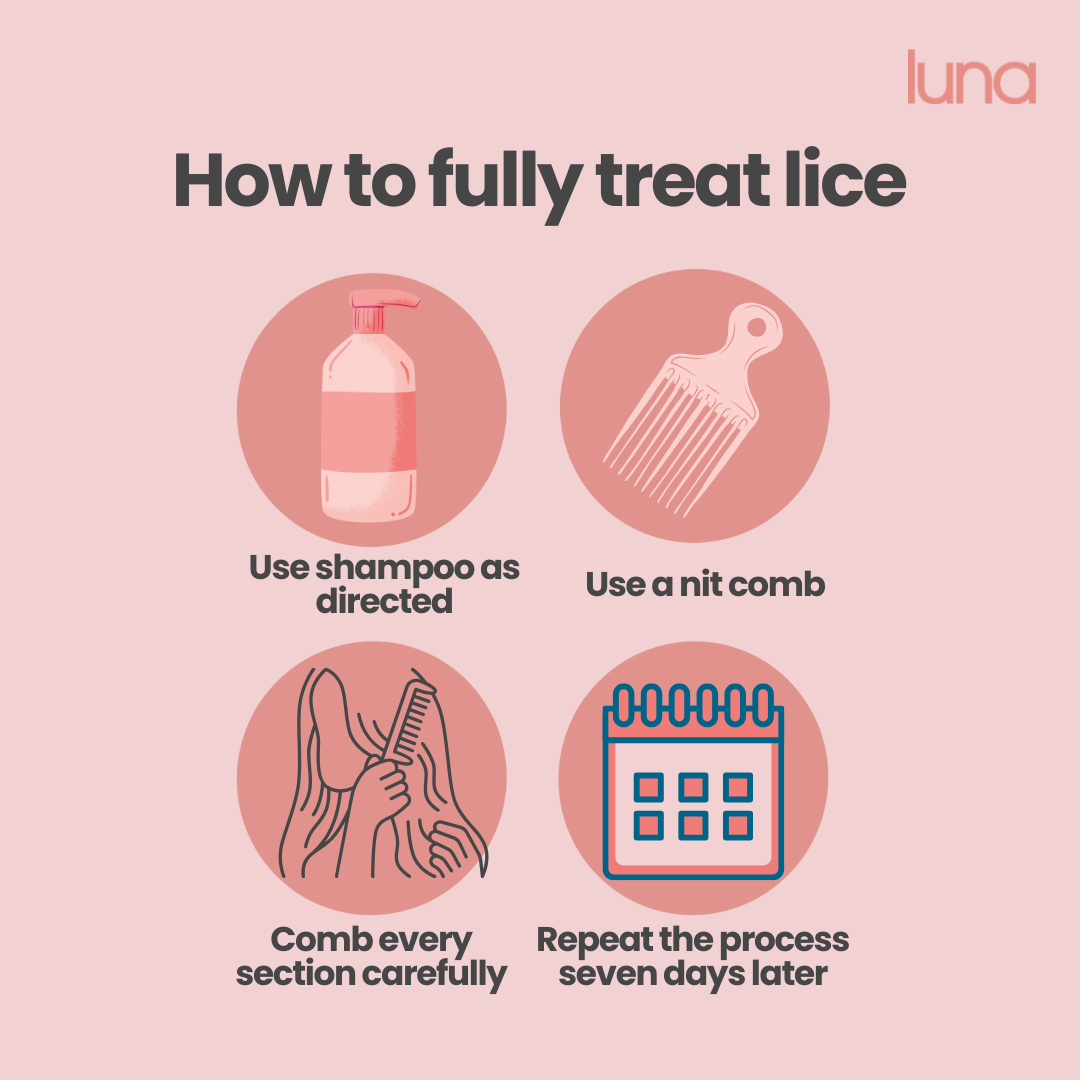
Using a lice treatment lotion or shampoo exactly as directed is key, followed by careful combing through the hair to remove nits.
Some families choose wet combing instead of medicated treatments. This involves using conditioner and a fine-toothed detection comb every few days to catch newly hatched lice.
Regardless of treatments used, know that combing takes time, patience, and good lighting. Missed eggs are one of the biggest reasons lice pop back up.
Repeating the treatment about seven days later is crucial, even if everything looks clear.
There’s no need to keep your daughter off school once treatment has started – head lice are common and schools do not require absence.
Common mistakes that cause reinfection
It’s easy to assume one thorough session should be enough, but lice don’t always cooperate.
Reinfection often happens when tiny sections of hair get missed, when the follow-up treatment is skipped, or when too little product is used.
So, you need to check every strand of hair for lice and nits.
Really time-consuming, but really necessary.
Another common misconception is thinking the job is done once the itching stops.
It’s often the second treatment (not the first) that makes all the difference.
One of the most common reasons lice keep coming back is untreated close contacts.
NHS guidance recommends checking everyone in your household – and treating anyone with live lice on the same day – to prevent lice being passed back and forth.
Despite popular advice online, do not use essential oils, repellents, or electric combs as they’re unlikely to work and can irritate the scalp.
How to reduce the risk of lice returning
Once lice are gone, prevention becomes the focus, especially during school outbreaks when reinfection is common.
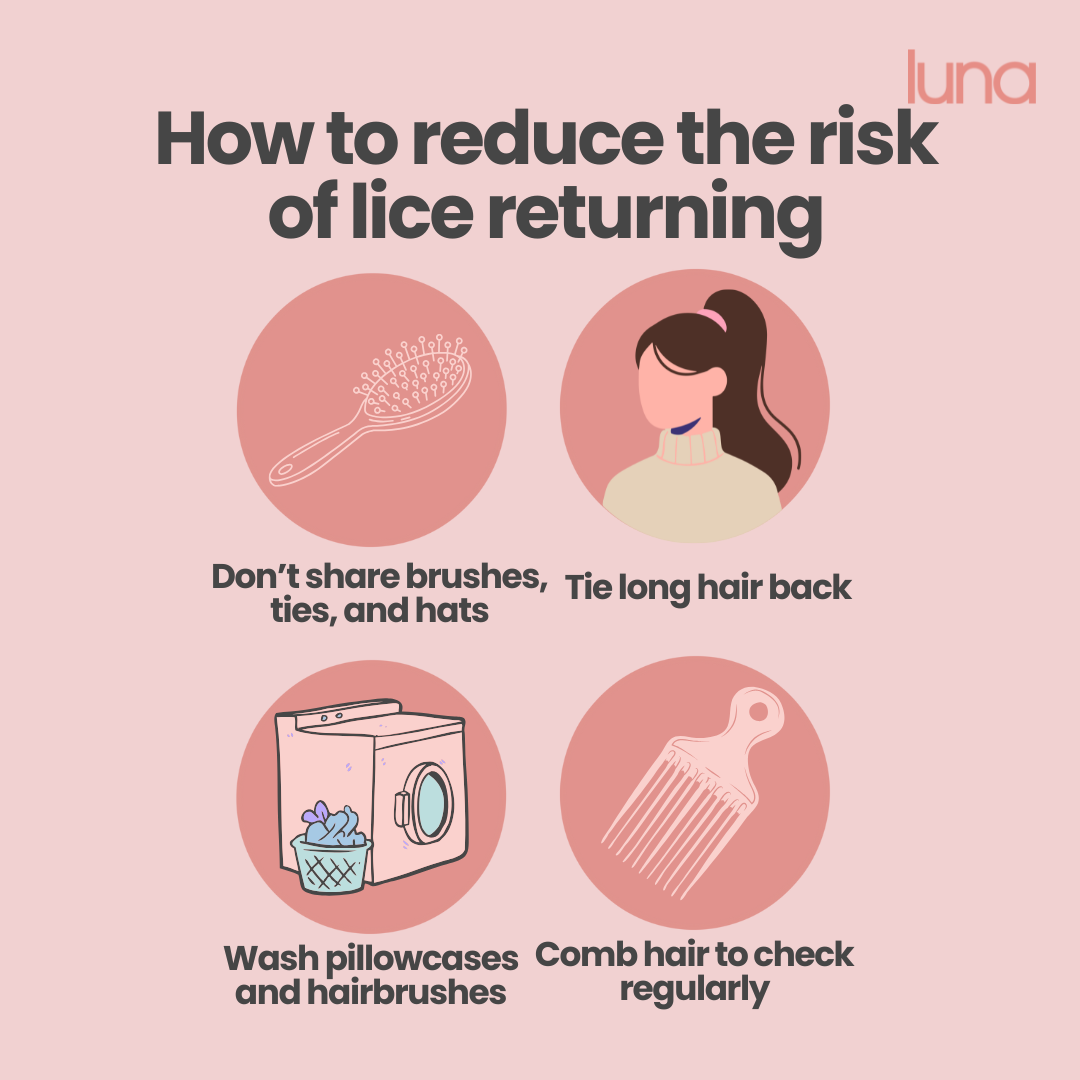
A few simple habits can make a big difference and help stop lice from returning:
- Avoid sharing brushes, hats, hair ties, or headphones
- Tie long hair back at school when possible
- Do regular comb checks for a few weeks after treatment
- Wash pillowcases and clean hair brushes and accessories
Should you clean the whole house?
This is where many parents panic (and where you can relax a bit).
No, you don’t need to deep-clean the entire house or bag up every soft toy.
Lice don’t survive long away from the scalp.
Only items used in the last 48 hours really matter.
Washing pillowcases, hats, and brushes is enough.
You can skip the furniture and carpet scrubbing.
Breaking the lice cycle (without losing your mind)
Recurring lice are usually caused by missed eggs or reinfection at school, not poor hygiene or poor parenting.
With careful treatment, a proper second round, and a few simple prevention steps, most families are able to break the cycle.
For expert-backed support on everyday teen health issues, from lice to puberty and everything in between, the luna app offers guidance your daughter can trust (and reassurance when they really need it).
How we created this article:
luna's team of experts comprises GPs, Dermatologists, Safeguarding Leads and Junior Doctors as well as Medical Students with specialised interests in paediatric care, mental health and gynaecology. All articles are created by experts, and reviewed by a member of luna's senior review team.
Sources:
NHS “Head lice and nits” | Accessed 20.01.26
https://www.nhs.uk/conditions/head-lice-and-nits/We'd love to keep in touch!
Sign up to our parent newsletter for emails on the latest teen trends, insights into our luna community and to keep up to date
By signing up, you are agreeing that we can use your email address to market to you. You can unsubscribe from marketing emails at any time by using the link in our emails. For more information, please review our privacy statement.