What age should you let your daughter go to a festival alone?
Let’s talk age and safety

Updated June 9, 2026
In this article
- In short
- What age is old enough for my daughter to go to a festival without me?
- Is it safe for my daughter to go to Reading or Boardmasters?
- What are the real risks I should be thinking about?
- What should I put in place before I say yes?
- How do I talk to my daughter about staying safe at a festival?
- What if she wants to drink at the festival?
- FAQ
In short
There's no set age at which a festival alone becomes automatically safe. The answer depends on how much independence your daughter has built up, who she's going with, and whether she has a real plan if something goes wrong.
For most parents, the turning point is less about her birthday and more about the conversation.
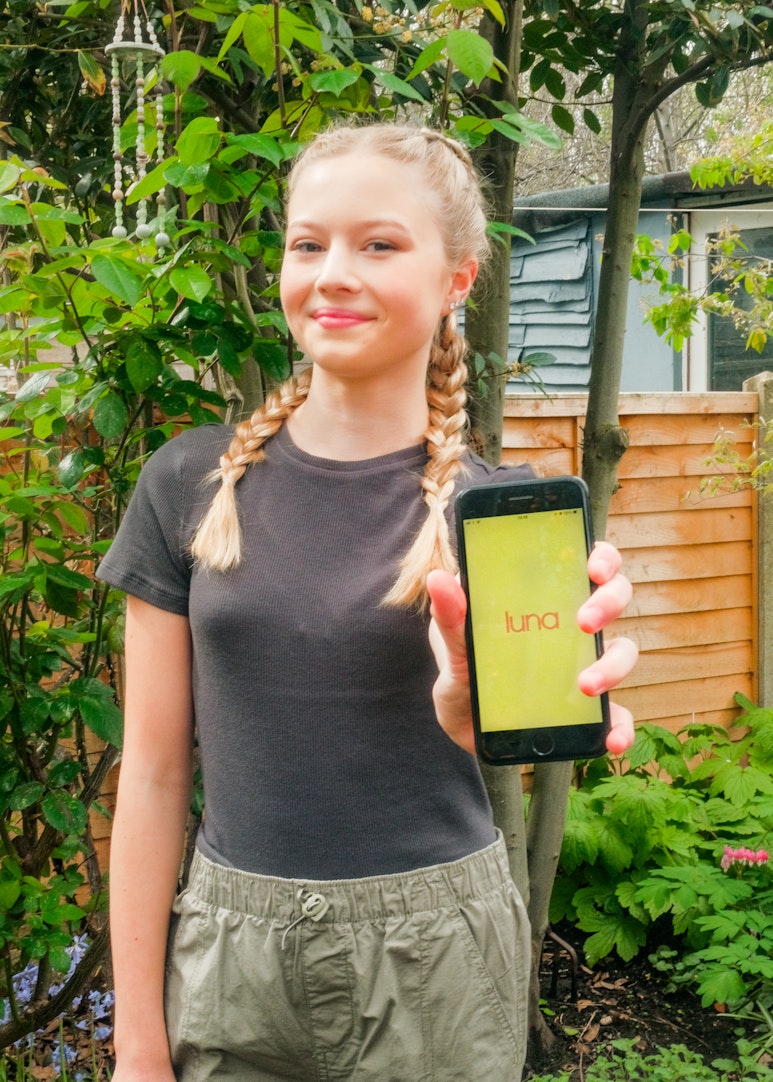
What age is old enough for my daughter to go to a festival without me?
There's no legal minimum and no single right answer, which is exactly what makes this so hard.
Maturity varies significantly even between teens of the same age. The right question isn't "is she 16?" but "has she built up to this?"
A 14-year-old who has done smaller overnight trips with trusted friends, communicates openly with you, and understands risk may be better placed than a 17-year-old who hasn't.
Gradually encouraging independence in teenagers, as long as they're safe, is a healthy part of growing up.
The key word is gradually. A first overnight trip with two close friends is a very different ask to a multi-day festival with 80,000 strangers.
Before deciding, it's worth asking yourself:
- Has she been away from home overnight without you before, and how did that go?
- Does she have a solid, trusted group going, or is she following along with people she doesn't know that well?
- Does she know what to do if something goes wrong, practically, not just theoretically?
- Does she communicate with you openly, or does she go quiet when things get hard?
- Is she asking because she genuinely wants to, or because she feels social pressure to?
If the honest answers give you more confidence than doubt, that matters more than her precise age.
Is it safe for my daughter to go to Reading or Boardmasters?
There's no clean yes or no here, and that uncertainty is exactly why so many parents are searching for it.
Safety at a festival depends more on preparation and the group she's going with than on age alone. Reading and Boardmasters both have dedicated welfare teams, medical staff on site, and security, which makes them a more controlled environment than many alternatives.
It's also worth knowing both festivals allow 16 to 17-year-olds to attend. Under 16s can attend, but they need to be with an adult.
What are the real risks I should be thinking about?
The main risks for teenagers out independently are getting lost, stranger danger, grooming, and exposure to alcohol and drugs.
At a festival, all four can be present, in a louder, later, and more disorientating setting than usual.
Alcohol is the biggest concern. According to NHS England data, 62% of 15-year-olds have already had an alcoholic drink, and 19% have been drunk in the last four weeks.
The Chief Medical Officer recommends that if 15 to 17-year-olds do drink, it should be in a supervised environment and no more than once a week. A festival is neither.
The NHS is clear that drinking at a young age, particularly heavily, can impair brain development and put teenagers at risk of alcohol-related accident or injury.
Mixing alcohol with other substances increases that risk significantly.
One risk that's easy to overlook is consent. Alcohol and drugs affect judgment, which is why talking to your teen about sex and consent before she goes is worth doing.
Not as a scary lecture, just as a practical conversation.
What should I put in place before I say yes?
Before any teenager goes out independently, parents should know: where she's going, who's going with her, how far it is, what time she'll be back, and how to reach her.
For a multi-day festival, that framework still applies.
The things that genuinely make a difference:
- Agree a specific check-in schedule, not just "text me when you get there"
- Make sure her phone is charged before she arrives and agree a backup plan, including a portable charger
- Find out whether the friends she's going with are people you trust, and whether there's someone older or steadier in the group
- Locate the welfare tent on a map together beforehand, so she knows where it is without having to ask
- Have an explicit "if something goes wrong, here's what to do" conversation, including that she can call you without any consequences
luna gives teen girls a space to explore topics like safety, wellbeing, and relationships at their own pace, with all content reviewed by medical experts. It's a good read-ahead for her too.
How do I talk to my daughter about staying safe at a festival?
This is often the conversation parents dread most, because it can tip into "you don't trust me" territory fast.
The NHS advises that teenagers need a calm, consistent presence from parents, not lectures. The goal is to give her real information, not to frighten her into staying home.
A few approaches parents find useful:
- Frame it as problem-solving together, not interrogating her
- Ask what she'd do if a friend got very drunk, if she got separated from the group, or if she didn't feel safe. Not to catch her out, but to hear her think it through
- Tell her specifically what worries you, so she can address it rather than guess
What if she wants to drink at the festival?
Many parents find this the hardest part, because it's the one you genuinely can't control.
The Chief Medical Officer's guidance is that the healthiest option is for under-18s to remain alcohol-free.
If 15 to 17-year-olds do drink, it should be supervised and infrequent. A festival doesn't fit that guidance, and it's fair to say so clearly.
At the same time, research suggests children are less likely to drink when parents show clearly they disapprove, so the conversation still matters even if it doesn't produce a guarantee.
Some parents find it helps to focus less on "don't drink" and more on "here's how to stay safer if you do."
FAQ
Does Reading Festival allow under-18s?
Yes. Reading Festival allows 16 to 17-year-olds to attend alone and under-16s with an adult. Check current rules each year as policies can change, and note that some areas including certain bars are adults-only.
What if she's going with people I don't know?
It's reasonable to want to know who's in the group. You don't have to approve everyone, but knowing there's at least one person you trust, or a sensible older teen, is a fair condition to set.
What if I say no and she goes anyway?
If you say no and she finds a way to go anyway, the real issue isn't the festival.
luna hears from parents regularly about daughters sneaking out, and the pattern is usually the same: a no with no reasoning tends to push behaviour underground rather than prevent it. If you're saying no, explaining why gives her something to work with.
Is 14 or 15 too young for a festival alone?
It depends far more on the individual than the age. Maturity varies significantly even between teens the same age. A 15-year-old who is confident, has a solid group, and has built up independence in smaller steps may be more ready than a 17-year-old who hasn't.
Most parents find the turning point is a gut feeling backed by evidence from smaller trips, not a number on a birthday card.
How do I prepare her for drink spiking?
Tell her the basics: never leave a drink unattended, never accept a drink from someone she doesn't know, and if she starts to feel unwell in a way that doesn't match how much she's had, to go straight to the welfare tent with a friend.
Festival welfare and medical teams are there for exactly this.
If you're still deciding, the most useful thing isn't researching more risks. It's having a longer conversation with her. What does she know about staying safe? What would she do if something went wrong? Her answers will tell you more than any article.
For the bigger picture on building her independence gradually, encouraging independence in your teen covers how to let go in a way that feels manageable for both of you.
How we created this article:
luna's team of experts comprises GPs, Dermatologists, Safeguarding Leads and Junior Doctors as well as Medical Students with specialised interests in paediatric care, mental health and gynaecology. All articles are created by experts, and reviewed by a member of luna's senior review team.
Sources:
NHS "Coping with your teenager" | 09.06.26
https://www.nhs.uk/mental-health/children-and-young-adults/advice-for-parents/cope-with-your-teenager/NHS England Digital "Smoking, drinking and drug use among young people in England, 2023: part 5 alcohol drinking prevalence and consumption" | 09.06.26
https://digital.nhs.uk/data-and-information/publications/statistical/smoking-drinking-and-drug-use-among-young-people-in-england/2023/part-5-alcohol-drinking-prevalence-and-consumptionNSPCC "Keeping children safe away from home" | 09.06.26
https://www.nspcc.org.uk/keeping-children-safe/outside-the-home/NHS "Guidance on the consumption of alcohol by children and young people" | 09.06.26
https://assets.publishing.service.gov.uk/media/6266dd208fa8f523bf22abec/cmo-alcohol-guidance-17122009.pdfWe'd love to keep in touch!
Sign up to our parent newsletter for emails on the latest teen trends, insights into our luna community and to keep up to date
By signing up, you are agreeing that we can use your email address to market to you. You can unsubscribe from marketing emails at any time by using the link in our emails. For more information, please review our privacy statement.