Can your teen daughter's trio friendship work?
Navigating three-person friend groups

Updated September 8, 2026 • Medically reviewed by Dr. Katie Knight
Medically reviewed by Dr. Katie KnightIn this article
Can my teen daughter's trio friendship work?
Yes, trio friendships can work, but they may come with challenges.
Teen friend groups of three can sometimes lead to feelings of being left out, shifting loyalties, or uneven dynamics between friends.
For example, when one person drifts closer to another, or two start making plans that leave the third on the sidelines, the tight-knit bond can suddenly feel fragile.
However, a trio friendship can be the perfect balance of support, laughter, and shared secrets when navigated in a healthy and confident manner - and that's where you, as a parent, come in.
Understanding how these dynamics work can help you support your teen through the ups and downs of three-person friendships.
Are trio friendships always tricky?
Trio friendships can be great, but can also be more complicated than they first appear.
Even strong friendships can feel unstable when there are three people involved, as it can be a bit of a balancing act.
It’s common for small changes in behaviour or closeness to feel much bigger in a trio setting.
Someone can unintentionally feel left out, even when no one means to exclude them.
It’s also quite common for two friends to become slightly closer, leaving the third feeling distant.
However, trio friendships can work well when there is:
- Open communication
- Flexibility between friends
- Awareness of including everyone
- Emotional maturity to handle shifting dynamics
What are common issues in trio friendships?
Even strong trio friendships can come with emotional ups and downs, such as arguments and falling out, especially during the teenage years when friendships feel central to identity and self-esteem.
Because there are three people instead of two, balance can easily shift - sometimes without anyone meaning to cause hurt.
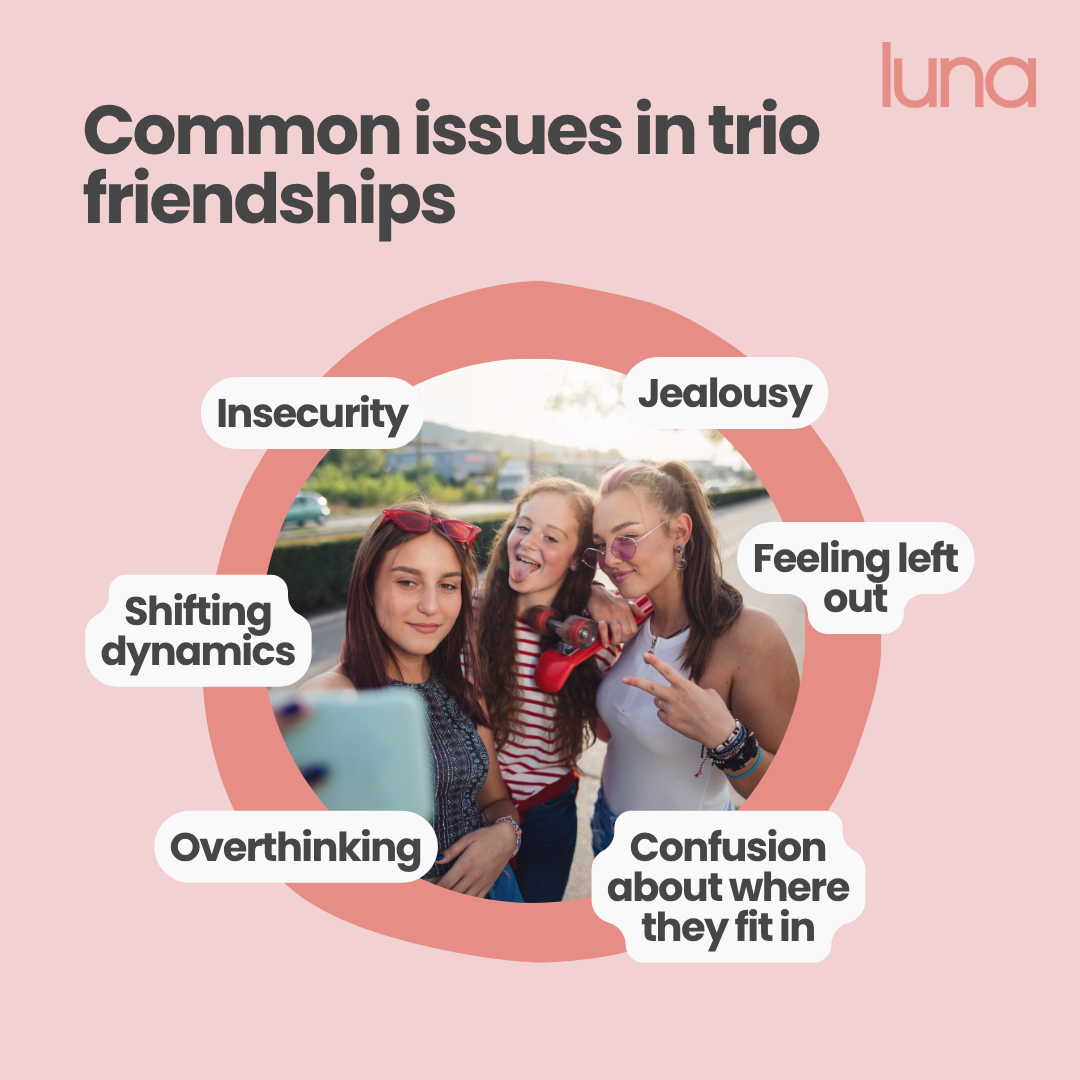
Here are some challenges your daughter may experience in a trio friendship:
- Feeling left out: your daughter might feel excluded when the other two spend time together, even in small moments like walking home or chatting in class
- Jealousy or insecurity: they may worry that their friends prefer each other, or that they are becoming “less important” in the group
- Misunderstandings or overthinking: a delayed reply, a short message, or an inside joke can feel much bigger in a close-knit trio
- Changing group dynamics: friendship roles can shift quickly, leaving your daughter unsure where they fit in from week to week or even kicked out of the friend group
It’s helpful to remind your daughter that these feelings are very normal in trio friendships, reflecting the complexity of group dynamics, not their value as a friend.
How can I support my daughter in her trio friendship?
When your daughter is struggling in a trio friendship, your role is less about solving the situation and more about helping them feel understood and supported as they navigate it.
Listening to your daughter and helping her see the situation from a more neutral standpoint can help, but never minimise her feelings.
Some practical ways to support your daughter include:
- Validate her feelings: let them know it’s okay to feel hurt or left out, for example, you may say: “I can see why that would feel upsetting - anyone would feel that way”
- Encourage open communication: if they feel safe, gently encourage her to share how she feels with her friends – it may be helpful to remind her that sometimes friends don’t realise the impact of their actions until it’s said out loud
- Help her see multiple perspectives: remind your daughter that all three friends may be navigating the group dynamic in her own way, even if it doesn’t always show
- Suggest inclusive activities: encourage group plans where all three are involved, like shared hobbies or activities that naturally include everyone
- Support a wider friendship circle: help your daughter make friends outside the trio so her emotional wellbeing isn’t tied to one group dynamic
- Keep the door open for conversation: regular check-ins help your daughter feel safe bringing up friendship worries before they build up – you could say, “you can always talk to me if things feel tricky with your friends”
How luna can help?
Trio friendships can feel complicated, but they also offer real opportunities for growth.
With steady support at home, your daughter can learn how to handle shifting dynamics, express her feelings clearly, and build confidence in managing friendships.
Over time, she can start to recognise what healthy group friendships feel like - and what doesn’t work for them.
If she needs extra support, luna offers a safe space where teens can explore friendship challenges through dedicated articles, ask questions anonymously, and hear from others going through similar experiences.
How we created this article:
luna's team of experts comprises GPs, Dermatologists, Safeguarding Leads and Junior Doctors as well as Medical Students with specialised interests in paediatric care, mental health and gynaecology. All articles are created by experts, and reviewed by a member of luna's senior review team.
We'd love to keep in touch!
Sign up to our parent newsletter for emails on the latest teen trends, insights into our luna community and to keep up to date
By signing up, you are agreeing that we can use your email address to market to you. You can unsubscribe from marketing emails at any time by using the link in our emails. For more information, please review our privacy statement.