My daughter's been dumped by her best friend
Reasons & how to talk about it

Updated April 30, 2026 • Medically reviewed by Dr. Emma Dickie
Medically reviewed by Dr. Emma DickieIn this article
- My daughter's been dumped by her best friend: the gist
- Why has my daughter's bestie dumped her?
- How can I help my daughter feel better after a friendship breakup?
- What should I say to my daughter when she's upset about a friend?
- How do I help my daughter rebuild her confidence?
- When should I step in if my daughter has been dumped by her bestie?
- What should I remember if my daughter has been dumped by her bestie?
- What other parents ask
If your daughter has lost her best friend, the heartbreak can feel huge. Here's why it happens and how to help her through it.
My daughter's been dumped by her best friend: the gist
If your daughter’s been dumped by her bestie, lead with listening, not fixing.
Friendship breakups are common in the teen years and usually pass with time, but they can feel devastating in the moment.
Stay calm, acknowledge how much it hurts, keep routines steady, and try not to criticise the other girl.
Step in only if her wellbeing starts to slip.
Why has my daughter's bestie dumped her?
Teen friendships often end because of shifting identities and changing social groups, not because your daughter has done something wrong.
What feels sudden is usually built up over weeks or months.
Common reasons include:
- Shifting friendship groups at school
- Miscommunication or unresolved conflict
- Influence from other friends pulling the bestie elsewhere
- Changes in interests, hobbies or priorities
- Misunderstandings on social media or in group chats
- Social pressure and changes in confidence
Both girls are still working out who they are and developing their independence, and friendships are a huge part of that identity. That's why these breakups can feel so all-consuming.
How can I help my daughter feel better after a friendship breakup?
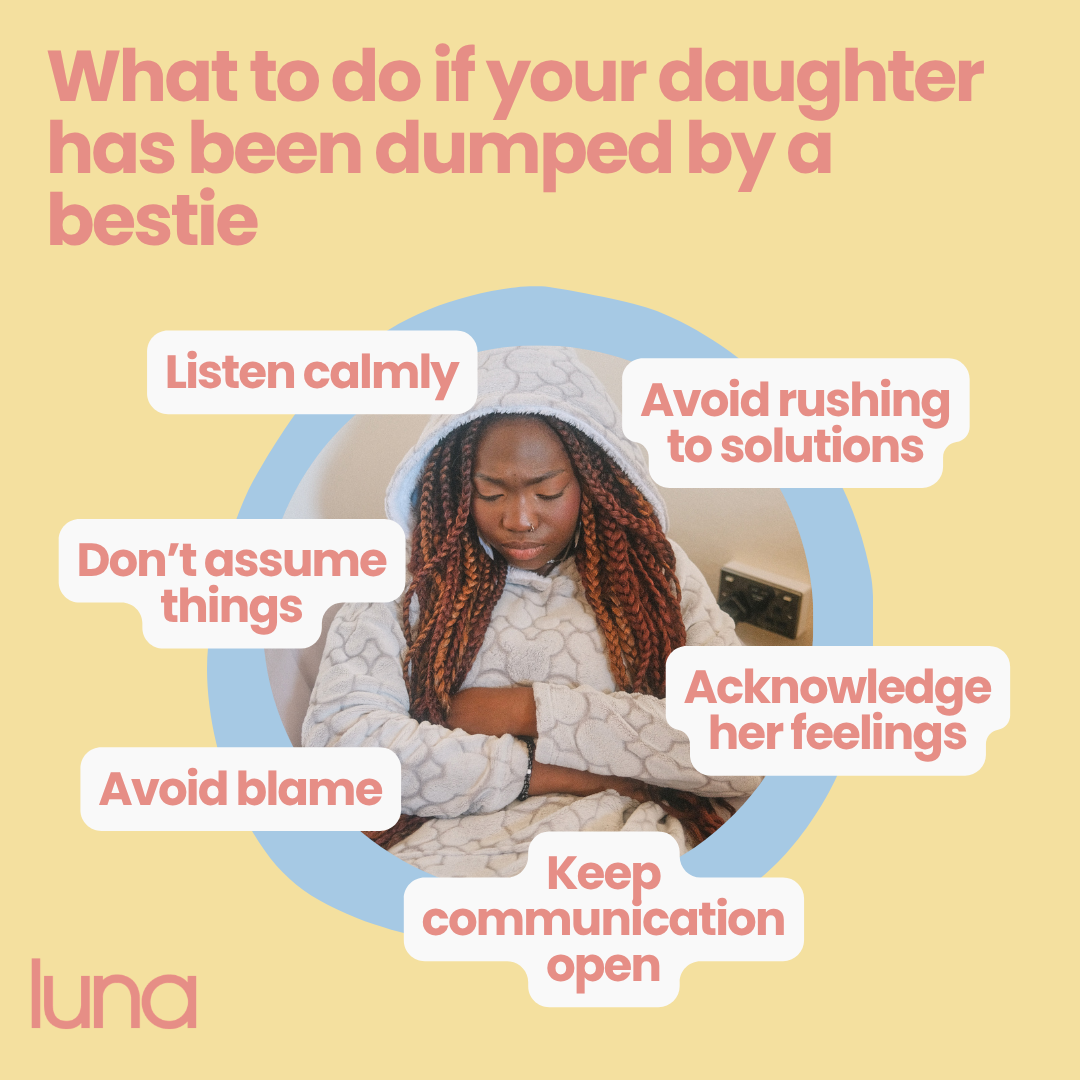
The most useful thing you can do is offer emotional support, not solutions.
Feeling heard is what reduces the intensity of the hurt: fixing usually backfires.
If your teen daughter feels left out by friends, you can support her by:
- Letting her talk without interrupting or jumping in
- Acknowledging how painful it feels
- Keeping routines steady (school, home, activities)
- Encouraging small moments of normality
- Being physically and emotionally present, even quietly
- Not assuming you know the full story
It may take time, but consistent, low-key support helps her feel less alone.
What should I say to my daughter when she's upset about a friend?
The most helpful thing to say is something that shows you're listening and that her feelings make sense. That keeps the door open for her to keep talking.
You might try:
- "That sounds really upsetting"
- "I can see why that hurt"
- "Do you want to tell me what happened?"
Try to avoid:
- Minimising it ("you'll make new friends")
- Criticising the other girl straight away
- Jumping into solutions ("just block her")
Even if it seems small from the outside, it almost certainly feels enormous to her.
How do I help my daughter rebuild her confidence?
Confidence and self-esteem usually return through small, positive experiences, not big interventions. Feeling secure socially again is a slow, gentle process.
You can help by:
- Encouraging other friendships, even quieter ones
- Supporting hobbies for teens she enjoys or feels good at
- Keeping routines predictable
- Noticing and naming her strengths
- Giving her space while staying available
It's worth knowing she isn't alone in this and her current situation isn't permanent. She will likely find her people again!
When should I step in if my daughter has been dumped by her bestie?
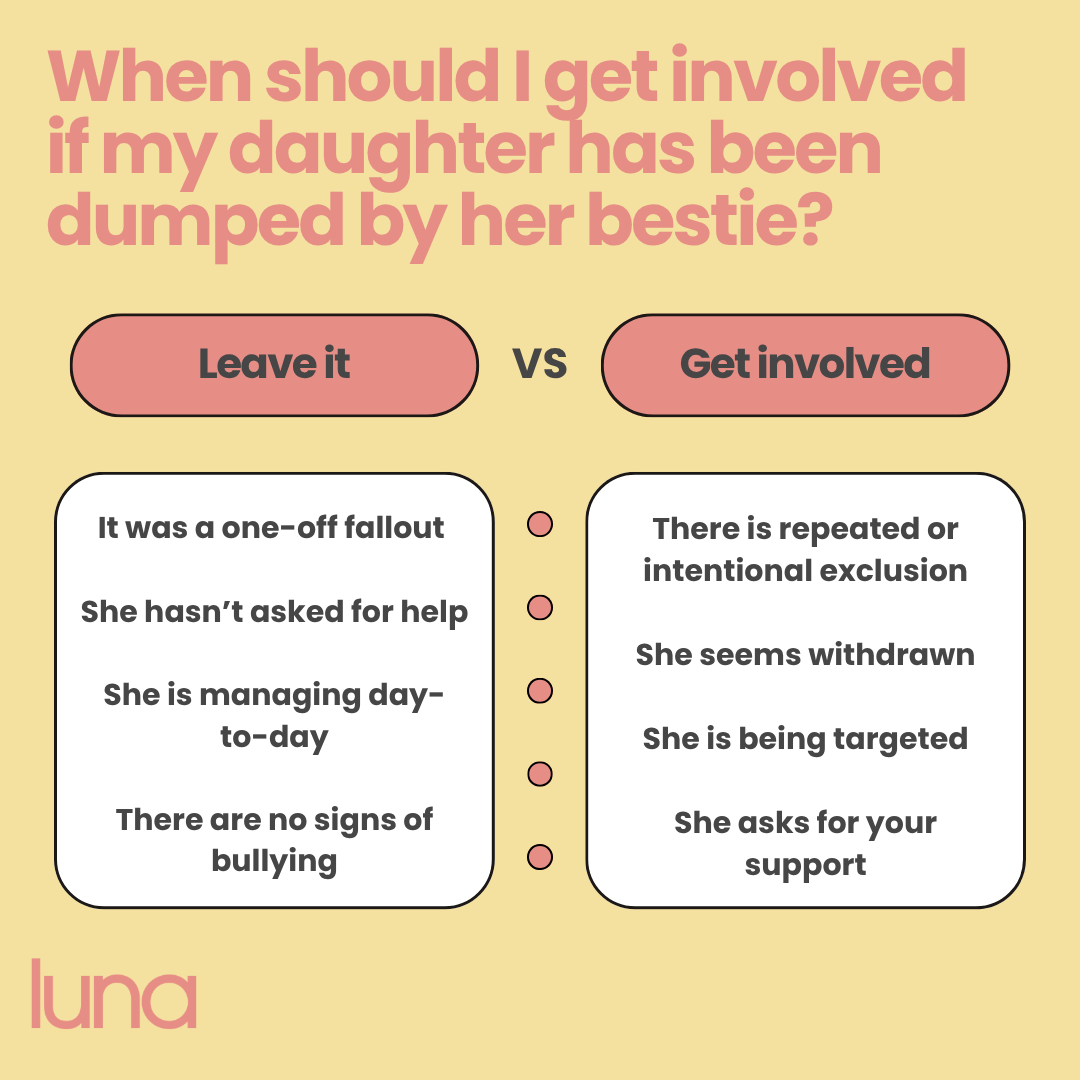
In most cases it's better not to step in straight away. Teen girls usually want space to handle friendship issues themselves, and being calm and observant is more useful than charging in.
You probably don't need to intervene if:
- It was a one-off fallout or misunderstanding
- There are no signs of bullying or ongoing exclusion
- She's still managing day to day (school, sleep, eating, other friends)
- She hasn't asked for your help
You may need to step in if:
- There's repeated or intentional exclusion
- She seems withdrawn, low or unusually distressed
- Her sleep, appetite or school attendance changes
- She's being targeted online or in group chats
- She asks for your support
If you do get involved, talk to your daughter first and ask what she'd like to happen. Keep the focus on her wellbeing rather than trying to fix the friendship, and loop in school or another trusted adult if needed.
What should I remember if my daughter has been dumped by her bestie?
The most important thing to remember is that how you respond matters more than the situation itself.
Staying calm, listening without judgement, and helping her feel understood can make a lasting difference to how she processes what's happened.
You know your daughter best. Trust your instincts, give her space when she needs it, and be there when she comes back round.
What other parents ask
Is it normal for teen best friendships to end?
Yes. Friendships shift a lot through the teen years as girls figure out who they are. Most teens will go through at least one painful friendship breakup before they leave school.
How long does it take for a teen to get over a friendship breakup?
There's no set timeline. Some bounce back in a few weeks, others take months. If she's still struggling after several weeks, or if it's affecting sleep, eating or school, it's worth checking in more closely or speaking to your doctor.
Should I contact the other girl's parents?
Usually no, unless there's bullying, online harassment or safety concerns. Going parent-to-parent over a falling out can make things worse for your daughter socially. Talk to her first.
What if my daughter doesn't want to talk to me about it?
That's normal, and not a sign you've done anything wrong.
Stay available without pushing, and let her know you're there when she's ready.
Sometimes a journal, a trusted adult outside the family, or a private app like luna can give her another way to process when she's not ready to say it out loud.
Could this be bullying?
A one-off fallout isn't bullying, but repeated, deliberate exclusion or targeting (in person or online) is. If you're seeing signs of bullying, speak to her school.
The fact that you're here, looking up how to help, already says a lot about the kind of parent you are.
Most teen friendship breakups pass with time, especially when there's a calm adult in her corner, even quietly.
If she'd like a private space to work through how she's feeling about friendships and confidence in her own time, the luna app is built for exactly that.
How we created this article:
luna's team of experts comprises GPs, Dermatologists, Safeguarding Leads and Junior Doctors as well as Medical Students with specialised interests in paediatric care, mental health and gynaecology. All articles are created by experts, and reviewed by a member of luna's senior review team.
Sources:
The Children’s Society "A guide to supporting young people with their friendships" | Accessed 30.03.26
https://www.childrenssociety.org.uk/sites/default/files/2020-10/friendship-guide-for-adults_0.pdfWe'd love to keep in touch!
Sign up to our parent newsletter for emails on the latest teen trends, insights into our luna community and to keep up to date
By signing up, you are agreeing that we can use your email address to market to you. You can unsubscribe from marketing emails at any time by using the link in our emails. For more information, please review our privacy statement.