What to do if your daughter's not been invited to a party
Reasons & how to talk about it

Updated September 8, 2026 • Medically reviewed by Dr. Katie Knight
Medically reviewed by Dr. Katie KnightIn this article
What can I do if my daughter hasn't been invited to a party?
If your daughter hasn’t been invited to a party, the most important thing is to acknowledge her feelings without rushing to fix the situation.
Feeling left out can affect confidence, even if it looks minor from the outside.
Gentle support, keeping communication open, and helping her reflect on friendships over time can make a real difference.
It is helpful to let her talk about her feelings and reassure her that this doesn’t define her friendships or worth.
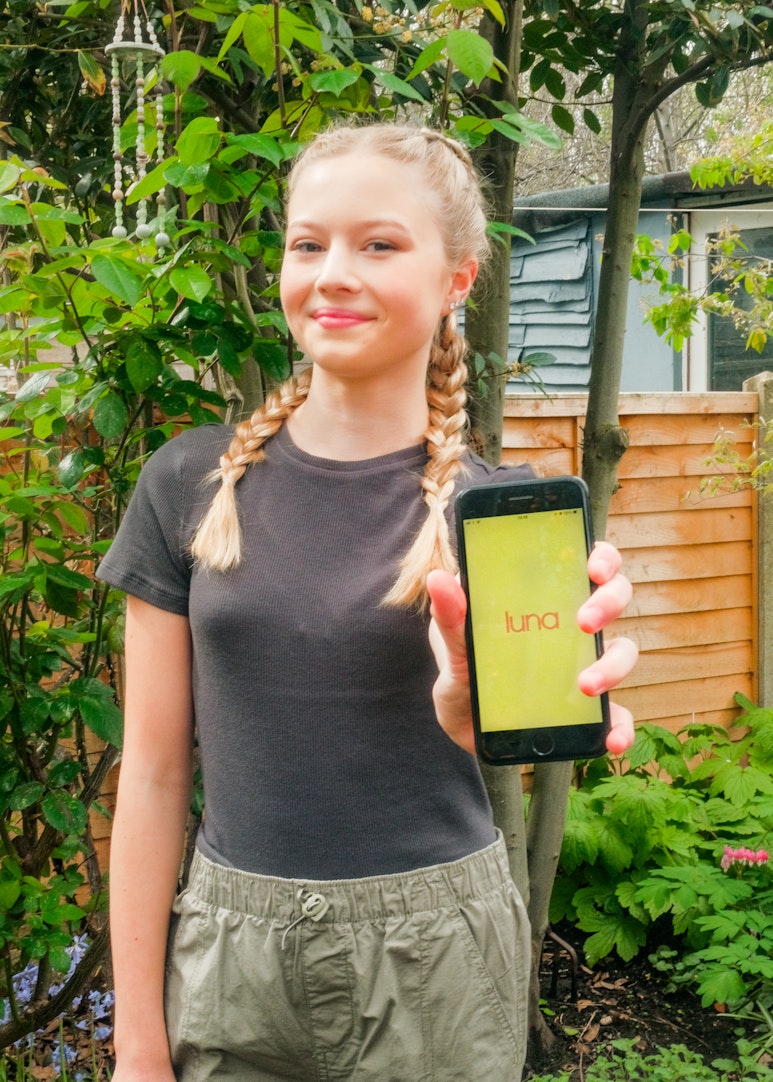
Some teens also benefit from a private, pressure-free space to explore feelings, like the luna app, especially if they’re not ready to talk openly.
Why wasn't my daughter invited to the party?
There are lots of reasons a daughter might not get an invite, and most of them aren't as personal as they feel in the moment.
Social dynamics in the teen years shift constantly, and an exclusion that feels deliberate often isn't.
Some of the most common reasons include:
- Limited guest numbers (a small gathering, a venue cap, or a family rule)
- A shifting friendship group your daughter may not be fully across yet
- An oversight – especially with digital invites that can be missed or go to the wrong account
- Different social circles forming as friendships naturally change
- Awkwardness or fallout after an argument neither of you may know the full story on
That said, it's also worth exploring whether this is a one-off or part of a pattern.
If your daughter is regularly left out by the same group, that's worth paying closer attention to.
The hardest part is that you often won't know the reason.
And that uncertainty can be just as painful for a parent as it is for your daughter.
What to say when my daughter isn’t invited to a party?
When your daughter isn’t invited to a party, simple and empathetic language can help her feel understood.
Although it can be heartbreaking to see your teen left out, remember that the goal is to validate her feelings without escalating the situation or placing blame (even if you are feeling upset and frustrated on her behalf).
You could say:
- “I can see why that feels upsetting”
- “It’s okay to feel left out sometimes”
- “This doesn’t mean people don’t like you”
- “Friendships can be complicated, and this won’t last forever”
Try to avoid:
- Minimising (“it doesn’t matter”)
- Overreacting (“that’s so unfair!”)
- Immediately trying to fix it
It may be tempting to criticise those who have not invited her to the party, but you should try to focus on her instead of anyone else.
Letting her feel heard often provides the most comfort.
How can I deal with my daughter being excluded?
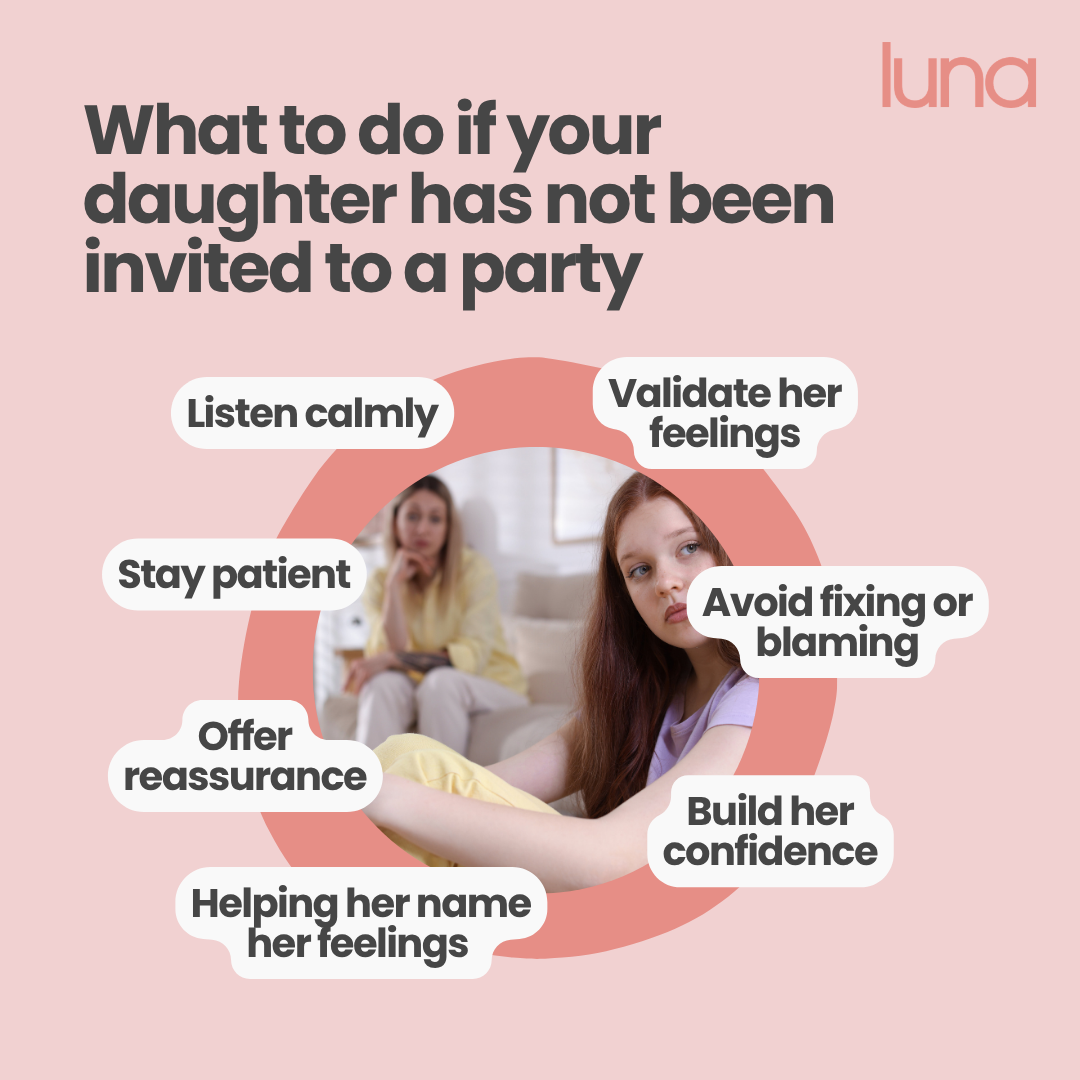
If your teen daughter feels left out by her friends, supporting her emotionally is just as important as understanding what’s happening socially.
Exclusion can affect confidence and self-esteem, but with the right support, teens can learn to cope and build resilience.
You can help by:
- Listening calmly and letting her explain what happened
- Helping her name her feelings (hurt, confusion, anger)
- Encouraging other friendships and social opportunities
- Keeping communication open over time
As confidence can really take a hit when teens are not invited to parties or are being excluded, it is a good idea to look at ways you can help your teen build it back up again.
To boost your teen's confidence, you might want to:
- Explore new activities and hobbies for teens to try with them
- Remind your daughter of all their positive qualities
- Look into volunteering ideas for your daughter which may help her build confidence and new friendships
Is being excluded a form of bullying?
Being excluded can be a form of bullying, but it depends on the situation.
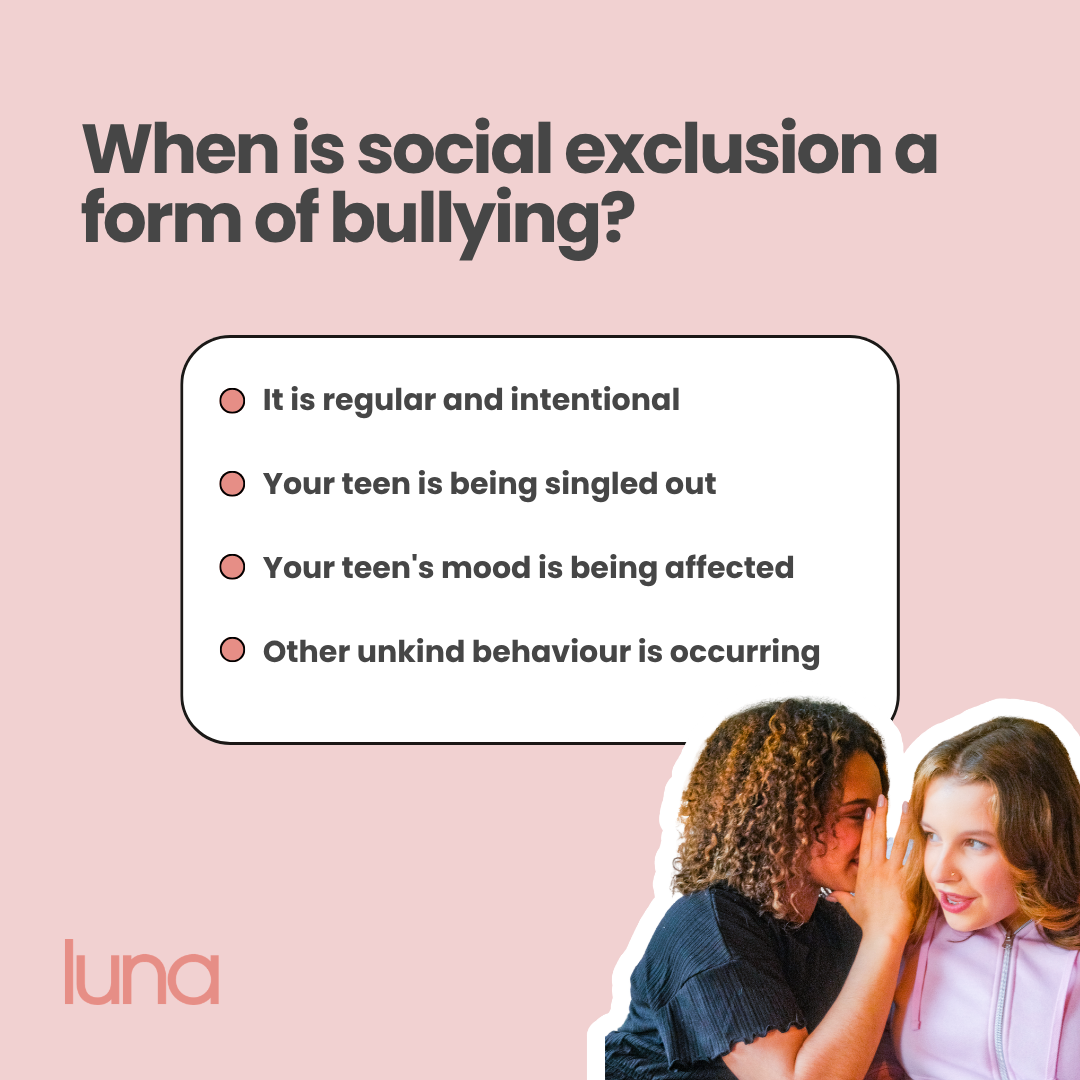
Occasional exclusion (like not being invited to one party) is often part of normal social dynamics, but repeated or intentional exclusion can be considered bullying.
Bullying can include behaviours like being repeatedly left out, targeted, or made to feel isolated.
It may be more serious if:
- It happens regularly or intentionally
- Your daughter is being singled out
- It’s combined with teasing, rumours, or unkind behaviour
- It begins to affect her mood, confidence, or willingness to socialise
If you’re unsure, it’s okay to observe what’s happening over time rather than jumping to conclusions.
Keep an eye on your daughter and watch out for other signs of bullying.
How can luna help?
When your daughter feels left out, the most important thing is to stay calm, listen, and show her she’s loved - these are all things daughters want to hear from their mothers.
Even small moments of attention and reassurance can make her feel seen and supported.
It’s okay if you don’t have the perfect words or a solution right away.
Being there, validating her feelings, and letting her know she’s not alone can make a real difference.
You may also want to introduce her to luna which is a safe, private app for her to explore her feelings, ask questions, track her moods and cycles, and build confidence at her own pace.
How we created this article:
luna's team of experts comprises GPs, Dermatologists, Safeguarding Leads and Junior Doctors as well as Medical Students with specialised interests in paediatric care, mental health and gynaecology. All articles are created by experts, and reviewed by a member of luna's senior review team.
Sources:
Parents Together “How to help your child deal with social exclusion” | Accessed 27.03.26
https://parents-together.org/how-to-help-your-child-deal-with-social-exclusion/The L.A. Trust for Children’s Health “Boosting self-esteem in teenage years” | Accessed 27.03.26
https://www.thelatrust.org/articles/boosting-self-esteem-in-teenage-yearsWe'd love to keep in touch!
Sign up to our parent newsletter for emails on the latest teen trends, insights into our luna community and to keep up to date
By signing up, you are agreeing that we can use your email address to market to you. You can unsubscribe from marketing emails at any time by using the link in our emails. For more information, please review our privacy statement.