Are you helicopter parenting your teen daughter?
How to recognise the signs

Updated June 19, 2026 • Medically reviewed by Dr. Emma Dickie
Medically reviewed by Dr. Emma DickieIn this article
- In short: am I helicopter parenting my teen daughter?
- What is helicopter parenting in the teen years?
- What are the signs I might be helicopter parenting my teen daughter?
- Why is helicopter parenting more noticeable with teens?
- Is helicopter parenting harmful for teen girls?
- How can I step back without feeling like I’m abandoning her?
- When should I step in instead of stepping back?
- FAQ
In short: am I helicopter parenting my teen daughter?
You might be helicopter parenting your teen daughter if you often step in to manage situations she could handle herself, or feel anxious when you’re not closely involved.
It’s very common in the teen years, when she’s pushing for independence.
What helps is gradually stepping back, letting her try things herself, and staying emotionally available without taking over.
What is helicopter parenting in the teen years?
Helicopter parenting in teens means staying very closely involved in your daughter’s decisions, problems, and day-to-day life, often stepping in quickly to manage things.
In adolescence, this tends to show up less as physical protection and more as managing outcomes, like schoolwork, friendships, or choices.
The intention is to help, but it can reduce opportunities for her to build independence.
What are the signs I might be helicopter parenting my teen daughter?
You might notice over-involvement in everyday situations, especially around school, friendships, and decisions.
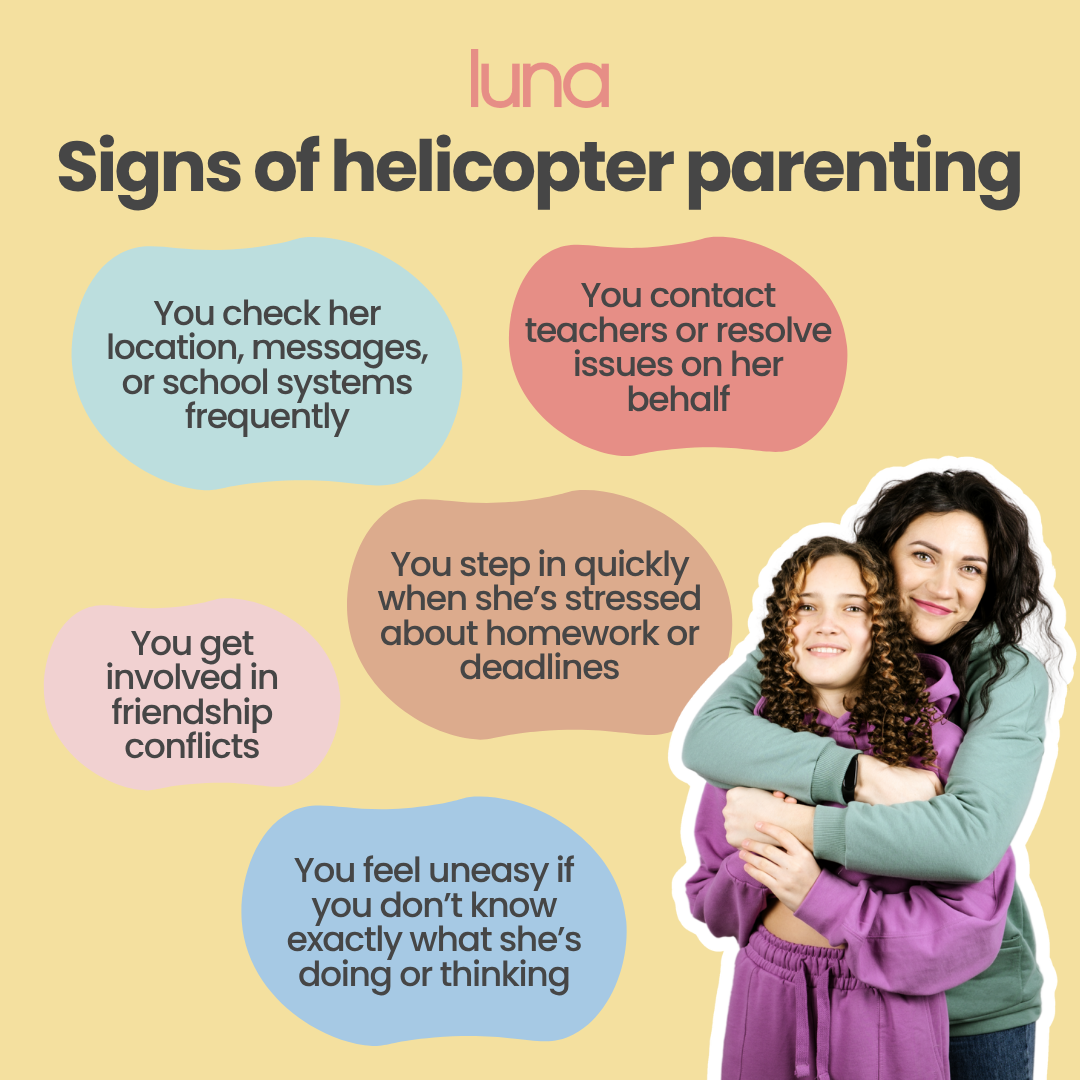
Common signs include:
- You check her location, messages, or school systems frequently
- You step in quickly when she’s stressed about homework or deadlines
- You contact teachers or resolve issues on her behalf
- You get involved in friendship conflicts rather than letting her handle them
- You feel uneasy if you don’t know exactly what she’s doing or thinking
None of these mean you’re doing something wrong, but together, they can suggest she’s getting less space to figure things out herself.
Why is helicopter parenting more noticeable with teens?
It often becomes more obvious because your daughter is naturally pushing for independence.
During adolescence, her brain is developing in ways that support decision-making, identity, and emotional regulation.
At the same time, she’s seeking more privacy and control over her life.
This can create tension:
- You may feel a stronger urge to protect or guide
- She may feel a stronger need to pull away
That push-pull is a normal part of growing up, but it can make over-involvement stand out more clearly.
Is helicopter parenting harmful for teen girls?
In the short term, it can feel supportive.
Over time, too much involvement can make it harder for her to build confidence and independence.
Teens need chances to:
- Make decisions (and sometimes get them wrong)
- Handle challenges without immediate intervention
- Build problem-solving skills
Without that space, some teens may:
- Doubt their ability to cope
- Rely more on reassurance
- Avoid taking initiative
This isn’t about blame, just about understanding what helps her grow.
How can I step back without feeling like I’m abandoning her?
It’s completely normal to worry that stepping back means doing less as a parent.
In reality, it’s about changing how you support her.
A simple way to think about it: move from doing to guiding
- Pause before stepping in: give her a moment to try
- Ask open questions: “What do you think you’ll do?”
- Let small mistakes happen: safe failures build confidence
- Stay emotionally available: she knows you’re there if she needs you
You’re still present but just giving her more room to grow.
When should I step in instead of stepping back?
Stepping back doesn’t mean stepping away completely. Some situations need your involvement.
It’s important to step in when there are concerns about:
- Her safety (online or offline)
- Mental health (persistent low mood, anxiety, withdrawal)
- Bullying or harmful relationships
- Situations she clearly can’t manage alone yet
The goal isn’t less parenting, it’s right-sized support.
FAQ
Is helicopter parenting worse for teens than younger children?
It can have a bigger impact in the teen years, because this is when independence and identity development are most important.
Can I be involved without being a helicopter parent?
Yes. Supportive parenting means guiding, listening, and being available without taking over or controlling outcomes.
What’s the difference between support and over-involvement?
Support helps your daughter think and decide. Over-involvement removes the need for her to do those things herself.
Is it too late to change how involved I am?
No. Even small shifts (like asking instead of solving) can help your daughter build more confidence over time.
If you’re asking this question, it usually means you care deeply about getting the balance right and that matters more than getting it perfect.
How we created this article:
luna's team of experts comprises GPs, Dermatologists, Safeguarding Leads and Junior Doctors as well as Medical Students with specialised interests in paediatric care, mental health and gynaecology. All articles are created by experts, and reviewed by a member of luna's senior review team.
We'd love to keep in touch!
Sign up to our parent newsletter for emails on the latest teen trends, insights into our luna community and to keep up to date
By signing up, you are agreeing that we can use your email address to market to you. You can unsubscribe from marketing emails at any time by using the link in our emails. For more information, please review our privacy statement.