How to talk to children about divorce
What to say, how to support, and when to seek extra help

Updated March 18, 2026
In this article
- How do I talk to my child about divorce?
- How can I tell my child we're getting a divorce?
- What to say when my child asks why we're getting divorced?
- How can I help my child cope with divorce?
- What is best for a child of divorced parents?
- How long does it take for a child to adjust to divorce?
- When should we seek extra support for a child struggling with divorce?
How do I talk to my child about divorce?
You can talk to children about divorce by being honest, calm, and reassuring.
It helps to explain the situation clearly, emphasise that both parents still love them, and avoid blaming either parent.
Children cope best when routines remain consistent, they have a safe space to ask questions, and they know their feelings are valid.
However, be mindful of how honest you are with your child.
They don’t need to know the whole ins and outs of the breakup.
It's best to avoid discussing infidelity and other aspects that may be inappropriate for them at their stage in life or may cause further upset in the moment.
How can I tell my child we're getting a divorce?
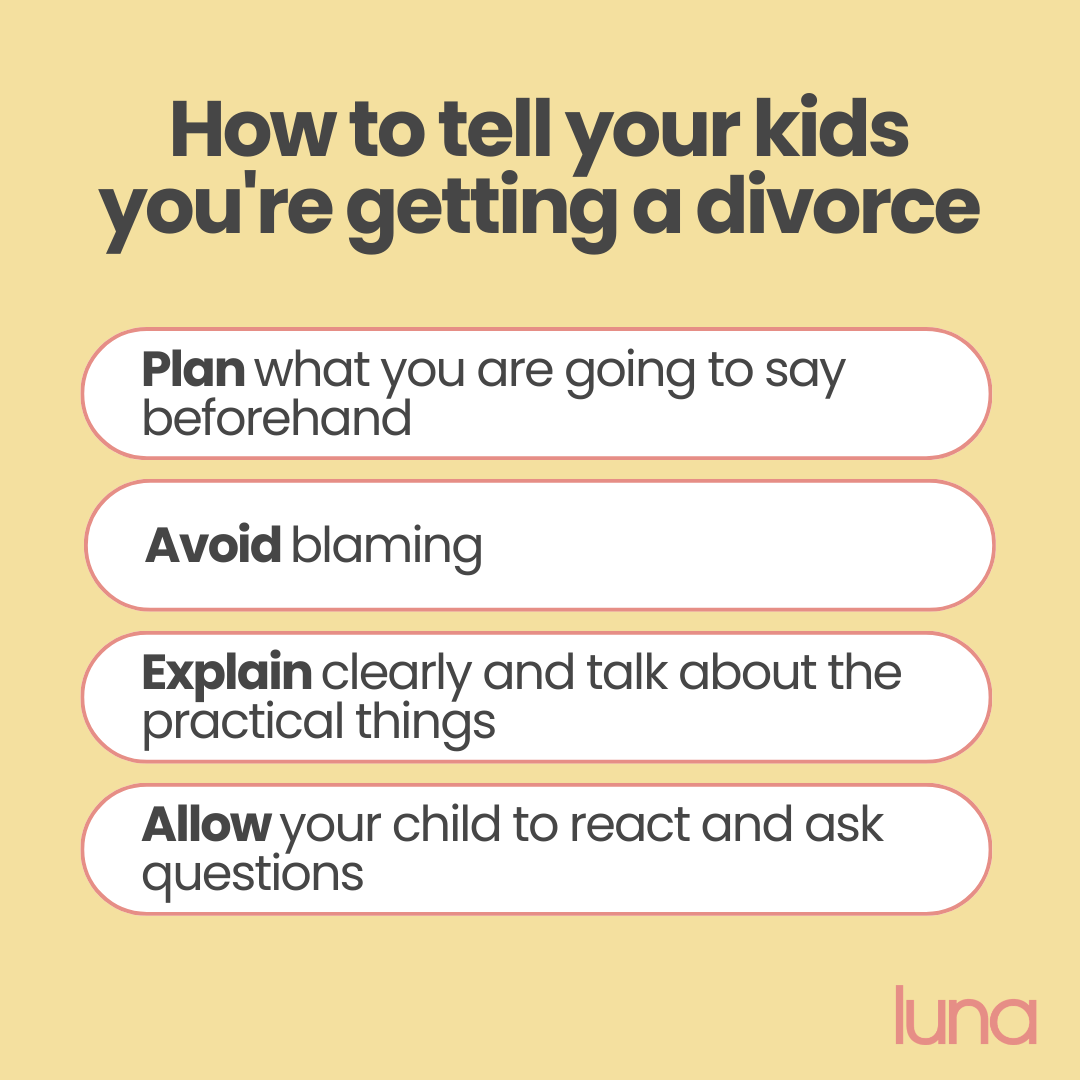
The best approach is to tell your children together, if possible, and in a calm, private setting where your child feels comfortable.
Keep explanations simple and age-appropriate.
Focus on what will stay the same and reassure them of your continued love and care.
Helpful tips:
- Avoid arguments or blaming your co-parent during the conversation
- Use clear language like “we are no longer going to live together, but we both love you”
- Give children time to react and ask questions - and really listen to them when they speak
- Revisit the conversation as questions arise - it’s rarely a one-off talk
- Talk about what will change and what will stay the same
Children will often pick up on tension and conflict in the home.
With that in mind, it's okay to discuss some of your feelings with them if you feel it is appropriate.
Simply saying, “we feel upset when we are together, so we are going to live apart to see if that helps,” can help.
What to say when my child asks why we're getting divorced?
When children ask why you got divorced, keep explanations simple, truthful, and age-appropriate.
Focus on the reason adults are separating without blaming anyone or overloading with adult details.
You could say things like:
- “Sometimes adults have problems and can’t live together happily”
- “We found that we can’t get along the way we both need to”
- “Our relationship as partners isn’t working anymore, but we both still care about each other”
- “Adults sometimes make decisions that are best for them, even if they are hard”
After explaining why, follow up with reassurance.
Remind your child that both parents still love and care for them, nothing they did caused the divorce, and you are there to support them.
Invite them to ask questions and be prepared to revisit the conversation as they process the changes over time.
How can I help my child cope with divorce?
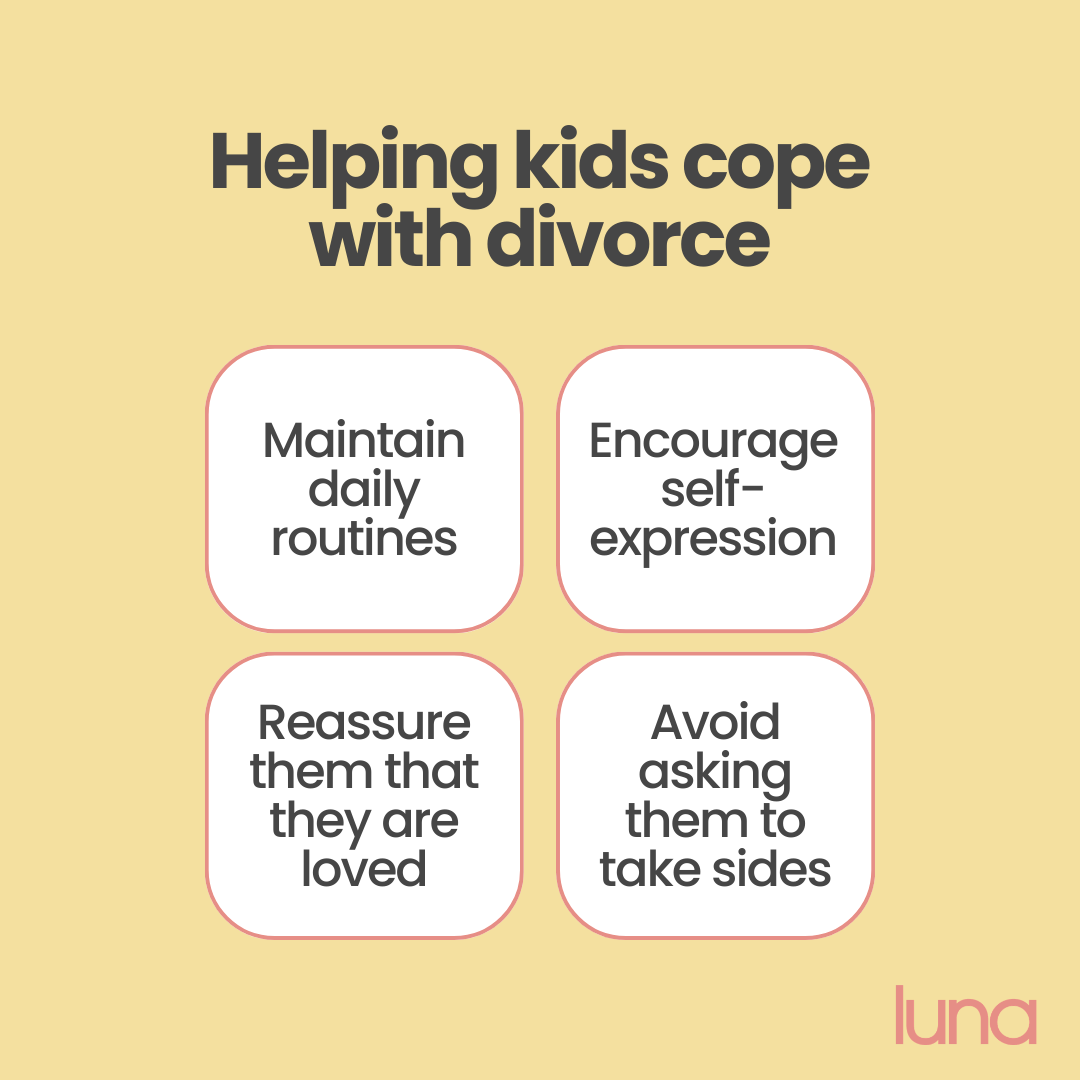
Children cope with divorce best when they feel secure, listened to, and included.
Consistency, routines, and reassurance that they are loved by both parents are key.
Supportive strategies include:
- Maintaining daily routines for meals, school, and bedtime
- Encouraging children to express feelings through talking, drawing, or writing
- Avoiding asking children to take sides or act as intermediaries
- Explaining practical changes clearly (who they will live with, visitation plans)
- Reassuring them that the divorce is not their fault
If children show ongoing stress, anxiety, or behavioural changes, seeking support from a counsellor, school, or family service can help.
What is best for a child of divorced parents?
Children do best when both parents continue to care for them, communicate respectfully, and avoid conflict in front of the child.
Shared routines, predictable schedules, and emotional availability from both parents provide security.
Other helpful practices:
- Keep transitions between homes smooth and predictable
- Maintain consistent rules, expectations, and boundaries
- Support continued relationships with extended family and friends
- Protect children from parental disagreements or legal conflicts
Even when parents live separately, consistent love and attention from both is the strongest predictor of adjustment.
How long does it take for a child to adjust to divorce?
There’s no single “normal” timeline - every child and family is different.
Many children begin to feel more secure within 6 to 12 months, and most adjust within about 2 years.
Although feelings of sadness or confusion can come and go.
Adjustment depends on factors like age, temperament, routines, and support from both parents.
Factors that help children adjust:
- Consistent routines and stable living arrangements
- Low levels of parental conflict
- Support from both parents and other trusted adults
- Opportunities to express feelings safely
Patience is important - children often show progress gradually, with occasional setbacks that are normal.
When should we seek extra support for a child struggling with divorce?
Parents should seek extra support if a child is showing ongoing distress, behavioural changes, or difficulty managing daily life.
Persistent anxiety, mood swings, anger, withdrawal, or academic struggles may signal that additional help is needed.
Signs it might be time to get help:
- The child seems sad, anxious, or withdrawn most of the time
- Sleep problems, frequent stomach aches, or other physical complaints linked to stress
- Struggles significantly at school or refuses to attend
- Persistent anger, guilt, or fear related to the divorce
- Repeated conflicts with siblings, peers, or parents that don’t improve
Support can come from a doctor, school counsellor, family therapist, or a specialist service.
The app luna can also help them navigate their emotions and get expert-approved guidance for times they feel unsure about opening up to you.
How we created this article:
luna's team of experts comprises GPs, Dermatologists, Safeguarding Leads and Junior Doctors as well as Medical Students with specialised interests in paediatric care, mental health and gynaecology. All articles are created by experts, and reviewed by a member of luna's senior review team.
Sources:
NSPCC "How to support children through separation or divorce" | Accessed 13.03.26
https://www.nspcc.org.uk/advice-for-families/support-children-through-separation-divorce/Cafcass "Supporting your child through divorce and separation" | Accessed 13.03.26
https://www.cafcass.gov.uk/parent-carer-or-family-member/my-family-involved-private-law-proceedings/resources-help-you-make-arrangements-are-your-childs-best-interests/supporting-your-child-through-divorce-and-separationAPA "Healthy divorce: How to make your split as smooth as possible" | Accessed 13.03.26
https://www.apa.org/topics/divorce-child-custody/healthyWe'd love to keep in touch!
Sign up to our parent newsletter for emails on the latest teen trends, insights into our luna community and to keep up to date
By signing up, you are agreeing that we can use your email address to market to you. You can unsubscribe from marketing emails at any time by using the link in our emails. For more information, please review our privacy statement.