Stopped talking to your teenage daughter?
How to resolve things

Updated March 18, 2026
In this article
I stopped talking to my daughter, how can we reconnect?
It’s normal for parents to feel disconnected from their teenage daughters at times.
Many relationships go through rough patches.
If you've stopped talking to your teenage daughter, you can work on rebuilding that connection.
Things like patience, understanding, and open, non-judgemental communication can help move things forward.
Small steps like listening, sharing activities, and knowing what daughters want to hear can help restore trust and closeness over time.
Is it normal to feel disconnected from my daughter?
Feeling disconnected from your teen daughter is very common.
Especially during early adolescence when independence and identity are developing.
Many parents experience periods where communication feels difficult or distant.
Signs this is normal include:
- Shorter conversations or reluctance to share details
- Mood swings or irritability on both sides
- Teens seeking more time with friends than family
It helps to remember that this phase usually improves with patience and time.
Feeling disconnected doesn’t mean your relationship is broken – it’s often part of normal teen development.
Why might daughters pull away from parents?
Teen daughters often pull away as part of growing independence and identity formation.
This is not a reflection of your parenting but a natural part of adolescence.
Common reasons include:
- Desire for privacy and personal space
- Developing friendships and peer identities
- Testing boundaries and exploring independence
- Hormonal changes affecting mood and behaviour
Understanding these factors and knowing that it is not their fault can help parents respond with empathy rather than frustration.
Recognising that pulling away is often temporary allows you to focus on rebuilding trust rather than feeling rejected.
How do I rebuild my relationship with my daughter?
Rebuilding a relationship with your teenage daughter requires patience, consistency, and genuine interest.
Focus on reconnecting gradually rather than trying to fix everything at once.
Practical steps include:
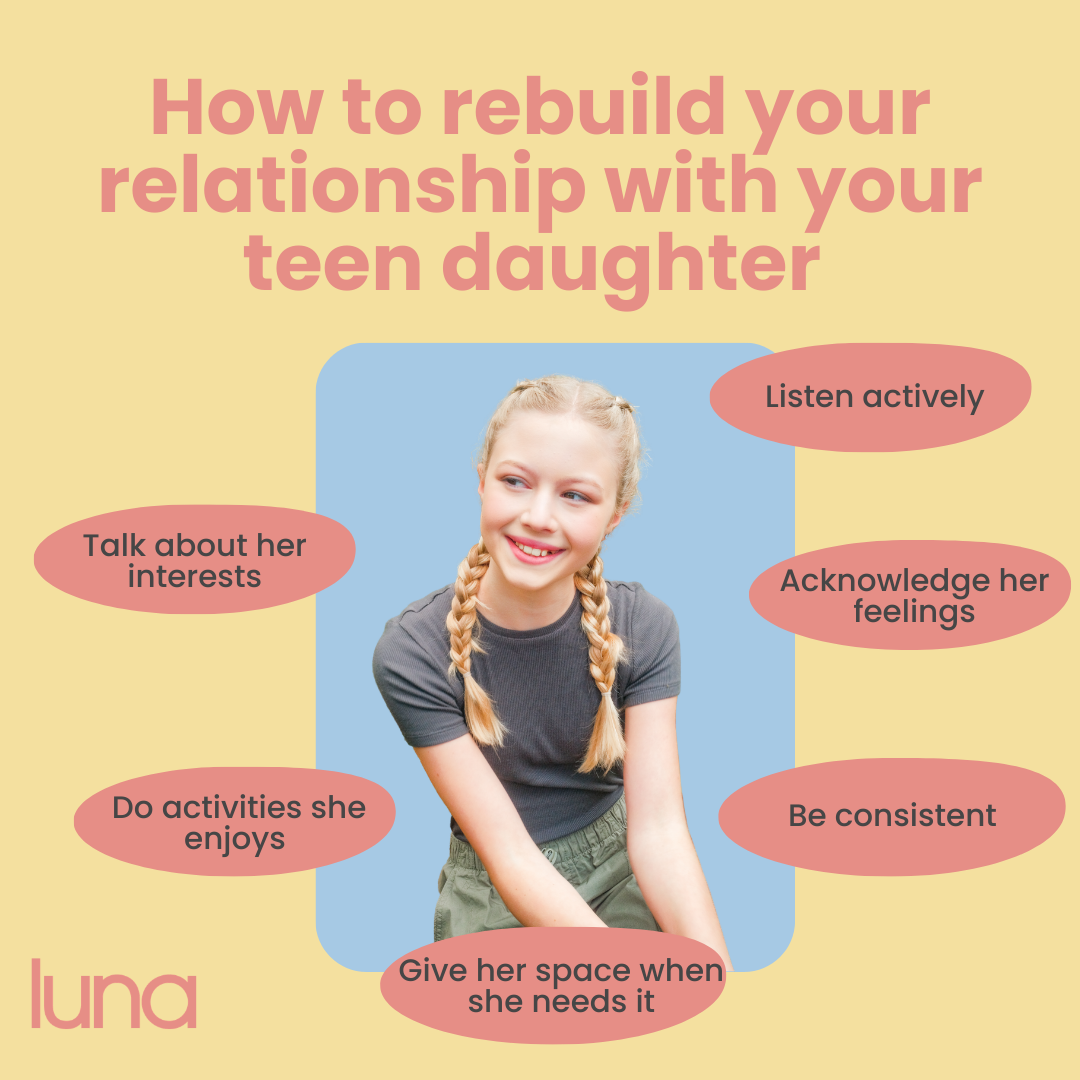
- Start with small, low-pressure conversations about her interests
- Listen actively without judging or immediately offering advice
- Acknowledge her feelings and experiences
- Spend time together doing activities she enjoys
- Be consistent in availability and emotional support
- Giving her space when she needs it
Rebuilding trust takes time, and occasional setbacks are normal. The key is to stay present, approachable, and patient.
How can I bond with my daughter?
Bonding is about creating shared experiences and emotional safety.
Even small gestures can strengthen your connection over time.
Ideas to bond include:
- Sharing hobbies or trying new activities together
- Eating meals together and talking about non-school topics
- Watching a TV show, movie, or reading the same book to discuss together
- Giving her space while remaining consistently available for conversations
- Celebrating achievements, no matter how small
Bonding is a gradual process.
Showing curiosity about her world, validating her feelings, and offering support without pressure helps strengthen your relationship naturally.
You may want to check out our fun things to do with your teenage daughter article to inspire new activities and experiences you can try out together.
What should I keep in mind during this phase?
If you’ve stopped talking to your teenage daughter, remember it’s often a normal phase of adolescence.
It's usually not a reflection on you as a parent.
Patience, consistent support, and gentle opportunities to reconnect matter more than forcing conversations.
Support is available for both you and your teen if needed.
Key points to keep in mind:
- It’s not about you: teens pull away as part of developing independence – this phase usually passes with time and understanding
- Offer support and resources: tools like the luna app provide a safe space for teens to explore feelings, ask questions, and learn about emotional wellbeing – introducing her to age-appropriate guidance can help her feel understood
- Watch for signs you might need extra help: persistent withdrawal, changes in mood or behaviour, or prolonged conflict may indicate your daughter could benefit from professional support, such as a school counsellor, doctor, or family therapist
Staying calm, consistent, and available helps your daughter know she can reconnect when she’s ready.
Small, patient steps often restore trust and closeness over time.
How we created this article:
luna's team of experts comprises GPs, Dermatologists, Safeguarding Leads and Junior Doctors as well as Medical Students with specialised interests in paediatric care, mental health and gynaecology. All articles are created by experts, and reviewed by a member of luna's senior review team.
We'd love to keep in touch!
Sign up to our parent newsletter for emails on the latest teen trends, insights into our luna community and to keep up to date
By signing up, you are agreeing that we can use your email address to market to you. You can unsubscribe from marketing emails at any time by using the link in our emails. For more information, please review our privacy statement.