Teen dating advice for parents
Should you set rules?

Updated March 17, 2026
In this article
- What is some important teen dating advice for parents?
- Should I let my teen date?
- Should I let my daughter cuddle with her boyfriend?
- Should I let her boyfriend in her bedroom?
- What are healthy boundaries in a teen relationship?
- What are the red flags in a teen relationship?
- What are the key things to remember about teenage dating?
What is some important teen dating advice for parents?
The most important teen dating advice for parents is to stay connected, set clear boundaries, and teach healthy relationship skills.
Teen dating is part of growing up, and guidance works better than control.
Clear expectations and open conversations help your teen feel safe and supported.
Teen dating can feel like a big step - for you as much as them.
It often marks a shift toward independence, and it’s natural to feel unsure about how much freedom to allow and where boundaries should sit.
While every family is different, there are some core principles that help teenagers build healthy relationship skills while staying safe and supported:
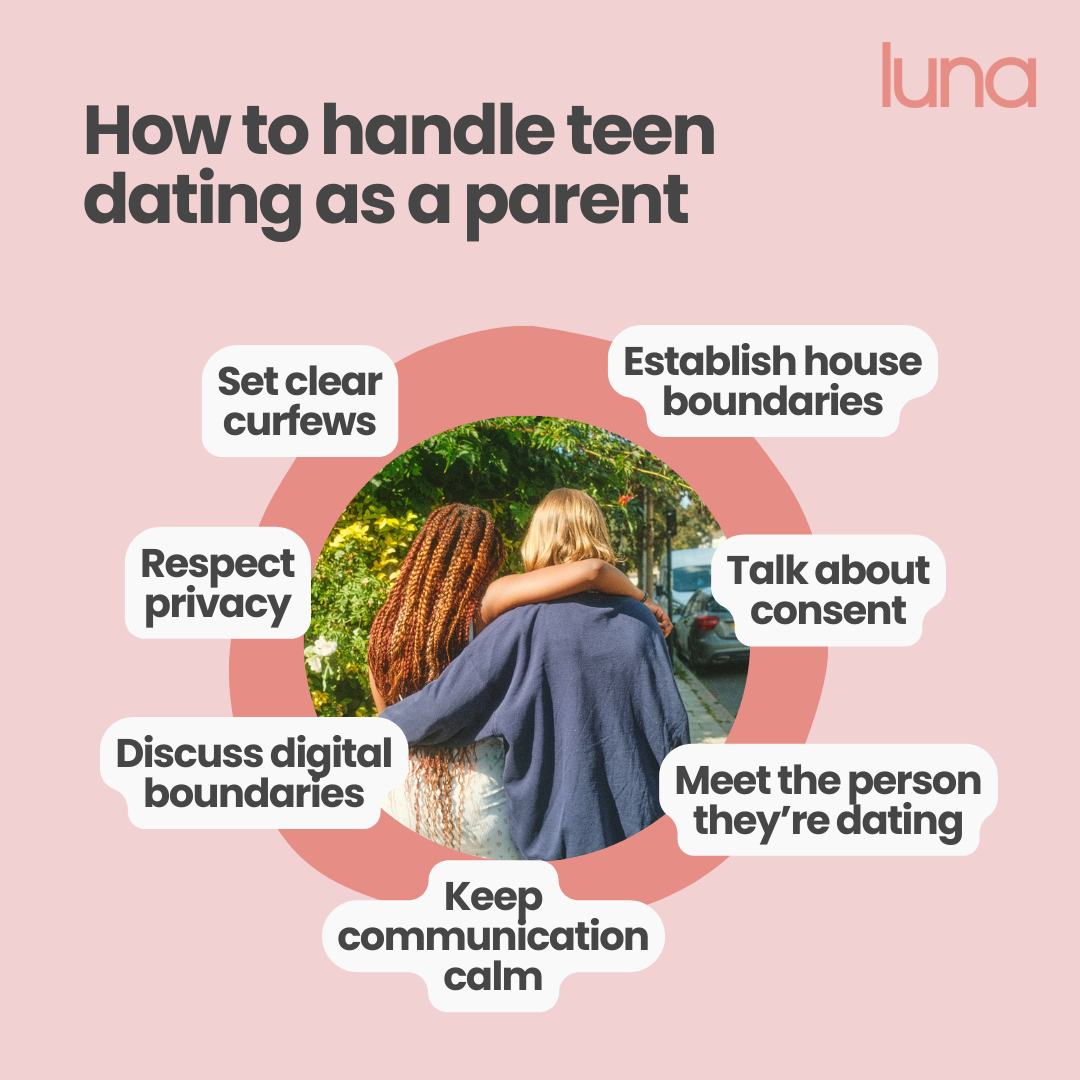
- Set clear curfews: agree on realistic time limits so there’s structure and safety
- Establish house boundaries: be clear about expectations around bedrooms, privacy, and supervision
- Talk about consent early and often: make sure your teen understands that consent must be mutual and can be withdrawn at any time
- Discuss digital boundaries: healthy relationships don’t require password sharing, constant tracking, or pressure to send images
- Meet the person they’re dating: a relaxed introduction reduces secrecy and keeps communication open
- Respect privacy: avoid checking phones or interrogating unless there’s a genuine safety concern
- Keep communication calm: if your teen fears overreaction, they are less likely to come to you when something feels wrong
Should I let my teen date?
There isn’t one “right” age to start dating - emotional maturity and communication skills matter more than numbers.
If your teen can talk openly, understands respect and consent, and can balance school and friendships, they may be ready for age-appropriate dating.
Instead of asking, “Should I allow it?”, it can be helpful to ask:
- Can they talk openly with me about what’s happening?
- Do they understand consent and respect?
- Can they balance school, friendships, and dating?
Setting clear expectations around curfews, communication, and safety helps create structure without secrecy.
Dating can be an opportunity to practise boundaries and independence - especially when parents stay involved and approachable.
Should I let my daughter cuddle with her boyfriend?
Physical affection is a normal part of teen relationships, but it should always feel mutual, respectful, and age-appropriate.
The most important factor isn’t the specific behaviour - it’s whether your daughter feels safe, comfortable, and able to set limits.
Open conversations about consent matter more than strict prohibitions.
Teaching your teen that she has full control over her body and that affection should always feel safe and mutual is key.
Should I let her boyfriend in her bedroom?
Whether you allow a boyfriend in her bedroom depends on your family values and your teen’s maturity.
Many parents choose structured boundaries, such as keeping doors open or limiting time alone.
Clear, consistent expectations help reduce secrecy and build trust.
Rather than framing rules in terms of distrust, explain that boundaries are about safety and respect.
It may also be helpful to talk to your teen about sex if she wants to have her boyfriend in her room, so she understands consent and ways to keep herself safe.
What are healthy boundaries in a teen relationship?
Healthy boundaries in teen dating include mutual respect, personal space, consent, and freedom.
A healthy relationship should add to your teen’s life - not control or limit it.
Clear communication and shared values are strong indicators of balance.
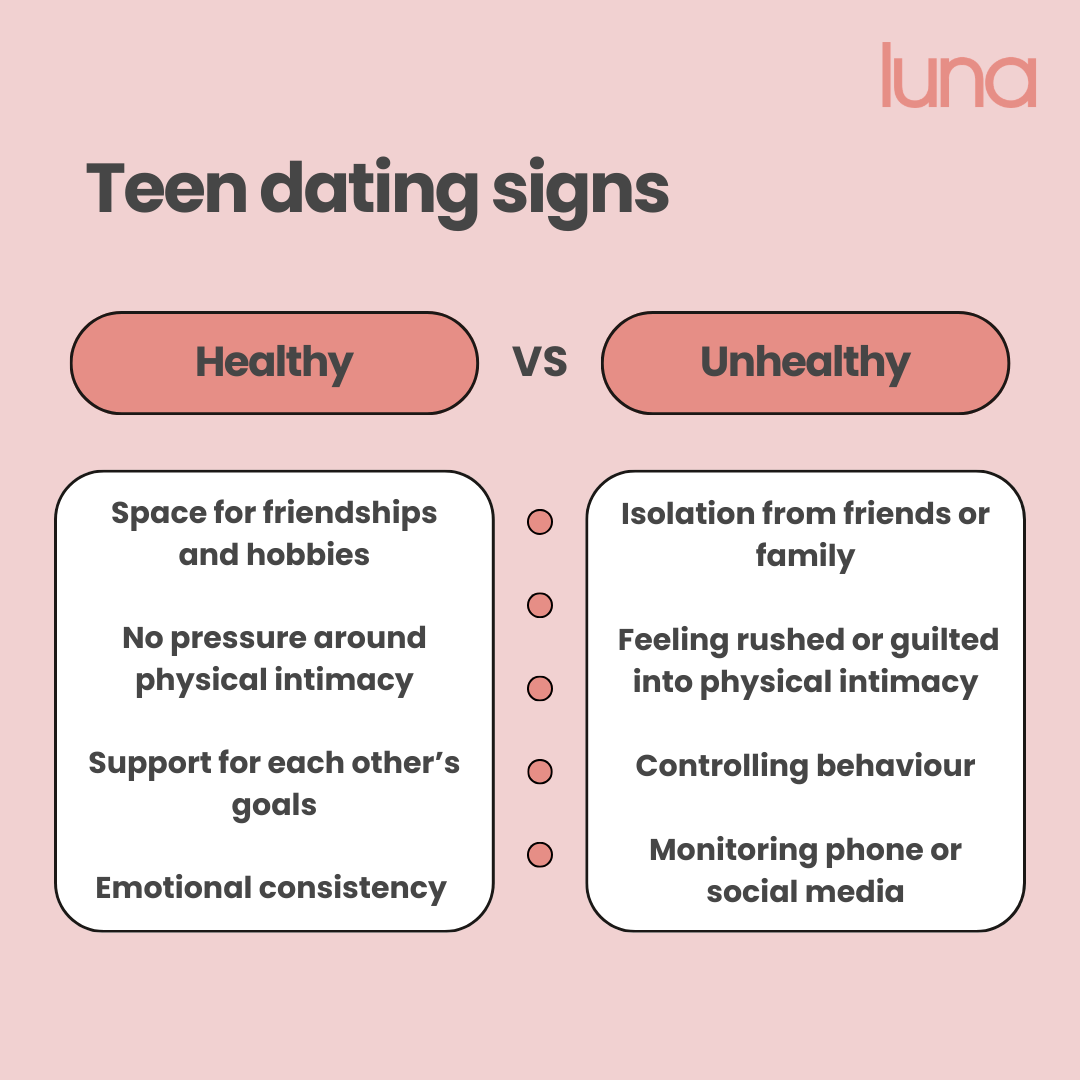
In a healthy teenage relationship, you might see:
- Space for friendships and hobbies
- No pressure around physical intimacy
- Open communication
- Support for each other’s goals
- Emotional consistency
- Comfort being themselves
Boundaries also extend to digital life.
Password sharing, constant location tracking, or pressure to send images are not signs of trust - they are warning signs.
Teaching digital boundaries is just as important as in-person ones.
What are the red flags in a teen relationship?
Red flags in teen dating often involve control, pressure, isolation, or emotional manipulation.
If your teen seems anxious, withdrawn, or afraid of upsetting their partner, it may signal something unhealthy.
Subtle changes in mood or behaviour are often early warning signs.
Red flags may include:
- Controlling behaviour: deciding who they can see, what they wear, or how they spend their time
- Excessive jealousy: accusations, suspicion, or anger over normal friendships
- Isolation from friends or family: gradually pulling away from their usual support network
- Pressure around physical intimacy: feeling rushed, guilted, or obligated
- Monitoring phone or social media: demanding passwords, constant updates, or location tracking
- Emotional manipulation: making your teen feel responsible for their partner’s moods or threats of withdrawal
- Walking on eggshells: feeling fearful of saying the wrong thing or causing conflict
If you notice changes - such as secrecy, lowered confidence, mood swings, or loss of interest in usual activities - it may be time to gently check in.
Focus on how your teen feels rather than criticising the partner directly, as this keeps communication open.
If you’re concerned about emotional or physical safety, speaking with a doctor, school safeguarding lead, or a youth support service can provide additional guidance.
There are things you can do to help your daughter leave a controlling relationship without pushing her away.
What are the key things to remember about teenage dating?
Dating is a normal part of adolescence, and most teens are learning rather than making life-altering choices.
Setting clear expectations, talking about boundaries and consent, and observing behaviour can help your teen develop healthy relationship skills.
It may be helpful to provide your teen with a trusted space to turn to when they’re unsure or overwhelmed.
luna allows your daughter to explore questions about dating, body image, and relationships in a safe, private space.
With this safe resource at hand, your teen can navigate adolescence with confidence.
How we created this article:
luna's team of experts comprises GPs, Dermatologists, Safeguarding Leads and Junior Doctors as well as Medical Students with specialised interests in paediatric care, mental health and gynaecology. All articles are created by experts, and reviewed by a member of luna's senior review team.
We'd love to keep in touch!
Sign up to our parent newsletter for emails on the latest teen trends, insights into our luna community and to keep up to date
By signing up, you are agreeing that we can use your email address to market to you. You can unsubscribe from marketing emails at any time by using the link in our emails. For more information, please review our privacy statement.