What to do if my teen is making friends online?
How parents can support safe online friendships

Updated March 30, 2026 • Medically reviewed by Dr. Emma Dickie
Medically reviewed by Dr. Emma DickieIn this article
- What to do if my teen is making friends online?
- Is it okay for teens to have online friends?
- Should I let my teen have online friends?
- What guidance should I follow if my teen is making friends online?
- What to do if my teen only has online friends
- What red flags should I look out for if my teen is making friends online?
- What to remember if your teen is making friends online
What to do if my teen is making friends online?
It’s normal for teens to make friends online, especially if they struggle socially at school or want to connect with others who share their interests. Online friendships can be positive, but it’s important to help your teen stay safe, recognise potential risks, and maintain a balance with real-life connections.
Many teens use these connections to feel included, explore shared interests, or find support they might not have locally. In a recent luna poll, 1 in 3 teen girls said they find making new friends at school challenging or very difficult, so it makes sense that some of these teens turn to the online world to find connections.
At the same time, online spaces can be unpredictable, and it’s natural to want to protect them.
Staying involved without controlling, listening without judgment, and encouraging both safety and independence helps your teen develop confidence and make smart choices online.
Is it okay for teens to have online friends?
Yes - online friendships can sometimes be a healthy and meaningful way for teens to connect with peers. Many teens find friends online who share hobbies, experiences, or interests they may not encounter at school or in their local area. These connections can boost confidence, provide a sense of belonging, and help teens practise social skills.
However, you can never be too sure who's behind the screen on the other side, so caution is necessary.
Teens do best when:
- They feel supported and understood rather than judged
- They know what information is safe to share online
- They continue to have opportunities for real-life friendships and activities
Should I let my teen have online friends?
You don’t need to forbid online friendships, and trying to control them too much can make teens less likely to be honest about who they are talking to. Instead, focus on guidance and open communication.
Helpful approaches include:
- Asking who they’re talking to and showing genuine interest in their friendships
- Explaining why boundaries are important, like not sharing personal details
- Framing rules around safety and wellbeing rather than punishment
- Making sure they feel comfortable coming to you if something feels wrong
What guidance should I follow if my teen is making friends online?
Navigating online friendships can be tricky - there’s no perfect formula, and every teen is different. However, education, support, and open-mindedness go a long way. Make sure your teen is clued up on online safety and the risks associated with making friends online.
Here are practical ways to support them:
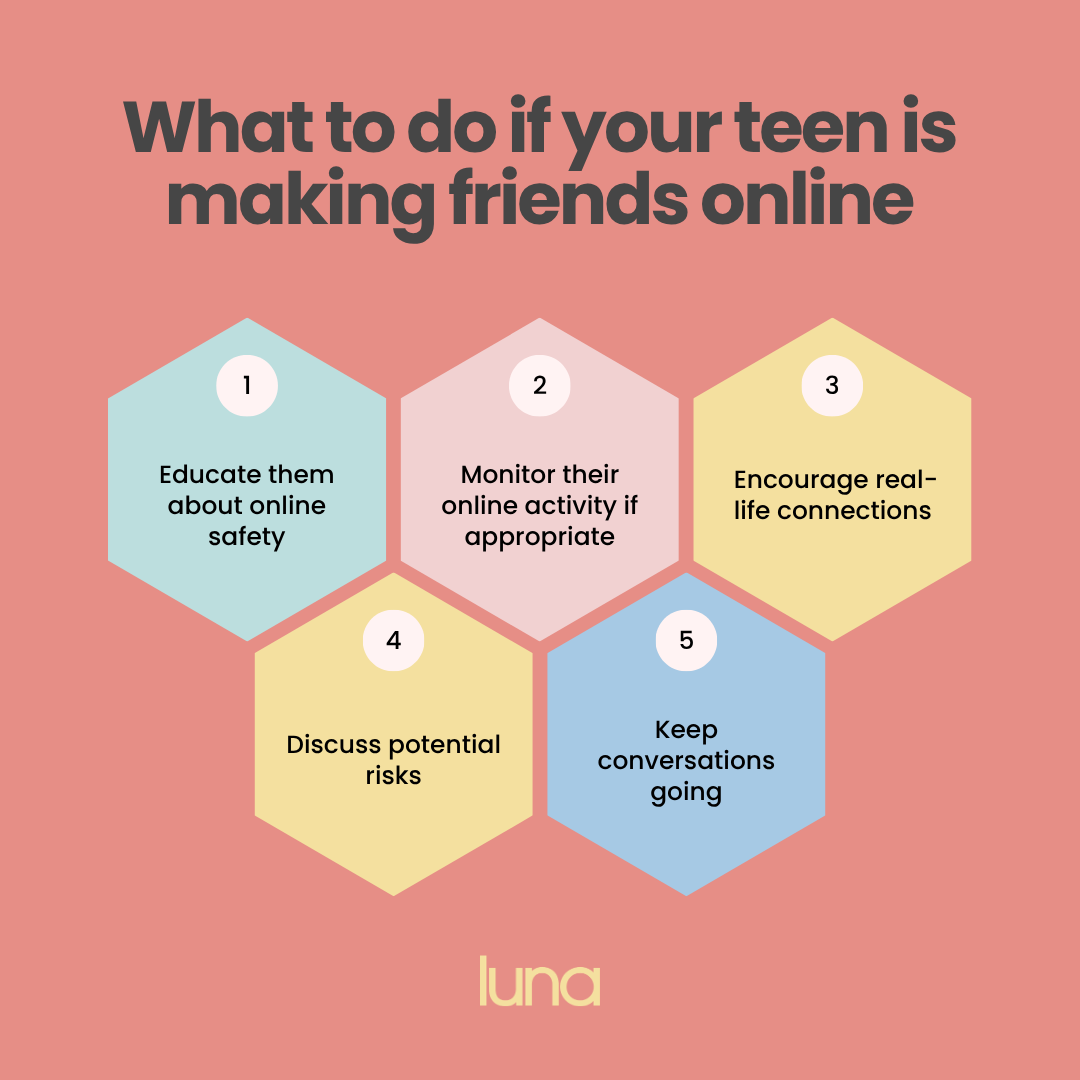
- Educate about online safety: teach them not to share personal information, like full name, address, or school, with anyone they haven’t met in person
- Monitor online activity: the level depends on trust and your relationship, but staying aware of platforms and who they talk to while encouraging openness is helpful
- Encourage real-life connections: clubs, sports, or hobbies for teens build friendships offline, too
- Discuss potential risks: talk about dangers like catfishing, inappropriate content, or online pressure, and make sure they know how to respond safely
- Keep conversations going: regularly check in, even briefly, about their online friendships and any concerns they might have. This shows you’re interested and available without controlling
What to do if my teen only has online friends
If your teen mainly has online friends, it can help to gently support them in building confidence and exploring face-to-face friendships. Both online and in-person friendships matter for their wellbeing.
It can be useful to understand why your teen gravitates toward online friendships. Maybe they feel shy at school, haven’t found peers with shared interests, or feel more comfortable connecting virtually. You can help them build self-esteem and courage and help your teen make friends by:
- Celebrate small successes: praise any attempt they make to join a club, speak up in class, or try a new activity
- Encourage hobbies or interests: activities they enjoy can help them meet like-minded peers naturally
- Role-play social situations: practise conversations, greetings, or joining a group together to reduce anxiety
- Set achievable goals: for example, attending one club meeting or saying hi to one new person a week
- Model confidence: show how you approach new situations with calm and curiosity - teens notice and learn from adults
- Stay supportive: let them know it’s okay if things don’t go perfectly; the effort itself matters
- Look into volunteering: there are some great volunteering ideas for teens that boost their confidence and help them meet new people
What red flags should I look out for if my teen is making friends online?
Watch for signs that a friendship might be unsafe, like secrecy, pressure, or changes in behaviour.
It’s completely normal to feel concerned - we all see scary stories in the news about online risks. But try not to jump straight to the worst-case scenario. Keep an eye out for warning signs and trust your instincts if something doesn’t feel right.
Some signs that a friendship might be unsafe include:
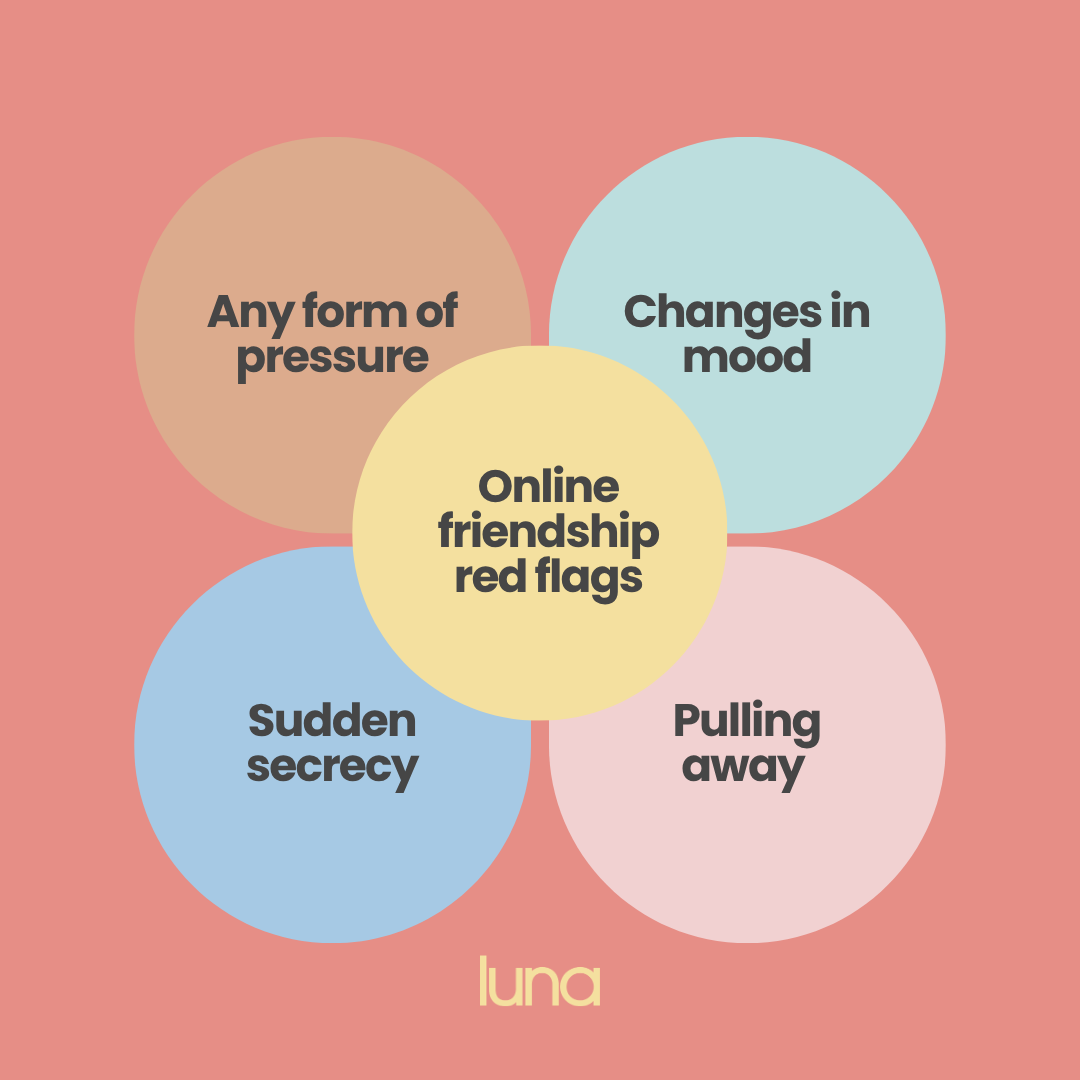
- Sudden secrecy: your teen stops talking about who they’re chatting with online
- Pressure to share personal info or meet in person: any sense of coercion is a red flag
- Changes in mood or behaviour: they seem stressed, anxious, or withdrawn after online interactions
- Pulling away from offline friends or activities: losing interest in school clubs, hobbies, or in-person friendships
If you are concerned about an online friendship, you can:
- Start a calm conversation: ask open-ended questions about their friend and what they like about the friendship
- Review online safety together: remind them that it is always within their rights to say no and block someone
- Keep communication open: regularly check in without judging, so they feel comfortable sharing.
- Seek advice if unsure: talk to school staff, online safety organisations, or trusted resources for guidance
What to remember if your teen is making friends online
Online friendships aren’t automatically dangerous. Your teen can have safe, positive connections if you stay involved, teach safety, and encourage balance. Parenting can feel tricky, especially with the online world changing fast, but small steps, open conversations, and gentle reassurance go a long way.
Remember: it’s normal to feel concerned - most parents do. You don’t have to have all the answers, and you don’t have to navigate this alone.
If your teen is looking for a supportive community to learn about online wellbeing, self-esteem, and friendships, introduce them to luna. luna offers teen-friendly guidance, tips, and resources, so you can feel confident that your teen is supported throughout adolescence.
How we created this article:
luna's team of experts comprises GPs, Dermatologists, Safeguarding Leads and Junior Doctors as well as Medical Students with specialised interests in paediatric care, mental health and gynaecology. All articles are created by experts, and reviewed by a member of luna's senior review team.
Sources:
Family Action "Online safety for children and young people" | Accessed 30.03.2026
https://family-action.org.uk/self-help/online-safety-for-children-young-people/Childline "Grooming" | Accessed 30.03.2026
https://www.childline.org.uk/info-advice/bullying-abuse-safety/online-mobile-safety/online-grooming/We'd love to keep in touch!
Sign up to our parent newsletter for emails on the latest teen trends, insights into our luna community and to keep up to date
By signing up, you are agreeing that we can use your email address to market to you. You can unsubscribe from marketing emails at any time by using the link in our emails. For more information, please review our privacy statement.