Skincare ingredients your daughter should avoid
What teen skin does not need
Updated July 1, 2026 • Medically reviewed by Dr. Simon Tso
Medically reviewed by Dr. Simon TsoIn this article
In short
Teen skin does not need anti-ageing products, and many adult skincare ingredients can actively damage it.
Dermatologists from the American Academy of Pediatrics are clear that teen skin is thinner, more sensitive, and more easily irritated than adult skin, meaning potent actives like retinol, high-strength AHAs, and fragrances can cause more harm than good.
The best routine for most teenagers is a short one: a gentle cleanser, a simple moisturiser, SPF in the morning, and a targeted acne treatment only if needed.
Everything else is largely unnecessary and potentially counterproductive.
Why is teen skin different from adult skin?
Teen skin is in a period of significant change, driven by hormonal shifts that affect oil production, cell turnover, and sensitivity.
This makes it more reactive and more easily disrupted by active ingredients than mature adult skin.
Products formulated to target wrinkles, dark spots, and collagen loss assume an adult skin baseline that simply does not apply to a 14 or 16-year-old.
Using them too early can compromise the skin barrier, cause lasting sensitisation, and trigger contact dermatitis.
What are the main ingredients to avoid?
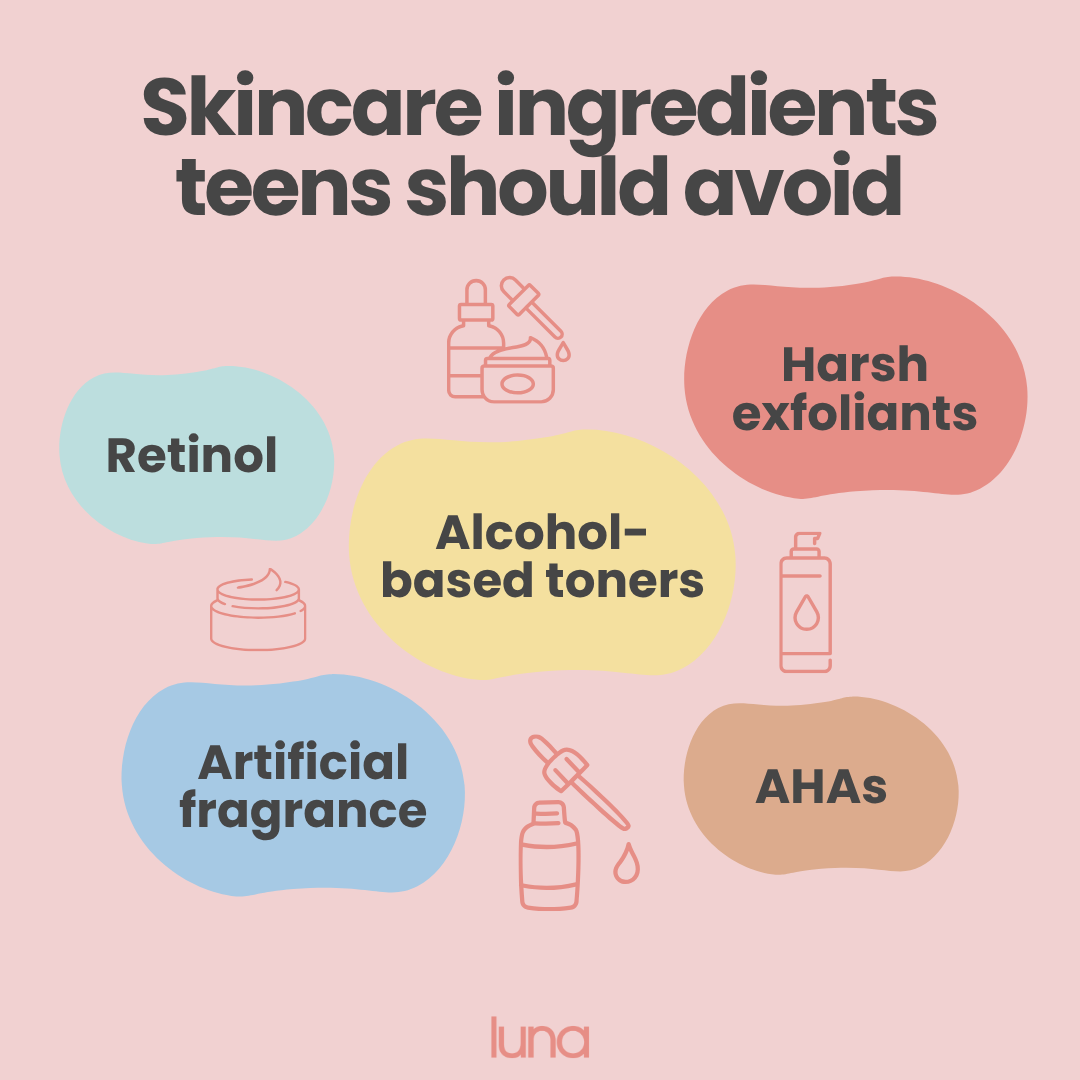
Based on guidance from dermatologists, here are the ingredients teenage skin generally does not need:
- Retinol and over-the-counter retinoids: before the twenties, collagen has not yet started declining, making retinol redundant – over-the-counter retinol can cause redness, peeling, and dryness on young skin; prescription retinoids for acne, prescribed by a doctor, are different and can be appropriate
- High-strength alpha-hydroxy acids (AHAs) such as glycolic acid: these exfoliating acids can cause burning, rashes, and peeling on teen skin, and can worsen sensitivity
- Artificial fragrance: fragrance is one of the most common triggers for contact dermatitis and long-term skin sensitisation
- Alcohol-based toners: these strip the skin barrier, which then over-produces oil to compensate, often making acne worse
- Heavy oils and rich anti-ageing creams: these can block pores and worsen acne in skin that is already producing excess sebum
- Physical scrubs and harsh exfoliants: aggressive scrubbing on acne-prone skin increases inflammation and can cause micro-tears
What should she use instead?
As teens can use too much skincare, which can harm their skin, a simple, evidence-backed routine is much more effective than a complicated one.
The American Academy of Pediatrics recommends:
- A gentle, fragrance-free, pH-balanced cleanser morning and evening
- A lightweight, non-comedogenic moisturiser
- SPF 30 or higher mineral sunscreen every morning
- For acne: ingredients such as benzoyl peroxide, azelaic acid, or salicylic acid (all recommended by the NHS for teenage acne, used at appropriate concentrations) and pimple patches
Ingredients worth looking for in a moisturiser include hyaluronic acid, ceramides, squalane, niacinamide, and panthenol.
All of these are gentle, effective, and well-tolerated on young skin.
This is a real issue, and the scale of it surprises many parents.
If you're worried about your daughter being obsessed with skincare products, it is helpful to know what exactly they are getting sold online.
A study analysed by the American Academy of Pediatrics found that TikTok skincare trends popular with teens featured over 250 unique products, many containing potent active ingredients.
The teenagers watching had no way to know which were safe and which were not.
Checking ingredient lists and specifically looking for fragrance-free products that avoid the above list is the most practical thing you can do.
Is there anything in acne treatments she should watch out for?
Yes.
The NHS advises that benzoyl peroxide increases photosensitivity, so SPF becomes even more important when she is using it.
Topical antibiotics prescribed by a doctor are appropriate for a set course of time, and they should not be used indefinitely, as this can lead to antibiotic resistance.
Any prescription topical retinoid should be used exactly as directed.
FAQ
My daughter uses a very popular brand, should I be worried?
Marketing success and safety are not the same thing.
Check the ingredients list for fragrance, alcohol, and any of the acids listed above.
If it is a simple moisturiser or cleanser with few active ingredients, it is likely fine.
If it contains multiple actives, check each one.
What about vitamin C serums?
Vitamin C (ascorbic acid) is an antioxidant and can be beneficial for adult skin, but it requires careful formulation to be stable, and studies on its effects on teen skin specifically are limited.
The American Academy of Pediatrics places it in the "not needed for teen skin" category alongside retinol and acids.
Is it okay for her to use products prescribed by a doctor even if they contain retinoids?
Yes.
Prescription topical retinoids, such as adapalene or tretinoin, used for acne are prescribed at specific concentrations and with clinical oversight.
These are different from over-the-counter retinol products and are considered appropriate by the NHS when medically indicated.
For a broader overview of what a safe teen routine looks like, luna's guide on teen skincare routines covers this clearly.
How we created this article:
luna's team of experts comprises GPs, Dermatologists, Safeguarding Leads and Junior Doctors as well as Medical Students with specialised interests in paediatric care, mental health and gynaecology. All articles are created by experts, and reviewed by a member of luna's senior review team.
Sources:
American Academy of Pediatrics "Trendy skin care for tweens and teens: is it safe?" | Accessed 05.06.26
https://www.healthychildren.org/English/ages-stages/teen/Pages/trendy-skin-care-for-tweens-and-teens-is-it-safe.aspxNHS "Acne - Treatment" | Accessed 05.06.26
https://www.nhs.uk/conditions/acne/treatment/British Association of Dermatologists "Acne" | Accessed 05.06.26
https://www.bad.org.uk/pils/acneNHS "Sunscreen and sun safety" | Accessed 05.06.26
https://www.nhs.uk/live-well/seasonal-health/sunscreen-and-sun-safety/We'd love to keep in touch!
Sign up to our parent newsletter for emails on the latest teen trends, insights into our luna community and to keep up to date
By signing up, you are agreeing that we can use your email address to market to you. You can unsubscribe from marketing emails at any time by using the link in our emails. For more information, please review our privacy statement.