Why teens can't stop doom scrolling
Learn how to help your teen

Updated December 16, 2025 • Medically reviewed by Dr. Katie Knight
Medically reviewed by Dr. Katie KnightIn this article
Quick summary
- Doom scrolling refers to endlessly scrolling through negative news or stressful content
- Excessive doom scrolling can increase anxiety, disrupt sleep, and create emotional overload, affecting mood, focus, and outlook
- Parents can help by having gentle conversations, phone-free time, and modeling healthy digital habits – luna can help with building health habits, too!
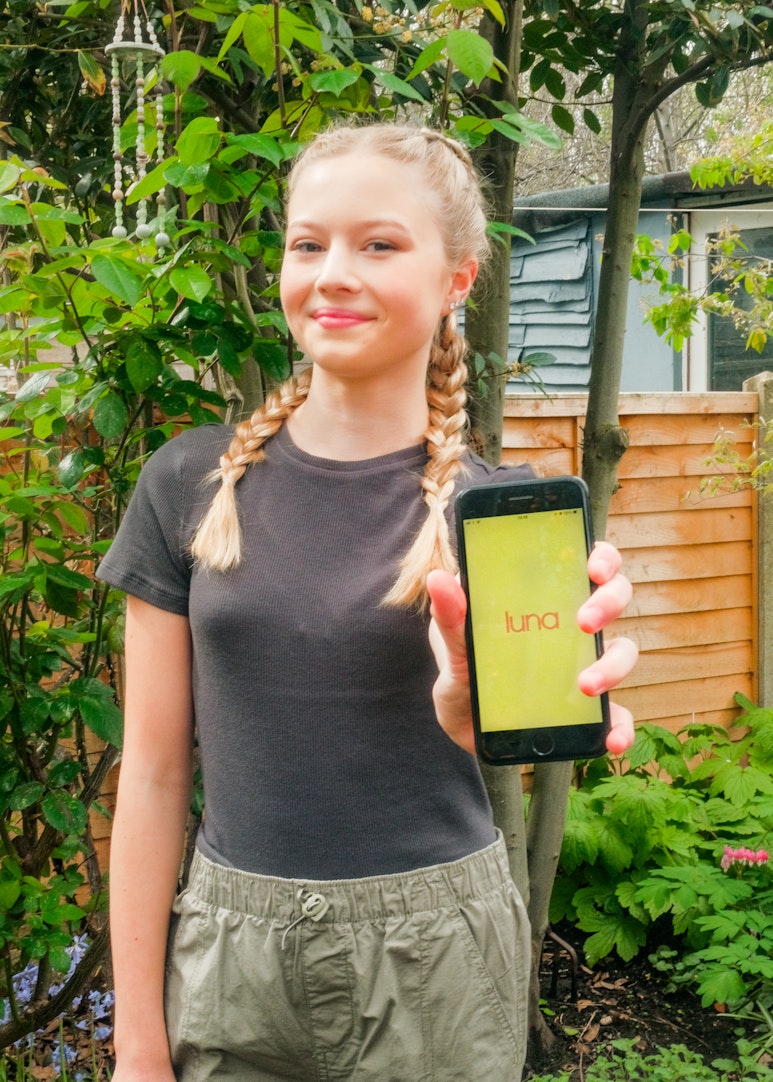
Teens are constantly glued to their phones; that part isn’t new.
But sometimes scrolling goes from a harmless habit to something that genuinely affects their mood and wellbeing.
If you’ve ever seen your teen look stressed after being online, stay up late on their phone, or jump between news updates and worrying posts, you might be seeing the start of doom scrolling.
But what does that actually mean? How do you know when it’s becoming a problem? And what can you do to help them break the cycle?
Let’s break down doom scrolling so you can understand what’s happening behind the screen and help your teen build healthier digital habits.
Doom scrolling meaning
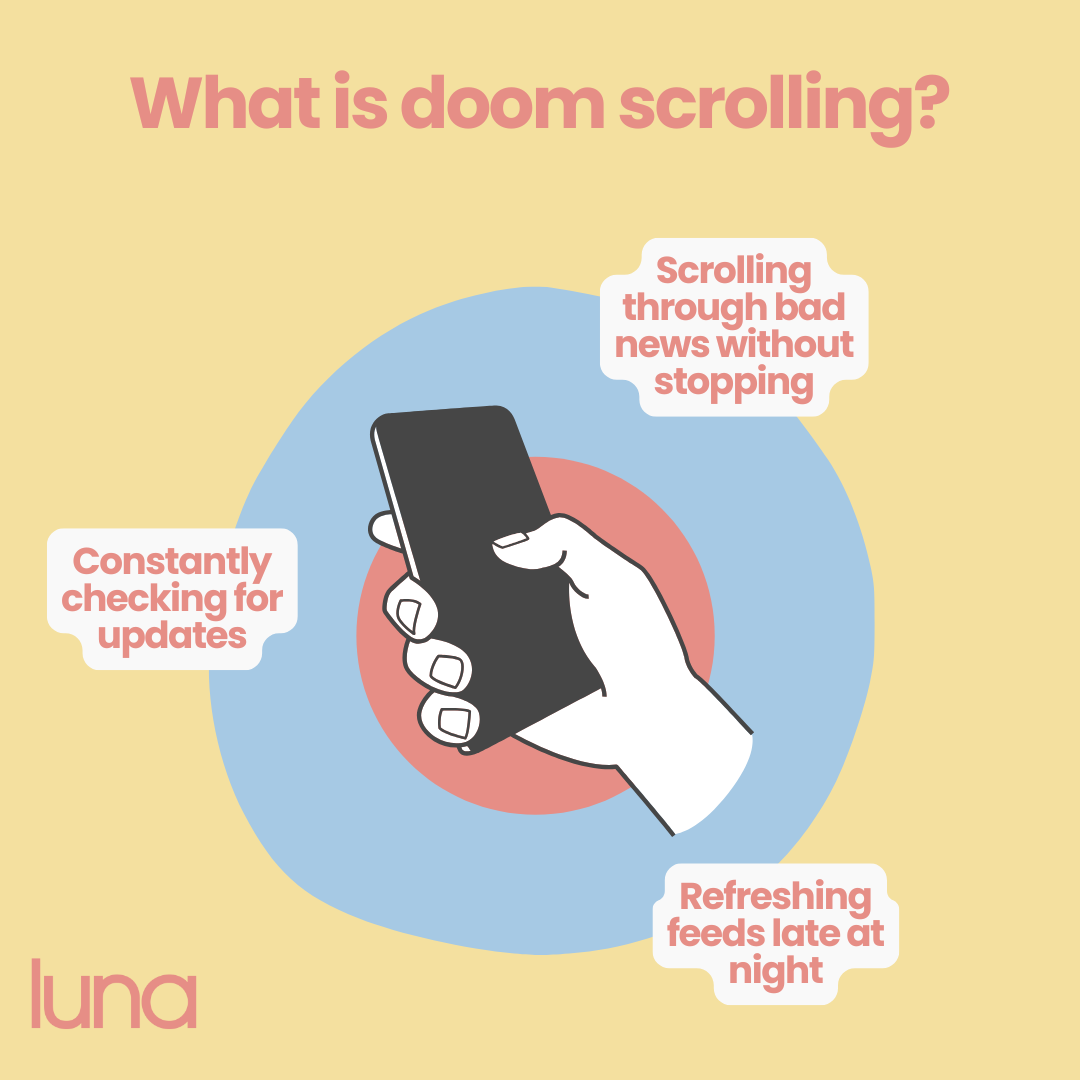
Think of doom scrolling as falling down a digital rabbit hole, but instead of cute dogs or funny videos, it’s a stream of worrying news, stressful updates, or negative social posts.
It usually looks like:
- Scrolling through bad news without stopping
- Checking for “just one more update”
- Refreshing feeds late at night
- Feeling pulled in even when they want to stop
It’s a cycle that feeds itself: the more someone reads, the more they feel the urge to keep going.
Why teens doom scroll
Teens aren’t doom scrolling because they want to feel stressed.
In fact, the opposite is usually true. They’re often hoping to feel informed, connected, or reassured, but the content they find can make them feel worse instead.
Here’s what drives the habit:
- Curiosity and FOMO: teens don’t want to be the only one who “missed something big
- Emotional sensitivity: global events can feel heavier and more personal to young people
- Stress or boredom loops: scrolling becomes the default escape
- Algorithms: once they click on one negative post, the platform serves them ten more
- Searching for reassurance: “if I keep reading, maybe I’ll understand it better.”
It’s easy to see how quickly this spirals.
Signs your teen may be doom scrolling
Teens aren’t always the best at telling us when something is bothering them. But their behaviour often reveals it.
If you’re noticing shifts in mood or sleep, it may be worth looking at their scrolling habits. These are the little clues that something online is weighing on them:
- Staying awake with their phone
- Worry or tension after scrolling
- Sudden mood swings
- Difficulty focusing during the day
- Checking news or social feeds repeatedly
- They seem to be developing a phone addiction
How doom scrolling affects teen wellbeing
It’s normal for teens to scroll, but doom scrolling hits differently. Constant exposure to stressful stories can pile up emotionally, even if they don’t talk about it.
Here’s how it can quietly shape their mood, thinking, and day-to-day life:
- Higher anxiety and stress: constant exposure to worrying headlines or upsetting posts keeps their brain on high alert
- Disturbed sleep: phones affect sleep by overstimulating the brain, making it harder to “switch off” and fall asleep
- Fear or pessimism about the future: seeing only negative stories can convince teens that the world is dangerous or hopeless
- Difficulty concentrating at school: tiredness, worry, and the urge to keep checking their phone can all disrupt focus
- Emotional overload from constant information: teens simply aren’t built to absorb endless crises. It can leave them overwhelmed and shut down
How parents can help teens reduce doom scrolling
Thankfully, you don’t need to take their phone away or fight their screen time to make a difference.
See, doom scrolling isn’t about your teen using their phone.
Instead, it’s about how they use their phone, and the thin line between the online world and their life.
Small, calm, practical steps can help teens feel more in control and less overwhelmed by what they see online.
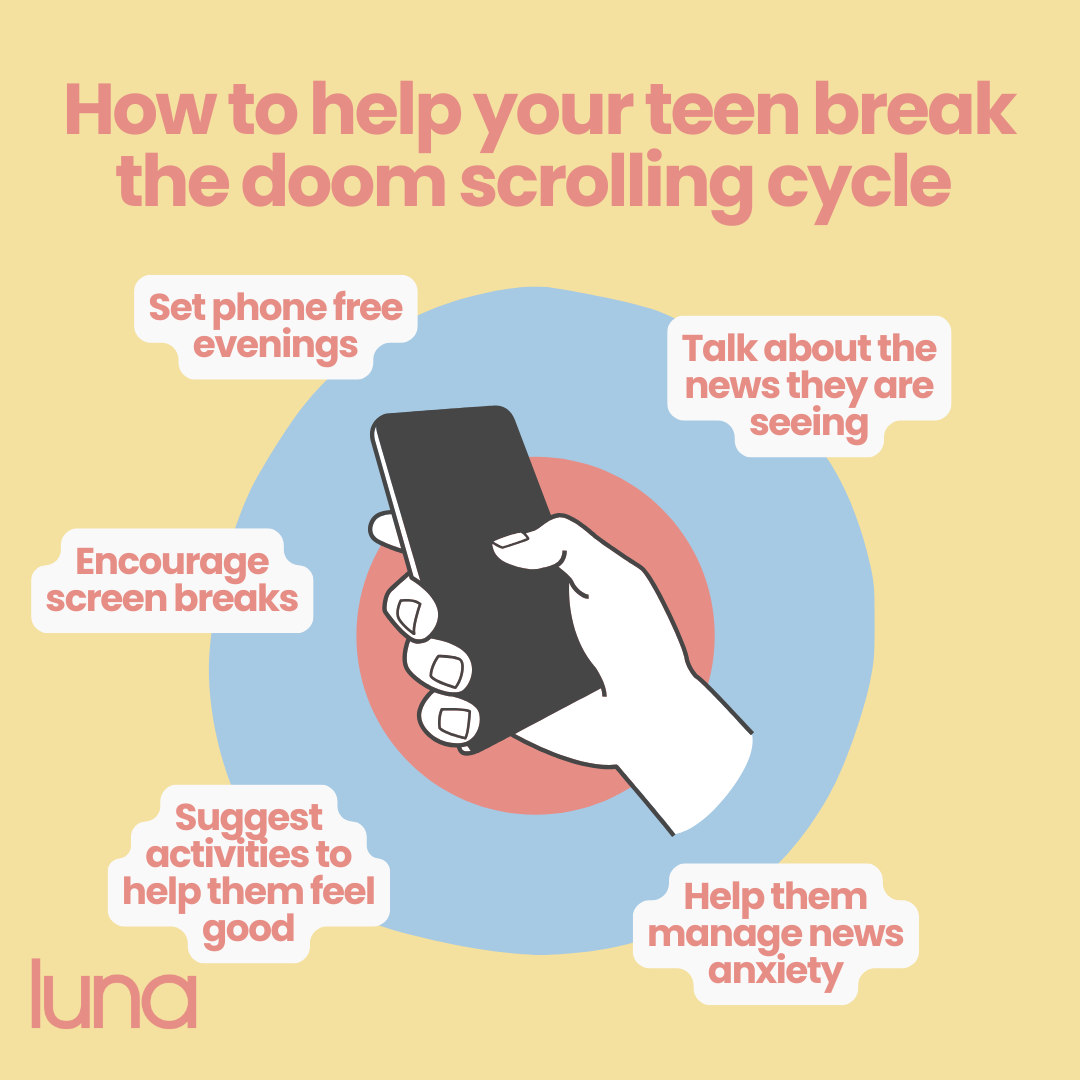
Here’s how to guide them without the arguments:
- Starting a calm conversation about the kind of content they’re seeing
- Encourage screen breaks so they can have a breather
- Suggesting feel-good alternatives, like music, crafts, or a walk
- Setting phone-free evenings (and doing it together so it feels fair)
- Model healthy digital habits and take screen breaks with your teen
- Explore ways you can help your teen manage news anxiety
The goal isn’t to cut them off from the world. Rather, it’s about helping them feel safer navigating it.
Supporting your teen in a digital age
Doom scrolling might be common, but it’s absolutely manageable with the right support.
When parents understand what’s happening online, teens feel more grounded, less anxious, and more willing to talk.
And if you are looking for a way to redirect your phone-obsessed teen to something more positive, you can introduce them to luna.
luna is there to empower your teen and help them understand themselves, with expert-approved guides and a built-in period and mood tracker!
How we created this article:
luna's team of experts comprises GPs, Dermatologists, Safeguarding Leads and Junior Doctors as well as Medical Students with specialised interests in paediatric care, mental health and gynaecology. All articles are created by experts, and reviewed by a member of luna's senior review team.
We'd love to keep in touch!
Sign up to our parent newsletter for emails on the latest teen trends, insights into our luna community and to keep up to date
By signing up, you are agreeing that we can use your email address to market to you. You can unsubscribe from marketing emails at any time by using the link in our emails. For more information, please review our privacy statement.