What if your daughter's acne is affecting her confidence?
Supporting her through acne and low self-esteem
Updated July 1, 2026 • Medically reviewed by Dr. Simon Tso
Medically reviewed by Dr. Simon TsoIn this article
In short
Acne affects up to 95% of teenagers, but its impact on confidence and mental health can be just as significant as the spots themselves.
Girls who feel self-conscious about their skin may withdraw socially, avoid school events, or stop doing things they love.
Your support and getting the right treatment make a genuine difference.
If her mood is persistently low or she's avoiding daily life, that's a signal to seek professional help.
Why does acne hit teen girls so hard emotionally?
It's not vanity, it's timing.
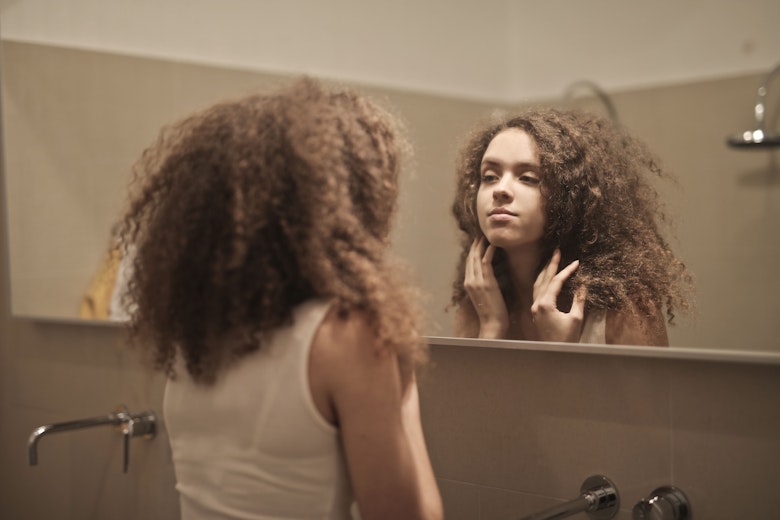
Adolescence is already a period of intense self-consciousness, when your daughter is forming her identity and caring deeply about how she's perceived by peers.
Acne appears at exactly the same time, and on exactly the part of her body she can't hide.
YoungMinds notes that having negative feelings about appearance is one of the key signs of low self-esteem, and it often feeds a cycle where feeling bad about skin leads to withdrawal, which makes mood worse, which makes the acne feel even more overwhelming.
How do I talk to my daughter about her acne without making things worse?
Lead with acknowledgement, not advice.
The instinct to jump to solutions ("have you tried washing your face more?") can feel dismissive.
Instead, try:
- "I've noticed your skin has been bothering you; how are you feeling about it?"
- "Do you want to talk about it, or would you rather I just find out what might help?"
- "It looks really uncomfortable, and I get why it would feel frustrating"
Avoid suggesting she's somehow caused her own acne (she hasn't, it's hormonal), and don't minimise it ("everyone gets spots") as that tends to shut conversations down rather than open them up.
What can I do to actually help her feel better?
There are practical and emotional steps that both matter:
- Help your daughter manage acne properly: the most powerful thing you can do for her confidence is help clear the spots – that might mean seeing a doctor for prescription-strength treatment if pharmacy options haven't worked
- Encourage her to keep doing the activities she loves: acne can make teens want to hide away, so gently encourage her to keep up sports, hobbies, and social time
- Notice and name her strengths and qualities: especially those that have nothing to do with her appearance
- Be curious about her interests: quality time builds self-esteem more than reassurances about how she looks
What signs should I watch for that suggest she needs more support?
Most teens feel self-conscious about acne, and that's normal.
But watch for signs that suggest her mental health needs more attention:
- She's become more withdrawn or isolated
- She's avoiding school or activities she used to enjoy
- She's saying very negative things about herself in general
- Her mood has been persistently low for several weeks
- She's showing signs of anxiety that feel disproportionate
If you notice several of these, it's worth speaking to a doctor.
Acne that significantly affects mental health is a valid reason for a medical referral, and doctors can address both together.
Should I mention her acne or leave her to it?
Both have their place.
Your daughter knows you can see her skin, and pretending otherwise can feel odd or even like you think it's shameful.
But there's a difference between opening a door ("I'm here if you want to talk about it") and making it a frequent topic that she can't escape.
Follow her lead. Some girls want practical help; others want empathy; some want you to just treat them exactly as normal. Ask, and respect the answer.
For more on supporting your teen, check out luna’s article on what to do if your daughter has zero confidence.
FAQ
My daughter refuses to go to school because of her acne. What do I do?
Start by taking her concerns seriously.
This is telling you something important about how she's feeling.
Try talking about it calmly and without pressure.
The next step is to help her get effective treatment as quickly as possible, since visible improvement is the most direct route to confidence.
If she remains unable to attend school, speak to her doctor, as this crosses into territory where professional support is warranted.
Are there any skincare products that might help her feel more in control?
Yes, having a simple, consistent routine can genuinely help both skin and confidence, because it gives her agency.
A mild cleanser, non-comedogenic moisturiser and SPF are the basics.
Pimple patches can help her feel prepared when a spot appears.
luna's article on do pimple patches work is a good starting point.
Can social media make acne-related confidence issues worse?
Yes.
Seeing heavily filtered images of "perfect" skin regularly makes ordinary teen skin feel more abnormal.
Some research has suggested that social media exposure is linked to lower self-esteem around appearance.
Try having open conversations about what she's seeing online and how it makes her feel rather than banning it outright.
If you're also concerned about her self-esteem more broadly, luna has a dedicated guide on what to do if your daughter has body image issues.
For more on what teens should use to look after their skin, check out luna’s teen skincare routine guide.
How we created this article:
luna's team of experts comprises GPs, Dermatologists, Safeguarding Leads and Junior Doctors as well as Medical Students with specialised interests in paediatric care, mental health and gynaecology. All articles are created by experts, and reviewed by a member of luna's senior review team.
Sources:
YoungMinds "Self-esteem and mental health guide for parents" | Accessed 05.06.26
https://www.youngminds.org.uk/parent/parents-a-z-mental-health-guide/self-esteem/YoungMinds "Acne and mental health: improving my self-confidence" | Accessed 05.06.26
https://www.youngminds.org.uk/young-person/blog/acne-and-mental-health-how-i-improved-my-self-confidence/NHS "Acne overview" | Accessed 05.06.26
https://www.nhs.uk/conditions/acne/NHS "Worried about your teenager?" | Accessed 05.06.26
https://www.nhs.uk/mental-health/children-and-young-adults/advice-for-parents/worried-about-your-teenager/We'd love to keep in touch!
Sign up to our parent newsletter for emails on the latest teen trends, insights into our luna community and to keep up to date
By signing up, you are agreeing that we can use your email address to market to you. You can unsubscribe from marketing emails at any time by using the link in our emails. For more information, please review our privacy statement.