Why does my daughter take everything I say as criticism?
When everything you say lands wrong

Updated May 11, 2026
In this article
In short
When your daughter hears criticism in everything you say, it's rarely about the sentence itself. The teenage brain is hyper-attuned to social judgement, especially from parents, and is still learning to separate tone from content.
Add stress, hormones, and a heightened need for autonomy, and a neutral question can land like an attack. Phrasing matters, but so does staying calm when she fires back.
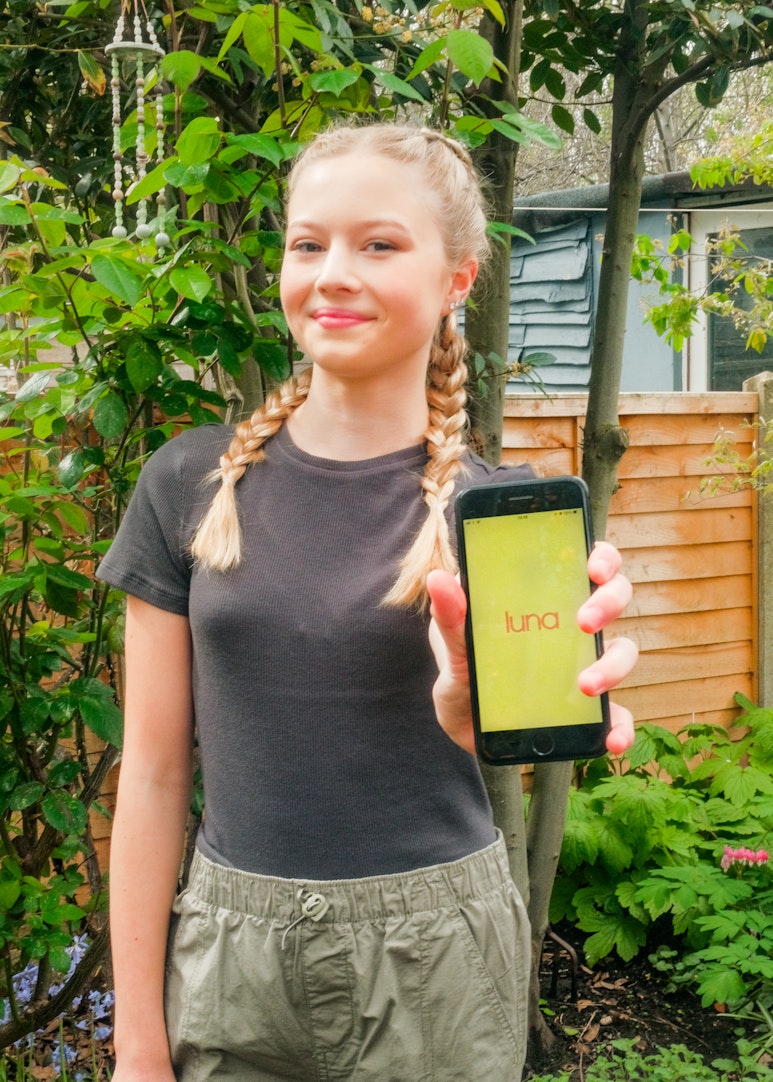
Why does my daughter take everything I say as criticism?
It's almost never about the sentence itself. It's about who's saying it, when, and what her brain does with it.
A few things are running at once:
- The teen brain is wired for social threat detection, with the amygdala (her brain's threat sensor) highly active in adolescence while the prefrontal cortex (the part that pauses and contextualises) is still under construction
- Autonomy is the developmental task of the teen years, so anything that sounds like instruction, advice, or evaluation can read as a threat to her independence, even when it isn't
- Cumulative load plays a part, because a neutral question lands very differently on a stressed brain
- Old patterns matter, and if she heard a lot of "constructive" feedback when younger, comments now can pattern-match to old criticism even when they aren't
- Hormonal shifts can sharpen all of this, especially in the days before her period
In a luna poll of 3,032 girls, 9 in 10 (88%) said they're stressed at least half the time, and 1 in 3 say they're always stressed. The teen who flares at a "how was your day?" is often someone whose nervous system is already at capacity.
It's also worth knowing that being on the receiving end of this all day is genuinely exhausting. The fact you're looking it up doesn't mean you're doing it wrong.
What makes it worse without me realising?
Some of the things that escalate her reaction are well-meaning. Worth checking which ones you do most.
- Tagging the comment with a "but", as in "you look great today, but maybe brush your hair?" (the second half cancels the first)
- Asking questions that aren't really questions, like "are you really wearing that?" (which she hears as a verdict)
- Bringing up the same topic repeatedly, even gently, because repetition reads as nagging
- Comparing, even positively, to siblings, friends, or "you at her age"
- Commenting on her body or food, even kindly, because these almost always land hard
- Catching her at the wrong time, like first thing in the morning, just after school, or in the days before her period
In a luna poll of 1,873 girls, 24% said nothing would help them open up to a parent, because they didn't want to, and 21% said reassurance that they won't be judged would help most.
Many teen girls are operating with a default assumption of being judged, which is exhausting for them as well as for you.
How do I phrase things so she's less likely to flare up?
The aim isn't to walk on eggshells. It's to reduce the unnecessary tripwires while keeping your relationship honest.
A few framings that tend to land better:
- Lead with curiosity, not judgement, like "what's the plan for today?" instead of "have you done your homework?"
- Use "I noticed" rather than "you", with something like "I noticed you've been quiet this week, anything going on?" rather than "you've been so moody"
- Separate the action from the person, like "the kitchen needs a tidy" rather than "you're so messy"
- Ask permission before advising: "do you want my take on this or just to vent?" works surprisingly often
- Drop the qualifier, because "just one thing..." or "quick question..." usually signals a critical comment is coming
- Lower the stakes of small stuff by skipping the comment entirely when it doesn't really matter
It may be useful to read luna’s article on what daughters want to hear from their mothers for more ideas on communication.
What do I do when she's already taken something the wrong way?
This is the harder part, because the urge is to defend yourself ("I didn't even mean it like that!"), and that almost always escalates.
When it goes wrong:
- Pause before defending, because the next 10 seconds shape the next 10 minutes
- Acknowledge the impact, not just the intent, with something like "I can see how that landed badly, that wasn't what I meant"
- Resist the urge to "win" the disagreement, because being right won't repair the rupture
- Give her space if she needs to walk off, and circle back later when she's regulated
- Repair, don't rehash, by going back later with a short check-in rather than a re-litigation
In a luna poll of 2,053 girls, 32% said being listened to without judgement is what they want most from a parent when they're stressed. The repair is the listening, not the explaining.
If she's been pulling away in general, why does my daughter hate me? explores this more deeply.
When could this be a sign of something deeper?
Most of the time, hyper-sensitivity to feedback is part of being a teen. Sometimes it's the visible edge of something heavier.
Worth a closer look if she also has:
- Persistent low mood, hopelessness, or tearfulness for two weeks or more
- Self-criticism that's harsher than the situation calls for, especially about her body, intelligence, or worth
- Withdrawal from friends, school, or things she used to love
- Sleep, appetite, or energy changes
- Avoidance of small social situations, not just family ones
- Self-harm, or talk of not wanting to be here
Anxiety, depression, low self-esteem, and unrecognised neurodivergence (ADHD or autism, which often go undiagnosed in girls) can all show up as this kind of high reactivity.
If you're seeing several of the signs above, talk to your GP. For more, see how to help your teen's mental health.
FAQ
Why does my daughter only react this way to me, and not her dad or her teachers?
Teen girls are usually most reactive with the parent they feel safest around, because that relationship is the one that can absorb it.
It's a strange compliment, even when it doesn't feel like one.
Could this be a sign of ADHD or autism?
It can be a feature of both. Rejection sensitivity is well-documented in ADHD, particularly, and many girls go undiagnosed for years.
If high reactivity is paired with other signs (focus, sensory differences, social exhaustion, masking) it's worth raising with your GP.
Should I just stop saying anything?
No. Backing off entirely sends a different bad message and can leave her feeling unseen.
The aim is to keep the comments that matter, drop the ones that don't, and learn to repair quickly when something lands wrong.
What if her reaction feels disproportionate every time?
A pattern of disproportionate reactions, especially with low mood, withdrawal, or harsh self-criticism, is worth taking to the GP.
It can be a sign of an underlying mental health issue, and earlier support is better.
How long does this phase last?
It usually peaks between 12 and 15, and most teens become noticeably easier to talk to from around 16 onwards as the prefrontal cortex matures.
The relationship work you do during the harder years tends to pay off in the easier ones.
If there's a wider motivation or low-mood thread sitting underneath the reactivity, how to motivate a teenager is a useful next read.
How we created this article:
luna's team of experts comprises GPs, Dermatologists, Safeguarding Leads and Junior Doctors as well as Medical Students with specialised interests in paediatric care, mental health and gynaecology. All articles are created by experts, and reviewed by a member of luna's senior review team.
Sources:
PubMed "Stress and the adolescent brain: Amygdala-prefrontal cortex circuitry and ventral striatum as developmental targets" | Accessed 11 May 2026
https://pubmed.ncbi.nlm.nih.gov/27473936/Cleveland Clinic "Rejection Sensitive Dysphoria" | Accessed 11 May 2026
https://my.clevelandclinic.org/health/diseases/24099-rejection-sensitive-dysphoria-rsdYoungMinds "How to talk to your child about mental health" | Accessed 11 May 2026
https://www.youngminds.org.uk/parent/how-to-talk-to-your-child-about-mental-health/NHS "Worried about your teenager?" | Accessed 11 May 2026
https://www.nhs.uk/mental-health/children-and-young-adults/advice-for-parents/worried-about-your-teenager/We'd love to keep in touch!
Sign up to our parent newsletter for emails on the latest teen trends, insights into our luna community and to keep up to date
By signing up, you are agreeing that we can use your email address to market to you. You can unsubscribe from marketing emails at any time by using the link in our emails. For more information, please review our privacy statement.