Daughter keeps getting worms?
How to stop the cycle

Updated January 20, 2026 • Medically reviewed by Dr. Emma Dickie
Medically reviewed by Dr. Emma DickieIn this article
Quick summary
- Threadworms spread easily through unwashed hands and shared surfaces, especially among children and teens
- Worms often come back because eggs are accidentally swallowed again, not because treatment failed
- Medication works, but stopping reinfection means treating the whole household and keeping up simple hygiene steps

Worms are very common in school-aged children and teens, and repeat infections are usually about how easily eggs spread – not about cleanliness, parenting, or anything being done “wrong”.
The most common type are threadworms (also called pinworms).
They’re tiny white worms that spread easily in homes and schools.
So let’s explore why worms keep coming back, and what actually helps stop the cycle.
Signs your daughter may have worms
Worm symptoms can be easy to miss at first, and many teens feel embarrassed, anxious, or unsure about speaking up.
Knowing what to look for can help you spot the signs early and keep the conversation calm and reassuring.
Common signs include:
- Itching around the bottom, especially at night
- Disturbed or restless sleep
- Irritability or low mood
- Seeing small white, thread-like worms in the toilet or underwear
luna often hears from teens who feel uncomfortable talking about these symptoms.
Reassuring your daughter that worms are common and treatable can make it much easier for her to ask for help.
Why worms keep coming back
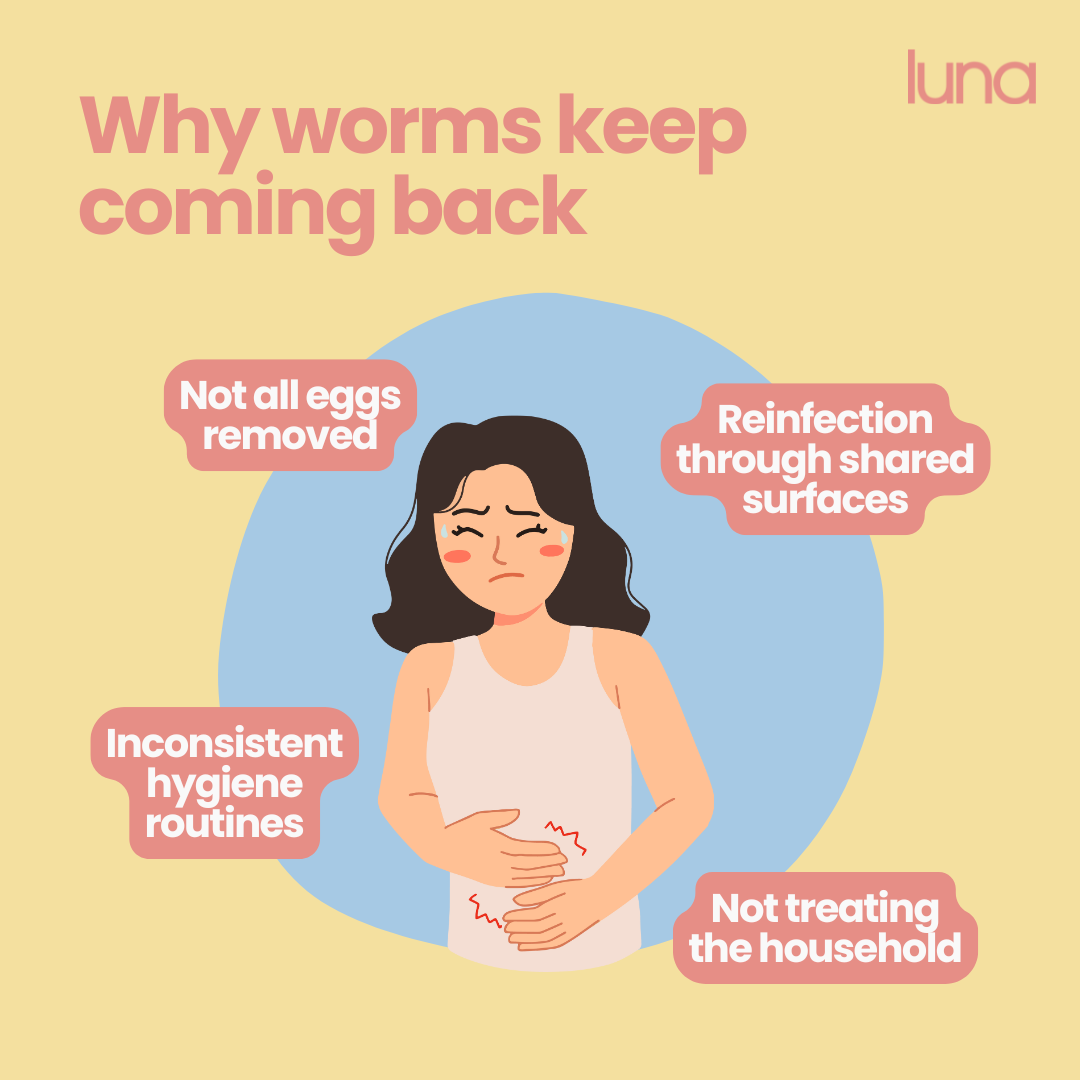
Worms usually come back because tiny eggs are swallowed again, often from hands, bedding, or shared surfaces, not because treatment didn’t work.
Reinfection is the most common reason worms return.
Threadworms lay microscopic eggs around the bottom, which can stick to fingers, bedding, clothes, and surfaces.
If those eggs are swallowed again, the cycle starts over.
The most common reasons worms return include:
- Eggs not being fully removed during the first round of treatment
- Reinfection from siblings, classmates, or shared surfaces
- Not treating everyone in the household at the same time
- Hygiene routines slipping during treatment
Worm eggs can survive on surfaces for up to two weeks, which is why consistency matters even after symptoms improve.
How worm treatment works
Worm medication is effective at killing adult worms, but it does not kill the eggs.
Treatment usually involves a medicine called mebendazole, which is available from pharmacies without a prescription.
Because eggs can hatch after the first dose, a second dose around 14 days later is essential.
This timing helps kill any newly hatched worms before they can lay more eggs.
To fully break the cycle, everyone in the household over the age of two is usually treated at the same time, even if they don’t have symptoms.
Hygiene steps that prevent reinfection
Medication works best when it’s supported by simple, consistent hygiene habits.
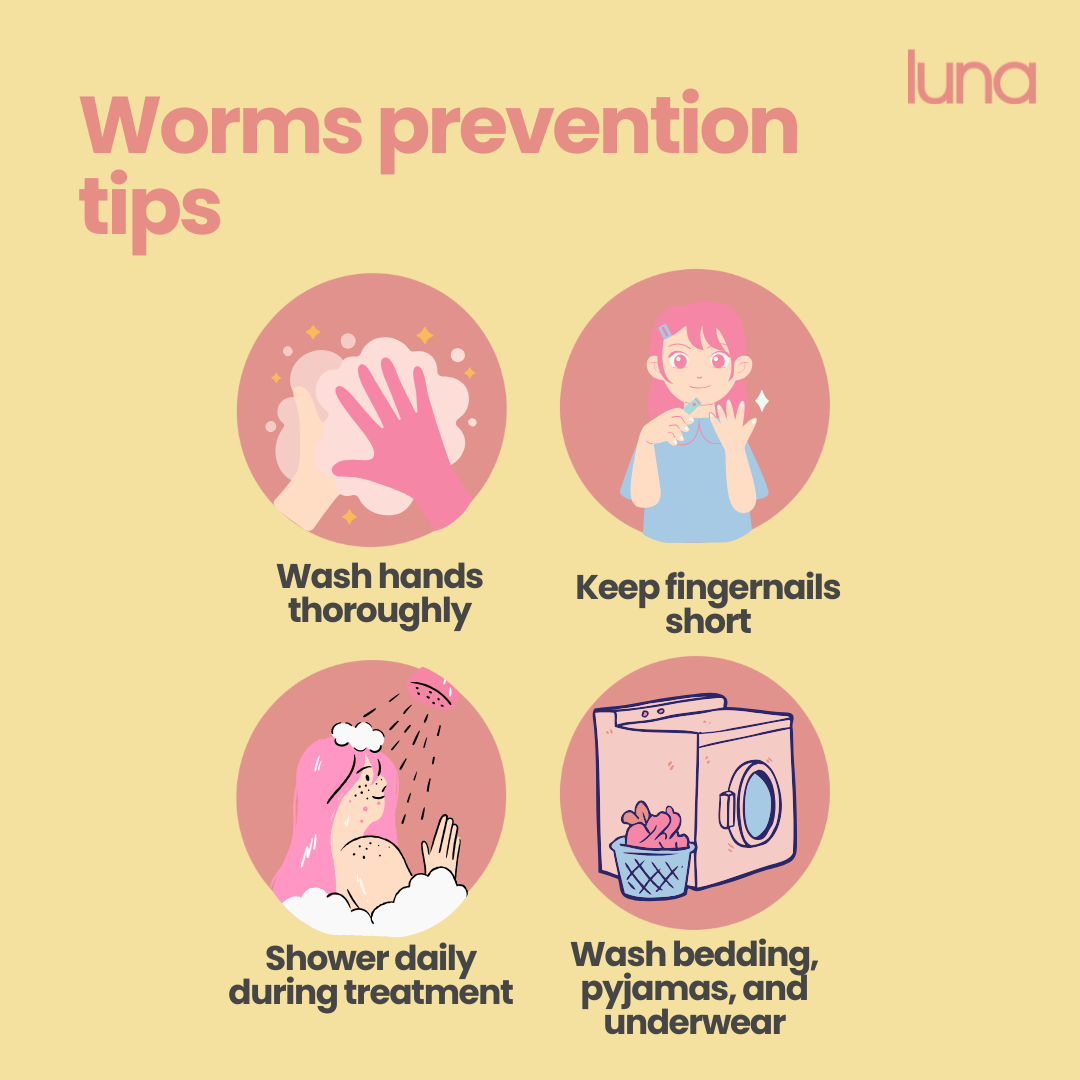
These steps help remove eggs and reduce the chance of reinfection during and after treatment:
- Wash hands thoroughly after using the toilet and before eating
- Keep fingernails short and clean
- Shower daily during treatment to remove eggs from the skin
- Wash bedding, pyjamas, towels, and underwear regularly
- Avoid nail-biting or putting fingers in the mouth
Do you need to deep-clean the house?
No. You don’t need to deep-clean the entire house or keep your child off school.
Threadworms don’t survive long without contact with people.
Focusing on bedding, underwear, handwashing, and regular cleaning of bathrooms and kitchens is usually enough.
When to seek professional advice
Speak to a pharmacist or your doctor if:
- Your daughter is under two years old
- Worms keep returning despite treatment and hygiene steps
- You’re unsure whether medication is suitable
There’s no need to stay off school if your child has worms.
Worms are very common!
Repeated worm infections usually come down to missed eggs or reinfection – not poor hygiene or poor parenting.
With the right timing, household treatment, and simple hygiene steps, most families are able to stop worms from returning.
For calm, expert-backed guidance on common teen health concerns (including the ones that feel awkward to talk about), explore the luna app for support you and your daughter can trust.
How we created this article:
luna's team of experts comprises GPs, Dermatologists, Safeguarding Leads and Junior Doctors as well as Medical Students with specialised interests in paediatric care, mental health and gynaecology. All articles are created by experts, and reviewed by a member of luna's senior review team.
Sources:
NHS "Threadworms" | Accessed 20.01.26
https://www.nhs.uk/conditions/threadworms/We'd love to keep in touch!
Sign up to our parent newsletter for emails on the latest teen trends, insights into our luna community and to keep up to date
By signing up, you are agreeing that we can use your email address to market to you. You can unsubscribe from marketing emails at any time by using the link in our emails. For more information, please review our privacy statement.