When should my daughter start wearing deodorant?
Timing it right for her routine
Updated June 1, 2026
In this article
In short
There is no single right age for starting deodorant.
The NHS advises that teenagers use deodorant as part of their hygiene routine, and the right time to begin is when the body starts showing signs of puberty, typically between ages 8 and 13.
The clearest cue is the development of underarm hair or noticeable body odour. Starting before she needs it is fine. Starting too late tends to affect her confidence.
Why does she need deodorant during puberty?
During puberty the sweat glands enlarge and become more active. This increased sweat, broken down by bacteria on the skin, creates body odour.
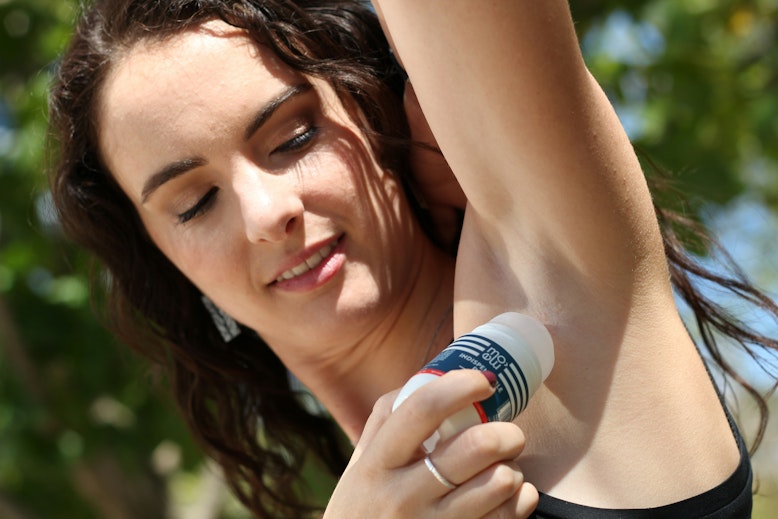
Deodorant addresses the smell. Antiperspirant also reduces the amount of sweat produced.
This is not about poor hygiene. It is a normal biological change that most people manage with products.
What age do girls typically start?
Puberty in girls begins between ages 8 and 13, so the need for deodorant can arise anywhere in that range.
Some girls will notice they need it at 9 or 10. Others will not feel the need until 12 or 13.
Rather than going by age, look for these cues:
- She’s developing underarm hair
- You or she has noticed body odour, especially after exercise or at the end of the school day
- She’s in the second or third stage of female puberty
If any of these apply, it is the right time to introduce deodorant, regardless of her exact age.
Which type of deodorant is best for teenagers?
The main options are:
- Roll-on: tends to apply directly and dry within a minute or two. Good for everyday use
- Spray: quick to apply. Choose unscented if she has sensitive skin
- Stick: easy to control the amount, less messy than roll-on for some people
- Antiperspirant deodorant: combines both functions
For girls new to deodorant, a simple, lightly scented or unscented option in a format they find easy to use is a sensible starting point.
Avoid heavily fragranced products if she has eczema or sensitive skin.
How do I help her build it into a routine?
The most common reason teenagers do not use deodorant consistently is that it has not become a habit yet.
A few practical things that help:
- Keep her deodorant somewhere she will see it during her morning routine, next to her toothbrush, for example
- Let her choose her own, so she has some ownership over it
- Giving it to her in a puberty kit that feels thoughtful and personal
- Mention it as part of a broader conversation about the hygiene routine, not as a separate criticism
- Revisit it gently if she forgets, without making it a big deal
What if she says she does not need it yet?
She may be right, or she may simply not have noticed her own smell.
Either way, there is no harm in keeping deodorant available and having a low-key conversation about why it is useful during puberty.
Body odour can make some young people feel anxious and self-conscious, so framing deodorant as something that protects her confidence and self-esteem is often more effective than making it about smell.
FAQ
Can deodorant cause any problems for teenage skin?
Some girls find certain ingredients, particularly alcohol or heavy fragrances, irritating.
If she develops a rash, switch to a sensitive skin or fragrance-free option. Applying to clean, dry skin also reduces the chance of irritation.
Is there any reason not to start early?
No. If she is showing signs of puberty and you want to introduce deodorant preventatively at age 8 or 9, that is perfectly fine. There is no minimum age requirement.
What about natural or aluminium-free deodorants?
These are fine for girls with sensitive skin or sensory preferences around products. They tend to address odour rather than sweat, so she may need to reapply more often on active days.
She is embarrassed to buy deodorant. What should I do?
Buy it alongside other toiletries as part of a normal shopping trip rather than making it a special, pointed purchase. Treating it as an unremarkable essential helps reduce any embarrassment around it.
Getting the routine established early makes everything easier down the line.
For more on approaching these topics with your teen, check out luna’s article on how to talk to your daughter about puberty.
How we created this article:
luna's team of experts comprises GPs, Dermatologists, Safeguarding Leads and Junior Doctors as well as Medical Students with specialised interests in paediatric care, mental health and gynaecology. All articles are created by experts, and reviewed by a member of luna's senior review team.
Sources:
NHS Cambridgeshire & Peterborough Children's Health "Hygiene for young people and teenagers" | 01.06.26
https://cambspborochildrenshealth.nhs.uk/child-development-and-growing-up/hygiene/hygiene-for-young-people-and-teenagers/NHS CNWL School Health Service "Personal hygiene for teenagers" | 01.06.26
https://www.schoolhealth.cnwl.nhs.uk/young-people/health-and-wellbeing-zone/personal-hygiene/NHS "Early or delayed puberty" | 01.06.26
https://www.nhs.uk/conditions/early-or-delayed-puberty/We'd love to keep in touch!
Sign up to our parent newsletter for emails on the latest teen trends, insights into our luna community and to keep up to date
By signing up, you are agreeing that we can use your email address to market to you. You can unsubscribe from marketing emails at any time by using the link in our emails. For more information, please review our privacy statement.