When does puberty end?
How long does puberty usually last?

Updated January 20, 2026 • Medically reviewed by Dr. Emma Dickie
Medically reviewed by Dr. Emma DickieIn this article
Quick summary
- Puberty usually unfolds over several years and tends to reach its later stages between the mid-teens and late teens, though timing varies widely
- Physical growth, hormones and emotional development continue to change even after periods begin
- Understanding the full puberty timeline helps parents support their teen with reassurance and confidence
Puberty doesn’t follow a perfect, predictable timeline, which can leave teens feeling really confused.
luna gets loads of questions from teens about why their bodies change at different times.
Some are worried that they are at a different pace from their friends, while others don’t realise that puberty is more than just their first period!
The physical and emotional changes of puberty continue for several years, and understanding the typical puberty pattern can help you explain it to your teen.
So, when does puberty end? And how can you help your teen through the changes that occur in puberty?
When does puberty end?
Puberty does not have a single, clear end point.
For most teens, the later stages of puberty happen between around 14 and 18 years old, but this varies widely from person to person.
Some teens finish physical growth earlier, while others continue developing into their late teens.
Girls often reach the later stages sooner than boys, simply because puberty tends to start earlier, but this is not a rule.
Rather than “ending” suddenly, puberty usually gradually slows down.
Height growth tapers off, periods become more regular one to two years after they start, skin and hormones feel more predictable, and emotions often become easier to manage over time.
The key thing for parents to know is that variation is normal. Different timing does not mean anything is wrong.
The easiest way to think about it is like a playlist: every teen experiences the same “tracks” of puberty, but the order, speed, and timing are completely individual.
No two playlists ever look exactly the same.
Late puberty reasons
Some teens will finish their puberty later than their peers.
Before you worry that something is “off,” it's important to remember that late bloomers are completely normal.
Teens can finish puberty later due to:
- Genetics (often the biggest factor)
- Nutrition and overall health
- Stress levels
- Underlying medical conditions (less common but possible)
End of puberty symptoms
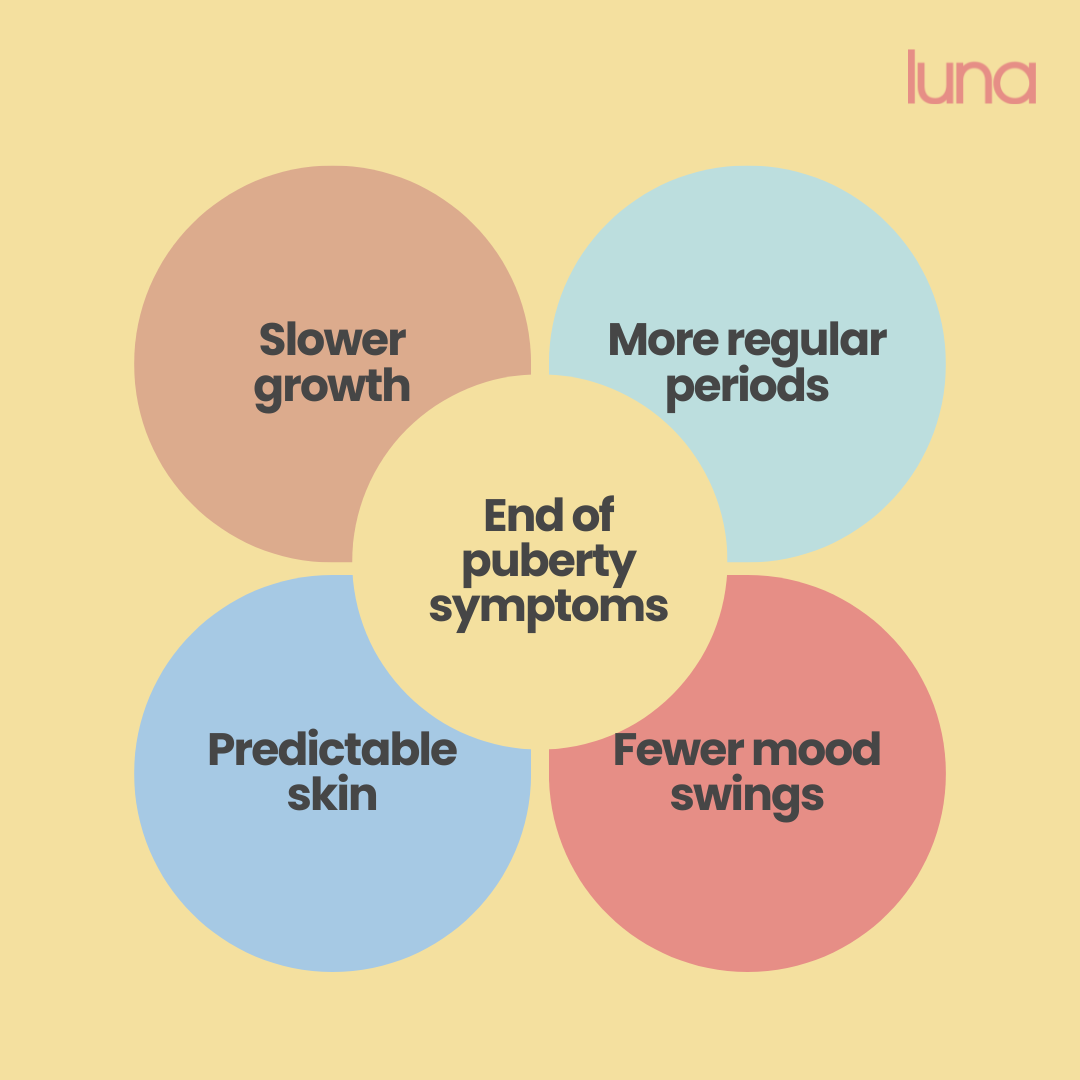
If you’re wondering whether your teen is finally reaching the end of puberty, the signs are usually subtle.
Nothing dramatic, no flashing neon “puberty complete!” banner (if only).
Instead, it’s more like a slow shift you start to notice in everyday life.
Here are the signs many families notice:
- Height growth slows down
- Periods settle into a steady rhythm
- Skin becomes more predictable
- Emotions feel a little easier with fewer mood swings
Many teens track these symptoms in the luna app, which helps them understand their rhythm and spot patterns.
Helping your teen with puberty changes
By the time teens reach the last stretch of puberty, everyone’s usually a little worn out.
They’re navigating big feelings, and you’re trying to keep up with changes that seem to shift every month.
This stage can feel a bit like the home stretch of a long journey: things are settling, but they still need steady guidance and reassurance as they adjust.
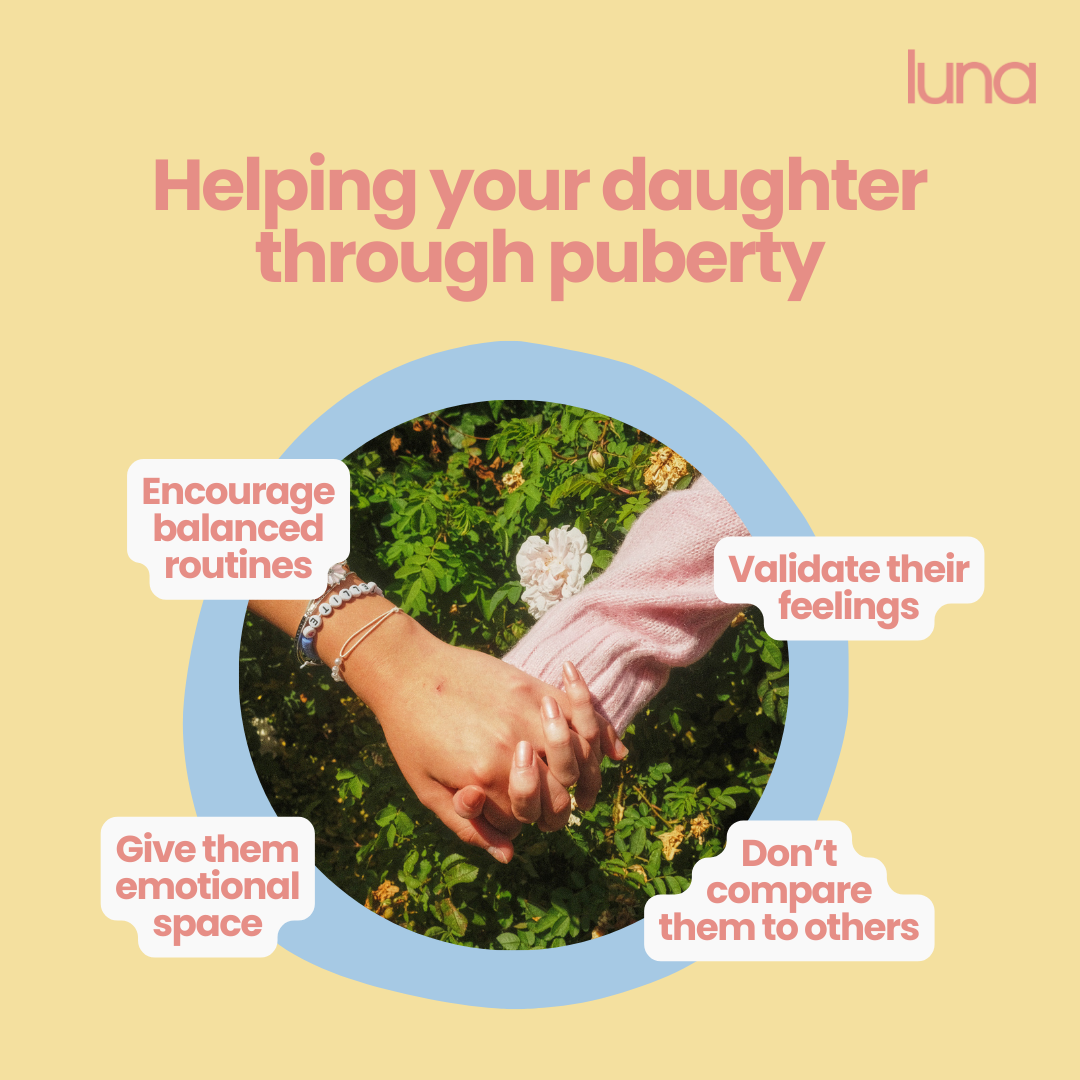
A few gentle, grounding reminders can make a big difference:
- Encourage balanced routines (sleep, food, movement - the basics really do work)
- Give emotional space and encourage independence without stepping away completely
- Validate their experience even when you don’t fully understand it
- Avoid comparing siblings or peers (every body develops differently)
Growing up on their own timeline
Puberty rarely ends at the same age for every teen, and that’s exactly how it’s supposed to be.
Understanding the real timeline helps families approach these years with confidence, calm, and connection.
If your teen is looking for expert-approved explanations for every stage of puberty that both parents and teens can trust, introduce them to luna.
On the luna app, your teen can read articles and ask anonymous questions to get an answer that’s been approved by our medically-qualified team.
How we created this article:
luna's team of experts comprises GPs, Dermatologists, Safeguarding Leads and Junior Doctors as well as Medical Students with specialised interests in paediatric care, mental health and gynaecology. All articles are created by experts, and reviewed by a member of luna's senior review team.
Sources:
NHS “Early or delayed puberty” | Accessed 18.12.25
https://www.nhs.uk/conditions/early-or-delayed-puberty/NHS Healthier Together “Puberty” | Accessed 18.12.25
https://www.healthiertogether.nhs.uk/young-person/pubertyWe'd love to keep in touch!
Sign up to our parent newsletter for emails on the latest teen trends, insights into our luna community and to keep up to date
By signing up, you are agreeing that we can use your email address to market to you. You can unsubscribe from marketing emails at any time by using the link in our emails. For more information, please review our privacy statement.