Narcissism and teen girls
Is your daughter showing narcissistic traits?

Updated January 20, 2026 • Medically reviewed by Dr. Emma Dickie
Medically reviewed by Dr. Emma DickieIn this article
Quick summary
- Many behaviours that worry parents – like self-focus, defensiveness, or big emotional reactions – are very common during the teenage years
- True narcissism is rare in adolescents, and most teens do not meet the criteria for a personality disorder
- What can look like narcissistic behaviour is often part of normal brain development, identity-building, and learning how to relate to others
Worried your daughter might be a narcissist?
It’s easy to jump to that conclusion when they’re self-focused, moody, or seeking validation.
However, these behaviours are often just a normal part of growing up.
During adolescence, teens are figuring out who they are, how to handle big emotions, and how to balance friendships, school, and family life.
This period of self-discovery can be intense, and sometimes it can feel like your daughter is all about them, but that’s usually just normal development in action.
Here’s how you can tell the difference between age-appropriate self-focus, and true narcissistic traits.
What narcissism actually means
True narcissism (as in narcissistic personality disorder) is a mental health condition that consists of needing constant praise and showing little empathy for others.
It’s rarely diagnosed in teens because their brains, especially the regions responsible for empathy and self-reflection, are still developing.
While it’s tempting to label intense or self-focused behaviour as narcissistic, real narcissism involves consistent patterns over time, not occasional teenage moodiness or self-interest.
Teen behaviour that can look like narcissism but is normal
Some behaviours can appear narcissistic but are actually part of normal teen development.
Teens may:
- Prioritise friends over family
- Be sensitive to criticism
- Seek independence
- May not support at home e.g. with chores
- Experience frequent mood swings
These behaviours are all part of figuring out identity, can often be a symptom of being tired (teens have a lot to balance), or testing boundaries, and navigating peer pressure.
They can feel extreme at times, but they usually don’t indicate a deeper personality disorder.
Real narcissistic traits to pay attention to in teens
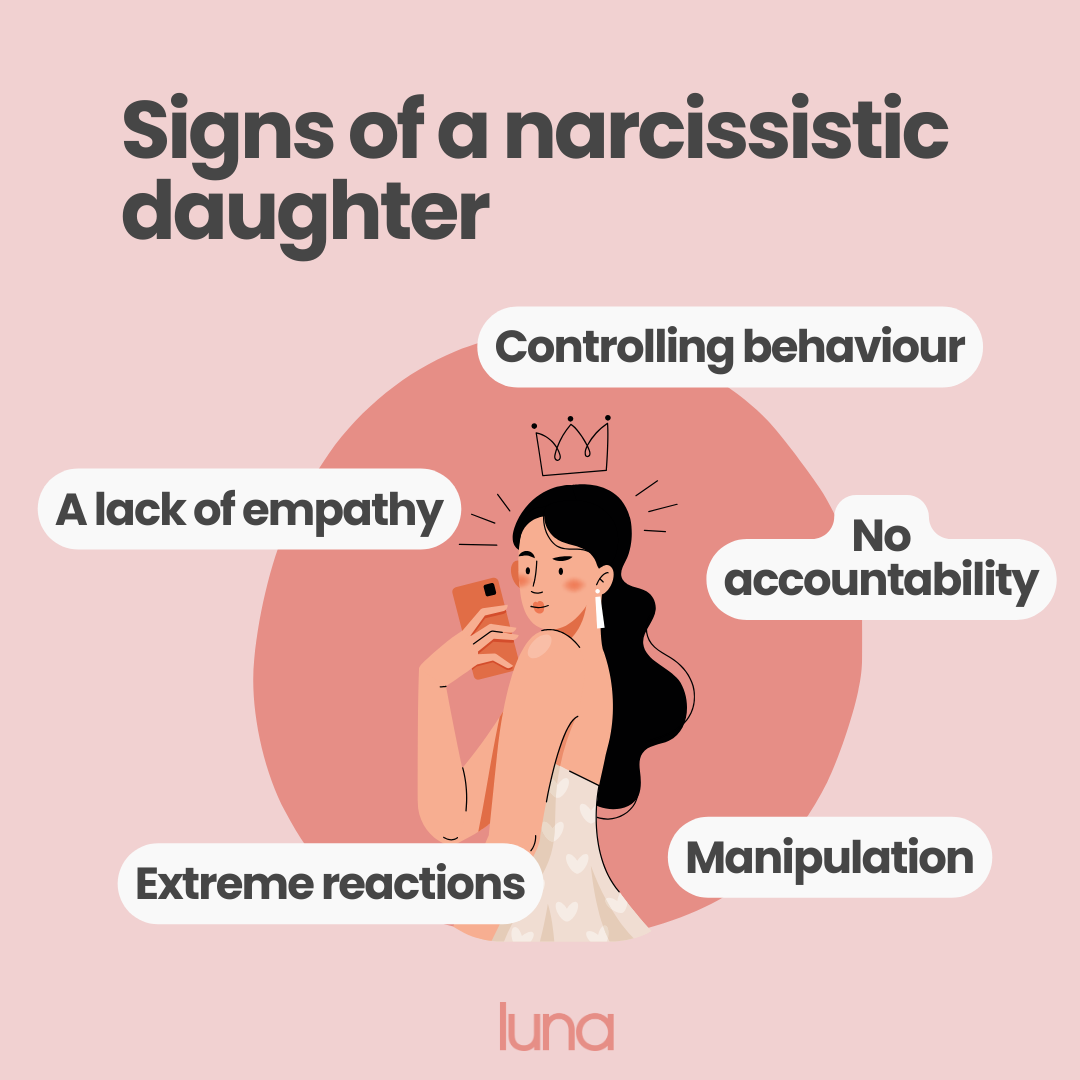
There are some behaviours that can be red flags if they appear consistently over time:
- A lack of empathy toward others
- Manipulative or controlling behaviour
- Extreme reactions when they’re not praised or validated
- No accountability for harmful actions
If you notice that these traits are ongoing, severe or impacting your teen’s relationships, school performance or mental health, it may be worth consulting a professional for guidance.
Why many teens seem narcissistic during development
It helps to remember that teen brains are still growing, especially in areas that control empathy, self-reflection, and emotional regulation.
This means that what looks like self-centered behaviour is often just part of normal development.
Teens are figuring out their identity, navigating friendships, coping with social media, and learning to manage emotions that can feel overwhelming.
From a parent’s perspective, seeing these behaviours up close every day can feel intense and even exhausting.
But it doesn’t automatically mean something is “wrong.”
What might seem like narcissism is usually just your teen experimenting with independence, testing boundaries, and learning how to relate to others.
Most teens are not narcissists; they’re simply navigating the intense and sometimes messy journey of adolescence.
However, understanding the difference between normal developmental behaviours and concerning patterns can ease worry and help you respond thoughtfully.
If you’re worried about your daughter, recommending the luna app can help give her guidance you can trust, that she’ll listen to.
On the luna app, we talk about kindness, positive friendships and being responsible, and your daughter can also ask anonymous questions, read medically-approved articles, and track their mood and symptoms, making adolescence so much easier.
How we created this article:
luna's team of experts comprises GPs, Dermatologists, Safeguarding Leads and Junior Doctors as well as Medical Students with specialised interests in paediatric care, mental health and gynaecology. All articles are created by experts, and reviewed by a member of luna's senior review team.
Sources:
NHS “Personality disorders” | Accessed 18.12.25
https://www.nhs.uk/mental-health/conditions/personality-disorder/Mayo Clinic “Narcissistic personality disorder” | Accessed 18.12.25
https://www.mayoclinic.org/diseases-conditions/narcissistic-personality-disorder/symptoms-causes/syc-20366662We'd love to keep in touch!
Sign up to our parent newsletter for emails on the latest teen trends, insights into our luna community and to keep up to date
By signing up, you are agreeing that we can use your email address to market to you. You can unsubscribe from marketing emails at any time by using the link in our emails. For more information, please review our privacy statement.