Should you let your daughter wear revealing clothes?
Crop tops, short shorts, and your worry
Updated July 22, 2026 • Medically reviewed by Dr. Emma Dickie
Medically reviewed by Dr. Emma DickieIn this article
In short
There's no single right answer.
Crop tops and short shorts are mainstream teen fashion, and experimenting with style is a normal part of growing up.
The NHS actually counts clothes among the smaller battles worth picking carefully, because staying connected matters more.
Occasion, safety, and her confidence are better guides than coverage alone.
Why does my daughter want to wear revealing clothes?
Almost always because it's fashion, not a message.
Crop tops and small shorts are what her friends wear, what fills her feed, and most of what the shops sell for her age group.
Trying out styles is also part of working out who she is.
YoungMinds describes body image as how she thinks and feels about her body, and feeling able to wear what her friends wear is often a sign of confidence and self-esteem rather than a problem.
It can help to remember she's dressing for her peers, not for adults.
An outfit that looks alarming to you usually reads as completely unremarkable to her friends.
Should I say something about my daughter's outfits?
Sometimes, but sparingly.
The NHS suggests picking your battles with teenagers: letting smaller things like clothes go can mean she's still listening when the bigger conversations arrive.
That doesn't mean staying silent when an outfit doesn't fit the occasion.
School, a grandparent's birthday, and a day out with friends all come with different unwritten rules, and "is this right for where you're going?" is a question about the plan, not her body.
However, there's also evidence that coming down hard can backfire.
One long-term study found that teenagers who felt psychologically controlled by their parents at 13 showed less healthy independence at 16.
Heavy policing of clothes tends to produce hiding, not changing, which is why gentle, open discussions may be better than blanket rules or bans.
Before commenting, some parents find it helps to ask themselves:
- Is this about safety or the occasion, or my own discomfort?
- Would I react the same way to a friend's daughter in this outfit?
- Have I said it once already (once is information, twice is a campaign)?
How do I talk to my daughter about clothes without a row?
Timing and tone matter more than the words.
It is a good idea to choose a relaxed moment and have a few bite-sized chats rather than one big lecture.
Side by side tends to work better than face to face: in the car, cooking, walking somewhere.
Open questions like "what do you like about that style?" land better than verdicts.
Listening is half the conversation too.
Letting her finish before offering a view tells her this is a discussion, not a judgement.
It's worth knowing the phrases that tend to shut teenage daughters down, and "you're not going out like that" is high on the list.
If you do disagree, commenting on practicality ("you'll freeze on the walk back") lands far more softly than commenting on her body or her judgement.
What if I'm worried about unwanted attention?
For most parents, this is the real worry underneath the question, and it deserves an honest answer: her clothes don't cause harassment; the people who decide to harass her cause it.
Linking her outfit to other people's behaviour, even gently, can teach her that if something ever happens it was somehow her fault.
The more protective move is to separate the two conversations.
Talk about clothes as clothes, and talk separately about what behaviour from others is never okay, what she can do about it, and that she can always tell you without being blamed.
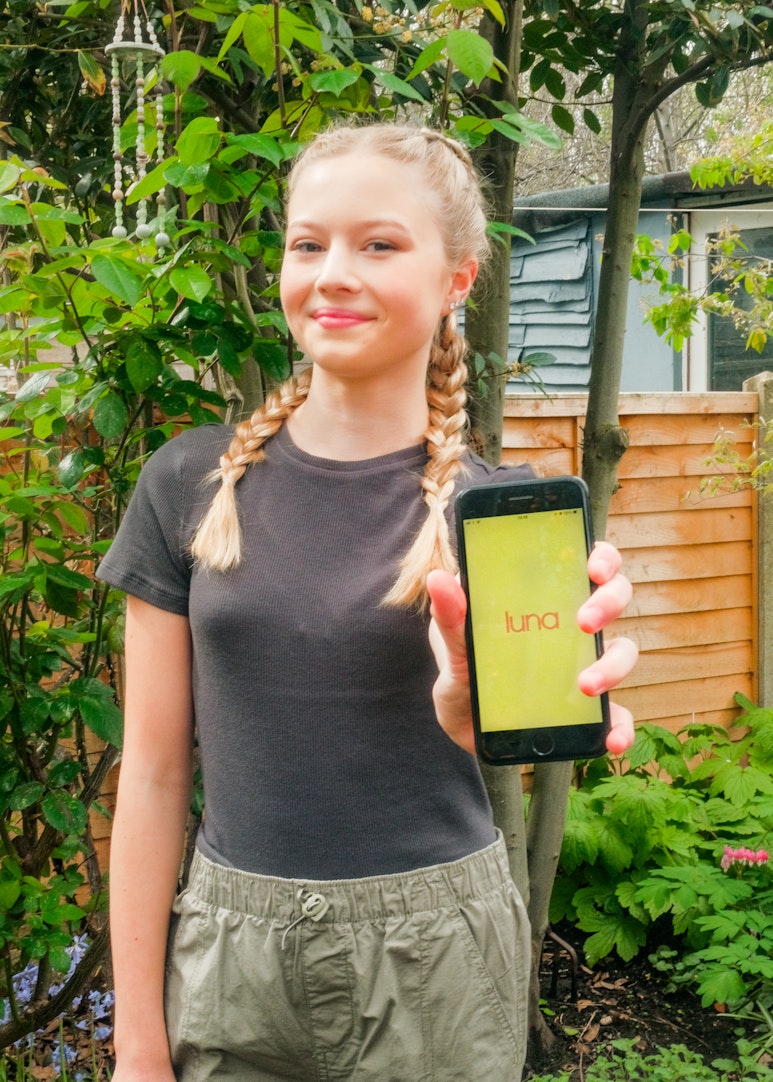
luna gives teen girls a private space to ask questions about exactly this kind of thing, with answers reviewed by experts and no judgement attached.
FAQs
Is it normal for a 13 year old to wear crop tops?
Yes, very.
They're mainstream fashion for her age group and most of her friends will own one.
What matters more is whether she feels comfortable and the outfit suits where she's going.
Can I ban my daughter from wearing certain clothes?
You can, but bans on clothes she owns or buys herself tend to move outfits into school bags rather than back into wardrobes.
Boundaries agreed together, occasion by occasion, hold up better than blanket rules.
What if her outfit breaks school rules?
A dress code is the school's boundary, which makes it useful neutral ground.
The school can enforce its own rules, and you get to stay out of the referee role at home.
Should I worry if my daughter suddenly covers up?
A sudden switch to baggy, covering clothes deserves more attention than a crop top does.
Avoiding tight or revealing clothes is a possible sign of body image struggles, so a gentle check-in is worth it.
There's more in luna's guide to supporting a daughter with body image worries.
Where to go from here
However you feel about the shorts, the fact you're thinking this carefully means the relationship matters to you more than the outfit.
That's the thing worth protecting.
If clothes have become a daily battleground, or the way she dresses comes with low mood or changes in eating, a chat with her doctor is a sensible step.
And if she'd like somewhere to work out her own body image and confidence questions, luna was built for teen girls to explore exactly that, at her own pace and without judgement.
How we created this article:
luna's team of experts comprises GPs, Dermatologists, Safeguarding Leads and Junior Doctors as well as Medical Students with specialised interests in paediatric care, mental health and gynaecology. All articles are created by experts, and reviewed by a member of luna's senior review team.
Sources:
NHS "Talking to your teenager" | Accessed 15.06.26
https://www.nhs.uk/mental-health/children-and-young-adults/advice-for-parents/talk-to-your-teenager/Young Minds "Body image" | Accessed 15.06.26
https://www.youngminds.org.uk/young-person/coping-with-life/body-image/NSPCC "How to talk to children about difficult topics" | Accessed 15.06.26
https://www.nspcc.org.uk/advice-for-families/talking-about-difficult-topics/Hare AL et al. "Undermining adolescent autonomy with parents and peers: the enduring implications of psychologically controlling parenting" | Accessed 15.06.26
https://pmc.ncbi.nlm.nih.gov/articles/PMC4715895/We'd love to keep in touch!
Sign up to our parent newsletter for emails on the latest teen trends, insights into our luna community and to keep up to date
By signing up, you are agreeing that we can use your email address to market to you. You can unsubscribe from marketing emails at any time by using the link in our emails. For more information, please review our privacy statement.