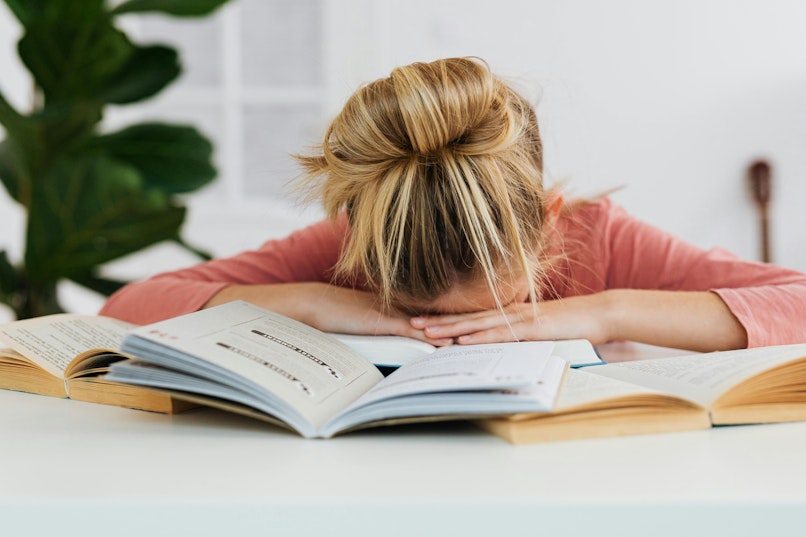
My daughter is always tired, could it be iron deficiency?
When low iron could be the reason
Updated May 19, 2026
In this article
- In short
- Why is my teen daughter so tired all the time?
- What is iron deficiency, and why are teen girls at risk?
- What are the signs of low iron in my daughter?
- Could her period be making it worse?
- How do I know if it's iron or just normal teen tiredness?
- What test does the doctor do for iron deficiency?
- How is iron deficiency treated in teenagers?
- What foods help boost her iron?
- FAQ
- A gentle next step
In short
If your daughter feels tired all the time, low iron may be the cause. Low iron is a common cause of tiredness in teen girls, especially after their periods start and if they have heavy periods.
Signs can include fatigue, pale skin, headaches, dizziness, and breathlessness. A simple blood test can confirm it, and most cases are treated with iron tablets and small changes to her diet.
Why is my teen daughter so tired all the time?
Teen tiredness can have lots of causes, but iron deficiency is one of the most common and most missed.
Late nights, school and exam stress, growth spurts, and hormones all play a part, but if she's exhausted most days, low iron is worth ruling out.
A teenage girl's body needs more iron than it did in childhood. Once her periods start, she loses iron every month, and her growing body needs more red blood cells to keep up.
So before assuming it's "just being a teenager," it's worth asking a few questions.
What is iron deficiency, and why are teen girls at risk?
Iron deficiency is when your body doesn't have enough iron to make healthy red blood cells, which carry oxygen around the body.
If it gets worse, it can turn into iron deficiency anaemia (IDA), the most common type of anaemia worldwide.
Teen girls are particularly at risk because:
- They lose iron every month through periods
- Their bodies are still growing and need more iron
- Diets often skip iron-rich foods like red meat, beans, or leafy greens
- Adolescent athletes lose extra iron through training
- Heavy or long periods make iron loss much higher
Iron deficiency can affect her energy, concentration, mood, and even her immune system, sometimes before anaemia shows up on a blood test.
What are the signs of low iron in my daughter?
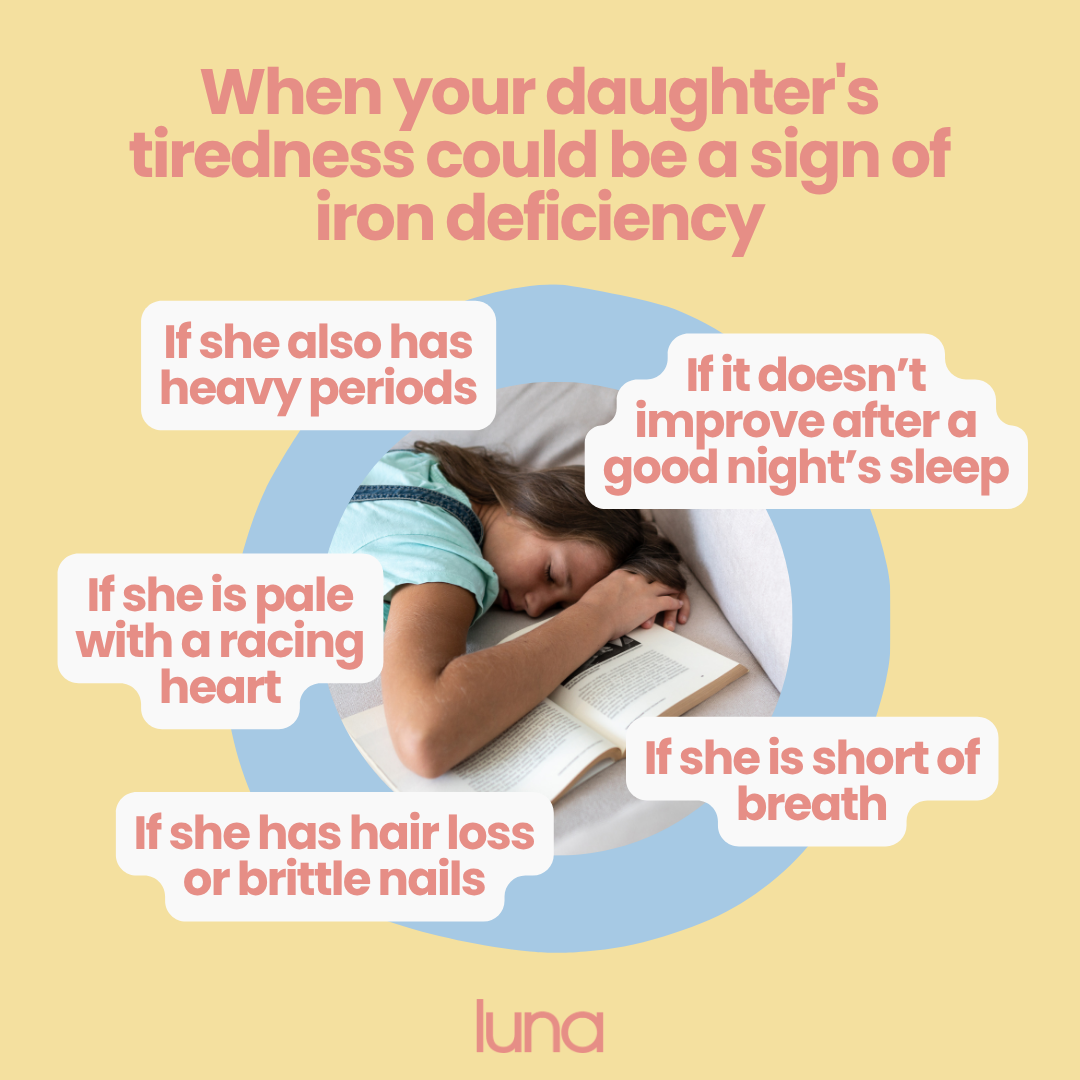
The most common signs of low iron are easy to mistake for normal teen tiredness, which is why it often gets missed.
The NHS lists the main symptoms as:
- Tiredness and lack of energy
- Shortness of breath
- Noticeable heartbeats or palpitations
- Paler than usual skin
- Headaches
Less common signs to watch for include:
- A sore tongue or mouth ulcers in the corners of her mouth
- Hair loss when brushing or washing
- Ringing or buzzing in her ears (tinnitus)
- Itchy skin
- Restless legs at night
- Cravings for non-food things like ice or paper (this is called pica)
- Nails that look brittle or spoon-shaped
If she's ticking off more than one of these, it's worth a doctor visit.
Could her period be making it worse?
Yes. Heavy or long periods mean she loses more blood, and more iron, each month. According to UNICEF, about 15 in 100 girls have iron-deficiency anaemia, and this is often made worse because of their period.
If your daughter is tired on her period, exploring whether her iron levels impact this can be a good idea.
In a luna poll of 1,695 teen girls, most said their period lasts around five to six days.
If hers regularly lasts longer than seven days, soaks through pads or tampons every hour, or includes large clots, that's worth flagging to the doctor. Heavy menstrual periods can be treated, and treating them helps protect her iron levels.
How do I know if it's iron or just normal teen tiredness?
Some tiredness is normal in adolescence. A luna poll found that nearly 4 in 10 teen girls say they get less than the recommended 8 hours of sleep teens need a night.
But iron-related tiredness tends to be different in a few ways:
- It doesn't improve with a good night's sleep or the weekend
- She's pale, breathless on stairs, or her heart races easily
- She's getting headaches or feeling dizzy when she stands up
- Her periods are heavy or long
- She's lost interest in things she used to enjoy because she has no energy
If three or more of these sound familiar, ask the doctor for a blood test.
What test does the doctor do for iron deficiency?
The doctor will usually do a full blood count (FBC) to check her red blood cells, and many will also check ferritin, which measures her iron stores.
She doesn't need to do anything special to prepare. A small blood sample is taken from her arm and sent off for testing. Results usually come back within a few days.
How is iron deficiency treated in teenagers?
Most cases are treated with oral iron tablets prescribed by the doctor, usually taken for at least three to six months until her iron stores are fully topped up.
A few tips that help:
- Take iron with a glass of orange juice (vitamin C helps absorption)
- Avoid taking it with tea, coffee, milk, or dairy, which block absorption
- If it upsets her stomach, take it with a little food
- Expect darker poo, this is normal and harmless
- Keep taking the tablets even after she feels better
For severe cases or if oral iron isn't working, the doctor may refer her to a specialist for intravenous (IV) iron, which works much faster.
Important: Always keep iron tablets out of reach of younger children. An overdose can be dangerous.
What foods help boost her iron?
Diet alone usually isn't enough to fix iron deficiency once it's there, but healthy eating helps prevent it coming back.
Aim to include some of these in most days' meals:
- Red meat, chicken, or fish
- Eggs
- Beans, lentils, and chickpeas
- Fortified breakfast cereals
- Dark green leafy veg (spinach, kale, watercress)
- Dried fruit like apricots, prunes, or raisins
- Tofu
To help her body absorb the iron, pair these with vitamin C foods like oranges, peppers, strawberries, or tomatoes. Try to keep tea, coffee, and large amounts of dairy away from her iron-rich meals, as they make it harder to absorb.
If she's vegetarian or vegan, she'll need to be a bit more deliberate about iron, and a doctor or dietitian can help.
FAQ
How long does it take for iron tablets to work?
Most teens start to feel better within two to four weeks, but full iron stores can take three to six months to rebuild. Stick with it.
Can low iron affect her mood and concentration?
Yes. Iron is needed for brain function, so low levels can cause poor concentration, low mood, irritability, and brain fog, sometimes before anaemia shows up.
Should I give her iron supplements without a doctor test?
No. Too much iron can be harmful, and the cause of her tiredness might be something else. Get a blood test first.
Could it be something other than iron?
Possibly. Vitamin B12 or folate deficiency, thyroid problems, glandular fever, and depression can all cause persistent tiredness. The doctor can test for these, too.
When should I take her to the doctor?
If she's tired most days for more than a few weeks, has heavy periods, looks pale, or has any of the other symptoms listed above, book an appointment.
A gentle next step
If her periods feel like they might be part of the picture, it can help to start tracking your daughter's period so you and the doctor have a clearer view of what's going on.
Cycle length, flow, and how she feels each month are all useful clues to bring to an appointment.
How we created this article:
luna's team of experts comprises GPs, Dermatologists, Safeguarding Leads and Junior Doctors as well as Medical Students with specialised interests in paediatric care, mental health and gynaecology. All articles are created by experts, and reviewed by a member of luna's senior review team.
Sources:
NHS "Iron deficiency anaemia" | Accessed 19 May 2026
https://www.nhs.uk/conditions/iron-deficiency-anaemia/Mayo Clinic "Ironing out iron deficiency in children and teens" | Accessed 19 May 2026
https://www.mayoclinic.org/medical-professionals/pediatrics/news/ironing-out-iron-deficiency-in-children-and-teens/mac-20592251Addo O, et al. "Physiologically based serum ferritin thresholds for iron deficiency among women and children" | Accessed 19 May 2026
https://www.thelancet.com/journals/langlo/article/PIIS2214-109X(25)00009-9/fulltextNHS "Vitamins and minerals: Iron" | Accessed 19 May 2026
https://www.nhs.uk/conditions/vitamins-and-minerals/iron/UNICEF "Why does my teenager seem so tired?" | Accessed 19 May 2026
https://www.unicef.org/eca/stories/why-does-my-teenager-seem-so-tiredWe'd love to keep in touch!
Sign up to our parent newsletter for emails on the latest teen trends, insights into our luna community and to keep up to date
By signing up, you are agreeing that we can use your email address to market to you. You can unsubscribe from marketing emails at any time by using the link in our emails. For more information, please review our privacy statement.