What do I do if my teen daughter is so fussy with food?
How to help

Updated May 22, 2026
In this article
- In short
- Why is my teen daughter suddenly so fussy with food?
- Is fussy eating in teenagers still normal?
- What's the difference between fussy eating and an eating disorder?
- How can I help my teen daughter eat a wider variety?
- Should I worry if my teen skips meals?
- When should I speak to a GP about my teen daughter's eating?
- FAQ
In short
Fussy eating in teens is more common than parents realise, and it's usually not a sign something serious is wrong. Hormones, stress, taste changes, and a need for control all play a part.
Keep mealtimes calm, offer variety without pressure, and watch for red flags like rapid weight loss, secretive eating, or intense focus on body image, which may need professional support.
Why is my teen daughter suddenly so fussy with food?
Teen fussiness usually comes from a mix of biology and emotion, not bad behaviour.
As her body changes through puberty, her tastes, appetite, and emotional needs are all shifting at once.
A few things that can drive picky eating in teens:
- Hormonal changes that affect appetite, cravings, and how foods taste
- Asserting independence, where saying no to dinner is one of the few areas she controls
- Sensory preferences around texture, smell, or appearance that may have been present since childhood
- Social pressure from friends, school stress, or what she sees on social media
- Body image worries, which can quietly shape what she's willing to eat
In a luna poll of 2,156 teen girls, 1 in 5 said body image was their top worry going into summer. That kind of pressure often shows up at the dinner table first.
Is fussy eating in teenagers still normal?
Yes, in most cases it's a phase rather than a problem. Fussy eating is a common part of growing up and usually improves over time, though it can carry into the teen years for some.
What matters most is the bigger picture: is she still growing well, generally energetic, and eating something from each main food group across the week?
If yes, you can probably relax a little. If no, it's worth paying closer attention.
What's the difference between fussy eating and an eating disorder?
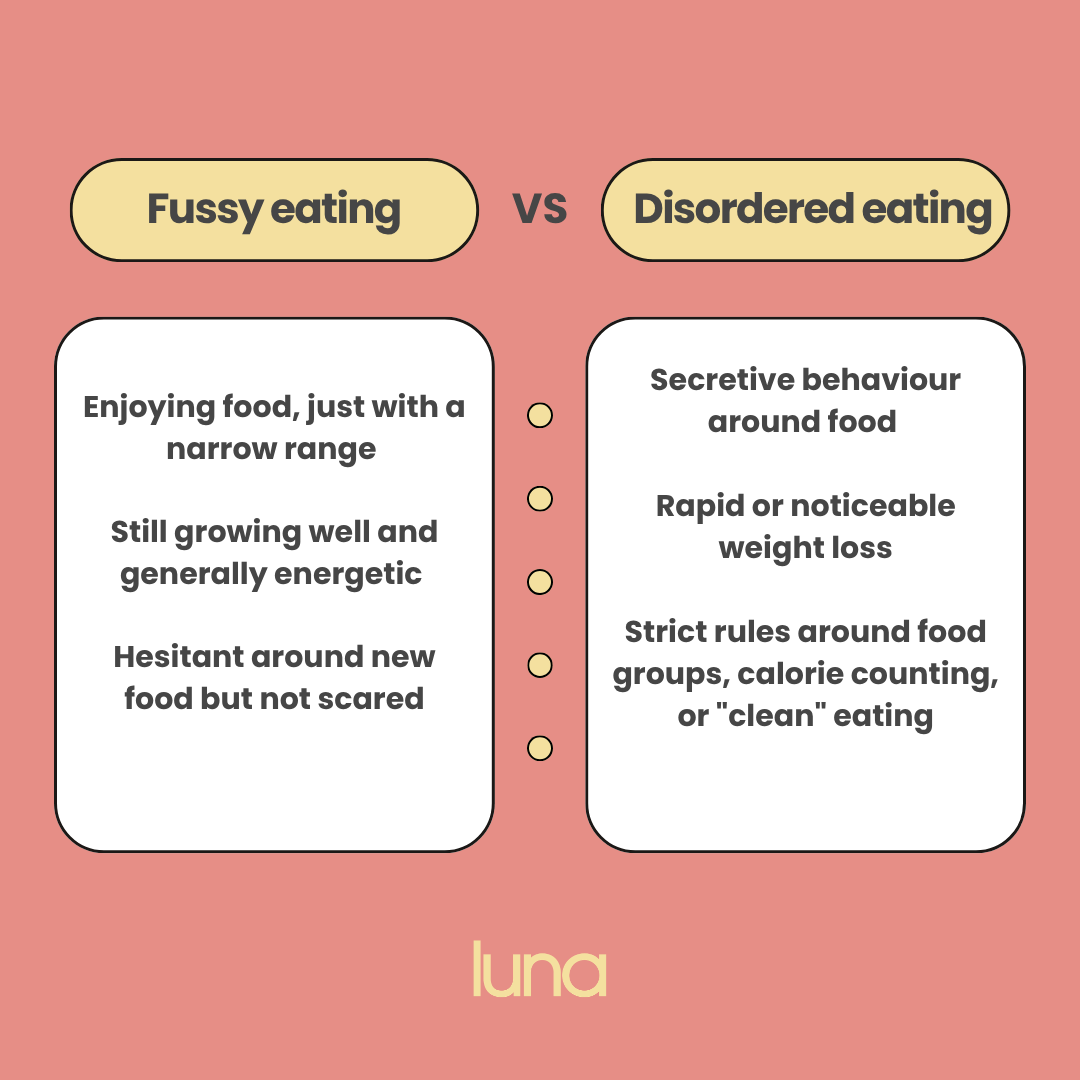
Fussy eating is about preferences. An eating disorder is about distress.
With fussy eating, your daughter still enjoys food, just within a narrower range. With an eating disorder, food itself becomes a source of fear, control, or shame.
Watch for signs that go beyond preference, including:
- Rapid or noticeable weight loss
- Skipping meals or hiding food
- Strict rules around food groups, calorie counting, or "clean" eating
- Excessive exercise
- Going to the bathroom straight after meals
- Strong distress at the idea of eating certain foods
- Preoccupation with weight, shape, or appearance
- Saying she thinks she’s fat
If you notice several of these, speak to your GP. Early support makes a big difference.
How can I help my teen daughter eat a wider variety?
Pressure almost never works with teens. The aim is to make food feel low-stakes, not loaded. A few approaches that tend to help:
- Keep cooking one family meal, and let her serve herself
- Offer new foods alongside familiar ones, in small amounts, so they're easy to try or skip
- Stay neutral if she refuses, take it away calmly, and try again another time
- Eat together when you can, even just a few times a week
- Avoid commenting on her body or what she eats, especially in front of others
- Get her involved by letting her cook, choose recipes, or come to the supermarket with you
It can take many tries before someone genuinely accepts a new food, even as a teen. Patience matters more than persuasion.
Should I worry if my teen skips meals?
Skipping the odd meal isn't usually a problem, but a regular pattern is worth noticing.
Teens are often busy, distracted, or sleeping until midday at weekends, and sometimes lunch slips off the radar.
Concern grows when meal skipping is paired with weight loss, low mood, secretive behaviour, or strong opinions about food and body.
If those start to overlap, it's a good time to gently check in with her and consider seeking advice.
If these issues happen at school, you may want to check out luna’s article on what to do if your daughter isn’t eating lunch at school.
When should I speak to a GP about my teen daughter's eating?
It's worth booking an appointment if she is losing weight without trying, avoiding whole food groups, becoming preoccupied with body image, or visibly distressed around mealtimes.
You don't need all the answers before going. A GP can help work out whether you're dealing with normal teen fussiness, a sensory-based issue, or something like ARFID (avoidant restrictive food intake disorder) or another eating disorder.
You know your daughter best. If your gut says something has shifted, that's enough reason to ask for support.
FAQ
Can my teen's period affect what she wants to eat?
Yes. Hormonal shifts across her cycle can change appetite, cravings, and tolerance to certain foods.
Many teens crave more carbs or sweet foods in the days before their period, and may eat less when cramps are bad.
Should I cook separate meals for my fussy teen?
It's usually best not to.
Cooking one family meal teaches her that food isn't built around her preferences alone, and removes the pressure of feeling singled out. She can still choose what to eat from what's offered.
My teen has gone vegetarian and barely eats anything else. What should I do?
Your teen daughter going vegetarian can be a healthy choice or, sometimes, a socially acceptable way to restrict food. Look at the bigger picture.
If she's eating beans, eggs, dairy, tofu, and a range of veg, she's likely fine. If "vegetarian" really means toast and pasta, it's worth a conversation and possibly a chat with your GP.
Could it be ARFID, not just fussy eating?
Possibly. ARFID goes beyond preference. It usually involves intense fear of certain textures, smells, or types of food, and can lead to nutritional gaps.
If her food list is shrinking rather than growing, ask your GP for an assessment.
If you're worried about how she's eating, you're already doing the most important bit: paying attention. Keep mealtimes warm and unforced, and reach out for support whenever your instincts say so.
How we created this article:
luna's team of experts comprises GPs, Dermatologists, Safeguarding Leads and Junior Doctors as well as Medical Students with specialised interests in paediatric care, mental health and gynaecology. All articles are created by experts, and reviewed by a member of luna's senior review team.
Sources:
NHS "Fussy eaters" | Accessed 22 May 2026
https://www.nhs.uk/baby/weaning-and-feeding/fussy-eaters/Cambridgeshire & Peterborough Children's Health "Fussy eating" | Accessed 22 May 2026
https://cambspborochildrenshealth.nhs.uk/feeding-and-eating/fussy-eating/NHS "Overview – Eating disorders" | Accessed 22 May 2026
https://www.nhs.uk/mental-health/feelings-symptoms-behaviours/behaviours/eating-disorders/overview/Beat Eating Disorders "ARFID" | Accessed 22 May 2026
https://www.beateatingdisorders.org.uk/get-information-and-support/about-eating-disorders/types/arfid/We'd love to keep in touch!
Sign up to our parent newsletter for emails on the latest teen trends, insights into our luna community and to keep up to date
By signing up, you are agreeing that we can use your email address to market to you. You can unsubscribe from marketing emails at any time by using the link in our emails. For more information, please review our privacy statement.