Signs your daughter is about to start her first period
What age can she expect it?
Updated July 24, 2026 • Medically reviewed by Dr. Emma Dickie
Medically reviewed by Dr. Emma DickieIn this article
- Signs your daughter is about to start her first period
- When do girls typically get their first menstruation?
- What are the main signs your daughter is about to start her period?
- When should someone seek medical advice if they have no period?
- What happens after a girl’s first period?
- How can you support your daughter’s first period challenges?
- FAQs about first periods
Signs your daughter is about to start her first period
Common signs that a first period is approaching include breast development, pubic or underarm hair growth, and an increase in clear or white vaginal discharge.
Many girls also experience mood changes, body odour, or mild acne as puberty progresses.
These signs usually begin one to two years before a first period, but the exact timing varies.
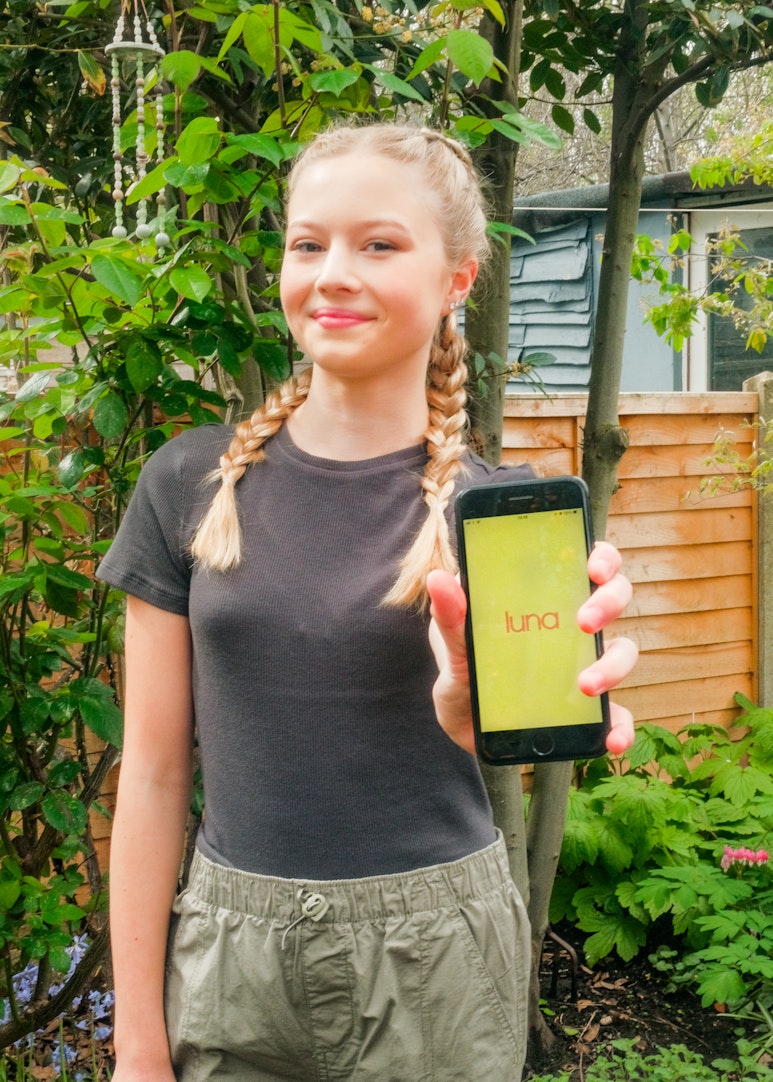
Many parents search for signs that their daughter is about to start her first period as puberty begins, and it’s totally understandable if you're in the same place too.
There’s a lot to learn and prepare for as a parent, and a lot to know to keep your daughter prepared for it too.
That’s why, here at luna, we’ve put together just the article you need – including signs your daughter is about to start her period.
Keep reading to learn about puberty changes, and how to prepare your daughter for her first period.
When do girls typically get their first menstruation?
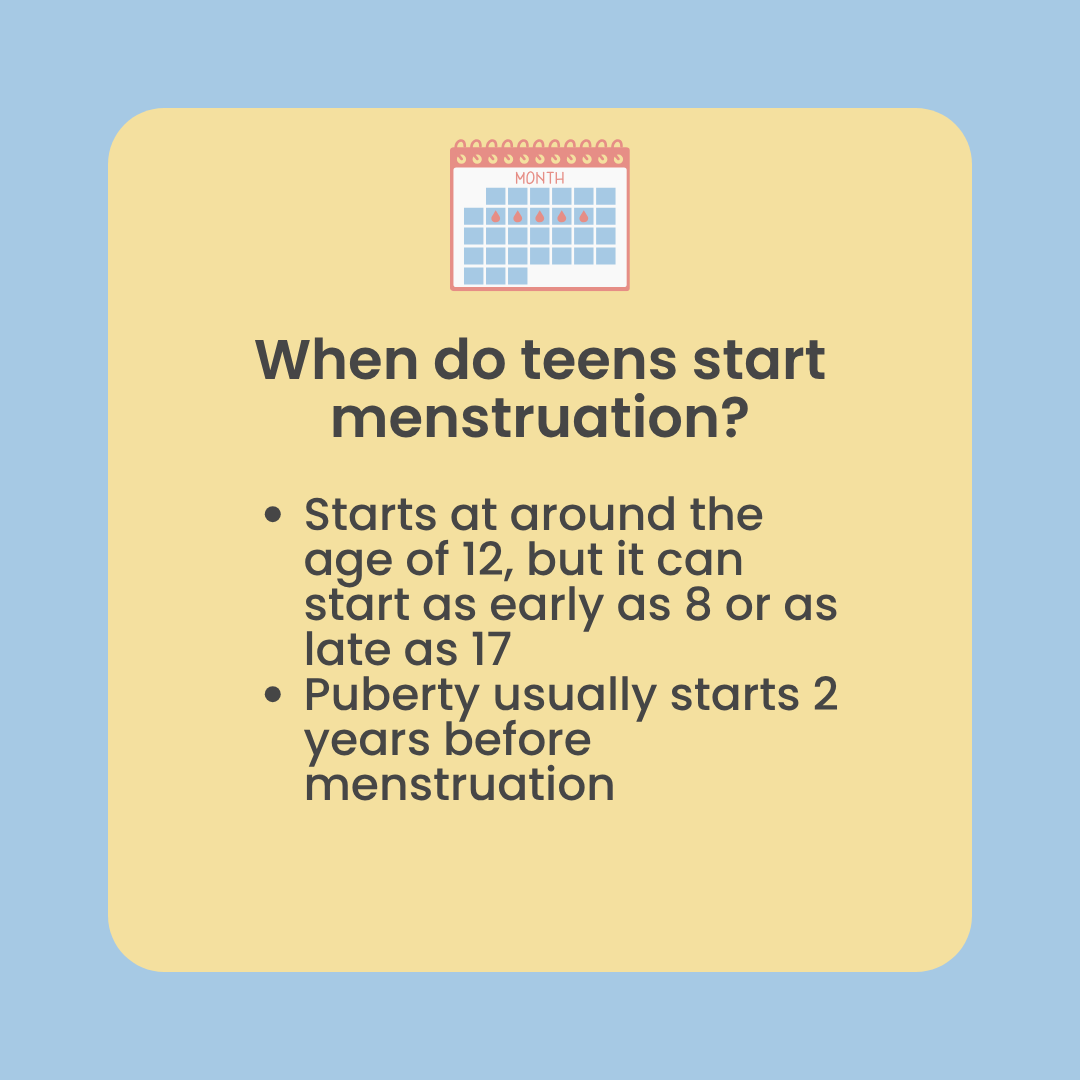
Most girls start their first period around age 12, but it can happen anytime between ages 8 and 17. The timing varies depending on genetics, growth patterns, and overall development, and all of these ages are considered normal.
Your teen might be feeling nervous, excited, anxious, or even left out when it comes to getting their first period – luna has a Q&A feature in the app and gets plenty of messages from teens about this exact topic!
So, with that in mind, it's important to encourage your teen to start tracking their symptoms early to help them feel more confident and prepared.
Luckily, the luna app can be with them every step of the way, and has plenty of medically-verified content to prepare them for their first period (unlike what they might be seeing on social media).
The experts on luna can also answer any questions they may be too embarrassed to ask you.
What are the main signs your daughter is about to start her period?
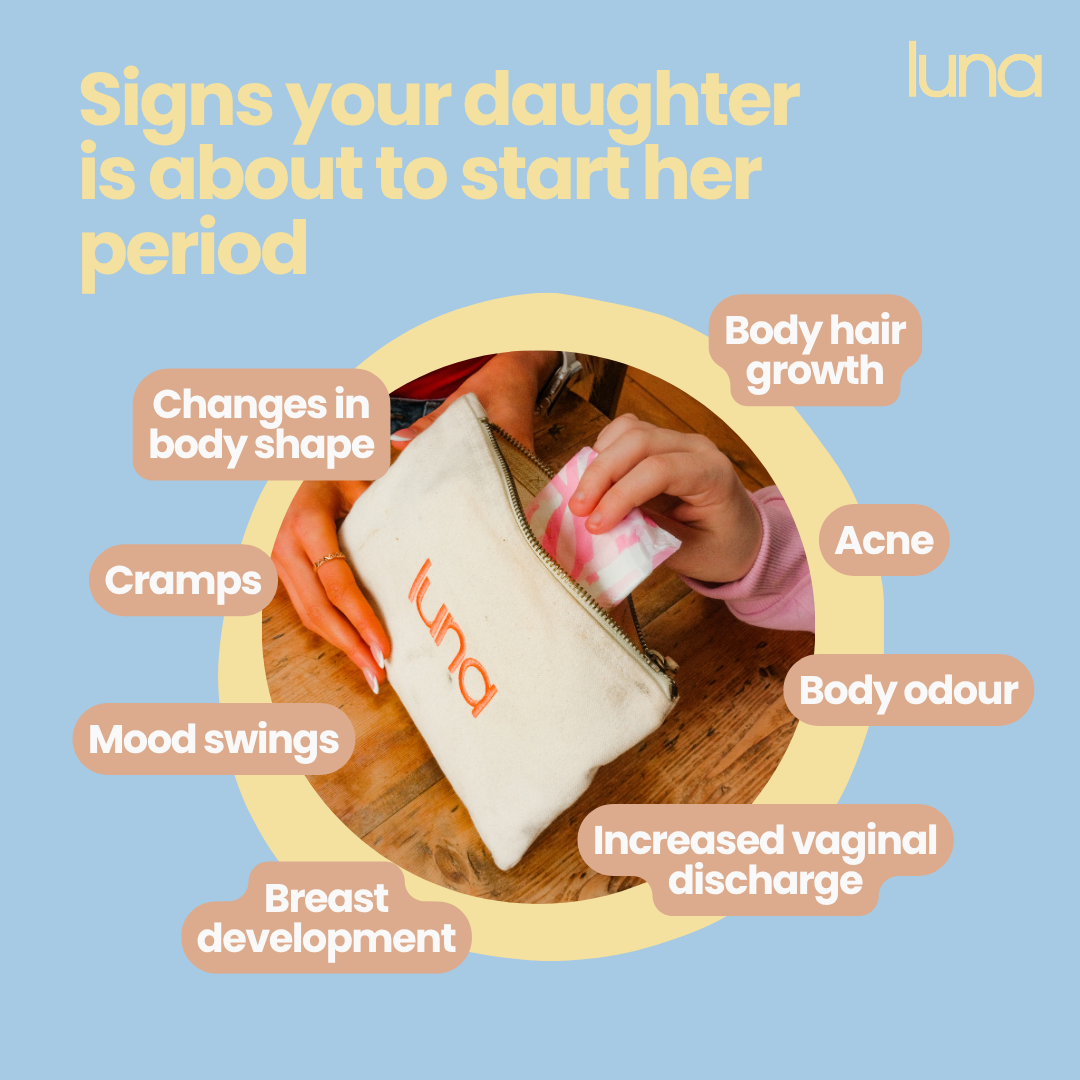
The main signs that a first period is approaching include breast development, the growth of pubic or underarm hair, and an increase in clear or white vaginal discharge. These changes usually begin one to two years before a first period, but the exact timing varies for each person.
Here are some indicators that your daughter is about to have her first period:
- Breast development: growth and tenderness in the breasts often begin years before the first period
- Body hair growth: the appearance of hair under the arms and in the pubic area is a sign of hormonal changes
- Increased vaginal discharge: a white or clear discharge before a period is common
These are the key first puberty symptoms to track. Periods usually start about 2 years after the first signs of breast development.
Are mood swings, acne or cramps signs a period is coming?
Yes. Mood changes, mild acne and body odour changes can be part of puberty and may happen in the months leading up to a first period.
These signs don’t mean a period is imminent, but they show the body is developing normally.
- Mood changes or emotional sensitivity
- Body odour changes
- Mild acne or skin changes
Being aware of these signs can help you prepare your daughter for this natural transition, ensuring she feels informed, supported, and confident.
When should someone seek medical advice if they have no period?
You should seek medical advice if a first period hasn’t started by age 15, or by age 13 if there are no other signs of puberty such as breast development or pubic hair. It’s also important to speak to a doctor if puberty starts very early (before age 8), as this may need assessment.
If your daughter's first period hasn't started by:
- age 15
- or age 13 without any signs of puberty like underarm or pubic hair or breast development
then it’s best to take them to see a doctor in case any tests are needed.
Delayed periods or puberty can sometimes be linked to medical conditions, just as early puberty (under the age of 8 in girls) known as precocious puberty, may require medical attention.
Don't panic though – doctors consider a wide range of puberty timelines normal, and most delays are not linked to serious health issues.
What happens after a girl’s first period?
After a first period, it’s normal for cycles to be irregular for the first one to two years. Periods may be light, short, or skip months as the body learns to regulate hormones.
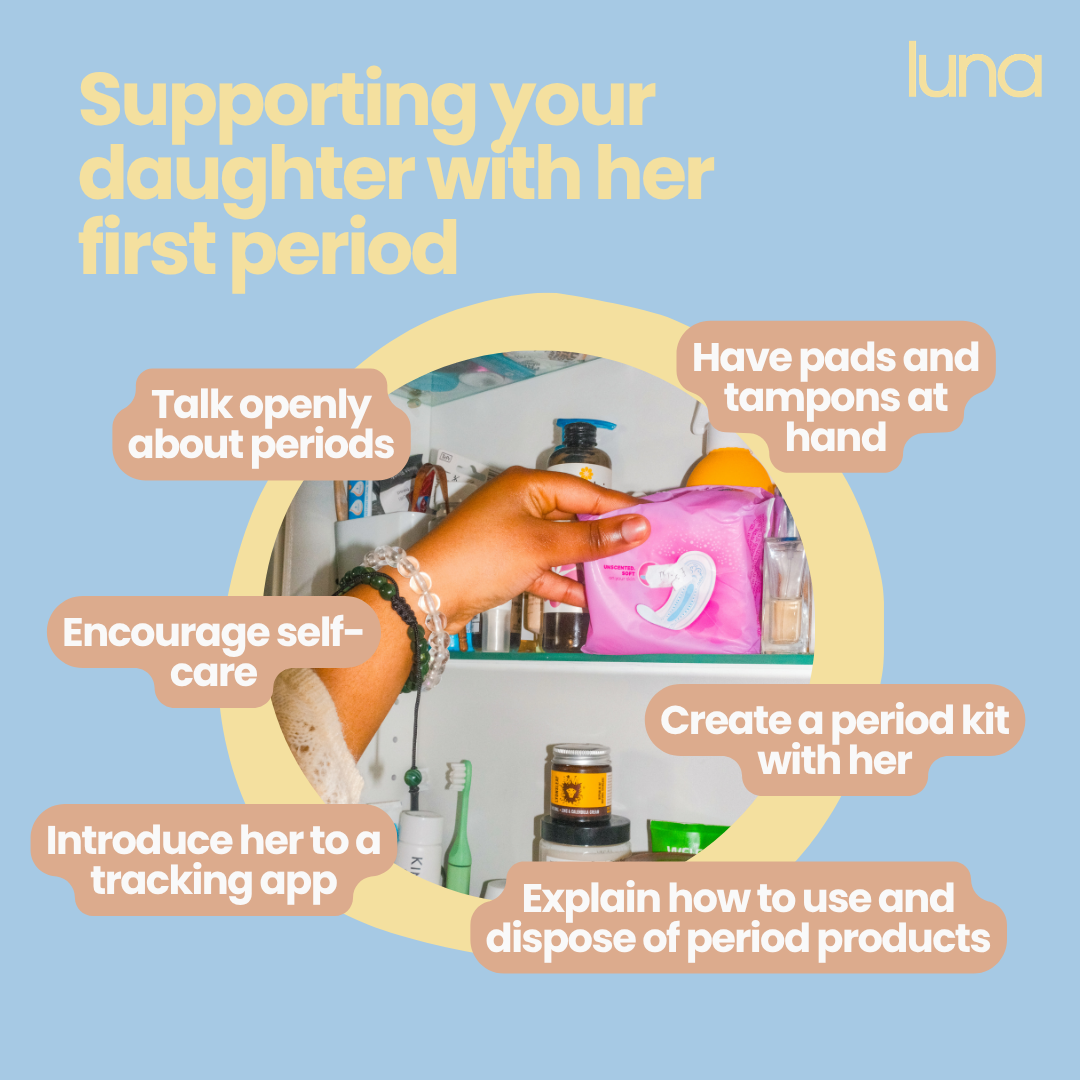
How can you support your daughter’s first period challenges?
You can support your daughter by talking openly about periods, helping her feel prepared with period products, and reassuring her that her experiences and emotions are normal. Offering calm guidance, privacy, and practical support can help her feel more confident as she adjusts to her first periods.
A few points to keep in mind that can help you along the way:
- Normalise the conversation: talk openly about periods to remove any stigma or embarrassment
- Provide the essentials: have pads, tampons, or period underwear ready so she feels prepared
- Teach proper hygiene: explain how to use and dispose of period products safely and hygienically
- Encouraging cycle and mood tracking: introduce her to a period tracking app – like luna, which is designed for pre-teens and teens and can be used even before a first period
- Encourage self-care: let her know it’s okay to rest and take care of herself during her period
- Be patient and supportive: mood swings and emotional changes are normal, so offer reassurance and understanding.
Please reassure your teen that whatever it is they're feeling about their period, be it scared or excited, it is normal.
You might find these first period dos and don’ts helpful for guiding the conversation.
Their period will come when their body is ready, and there’s nothing they can do to make it come faster.
Encourage them to use this time to really educate themself about what to expect and consider putting together a first period kit to help them feel prepared.
FAQs about first periods
How long after puberty does a first period start?
For many girls, a first period starts around one to two years after breast development begins, but this varies.
Is it normal not to have started a period by 13?
Yes. Many healthy teens haven’t started their period at 13, especially if other signs of puberty are still developing.
Can stress delay a first period?
Yes. Stress, weight changes, and illness can all affect when a first period begins.
Is it normal if my daughter hasn’t started her period but her friends have?
Yes. Puberty timing varies widely, and it’s very common for friends to start at different ages.
Being earlier or later does not mean anything is wrong and period syncing is a myth.
What does a girl’s first period look like?
A girl’s first period is often very light and may look like spotting, brown discharge, or a small stain in underwear rather than a heavy flow.
Early periods can be short, irregular, and easy to miss, sometimes lasting only one or two days.
Blood may appear brown, pink, or rust-coloured, and there may be little or no cramping at first.
👉 Find out more about what a first period looks like.
How we created this article:
luna's team of experts comprises GPs, Dermatologists, Safeguarding Leads and Junior Doctors as well as Medical Students with specialised interests in paediatric care, mental health and gynaecology. All articles are created by experts, and reviewed by a member of luna's senior review team.
Sources:
NHS "Starting periods" | Accessed 24.09.25
https://www.nhs.uk/conditions/periods/starting-periods/Cleveland Clinic "Menarche" | Accessed 24.09.25
https://my.clevelandclinic.org/health/diseases/24139-menarcheWe'd love to keep in touch!
Sign up to our parent newsletter for emails on the latest teen trends, insights into our luna community and to keep up to date
By signing up, you are agreeing that we can use your email address to market to you. You can unsubscribe from marketing emails at any time by using the link in our emails. For more information, please review our privacy statement.