Does my daughter have PMDD?
Recognising severe premenstrual symptoms
Updated May 29, 2026
In this article
In short
PMDD (premenstrual dysphoric disorder) is a severe form of PMS (premenstrual syndrome) where symptoms are intense enough to significantly disrupt daily life.
It is not just feeling a bit low before a period. According to the NHS, symptoms can include extreme anxiety, anger, depression, difficulty sleeping, and, in some cases, suicidal thoughts.
If your daughter's premenstrual symptoms are severe, persistent, and tied to her cycle, speaking to a doctor is the right step.
What is PMDD, and how does it differ from PMS?
PMS affects many people who menstruate, causing mood changes, bloating, breast tenderness, and tiredness in the week or two before a period. PMDD involves the same kinds of symptoms, but much more severely.
PMDD is a condition where symptoms are similar to PMS but are much more intense. Many people experience cycle phases and mood changes, but PMDD has a much greater negative impact on everyday life.
The key difference is not just the type of symptom but how disabling it is.
What are the symptoms of PMDD in teens?
Symptoms of PMDD tend to appear in the second half of the menstrual cycle (the luteal phase, roughly one to two weeks before a period) and ease once the period starts.
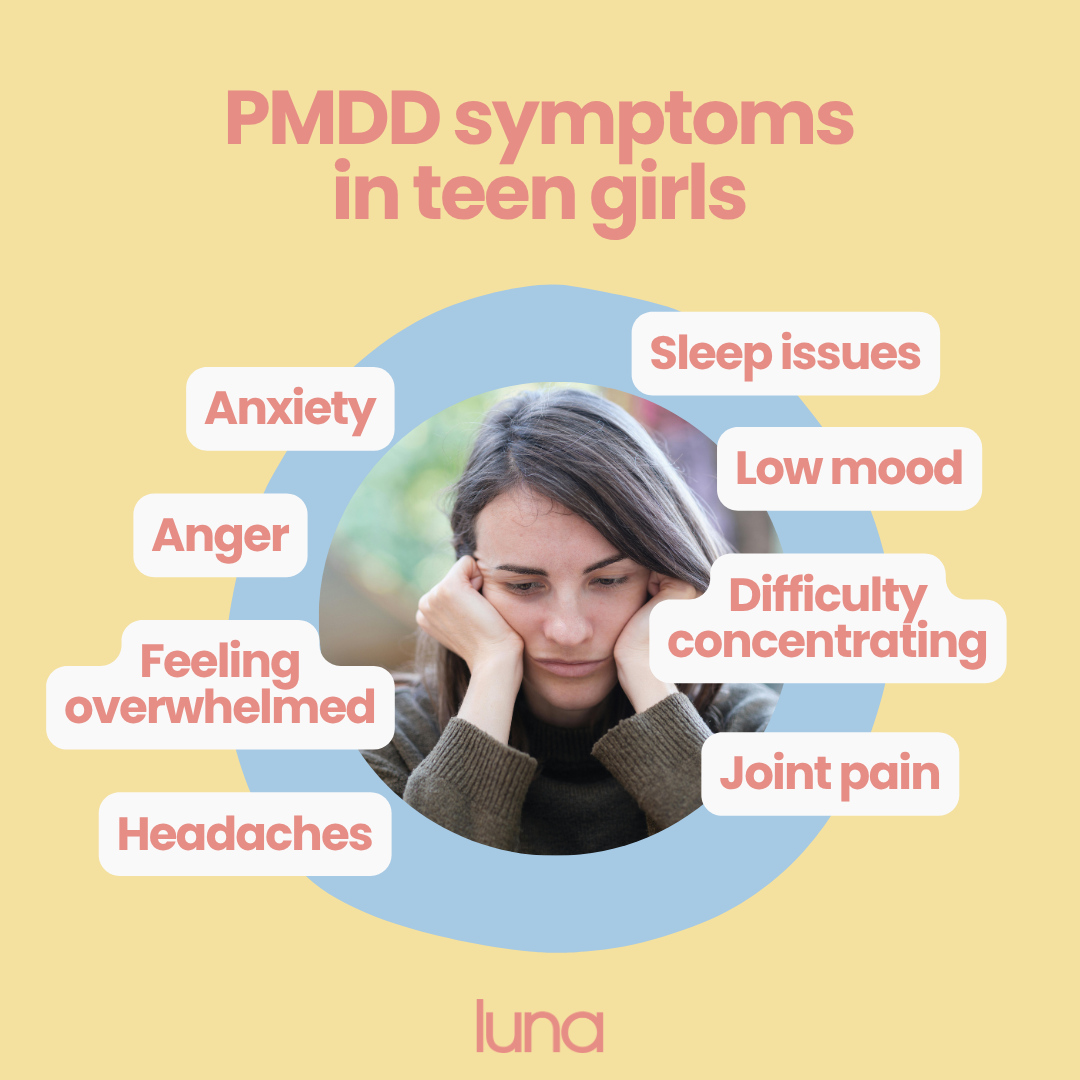
Emotional and mental symptoms can include:
- Feeling extremely anxious, angry, or irritable
- Severe low mood or depression
- Difficulty concentrating
- Feeling overwhelmed or out of control
- Suicidal thoughts
Physical symptoms can include:
- Headaches and joint or muscle pain
- Trouble sleeping or sleeping too much
- Overeating or food cravings
- Bloating and breast tenderness
How do I know if it is PMDD and not just typical PMS?
The clearest sign is the pattern. PMS symptoms are uncomfortable but manageable; PMDD symptoms are severe enough to affect school, relationships, and daily functioning.
It is helpful to track your daughter’s period and symptoms over two or three months to see if there is a pattern.
If the most intense emotional and physical symptoms reliably appear in the same window before a period and lift once it arrives, this cyclical pattern is one of the key features a doctor will look for.
What causes PMDD?
The NHS notes that it is not fully understood why some people develop PMDD. It has been linked to being particularly sensitive to the hormonal changes that occur across the menstrual cycle, and there may also be a genetic element.
What support is available?
Treatment options a doctor might discuss include hormonal medicines such as the combined contraceptive pill, antidepressants (particularly SSRIs, which have evidence for PMDD), and cognitive behavioural therapy (CBT).
Lifestyle measures like regular exercise for teens, reduced caffeine, and good sleep hygiene can also help.
If your daughter expresses suicidal thoughts connected to her symptoms, this needs urgent attention. The NHS advises calling 999 or going to A&E.
FAQ
Can teens be diagnosed with PMDD?
Yes. PMDD can develop as soon as periods begin, though it is often not diagnosed promptly because severe premenstrual symptoms are sometimes dismissed.
If your daughter's symptoms are significantly disrupting her life, a doctor can assess her and refer if needed.
Is PMDD the same as depression?
PMDD is not the same as depression, though it shares some symptoms. The key difference is that PMDD is tied directly to the menstrual cycle. Symptoms ease after a period starts.
If low mood is present throughout the whole cycle, this may point to depression rather than, or in addition to, PMDD.
How is PMDD diagnosed?
Diagnosis is based on symptom tracking across at least two cycles. A doctor will want to see a clear cyclical pattern of severe symptoms in the luteal phase that ease after the period begins.
What should I do if I think my daughter has PMDD?
Start by tracking her symptoms with her over two to three cycles, noting timing, severity, and which areas of life are affected. Then speak to a doctor, who can discuss options and refer if needed.
For further support, luna's article on helping your teen with PMS mood swings may also be useful.
How we created this article:
luna's team of experts comprises GPs, Dermatologists, Safeguarding Leads and Junior Doctors as well as Medical Students with specialised interests in paediatric care, mental health and gynaecology. All articles are created by experts, and reviewed by a member of luna's senior review team.
Sources:
NHS "PMS (premenstrual syndrome)" | 29.05.26
https://www.nhs.uk/conditions/pre-menstrual-syndrome/NHS 111 Wales "Premenstrual dysphoric disorder (PMDD)" | 29.05.26
https://111.wales.nhs.uk/encyclopaedia/p/article/premenstrualdysphoricdisorder%28pmdd%29Mind "Premenstrual dysphoric disorder (PMDD)" | 29.05.26
https://www.mind.org.uk/information-support/types-of-mental-health-problems/premenstrual-dysphoric-disorder-pmdd/We'd love to keep in touch!
Sign up to our parent newsletter for emails on the latest teen trends, insights into our luna community and to keep up to date
By signing up, you are agreeing that we can use your email address to market to you. You can unsubscribe from marketing emails at any time by using the link in our emails. For more information, please review our privacy statement.