How to explain periods to your daughter
Helping your teen navigate growing up

Updated March 17, 2026 • Medically reviewed by Dr. Emma Dickie
Medically reviewed by Dr. Emma DickieIn this article
- How do I explain periods to my daughter?
- What info should I cover when explaining periods to my daughter?
- What phrases could I use to explain periods?
- What age should I give my daughter the period talk?
- What questions might my daughter ask about periods?
- How do I prepare my daughter for her first period?
- What should I say when my daughter gets her first period?
- How can the luna app help my daughter learn about periods?
How do I explain periods to my daughter?
You can explain periods to your daughter by using simple, honest language and focusing on what will actually happen to their body.
It helps to frame periods as a normal sign of growing up, not something embarrassing or scary.
Start with the basics: that a period is monthly bleeding from the uterus.
Then, let them guide how much detail they want. You don’t need one perfect talk.
Small, ongoing conversations often work better than a single “big chat”.
What info should I cover when explaining periods to my daughter?
When explaining periods, focus on what will happen, what it means for their body, and what to do when it starts.
Clear, practical information helps reduce fear and confusion.
Key things to include:
- What a period is: monthly bleeding from the uterus
- Why it happens: it’s part of the menstrual cycle and growing up
- What it looks like: blood, not an injury
- How often it happens: usually about once a month, but periods can be irregular at first
- What to do: how to use pads or period underwear and who to tell if it starts
You don’t need to cover everything at once.
Giving the basics first and adding detail over time helps your daughter feel informed without being overwhelmed.
What phrases could I use to explain periods?
The best way to explain periods is to use simple, factual sentences and avoid overloading your daughter with detail.
Clear, calm wording helps periods feel normal rather than awkward or scary.
You can explain periods using short, straightforward phrases like:
- “A period is part of the menstrual cycle”
- “Once a month, the body releases some blood through the vagina”
- “This doesn’t mean you’re hurt, it’s normal”
- “Periods usually last between two and seven days”
- “People use pads, tampons, or period underwear to catch the blood”
- “Everyone’s periods are different, especially at the beginning”
- “You can always ask me questions whenever you are curious”
You don’t need perfect wording.
What matters most is that your daughter hears about periods in a calm, confident way from someone they trust.
What age should I give my daughter the period talk?
Most experts recommend talking to your daughter about periods at around age 6 or 7, with simple conversations you gradually build on.
It’s best for your daughter to hear about periods before their first one arrives
Periods can start as early as 8, and many girls feel frightened if bleeding happens without warning.
Early conversations help normalise periods and reduce fear or shame.
These talks often happen in phases at natural times.
For example, if there is an advert for period products on the TV, you may want to raise it with your daughter and ask them if they know much about it.
What questions might my daughter ask about periods?
Many girls ask practical questions about pain, bleeding, school, and whether periods are normal.
Some questions may come slowly over time rather than all at once.
Common questions include:
- Will it hurt?
- How long will it last?
- Can people tell I’m on my period?
- What colour will it be?
- Can I still play sports or swim with a period?
Answer honestly and simply. It’s okay to say, “That can be different for everyone.”
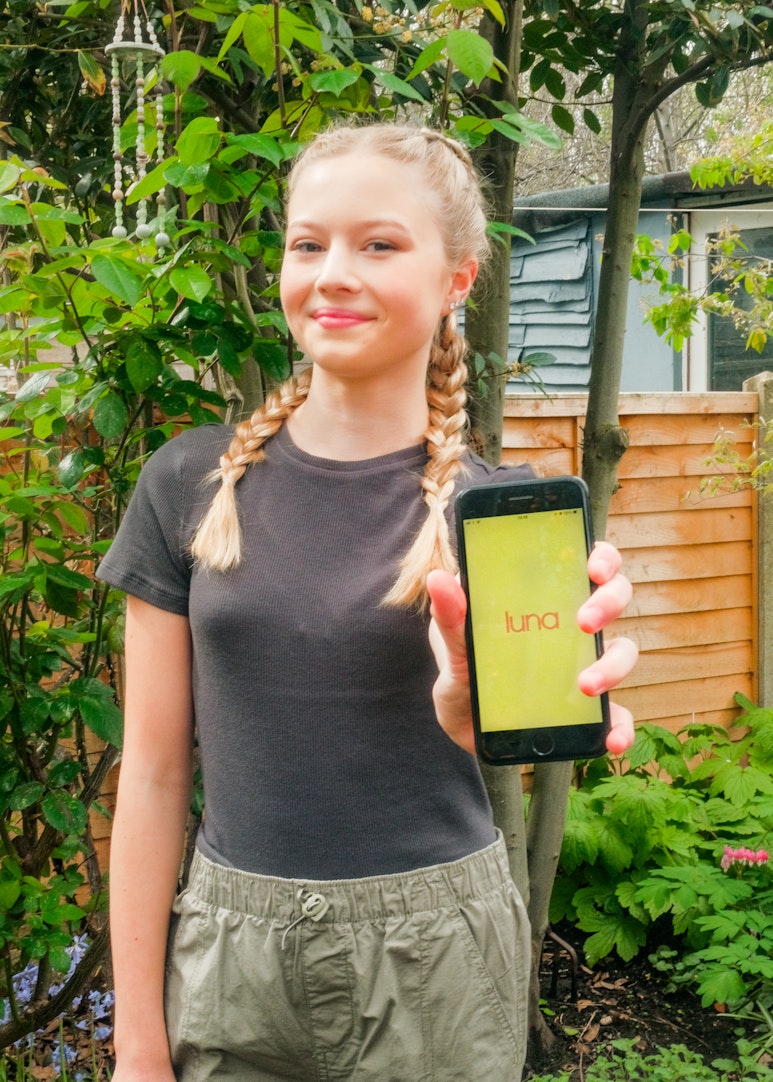
If there are questions you are struggling to answer, explore the luna app together.
On the app, your daughter can check out expert-vetted articles on periods and puberty so they can feel informed and prepared.
How do I prepare my daughter for her first period?
Preparing your daughter means explaining what a period looks like, what it feels like, and what to do when it starts.
Practical preparation helps them feel calm and in control.
Helpful ways to prepare include:
- Showing them pads or period underwear and how to use them
- Explaining common symptoms like cramps or tiredness
- Letting them know periods don’t start perfectly “on time”
- Packing a first period kit for school or outings
Let them know they can always come to you or another trusted adult if they need help.
What should I say when my daughter gets her first period?
When your daughter gets their first period, the most important thing is to stay calm, supportive, and positive.
Your reaction shapes how they feel about periods going forward.
Things you can say to help:
- “This is totally normal, even though it might feel a bit strange!”
- “You’re doing great, and I’m here to help”
- “Loads of people feel unsure the first time, but it gets easier”
- “I’m here if you want help, or I can give you some space”
- “There’s no rush to figure everything out today.”
Some teens want comfort, others want privacy.
Follow their lead.
If they feel uncomfortable, avoid over-celebrating.
But if they want to, you can throw a first period celebration with them!
How can the luna app help my daughter learn about periods?
Having the right tools can make period conversations feel less awkward and more supportive.
Clear information, ongoing chats, and gentle guidance all help your daughter feel confident as their body changes.
Alongside open conversations at home, many families find it helpful to use teen-friendly resources that explain periods in a way they can actually understand.
luna is designed to support teens through puberty and early periods with age-appropriate education, symptom tracking, and expert-vetted advice.
Using luna can help your daughter:
- Learn what’s normal for their body
- Recognise early signs that a period is coming
- Understand symptoms like cramps or mood changes
- Feel more prepared and less anxious
Explaining periods doesn’t have to be perfect.
What matters most is that your daughter knows they are supported, informed, and never alone in figuring it out.
How we created this article:
luna's team of experts comprises GPs, Dermatologists, Safeguarding Leads and Junior Doctors as well as Medical Students with specialised interests in paediatric care, mental health and gynaecology. All articles are created by experts, and reviewed by a member of luna's senior review team.
Sources:
Kids Health "Talking about menstruation" | Accessed 06.02.26
https://kidshealth.org/en/parents/talk-about-menstruation.htmlWe'd love to keep in touch!
Sign up to our parent newsletter for emails on the latest teen trends, insights into our luna community and to keep up to date
By signing up, you are agreeing that we can use your email address to market to you. You can unsubscribe from marketing emails at any time by using the link in our emails. For more information, please review our privacy statement.