Is discharge after a period normal for teens?
Does discharge increase after menstruation?

Updated February 25, 2026 • Medically reviewed by Dr. Katie Knight
Medically reviewed by Dr. Katie KnightIn this article
- Is discharge after a period normal for teens?
- What does normal discharge look like after a period?
- Why does discharge increase after a period?
- How much discharge is normal for a teenager?
- When should a parent worry about discharge after a period?
- Is it normal to have discharge after starting periods?
- What should parents remember about discharge after periods?
Is discharge after a period normal for teens?
Yes, discharge after a period is normal and is part of the body’s natural menstrual cycle.
It often changes in amount and texture in the days after bleeding stops as hormone levels begin to rise again.
For teens, especially in the first few years after periods begin, discharge patterns can feel unpredictable but are usually healthy.

What does normal discharge look like after a period?
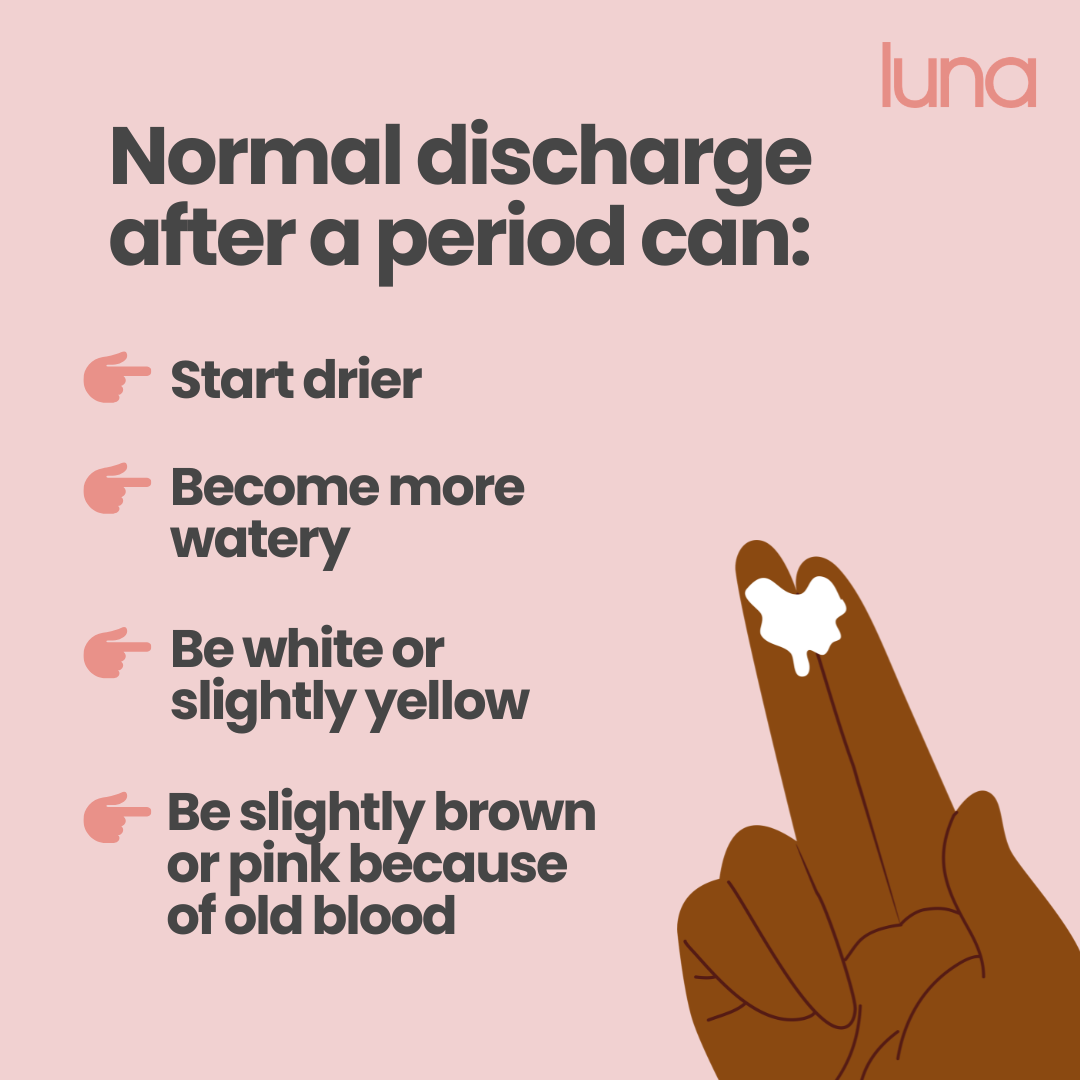
Normal discharge after a period is usually white or slightly yellow, mild in smell, and not uncomfortable.
Some teens may notice light pink or brown discharge just after their period as old blood clears, which is usually normal.
After a period, discharge may:
- Start off drier
- Become more slippery or watery as ovulation approaches
- Change slightly from day to day
Every teen is different.
Some notice more discharge around ovulation (mid cycle) while others notice very little.
Why does discharge increase after a period?
Discharge often increases after a period because oestrogen levels begin to rise again.
Oestrogen helps prepare the body for ovulation and stimulates the cervix to produce more cervical mucus.
This increase is usually a normal sign that the menstrual cycle is progressing.
At this stage, discharge may feel:
- Slippery
- Wet
- Stretchy
If your teen feels uncomfortable or unsure about changes, you can speak with your family doctor for reassurance.
How much discharge is normal for a teenager?
There is a wide range of normal when it comes to discharge in teens.
Some teenagers notice discharge most days, while others only see it at certain points in their cycle.
Fluctuations are especially common in the first few years after periods begin.
Discharge can also vary from month to month during puberty.
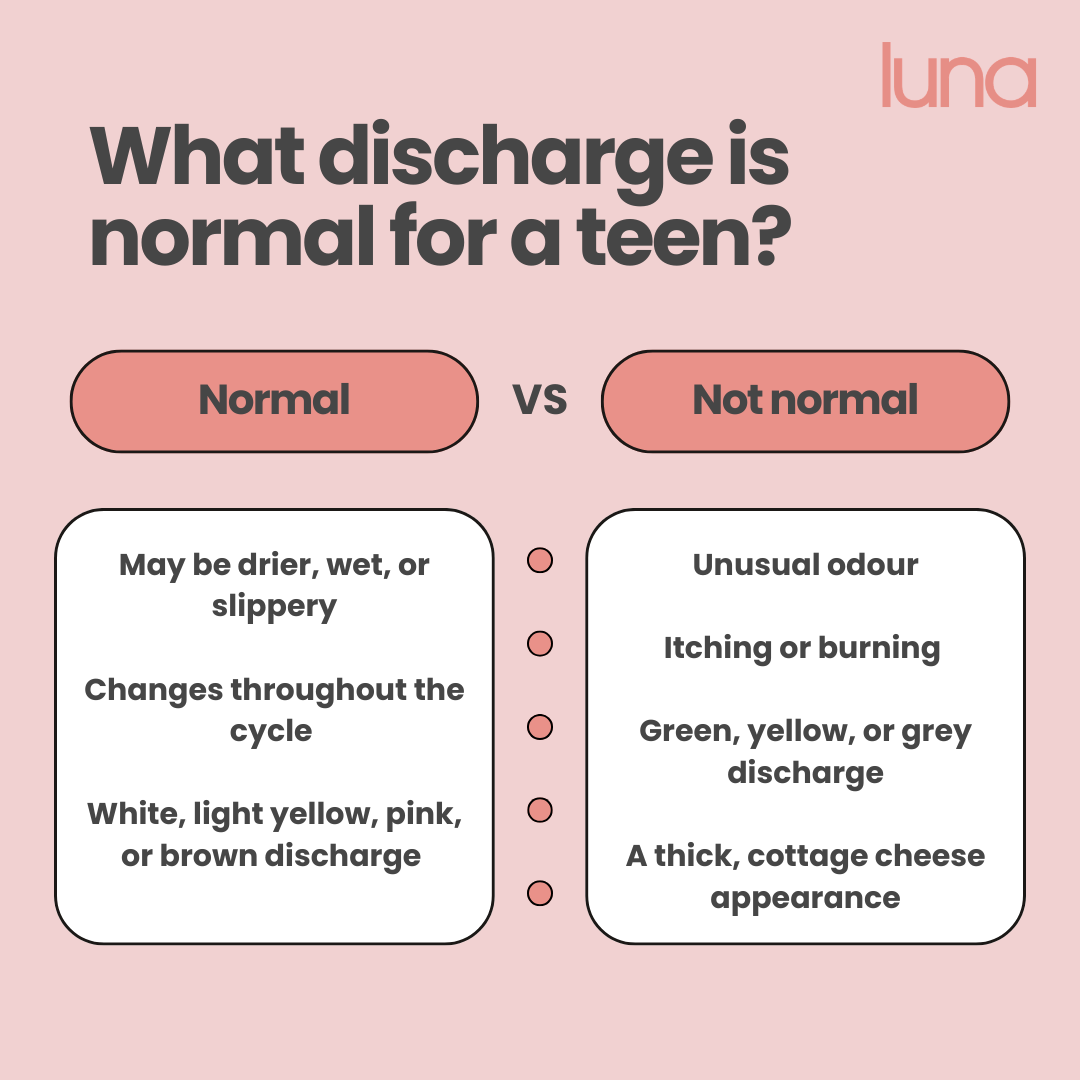
What matters more than the amount is whether there are additional symptoms like itching, strong odour, pain, or unusual colour.
When should a parent worry about discharge after a period?
Parents should seek medical advice if discharge comes with symptoms that may suggest infection or irritation.
Changes in colour, smell, or comfort are usually more important than the amount of discharge.
Speak to a family doctor if your teen has:
- Strong or unpleasant odour
- Itching, burning, or redness around the vagina
- Green, grey, or bright yellow discharge
- Pain when urinating
- Thick, cottage cheese-like discharge
- Foamy discharge
And if you're unsure but still worried, it's always reasonable to seek medical advice for reassurance.
Is it normal to have discharge after starting periods?
Yes, discharge continues after periods begin and remains a normal part of the menstrual cycle through puberty and adulthood.
Hormonal changes across the cycle naturally affect how much discharge is produced.
Many teens notice discharge changes between periods, around ovulation, or before their next period starts.
This variation is usually healthy and expected.
What should parents remember about discharge after periods?
Discharge after a period is usually a healthy and normal part of the menstrual cycle.
Variations in amount, colour, and texture are common during the teen years.
What matters most is whether your teen feels comfortable and has no signs of infection.
Open, calm conversations can help your teen feel confident asking questions and speaking up if something changes.
If anything seems unusual or worrying, checking with a family doctor can provide reassurance.
How we created this article:
luna's team of experts comprises GPs, Dermatologists, Safeguarding Leads and Junior Doctors as well as Medical Students with specialised interests in paediatric care, mental health and gynaecology. All articles are created by experts, and reviewed by a member of luna's senior review team.
Sources:
KidsHealth "Is it ok to have a discharge after getting your period?" | Accessed 25.02.26
https://kidshealth.org/en/teens/discharge-wperiod.htmlCleveland Clinic "Cervical mucus" | Accessed 25.02.26
https://my.clevelandclinic.org/health/body/21957-cervical-mucusCleveland Clinic "Oestrogen" | Accessed 25.02.26
https://my.clevelandclinic.org/health/body/22353-estrogenNHS "Vaginal discharge" | Accessed 25.02.26
https://www.nhs.uk/symptoms/vaginal-discharge/We'd love to keep in touch!
Sign up to our parent newsletter for emails on the latest teen trends, insights into our luna community and to keep up to date
By signing up, you are agreeing that we can use your email address to market to you. You can unsubscribe from marketing emails at any time by using the link in our emails. For more information, please review our privacy statement.