Why has my daughter had her period for 3 weeks?
Is this something to worry about?
Updated April 30, 2026 • Medically reviewed by Dr. Emma Dickie
Medically reviewed by Dr. Emma DickieIn this article
Why has my daughter had her period for 3 weeks?
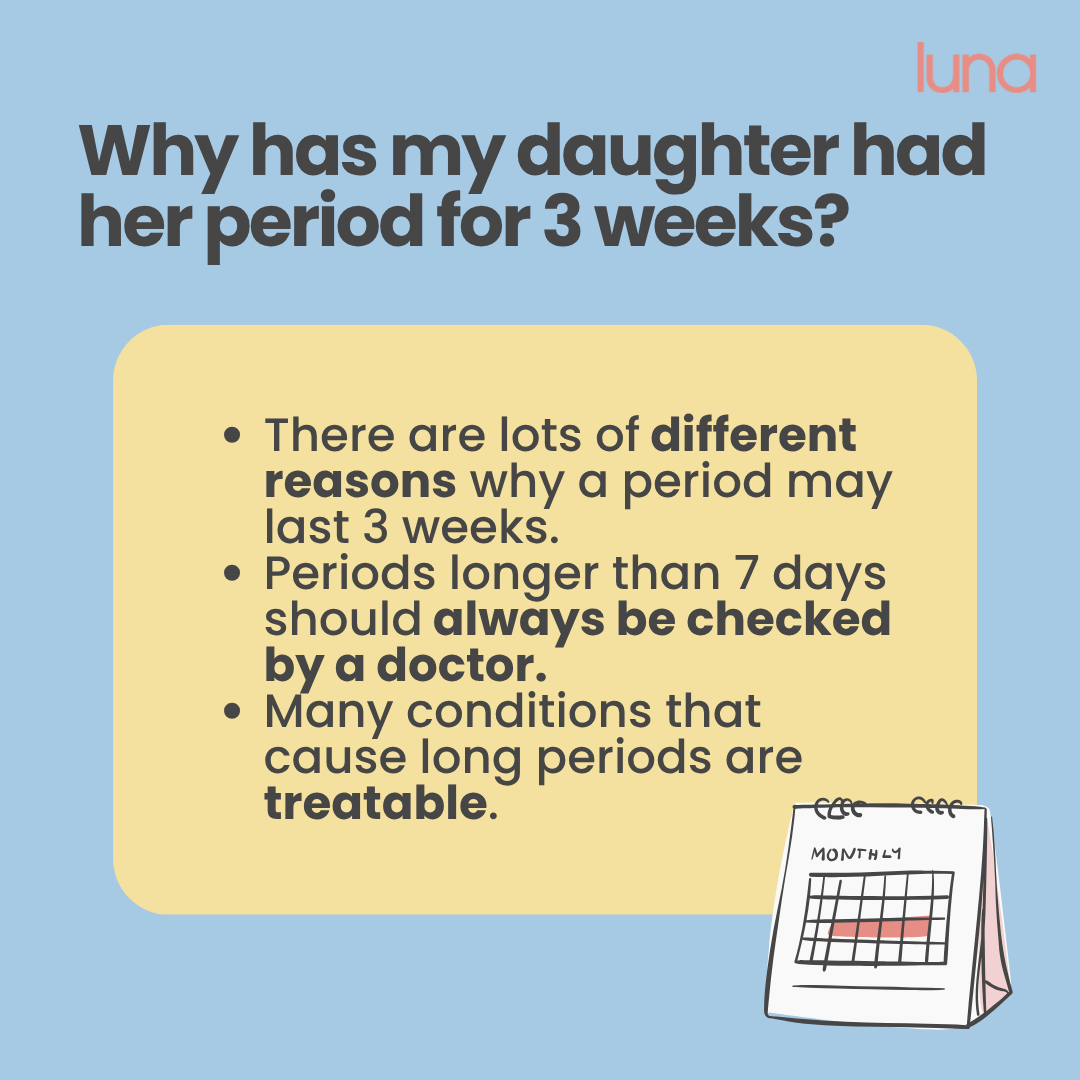
A period lasting three weeks isn’t considered typical, even in teens, and it’s a good idea to get it checked by a doctor.
There are a few different reasons why your daughter may be experiencing a long period, including hormonal changes and conditions that affect the womb or ovaries.
It may simply be your daughter's periods settling in, but ongoing bleeding like this should be looked into to understand the cause and get the right support.
Your daughter's period should last between 2 and 7 days, and it is best to see a doctor if they last more than 7 days.
This may be scary for both you and your teen, but many of the conditions that cause long or heavy menstrual periods are treatable, and getting help will help your daughter manage their symptoms.
Why is my daughter’s period lasting so long?
Long periods in teens are often linked to hormonal changes, especially in the first few years of menstruation, when things are still settling down and irregular periods are common.
However, when bleeding lasts this long, it can also be linked to other underlying causes that may need medical support.
Possible reasons can include:
- Irregular or absent ovulation
- Conditions that affect the womb and ovaries, such as polycystic ovary syndrome
- Stress and lifestyle habits
- Bleeding conditions, such as Von Willebrand disease
- Certain medications
While some variation is normal in early periods, bleeding that lasts several weeks is something that should be checked rather than monitored alone.
What should I do about my daughter’s long period?
If your daughter’s period has lasted this long, the best next step is to arrange a doctor's appointment.
It’s especially important to seek advice if:
- They are soaking through pads or tampons frequently
- They are very tired, dizzy, or weak
- They are experiencing ongoing period pain or discomfort
While waiting, you can support your teen by monitoring symptoms and helping them stay comfortable, but ongoing bleeding shouldn’t be left without medical advice.
You can help by:
- Keeping track of how long the bleeding has lasted
- Noting how heavy it is
- Checking how they’re feeling (energy levels, dizziness, pain)
- Supporting rest, hydration, and regular meals
What should I remember if my daughter’s period is lasting this long?
A very long period can feel worrying, but it’s something that can be checked and managed with the right support.
The most important step is not to ignore it - getting advice early can help your daughter feel more comfortable and confident about what’s happening.
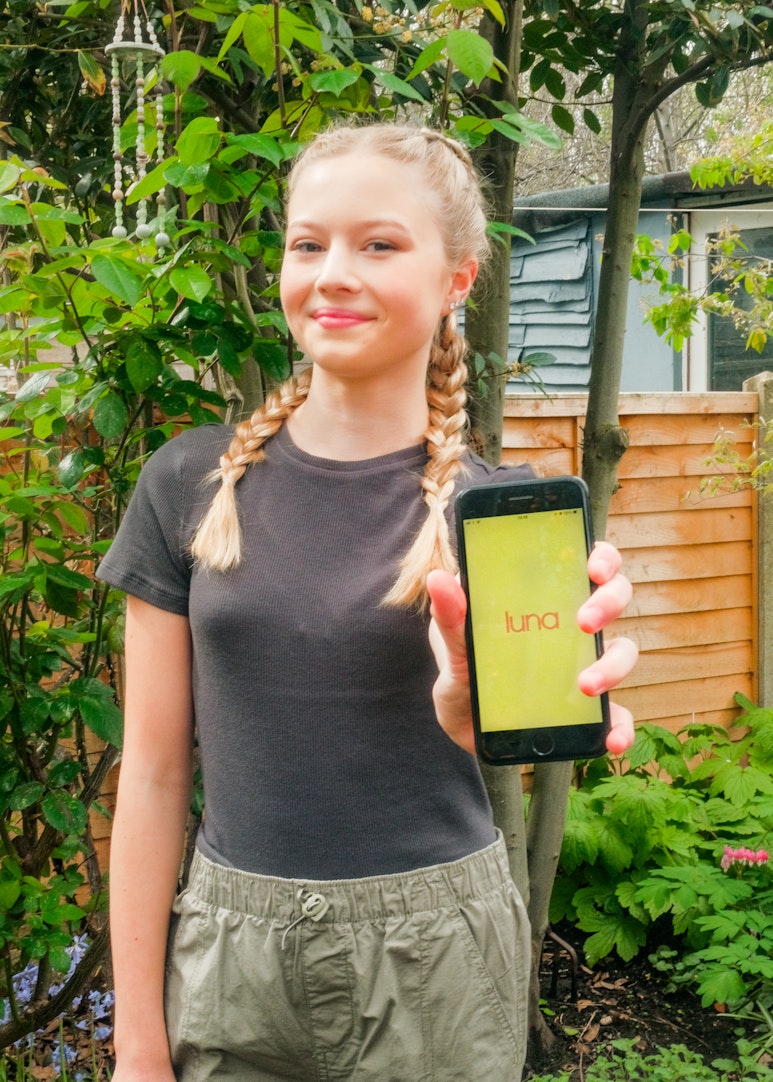
Tools like luna can also help your daughter track their cycle and notice changes over time, making it easier to spot when something isn’t quite right and talk about it early - with your support alongside them.
How we created this article:
luna's team of experts comprises GPs, Dermatologists, Safeguarding Leads and Junior Doctors as well as Medical Students with specialised interests in paediatric care, mental health and gynaecology. All articles are created by experts, and reviewed by a member of luna's senior review team.
Sources:
Kids Health “Abnormal Uterine Bleeding (AUB)” | Accessed 20.04.26
https://kidshealth.org/en/teens/aub.htmlNHS “Heavy Periods” | Accessed 20.4.26
https://www.nhs.uk/conditions/heavy-periods/NHS “Periods” | Accessed 20.4.26
https://www.nhs.uk/conditions/periods/We'd love to keep in touch!
Sign up to our parent newsletter for emails on the latest teen trends, insights into our luna community and to keep up to date
By signing up, you are agreeing that we can use your email address to market to you. You can unsubscribe from marketing emails at any time by using the link in our emails. For more information, please review our privacy statement.