My daughter won't track her period
How to introduce a period tracker
Updated May 4, 2026
In this article
- In short
- Is it normal for my daughter to refuse to track her period?
- Why does tracking actually matter?
- Why might she not want to track?
- How do I introduce a period tracker without being pushy?
- What should I look for in a period tracker for teens?
- What about privacy and her data?
- What if she still refuses?
- FAQ
- What if she's only just started?
- A small note before her next period
In short
Tracking is genuinely useful: it helps her understand her body, prepare for her next period, and gives a GP real data if something feels off.
But it has to feel like hers, not yours. Start with curiosity, suggest a teen-friendly app, and let her decide.
If she still refuses, a paper diary, a note in her phone, or just logging her start date is enough to begin with.
Is it normal for my daughter to refuse to track her period?
Very. Tracking can feel intrusive, boring, or like another thing to remember, especially in the first year of periods when cycles are all over the place anyway.
A bit of context:
- A luna poll of 1,605 girls found that only 13% had regular periods straight away
- 71% of girls got their first phone aged 11 or younger (luna poll of 3,901 girls), so the device is there: it's the habit that's missing
- Many teens already track without realising, by texting friends or noting it in their phone notes app
If she's pushing back, she's not being unreasonable.
Her body is brand new to her, and tracking can feel like surveillance.
The aim is for tracking to feel like a tool she chooses, not a job you're giving her.
Why does tracking actually matter?
Tracking gives her (and any doctor she sees) real data about what's normal for her body. It also takes the surprise out of periods, which most teens appreciate once they feel it.
The practical benefits:
- She can predict her next period and avoid being caught out at school
- She'll start to spot patterns: pain, mood, energy, sleep
- She'll know what's normal for her body, which makes spotting problems easier
- A GP can give better care with a few months of data than with a vague "they're heavy"
- It builds body literacy, which is useful for the rest of her life
The NHS specifically recommends keeping a diary of symptoms before a GP appointment about period problems.
Without one, the conversation is much harder. luna's guide on how to track your daughter's period walks through what to log.
Why might she not want to track?
Naming the reason usually unlocks the conversation. Most teens have a specific objection, not a blanket refusal.
Common reasons teens resist tracking:
- It feels like one more thing to remember
- She's worried about privacy (who sees the data, who can read her phone)
- She finds it embarrassing or wants to keep periods completely private
- She doesn't think it's necessary if her periods seem fine
- She's tried an app that felt clinical, adult-targeted, or creepy
- She doesn't want her parent to be involved at all
- She's in denial that her periods are here to stay
A luna poll of 2,229 girls found that 30% feel embarrassed, uncomfortable, or want to keep periods completely private.
That privacy instinct is a feature, not a problem: a good tracker should respect it.
How do I introduce a period tracker without being pushy?
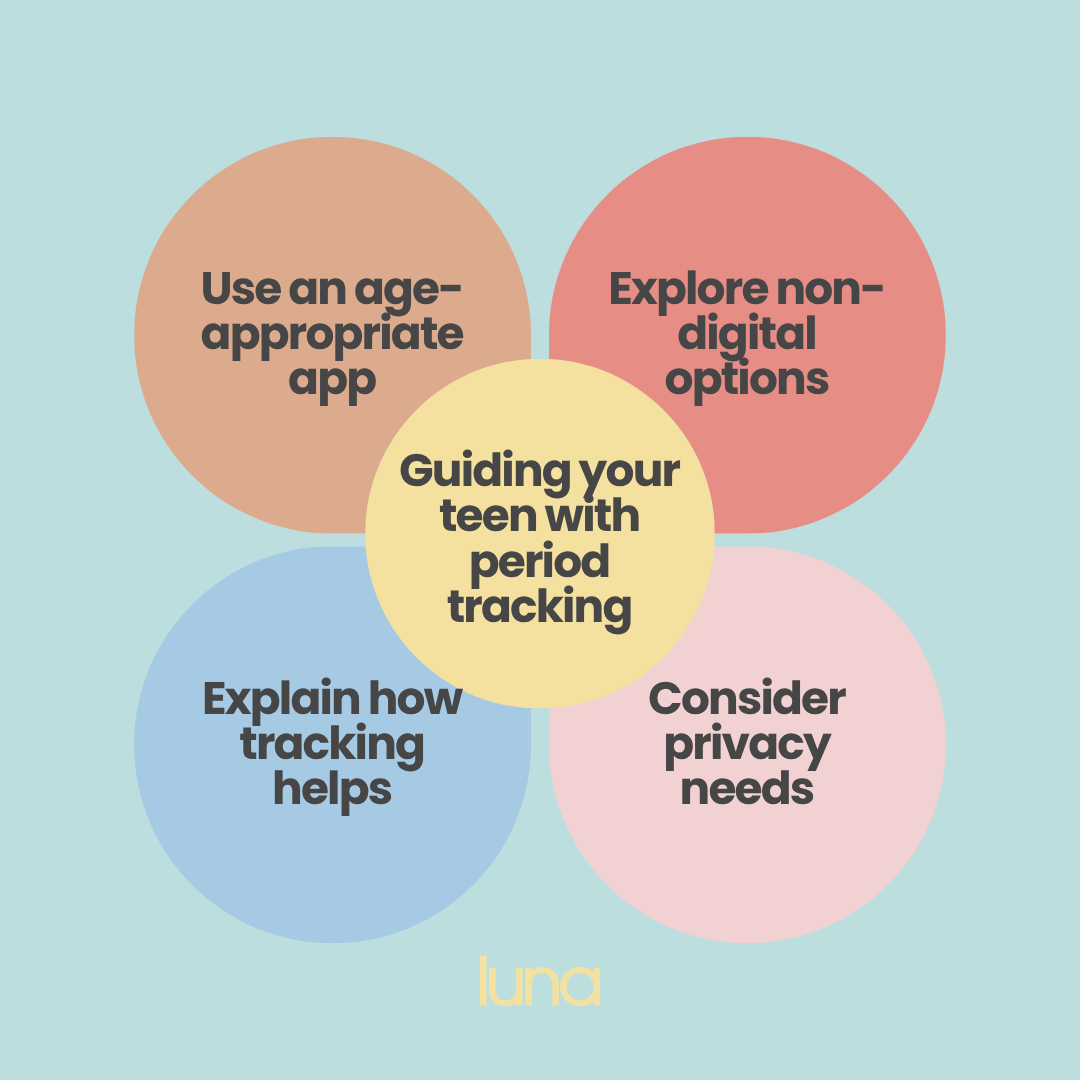
Lead with usefulness, not duty. Teens are more open to tools than tasks.
Things that often help:
- Ask if she'd like to know when her next period is due (this is the hook for most teens)
- Frame it as something that's just for her, not something you'll see
- Show her a tracker once, then leave it alone
- Let her choose the app: she's the one using it
- Start small, with just the start and end dates of each period
- Normalise tracking by mentioning that adults track too (cycle apps, sleep apps, fitness apps)
- Avoid making it part of a bigger period chat: keep it light
If she's curious about how trackers actually work, how does a period tracker work? is a quick explainer she can read herself.
What should I look for in a period tracker for teens?
Not all trackers are designed with teens in mind. Most popular apps were built for adults trying to conceive or manage contraception, which is a long way from a 12-year-old's needs.
What to look for in a teen-friendly tracker:
- Age-appropriate language and design, not adult fertility framing
- A private, password protected app
- The option to track without entering personal data
- Support for irregular cycles, since most teens have them at first
- Educational content written for her age group, not adults
- A free or low cost version
- Cear, plain-English privacy policy
luna covers this in detail in choosing a teen period tracker and best period tracker app for teenage girls.
If she has irregular periods, is there a period tracker for irregular periods? is a useful read.
What about privacy and her data?
Privacy is a fair concern and worth taking seriously. Period data is sensitive, and not every app handles it well.
Things to check before she signs up:
- Does the app store data on her device only, or send it to a server?
- Is data shared with advertisers or third parties?
- Can she use the app without an email address or login?
- Is the privacy policy short and readable, or buried in jargon?
- Is the app made by a company that specialises in women's or teen health?
A luna poll of 902 girls found that 41% have used free AI for health advice, and 65% would sometimes trust free AI for personal advice.
Teens are already using their phones for health information: helping her pick a tracker she trusts is part of that wider digital literacy.
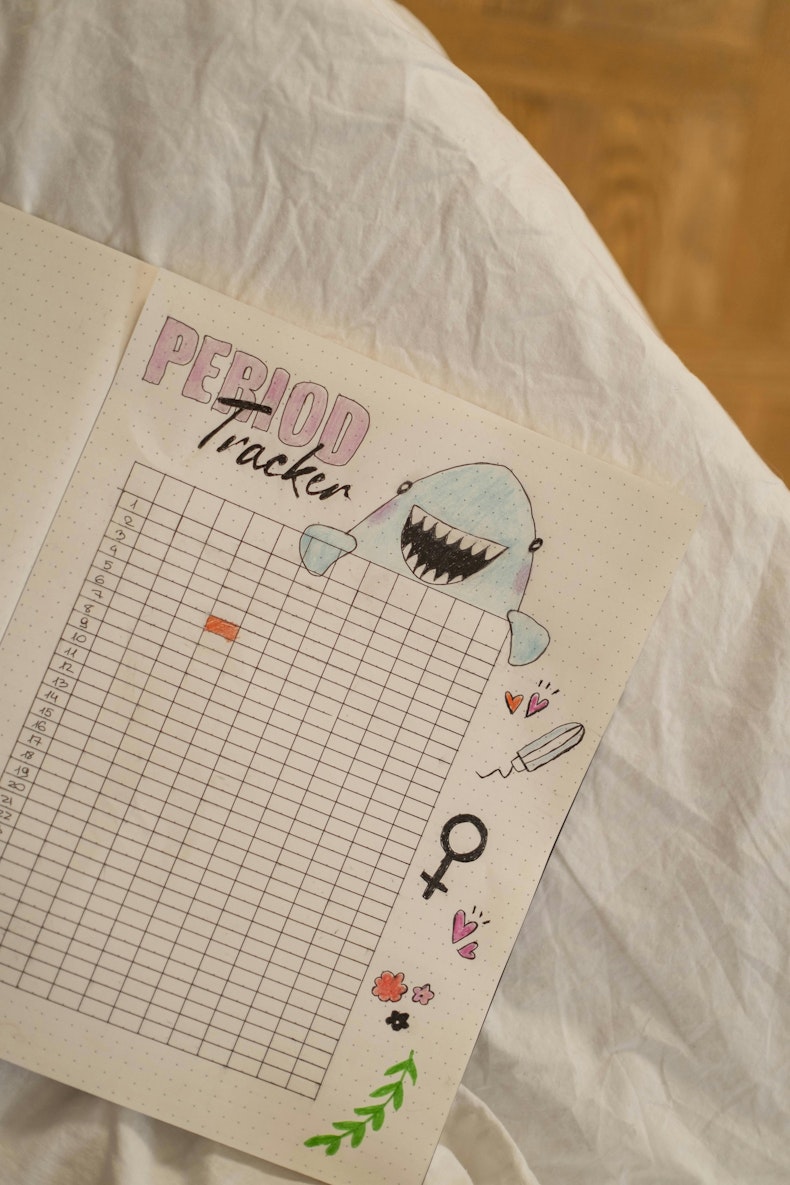
If she'd rather use something more analogue, that's also fine. A note in her phone, a paper diary, or a calendar with a small dot on period days does the job for the basics.
What if she still refuses?
Then leave it. Forcing tracking almost always backfires and makes her less likely to come to you when she has a question later. The relationship matters more than the data.
Things you can still do:
- Track quietly yourself if you're worried about her cycle (with her permission)
- Leep an eye on how often she changes products, how long her periods last, and any pain
- Let her come to tracking in her own time, often when she has a reason (a holiday, a school trip, sport)
- Focus on the conversation about her periods, not the data
If you're worried something isn't right, you don't need a tracking app to take her to the GP.
luna's guides on signs your teen has a heavy menstrual period and is it normal for teens to have irregular periods? walk through what's worth flagging.
FAQ
At what age should my daughter start tracking?
Whenever she wants to. There's no minimum age. Most teens start when they're curious, or when they want to predict their next period (often after being caught out once).
Is a paper diary as good as an app?
Yes, for the basics. Start date, end date, pain level, and any other symptoms cover most of what a GP would need. Apps just make pattern-spotting easier.
Will tracking help if she has irregular periods?
Yes, especially. Irregular cycles are very common in the first few years, and a tracker helps her see the pattern (or lack of one) clearly.
Should I have access to her tracker?
Probably not, unless she wants you to. Trackers feel safer when they're private. You can ask her general questions ("when's your period due?") without needing access to the data itself.
What if she's only just started?
A first period tracker is genuinely useful, and there are options designed exactly for this. Have a look at does a first period tracker exist? for what to look for.
A small note before her next period
You don't need to win this in one go. Most teens come round to tracking when they have a reason: a school trip, exam season, sport, or just being fed up of being caught out.
Until then, keeping the door open is the most useful thing you can do.
If you'd like a starter resource you can share with her (no pressure), how to track your daughter's period is written so a parent or a teen can use it.
If your daughter's periods are very heavy, very painful, or affecting her daily life, that's worth a GP visit, with or without a tracker.
How we created this article:
luna's team of experts comprises GPs, Dermatologists, Safeguarding Leads and Junior Doctors as well as Medical Students with specialised interests in paediatric care, mental health and gynaecology. All articles are created by experts, and reviewed by a member of luna's senior review team.
Sources:
NHS "Period problems" | Accessed 30.04.26
https://www.nhs.uk/conditions/periods/period-problems/We'd love to keep in touch!
Sign up to our parent newsletter for emails on the latest teen trends, insights into our luna community and to keep up to date
By signing up, you are agreeing that we can use your email address to market to you. You can unsubscribe from marketing emails at any time by using the link in our emails. For more information, please review our privacy statement.