Period phases and mood: what changes to expect
How to support your daughter
Updated February 25, 2026
In this article
- How does the menstrual cycle affect my teen's mood?
- Is it normal for my teen to feel emotional during her period?
- Why does my teen seem happier after her period?
- What mood changes happen mid cycle?
- Why is my teen more sensitive before her period?
- How can I help my teen cope with PMS mood changes?
- Should my teen track her mood with her cycle?
How does the menstrual cycle affect my teen's mood?
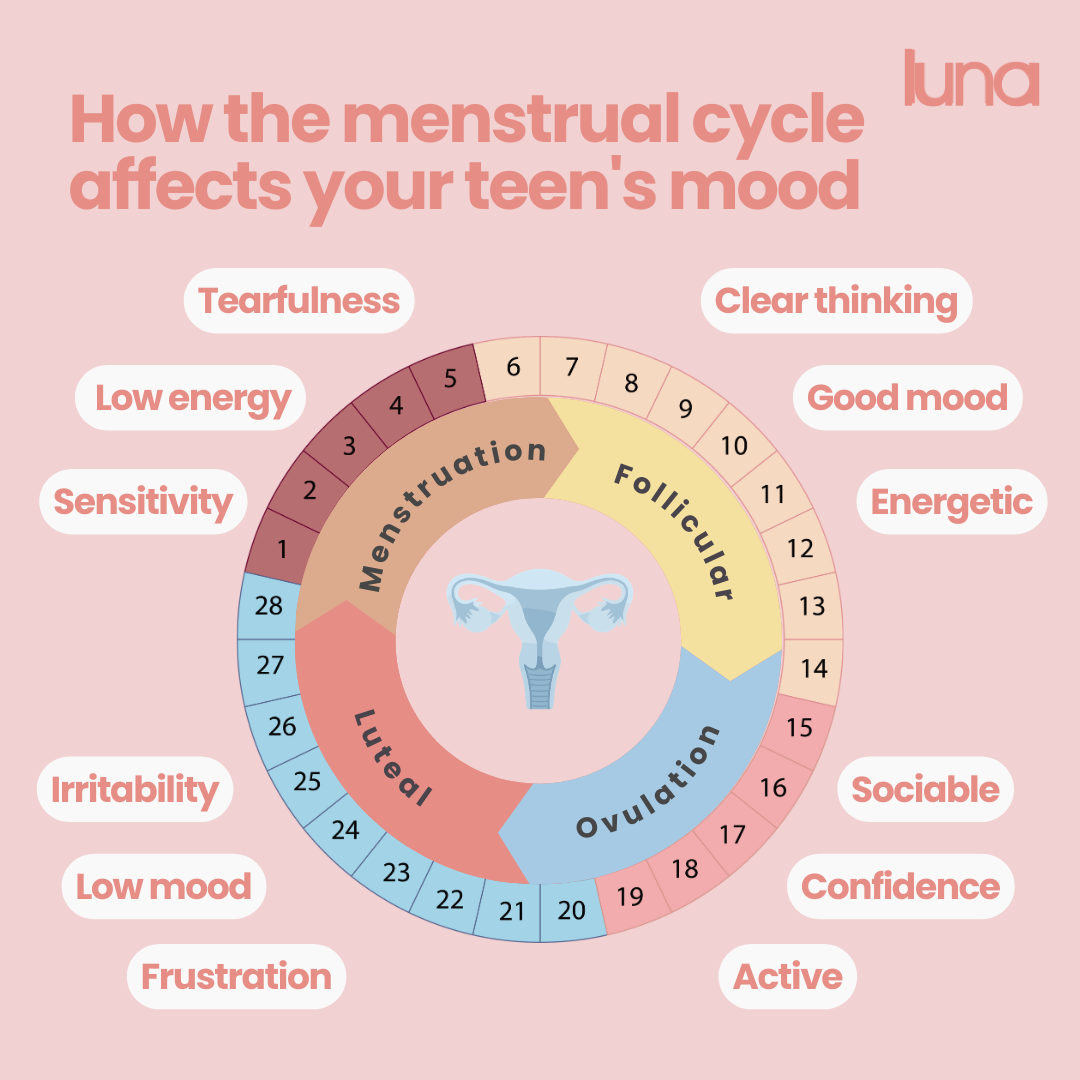
The menstrual cycle can affect your teen’s mood because hormone levels naturally rise and fall throughout the month.
Changes in oestrogen and progesterone can influence energy, emotions, and focus, so mood shifts at different points in the cycle are common.
However, experiences vary from person to person.
Rather than being random, emotional changes often follow the four menstrual cycle phases: menstrual, follicular, ovulation, and luteal.
Understanding this pattern can help you support your teen with more empathy and reassurance.
Is it normal for my teen to feel emotional during her period?
Yes – many teens feel more sensitive, tired, or low in mood during their period.
Hormone levels are lower in the menstrual phase, and physical symptoms like cramps or poor sleep can also affect emotional resilience.
Periods usually last around 2 to 7 days.
If your teen seems quieter, more tearful, or more easily overwhelmed at this time, it may be linked to normal hormonal changes.
What physical symptoms can affect mood during a period?
Common period symptoms such as cramps, headaches, bloating, and fatigue can make it harder to regulate emotions.
When the body feels uncomfortable or low on energy, mood can feel more fragile.
When should I be concerned about mood changes?
Mood changes around periods are common.
However, speak to your family doctor if your teen has severe or persistent low mood, symptoms that interfere with daily life, or anxiety or depression that continues throughout the cycle.
How can I support my teen when she’s on her period?
Gentle understanding and practical comfort are usually the most helpful support during a period.
Physical discomfort and lower energy can make emotions feel stronger, so small adjustments often help your teen cope.
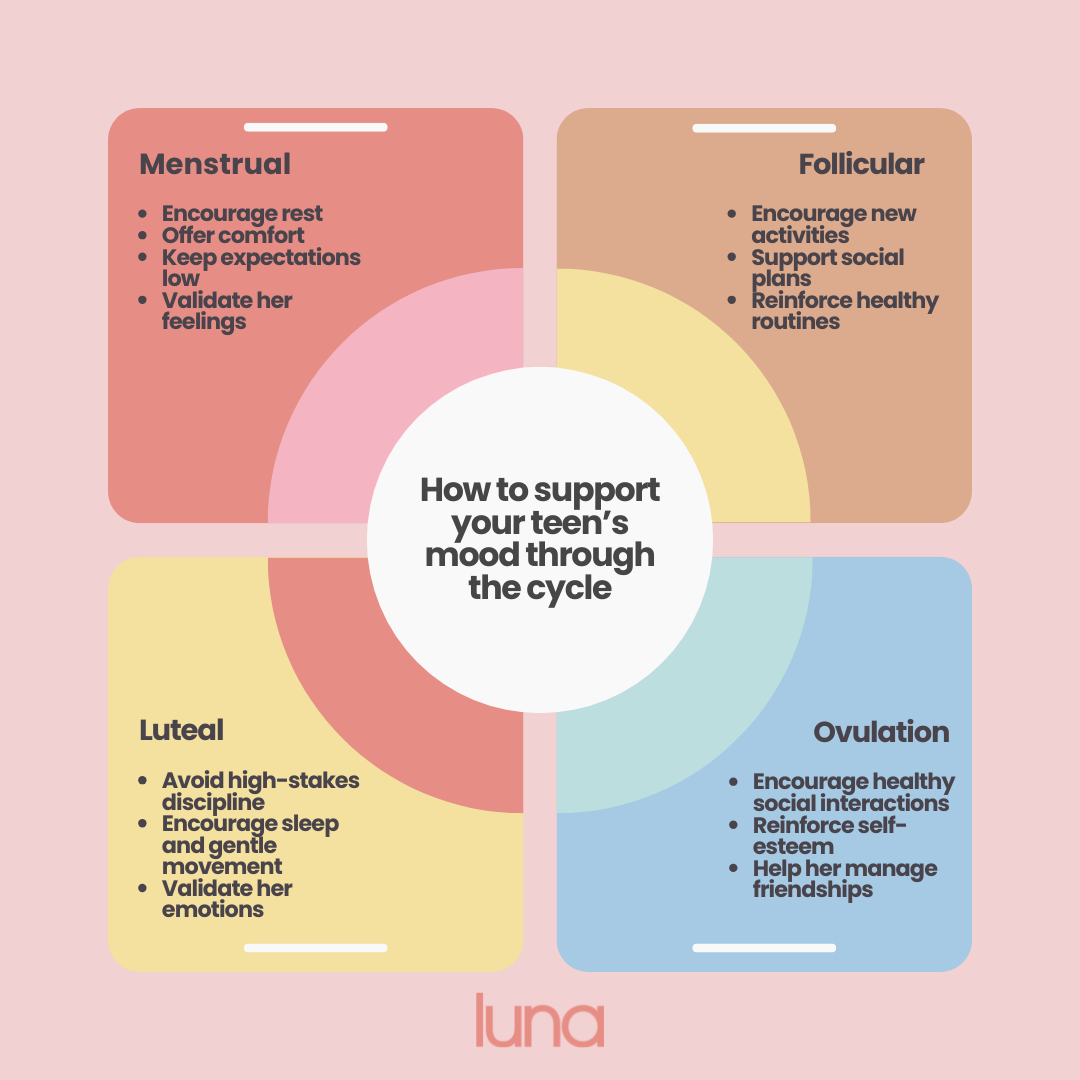
You can support her by:
- Encouraging rest without labelling it as laziness
- Offering comfort items like a hot water bottle or warm drink
- Keeping expectations slightly lighter if she seems tired
- Checking in with simple, low-pressure questions
- Validating her feelings calmly
- Helping her track her cycle over time
Small ways to make periods more comfortable
Warm baths, cosy clothing, favourite snacks, and quiet time can help your teen feel more supported during her period.
How to talk about emotions during this phase
Keep conversations brief and low pressure.
Gentle check-ins often work better than long discussions when she is already feeling sensitive.
Why does my teen seem happier after her period?
Many teens notice improved mood and energy after their period because oestrogen levels begin to rise during the follicular phase.
This hormone increase can support concentration, motivation, and social confidence.
The follicular phase starts after bleeding ends and continues until ovulation.
However, every teen’s experience is slightly different.
How should I support my teen during this higher-energy phase?
This phase is often a good time to encourage independence and positive routines.
When energy and focus are higher, teens may feel more open to learning, planning, and social activities.
You can support her by:
- Encouraging new activities or projects
- Having bigger or more reflective conversations
- Supporting social plans if she feels energised
- Helping her notice links between mood and her cycle
- Reinforcing healthy daily routines
What mood changes happen mid cycle?
Ovulation (when an egg is released) usually occurs roughly midway through the cycle, but timing can vary.
Around ovulation, some teens experience increased confidence, sociability, and energy as oestrogen peaks.
Some teens notice temporary emotional sensitivity at this time, while others notice very little change.
How can I guide my teen during ovulation?
During ovulation, steady routines and calm check-ins remain helpful.
Even when mood and energy are higher, teens still benefit from consistent boundaries and support.
You can support her by:
- Encouraging healthy social interactions
- Keeping boundaries consistent
- Helping her navigate friendship dynamics
- Checking in if emotions seem heightened
- Reinforcing self-esteem beyond appearance
Why is my teen more sensitive before her period?
In the 1 to 2 weeks before a period, hormone levels change again.
Many teens experience symptoms of premenstrual syndrome (PMS), which can include irritability, low mood, anxiety, or increased emotional sensitivity.
These symptoms are common but vary widely between individuals.
What is PMS in teens?
PMS (premenstrual syndrome) refers to physical and emotional symptoms that occur before a period.
In teens, this may include mood swings, irritability, tiredness, bloating, or breast tenderness.
How can I help my teen cope with PMS mood changes?
Extra patience, predictable routines, and simple coping tools can help many teens manage PMS symptoms more comfortably.
You can help by:
- Avoiding high-stress conversations where possible
- Encouraging regular sleep and balanced meals
- Supporting gentle movement
- Offering space if she feels overwhelmed
- Validating emotions calmly
- Tracking patterns together over time
Daily habits that may ease PMS
Regular sleep, balanced nutrition, gentle exercise, and stress management can support overall wellbeing across the cycle.
When should we speak to a family doctor?
Consider medical advice if PMS symptoms are severe, worsening, or interfering with school, friendships, or daily life.
Should my teen track her mood with her cycle?
Tracking mood alongside the menstrual cycle can help teens recognise patterns and feel less confused by emotional changes.
Many young people feel more confident when they can see that mood shifts follow a predictable rhythm.
Tools like luna can provide an age-appropriate space to track periods, learn what is normal, and build body awareness alongside your support.
Over time, this understanding can reduce self-criticism and strengthen emotional confidence.
How we created this article:
luna's team of experts comprises GPs, Dermatologists, Safeguarding Leads and Junior Doctors as well as Medical Students with specialised interests in paediatric care, mental health and gynaecology. All articles are created by experts, and reviewed by a member of luna's senior review team.
Sources:
NHS "Periods" | Accessed 25.02.26
https://www.nhs.uk/conditions/periods/NHS Norfolk "Mood swings" | Accessed 25.02.26
https://www.justonenorfolk.nhs.uk/emotional-health/children-young-peoples-emotional-health/mood-swingsManchester Mind "Mental health and the menstrual cycle" | Accessed 25.02.26
https://www.manchestermind.org/menstrual-cycle/NHS "Periods and fertility in the menstrual cycle" | Accessed 25.02.26
https://www.nhs.uk/conditions/periods/fertility-in-the-menstrual-cycle/We'd love to keep in touch!
Sign up to our parent newsletter for emails on the latest teen trends, insights into our luna community and to keep up to date
By signing up, you are agreeing that we can use your email address to market to you. You can unsubscribe from marketing emails at any time by using the link in our emails. For more information, please review our privacy statement.