Do girls shed skin on their period?
Navigating the TikTok trend
Updated January 14, 2026 • Medically reviewed by Dr. Emma Dickie
Medically reviewed by Dr. Emma DickieIn this article
- Do girls shed skin?
- Where did the skin-shedding myth come from?
- Do girls shed skin during their period?
- What actually happens to the skin during the menstrual cycle?
- Why do period myths spread so easily?
- How to reassure and support your teen
- How can teens care for their skin during their period?
- When do you need to see a doctor about hormonal skin changes?
- FAQs
- So, what can you takeaway from this?
Do girls shed skin?
No – girls do not shed skin from their face or body during their period. The only shedding that happens is the uterine lining, which leaves the body as menstrual blood.
Social media moves fast, and unfortunately, myths move even faster – especially on platforms like TikTok, where trends can blur fact and fiction.
Our guide to harmful TikTok trends parents need to know about explains how misinformation spreads and how to keep teens safe.
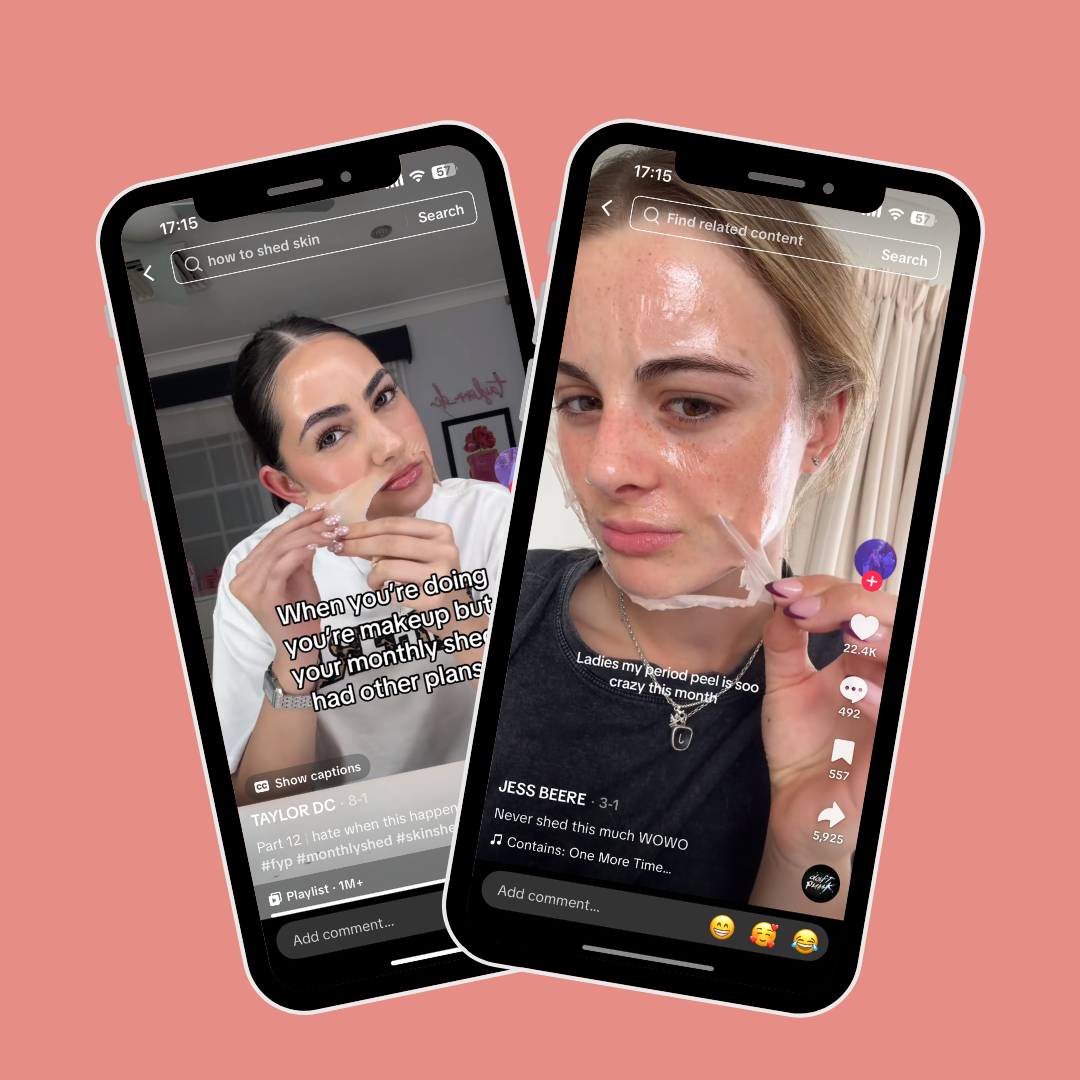
One trend that has recently gained attention shows menstruators peeling the skin off their face and claiming it’s something that happens during a period.
If your teen has asked you about this and you’re not sure how to respond, you’re not alone.
Many parents have let us know they're worried about what their children are seeing online, especially when concepts like “brain rot” and content overload make it harder for teens to tell what’s real. Our guide to what “brain rot” really means explains why some content feels so convincing.
This guide explains exactly what’s going on in these videos, what actually happens to the body during a menstrual cycle, and how you can confidently reassure your teen.
Where did the skin-shedding myth come from?
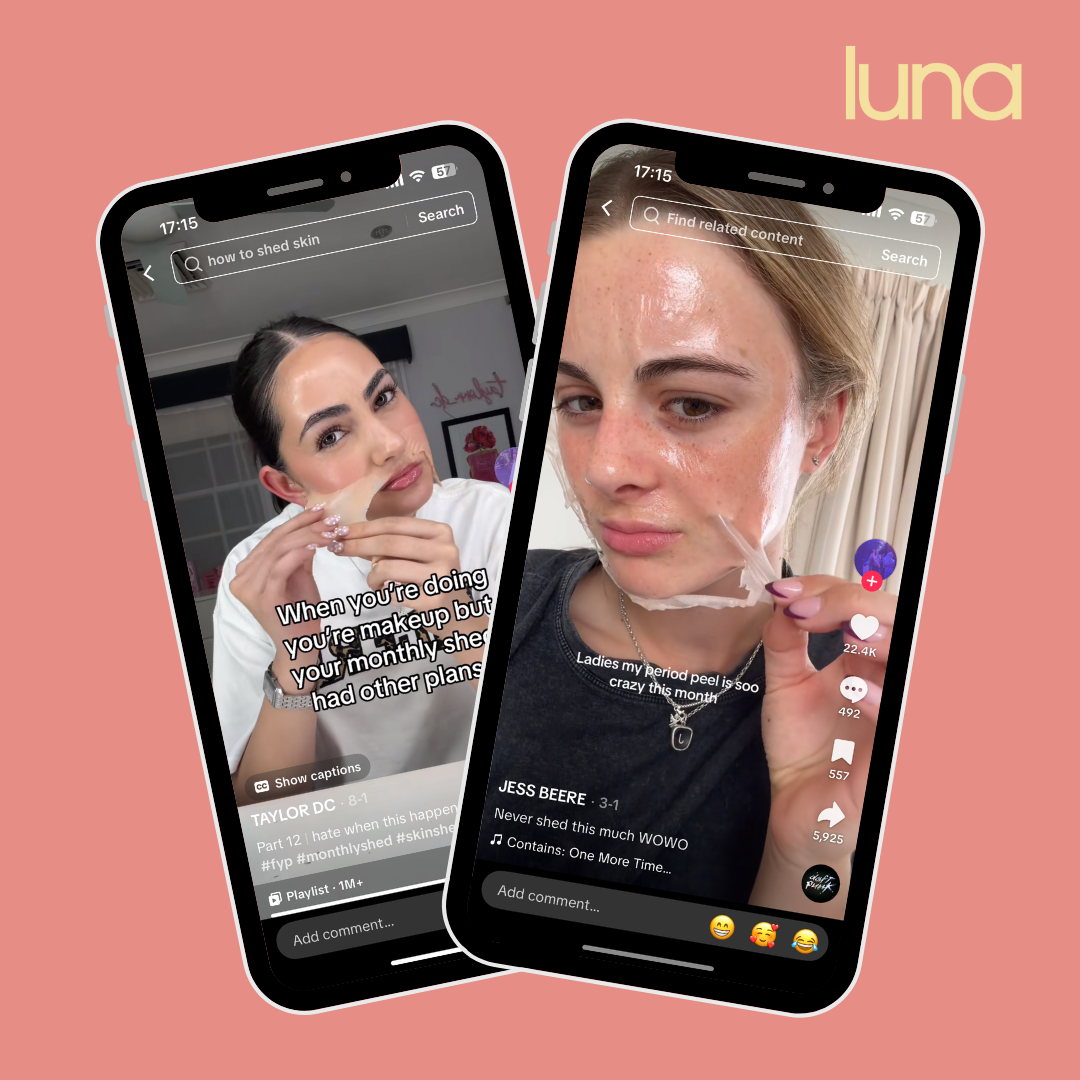
This trend began as an inside joke: creators applied a peel-off face mask, filmed themselves peeling it away, and added captions implying this was a normal part of menstruation.
Many viewers recognised it as a joke – but not all.
Some teens and tweens, especially those who haven’t begun menstruating, saw these videos and genuinely believed they were watching the “skin shedding” that supposedly happens after a period.
If your teen is still waiting for their first period, our guide on what a first period actually looks like can help reassure them about what’s normal.
luna receives many anonymous questions from young people asking if this is true. That’s why clear, calm information matters.
Do girls shed skin during their period?
No. Girls and women do not shed skin from their face or body during their period.
The only shedding that occurs during menstruation happens inside the uterus, where the uterine lining breaks down and leaves the body as menstrual blood.
This process does not affect the skin on the face or elsewhere.
The peeling seen online is simply a skin-care mask being removed.
You can confidently reassure your teen:
This is a myth, and there is absolutely no medical process where girls shed facial skin during a period.
What actually happens to the skin during the menstrual cycle?
While skin shedding is not real, skin changes are – and they’re completely normal.
What’s normal vs what’s a myth
Normal skin changes during a cycle
- Breakouts or acne
- Mild dryness
- Temporary sensitivity
Not normal
- Peeling sheets of facial skin
- Skin “shedding” after a period
- Painful or raw skin without another cause
Hormones fluctuate throughout the cycle, and this can affect the skin in several ways:
If your teen is noticing changes in mood, skin, or breakouts throughout their cycle, our explanation of how teen hormones affect periods, skin and mood breaks down what’s normal and what to expect.
For a full, medically-reviewed routine, you might find our guide to the best teen skincare routine helpful too.
1. Breakouts
Before a period, progesterone drops and testosterone becomes more dominant.
This can increase oil production, leading to:
- spots
- blackheads
- whiteheads
2. Dryness
Some teens experience temporary dryness or rough patches, especially during or just after menstruation.
3. Sensitivity
Hormonal changes may make the skin more reactive, meaning:
- redness
- irritation
- stinginess with certain products
These changes can be frustrating, especially for teens navigating puberty, but they are normal and temporary.
None of them involve peeling off sheets of skin.
Why do period myths spread so easily?
Period myths often spread on social media because periods aren't talked about very openly and so they're easy to create misleading content about.
Teens often trust what they see on social media, especially when many commenters repeat the same information.
Period myths spread because:
- young people may not have had comprehensive period education yet
- the menstrual cycle can feel “mysterious” or hard to understand
- many teens are embarrassed to ask adults questions
- jokes online aren’t always labelled clearly as jokes
For a teen about to get their first period, these videos can be genuinely scary. That’s why hearing the truth from a trusted adult is so important.
If they’re unsure whether their first period is coming, our article on the signs your daughter is about to start her period can help them understand their body better.

How to reassure and support your teen
You can reassure them clearly: “Periods don’t cause skin to peel – those videos use face masks to make it look real.”
If your teen comes to you with questions about this trend, you can:
1. Validate their feelings
You might say: “it makes sense that video confused or worried you – it looks very real.”
2. Explain the truth simply
“Periods involve shedding the lining of the uterus, not shedding skin from your face. Those videos are made using peel-off masks.”
3. Encourage healthy skepticism
Together you can talk about:
- checking sources
- recognising edited or staged videos
- asking questions if something feels strange
4. Let them know they can ask you anything
Open conversations now make future puberty questions feel much easier.
5. Point them to reliable information
luna’s content is reviewed by doctors, written for young people, and created with accuracy and reassurance in mind.
How can teens care for their skin during their period?
Gentle skincare can help manage normal hormonal changes, but it won’t – and doesn’t need to – prevent “skin shedding,” because that isn’t a real process.
You can share these simple, teen-friendly tips to help with teen acne or generally taking care of teen skin:
- Use a gentle cleanser to avoid irritation
- Moisturise daily, especially if skin feels dry
- Avoid picking at spots, which can worsen breakouts
- Use spot treatments with salicylic acid or benzoyl peroxide if recommended for their age
- Wear SPF to protect sensitive skin.
- Drink water regularly, which supports overall skin health.
These are supportive habits and help teens feel more in control of their bodies during hormonal changes.
If acne is becoming persistent or upsetting for your teen, our guide on helping your daughter manage acne offers doctor-reviewed advice
When do you need to see a doctor about hormonal skin changes?
Most period-related skin changes are normal. However, consider speaking to a healthcare professional if your teen has:
- severe or painful acne that isn't fixed with over-the-counter treatments
- sudden skin changes that don’t match their usual cycle
- persistent rashes or peeling
- symptoms that affect their confidence or wellbeing
Additionally, large sheets of peeling skin are not a normal period symptom and should be assessed separately.
FAQs
Do girls shed skin on their period?
No. The only shedding during menstruation is the uterine lining – not facial or body skin.
Why do these skin-shedding videos look real?
They use peel-off face masks that mimic the appearance of a “sheet of skin”.
Can periods cause skin changes?
Yes – breakouts, sensitivity, and dryness can happen, but they are temporary.
Is dry or flaky skin normal for teens?
Mild dryness can be normal, especially with hormonal changes, but large sheets of peeling skin are not.
How can I explain this to my tween who hasn’t had their first period yet?
Keep it simple: “Your body doesn’t peel skin during a period. That’s just a TikTok joke.”
So, what can you takeaway from this?
Period myths spread quickly, and many teens take them seriously – especially if they’re new to menstruation or feeling anxious about it.
By giving your teen calm, accurate information, you not only help them understand their body but also build trust and openness for future conversations.
If your teen is anxious about upcoming periods, they might also find it helpful to learn what to pack in a first-period kit or read about what a first period looks like – there's teen-friendly guides to both of these on the luna app.
If they have more questions, remind them that luna is always there for them with reliable, medically-reviewed guidance created just for young people and the adults supporting them.
How we created this article:
luna's team of experts comprises GPs, Dermatologists, Safeguarding Leads and Junior Doctors as well as Medical Students with specialised interests in paediatric care, mental health and gynaecology. All articles are created by experts, and reviewed by a member of luna's senior review team.
Sources:
R. S. Raghunath, Z. C. Venables, G. W. M. Millington, "The menstrual cycle and the skin" | Accessed 14.01.26
https://pubmed.ncbi.nlm.nih.gov/25683236/We'd love to keep in touch!
Sign up to our parent newsletter for emails on the latest teen trends, insights into our luna community and to keep up to date
By signing up, you are agreeing that we can use your email address to market to you. You can unsubscribe from marketing emails at any time by using the link in our emails. For more information, please review our privacy statement.