What does "glass child" mean?
And how to support yours

Updated September 8, 2026 • Medically reviewed by Dr. Emma Dickie
Medically reviewed by Dr. Emma DickieIn this article
What does being a glass child mean?
A “glass child” is a term used to describe a child whose sibling has significant medical, developmental, or additional needs, and who may feel overlooked as a result.
The term reflects how these children can feel “seen through,” as attention is often focused on the sibling who needs more care.
Being a glass child doesn’t mean a parent is doing anything wrong.
It highlights a family dynamic where one child’s needs are necessarily prioritised, which can sometimes leave the other child feeling less visible or supported.
What is it like to be a glass child?
Being a glass child can involve a mix of emotions.
This can include love for a sibling, for example, alongside feelings of being overlooked or under pressure to cope independently.
These experiences can vary widely depending on the family and situation.
Some glass children may:
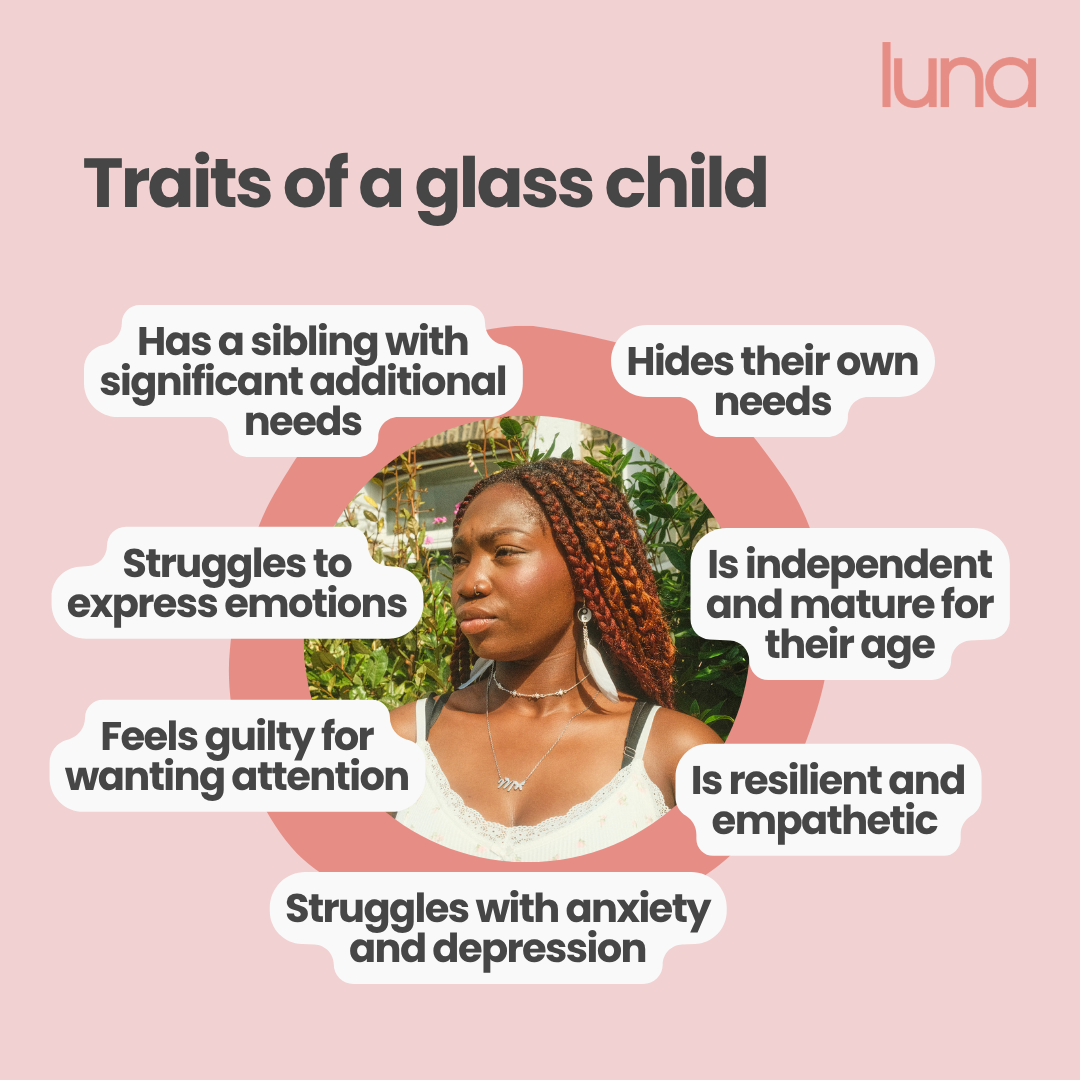
- Try not to “add stress” by hiding their own needs
- Take on a more responsible or mature role at a young age
- Feel guilty for wanting attention
- Struggle to express difficult emotions
- Feel proud of their sibling but also overwhelmed at times
- Difficulty concentrating
- Struggle with mood swings, depression, or anxiety
It’s important to remember that many glass children are resilient and empathetic.
But they still need space to be supported in their own right.
How do I know if I have a glass child?
A glass child’s struggles can sometimes be subtle, as they may not openly ask for support or attention.
Instead, their feelings may show up in subtle ways.
You might notice:
- They rarely ask for help or downplay their own problems
- They seem unusually independent for their age
- They avoid talking about their feelings
- They take on a “helper” role within the family
- They become withdrawn, anxious, or frustrated
- They have low self-esteem
Not every child will show the same signs, and some may appear to be coping well on the surface while still needing emotional support.
How can I support a glass child?
Supporting a glass child involves making sure they feel seen, heard, and valued.
Small, consistent actions can make a meaningful difference.
You can support a glass child by:
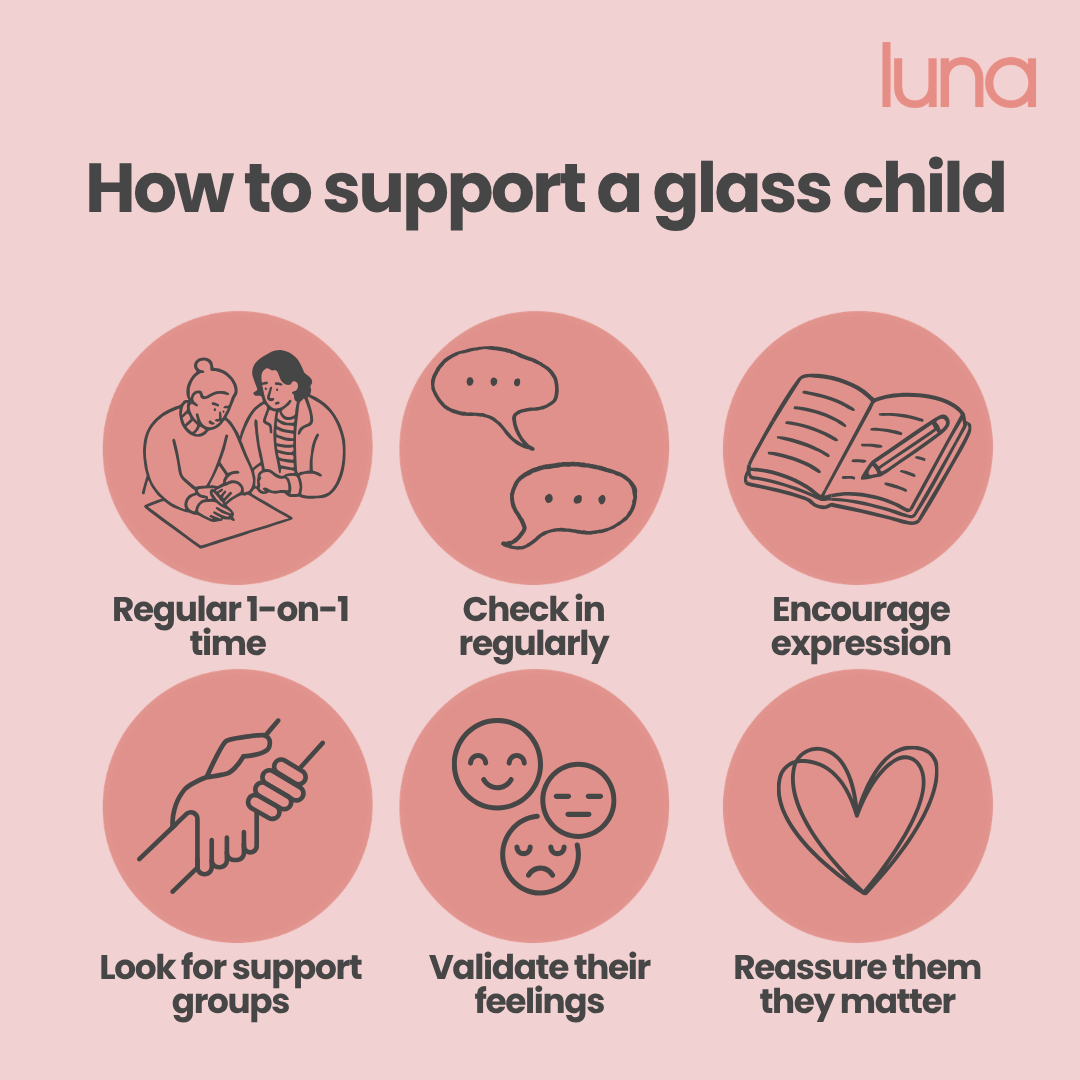
- Spending regular one-to-one time together
- Checking in on how they’re feeling (even if they say “fine”)
- Acknowledging their experience without guilt or comparison
- Encouraging them to express emotions safely
- Letting them know their needs matter just as much
- Avoiding putting parental responsibility onto them
- Looking for support groups or mental health resources in your area
What's a key takeaway about glass children?
If you have a glass child, the most important thing to remember is that small, consistent moments of attention and reassurance can make a big difference.
You don’t need to be perfect - feeling seen, valued, and supported over time is what matters most.
It can help to keep in mind that you’re not failing and you are doing your best.
Navigating this family dynamic can be overwhelming and complex, but a little goes a long way.
Keep checking in with your child, prioritising one-to-one time, and talking about mental health with them.
With awareness and small, intentional effort, glass children can feel just as supported, understood, and emotionally secure within the family.
How we created this article:
luna's team of experts comprises GPs, Dermatologists, Safeguarding Leads and Junior Doctors as well as Medical Students with specialised interests in paediatric care, mental health and gynaecology. All articles are created by experts, and reviewed by a member of luna's senior review team.
Sources:
Cleveland Clinic "Glass Child" | Accessed 23.03.26
https://health.clevelandclinic.org/glass-childWe'd love to keep in touch!
Sign up to our parent newsletter for emails on the latest teen trends, insights into our luna community and to keep up to date
By signing up, you are agreeing that we can use your email address to market to you. You can unsubscribe from marketing emails at any time by using the link in our emails. For more information, please review our privacy statement.