What's your mother-daughter relationship style? Take the quiz
Find your style
Updated July 9, 2026
In this article
In short
A mother-daughter relationship style is the pattern of warmth and boundaries that shapes how you and your daughter connect day to day.
Research links styles that combine warmth with clear, fair limits to better teen mental health.
This quiz helps you spot your current style, what it already gets right, and one small shift worth trying.
What is a mother-daughter relationship style?
It's the typical pattern in how you show warmth and how you set boundaries: the two dimensions psychologists have used to describe parent and teen relationships for decades.
Your style isn't a fixed label or a verdict on your parenting.
It's a snapshot of how things tend to go between you right now, and snapshots can change.
The four styles in this quiz:
- The anchor: warm and affectionate, with boundaries that are clear and fairly consistent
- The best friend: closeness comes first, and rules are usually up for negotiation
- The protector: structure and safety come first, and warmth can get lost in the logistics
- The quiet supporter: the love is real, but it mostly goes unspoken while the house runs in parallel
These loosely map onto the four parenting styles for teens researchers have explored since the 1960s.
What's my mother-daughter relationship style?
Answer the nine questions below, then count which letter you chose most often.
Go with your honest pattern over the last few months, not one bad week.
There's no failing score here!
Every style has strengths, and most mums are a blend.
Q1. Something's clearly bothering her after school. What do you do?
- A. Mention you've noticed, then leave the door open for her to come to you
- B. Sit on her bed and gently chat until she spills
- C. Ask her directly what's happened, because you'd rather know now
- D. Give her space, she'll talk if she wants to
Q2. She wants to go to a party you're not sure about. What's most like you?
- A. Hear her out, then agree the terms together: lifts, times, check-ins
- B. Say yes, you remember being fifteen and you want her to have fun
- C. Say no until you have every detail: whose house, which parents, who's going
- D. Leave it to her to sort out, she usually manages these things herself
Q3. How do disagreements between you usually end?
- A. We cool off, then one of us comes back, and we talk it through
- B. I smooth things over quickly, I hate us falling out
- C. They end when she accepts the rule, because the rule is the rule
- D. We don't really argue, we tend to retreat to separate rooms
Q4. Her phone, her room, her diary. Where do you stand?
- A. I respect her privacy, and she knows exactly when I'd step in
- B. We're so close she shows me most things anyway
- C. I check regularly, because it's my job to know what's going on
- D. I stay out of it altogether
Q5. She tells you something you really don't want to hear. What's your honest first reaction?
- A. Take a breath and listen before I respond
- B. Reassure her straight away that I'm on her side
- C. Jump in with questions and consequences, I need to fix this
- D. Keep it brief in the moment, then quietly worry on my own
Q6. Free time, hobbies, clothes. Who decides?
- A. Mostly her, I share my view but the everyday calls are hers
- B. Completely her, I love how she expresses herself
- C. Mostly me, she'll thank me when she's older
- D. Her, though I'm not always sure what she's into these days
Q7. What does a typical weeknight look like in your house?
- A. Some time together, some apart, and a check-in at some point
- B. Side by side: same sofa, shared playlists, group chat energy
- C. Homework first, screens monitored, routine fairly fixed
- D. Different rooms, different schedules, a wave in passing
Q8. How does warmth show up between you day to day?
- A. Hugs, in-jokes and little messages flow fairly easily both ways
- B. Constantly, she's my best mate as much as my daughter
- C. I show love through standards, making sure she's on track
- D. We're not gushy, but I hope she knows I love her
Q9. She makes a serious mistake. What do you think she'd expect from you?
- A. That I'd be upset, but she could still come to me first
- B. That I'd comfort her first and we'd figure it out together
- C. That there'd be consequences before anything else
- D. Honestly, I'm not sure she'd tell me
What do my quiz results mean?
Whichever letter you picked most often points to your current style.
If you're split between two, read both: most relationships are a mix.
Mostly As: the anchor
Your relationship runs on what research consistently links with steadier teen mental health: warmth plus clear, fair boundaries.
That doesn't mean every week is smooth, and it doesn't need to be.
What you've built is a pattern where rows get repaired, and she knows where she stands.
The nudge: make sure you are having fun with your teen.
Anchors drift under stress. Exam season, work pressure, and sibling battles can quietly push any mum toward more control or more distance.
Try to keep things light when everything is feeling heavy.
Mostly Bs: the best friend
Closeness is your superpower.
She talks to you, and the NHS notes teens open up most when they don't fear an instant verdict.
The watch-out is that when every rule is negotiable, she can end up carrying decisions she's not ready to carry alone.
Teenagers often experience a clearly held boundary as safety rather than distance, even when they argue with it.
The nudge: pick one boundary that matters and hold it kindly.
You can be warm and immovable at the same time.
Mostly Cs: the protector
You're reliable, organised, and fully present.
She never has to wonder whether you care enough to notice, and you know how to step up and help her when she’s in need.
The nudge: pick your battles, so the small stuff (clothes, mess, music) slides and the big rules keep their weight.
Asking what she thinks before telling her what you think helps her practise judging risk for herself.
You may want to read up on helicopter parenting and why protecting can sometimes become detrimental to a teen’s independence.
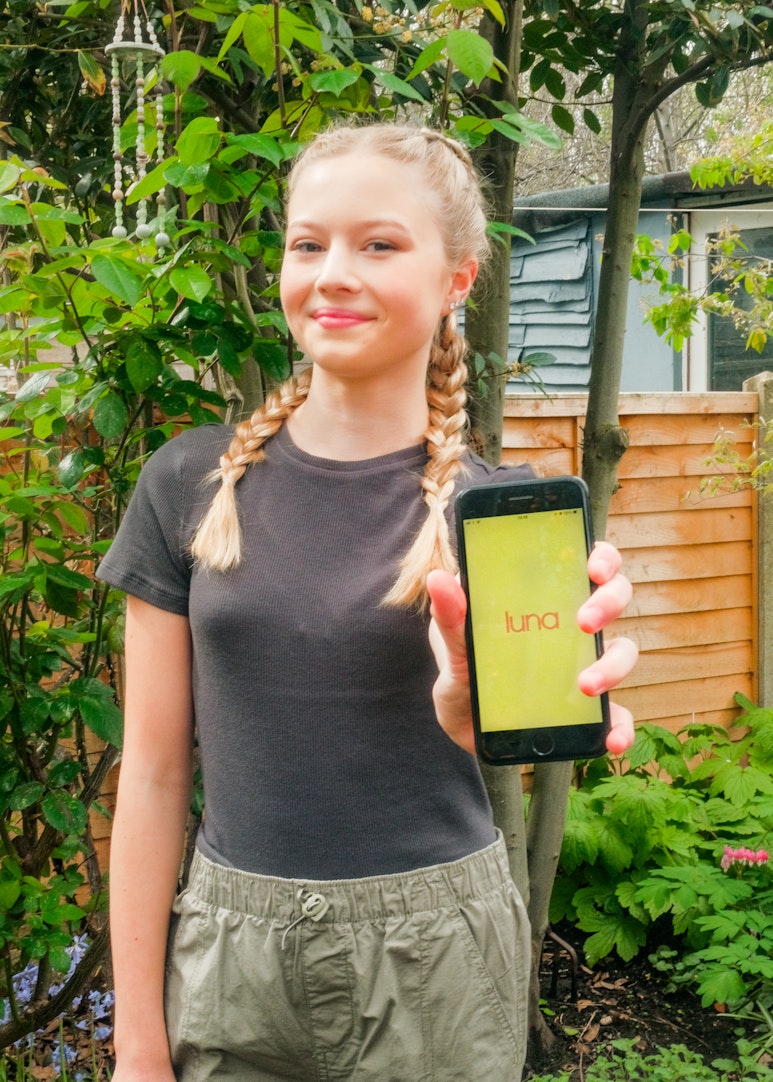
If part of your protecting is wanting her to have good information, luna gives teen girls a space to explore health and wellbeing topics at her own pace, with content reviewed by medical experts.
Mostly Ds: the quiet supporter
There's real strength here: calm, low drama, and genuine respect for her space and privacy.
You value her independence and honesty, and this is great for her as she transitions into adulthood.
The watch-out is that distance can read as disinterest to a teenager, even when the love behind it is solid.
If conversation has thinned out to logistics, you're far from alone, and there are gentle ways back in if you've stopped talking to your teenage daughter.
The nudge: small, low-pressure moments rebuild connection faster than big talks.
A lift somewhere, a shared snack, a message that doesn't need a reply.
You may want to explore fun things to do with your teenage daughter to ensure your relationship stays solid.
Can I change my relationship style?
Yes. A style is a set of habits, not a personality, and habits shift with small repeated changes rather than grand resets.
Small shifts that move any style toward warmth and clarity:
- Ask open questions like "how has your day been?" rather than firing specifics
- Try not to take angry outbursts personally; the NHS notes teens often hit out at the people they trust most
- Let the minor stuff go so the big boundaries keep their meaning
- Listen without interrupting when she does open up, even if you're rattled
- Let her make safe mistakes and learn from them
If you want somewhere to start tonight, it helps to know what daughters most want to hear from their mothers.
FAQ
Is one relationship style better than the others?
The anchor pattern of warmth plus clear boundaries has the strongest research support for teen wellbeing.
But every style has real strengths, and the direction you're moving in matters more than the label you got today.
What if my daughter would answer this quiz differently?
She probably would, and that gap is useful information rather than bad news.
Some mums do the quiz separately with their daughter and compare answers as a low-stakes conversation starter.
Why has our style suddenly changed?
Pulling away in the mid-teens is a normal part of working out who she is, so a shift toward the quiet end is common and rarely about you.
If withdrawal comes with big changes in mood, sleep, eating or friendships, it's worth a chat with a doctor.
Does arguing a lot mean we have a bad relationship?
No. Conflict is part of adolescence, and what matters most is how things end: coming back together after a row counts for more than never having one.
If conflict is constant and exhausting for months, a family counsellor can take the weight off both of you.
However you scored, taking a quiz about your relationship at all says a lot about the kind of mum you are.
And while you work on your side of the relationship, luna gives her a space of her own: somewhere to explore growing up, health and feelings without judgement, with content reviewed by medical experts.
How we created this article:
luna's team of experts comprises GPs, Dermatologists, Safeguarding Leads and Junior Doctors as well as Medical Students with specialised interests in paediatric care, mental health and gynaecology. All articles are created by experts, and reviewed by a member of luna's senior review team.
Sources:
NHS "Talking to your teenager" | 19.06.26
https://www.nhs.uk/mental-health/children-and-young-adults/advice-for-parents/talk-to-your-teenager/NHS "Coping with your teenager" | 19.06.26
https://www.nhs.uk/mental-health/children-and-young-adults/advice-for-parents/cope-with-your-teenager/YoungMinds "How to talk to your child about mental health" | 19.06.26
https://www.youngminds.org.uk/parent/how-to-talk-to-your-child-about-mental-health/Azman Ö et al. "Associations between parenting style and mental health in children and adolescents aged 11-17 years: results of the KiGGS cohort study" | 19.06.26
https://pmc.ncbi.nlm.nih.gov/articles/PMC8394813/We'd love to keep in touch!
Sign up to our parent newsletter for emails on the latest teen trends, insights into our luna community and to keep up to date
By signing up, you are agreeing that we can use your email address to market to you. You can unsubscribe from marketing emails at any time by using the link in our emails. For more information, please review our privacy statement.