Is your teen daughter embarrassed of you? Take the quiz
Helping you decode things

Updated July 9, 2026
In this article
In short
Almost every teen girl finds her parents embarrassing at some point, and the science says it's a healthy sign.
Embarrassment peaks in adolescence, when her brain becomes highly tuned to peer judgement, and it fades by adulthood.
Take the quiz below to see where you score, then read on for what your result really means.
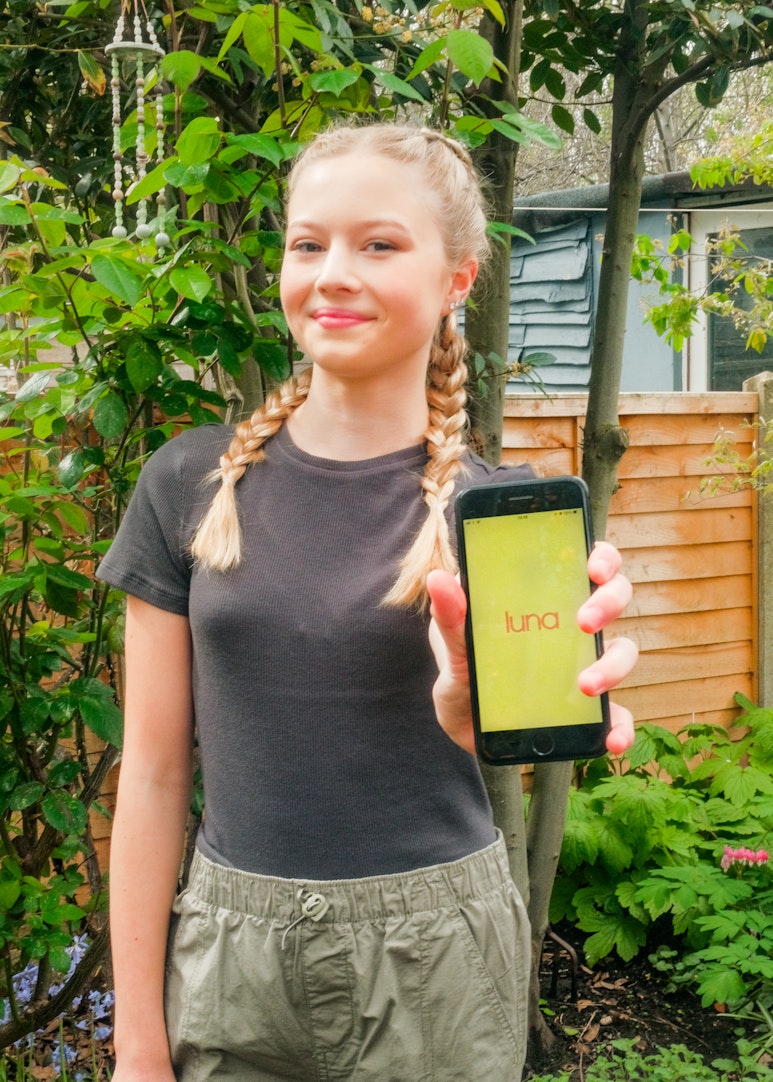
Is my teen daughter embarrassed of me? Take the quiz
If you're asking the question, the answer is probably yes, at least sometimes.
The more useful question is whether it's the normal kind, and that's what this quiz is for.
Count up how many of these get a yes:
- Does she walk a few steps ahead of you in public?
- Has she asked you to drop her off around the corner from school?
- Does she wince or whisper "please don't" when you chat to her friends?
- Has she stopped inviting friends round when you're home?
- Does she beg you not to sing, dance, or tell jokes in front of others?
- Does she go quiet or roll her eyes when you speak up in public?
- Has she ever asked you to change your outfit before a school event?
- Does she give one word answers when her friends are around, but chat normally at home?
- Would she rather text you than have you call her in front of her friends?
What your score means:
- 0 to 3 yeses: the occasional cringe is standard teen self-consciousness, and things sound fairly relaxed between you
- 4 to 6 yeses: she's in the thick of the embarrassment phase, right on schedule for the early-to-mid teens
- 7 to 9 yeses: you're officially mortifying, which usually means she's doing adolescence exactly as designed
Whatever you scored, it says far more about her stage of development than about you. Here's why.
Why is my daughter embarrassed of me?
Because her brain is at peak self-consciousness, not because you've done anything wrong.
Teenage brains are wired to care intensely about what peers think.
In one brain imaging study, simply believing a peer was watching them was enough to make teenagers feel embarrassed, and that response rose through childhood, peaked in adolescence, and partly faded in adulthood.
The embarrassment came with measurable changes in heart rate and brain activity, so it's a real physiological state, not attitude.
Psychologists also describe the imaginary audience: the feeling that critical peers are watching and judging everything she does.
To a brain running that programme, you're not just her parent standing at the school gate.
You're part of her image.
Add the teen hormonal surges, body changes and search for identity that the NHS describes as core parts of becoming an adult, and an enthusiastic wave from you can feel to her like a spotlight she didn't ask for.
Is it normal for my daughter to find me embarrassing?
Yes, completely. It’s a normal part of mental development in adolescence.
Becoming aloof, wanting more time with friends, and rejecting a parent's attempts to talk or show affection are common, expected parts of the teenage years.
Pulling away from you in public is part of how she works out who she is when she's not somebody's daughter.
If it feels bigger than that, like her personality has completely changed, that's usually the same process working at full volume.
There's reassuring evidence here too.
Research suggests the imaginary audience fades by late adolescence, and fades most reliably in teens who feel secure in their relationship with their parents.
Your steady presence is quietly helping the phase pass, even on the days it doesn't feel like it.
What can I do when my daughter says I embarrass her?
Try not to take it personally, even though it stings.
Teenagers take things out on the people they feel closest to and safest with.
Some parents find these help:
- Agree to the small stuff: dropping her off around the corner costs you little and matters a lot to her
- Save the hugs, jokes and singing for home rather than the school gate
- Pick your battles, as the NHS suggests, so there's goodwill left for the things that matter
- Keep boundaries in place: she may object, but they're a sign you care
- Stay calm and consistent when she snaps, rather than matching her energy
You don't need to shrink yourself entirely, though.
There's a difference between courtesy and walking on eggshells, and knowing what not to say to your teenage daughter often matters more than what you wear.
And if she'd rather work out her own "is this normal?" questions away from you for now, luna gives teen girls a space to explore exactly these topics at her own pace, with content reviewed by medical experts.
When should I worry it's more than embarrassment?
When the pulling away comes with other changes, not on its own.
Embarrassment that's part of normal development still leaves her chatting at home, seeing friends and enjoying her usual things.
It might be worth a closer look if you notice:
- She's withdrawn from friends as well as from you
- Her mood has dropped, or she's seemed anxious or flat for weeks
- She's lost interest in things she used to love
- Her eating or sleeping habits have changed noticeably
Our guide to normal teen behaviour vs signs something's wrong walks through the difference in detail. If your instinct says something's off, a doctor is a good first port of call.
FAQs
At what age do daughters stop being embarrassed by their parents?
It varies, but research suggests self-consciousness peaks in the early-to-mid teens and eases through late adolescence.
Many parents notice things softening from around 16 or 17.
Does being embarrassed of me mean she doesn't love me?
No.
Teenagers push hardest against the people they trust most, and her embarrassment is about how watched she feels by peers, not how she feels about you.
Should I change how I act around her friends?
Small courtesies, like toning down the jokes or skipping the hug at drop off, can be a kindness.
Changing who you are isn't necessary, and most daughters quietly respect parents who stay themselves.
Why is she only embarrassed of me in front of her friends?
Because peers are the audience her brain is most tuned to right now.
At home there's no audience, so you get the relaxed version of her.
If the eye rolls have started to feel more like hostility, luna’s article on why your daughter seems to hate you is a useful next read.
And while she figures it all out, luna is there for her in the background: a judgement-free space built for teen girls, with answers she can actually trust.
How we created this article:
luna's team of experts comprises GPs, Dermatologists, Safeguarding Leads and Junior Doctors as well as Medical Students with specialised interests in paediatric care, mental health and gynaecology. All articles are created by experts, and reviewed by a member of luna's senior review team.
Sources:
NHS "Coping with your teenager" | Accessed 19.06.26
https://www.nhs.uk/mental-health/children-and-young-adults/advice-for-parents/cope-with-your-teenager/NHS "Talking to your teenager" | Accessed 19.06.26
https://www.nhs.uk/mental-health/children-and-young-adults/advice-for-parents/talk-to-your-teenager/YoungMinds "Challenging behaviour" | Accessed 19.06.26
https://www.youngminds.org.uk/parent/parents-a-z-mental-health-guide/challenging-behaviour/Somerville LH et al. "The medial prefrontal cortex and the emergence of self-conscious emotion in adolescence" | Accessed 19.06.26
https://pubmed.ncbi.nlm.nih.gov/23804962/Ryan RM et al. "The imaginary audience, self-consciousness, and public individuation in adolescence" | Accessed 19.06.26
https://pubmed.ncbi.nlm.nih.gov/8046574/We'd love to keep in touch!
Sign up to our parent newsletter for emails on the latest teen trends, insights into our luna community and to keep up to date
By signing up, you are agreeing that we can use your email address to market to you. You can unsubscribe from marketing emails at any time by using the link in our emails. For more information, please review our privacy statement.