Why does my daughter struggle to keep friends?
Helping her in social situations

Updated April 30, 2026 • Medically reviewed by Dr. Emma Dickie
Medically reviewed by Dr. Emma DickieIn this article
Why does my daughter struggle to keep friends?
There are many reasons a teen might struggle with friendships, and it doesn’t mean there’s anything “wrong” with them.
They may not have found the right people yet, may be lacking confidence, or may be navigating complex social dynamics that are common during adolescence.
Friendships often take time to settle at this age, and many teens go through periods of change, conflict, or loneliness.
It can be especially hard as a parent to watch. Seeing your daughter come home upset and withdrawn every day is incredibly worrying - but it’s a more common experience than it might seem.
A recent luna poll found that 1 in 3 teen girls say they find making new friends at school challenging or very difficult. This shows that your teen isn’t alone in navigating friendship struggles.
Knowing how you can support them during these difficult times can make a world of difference when it comes to self-esteem and confidence.
Why does my teenage daughter keep losing friends?
Your daughter may be losing friends because teen friendships can change quickly due to shifting social groups, misunderstandings, and growing independence.
Losing friends doesn’t always mean your daughter has done something wrong - it often reflects how complex and unstable social dynamics can be during the teenage years.
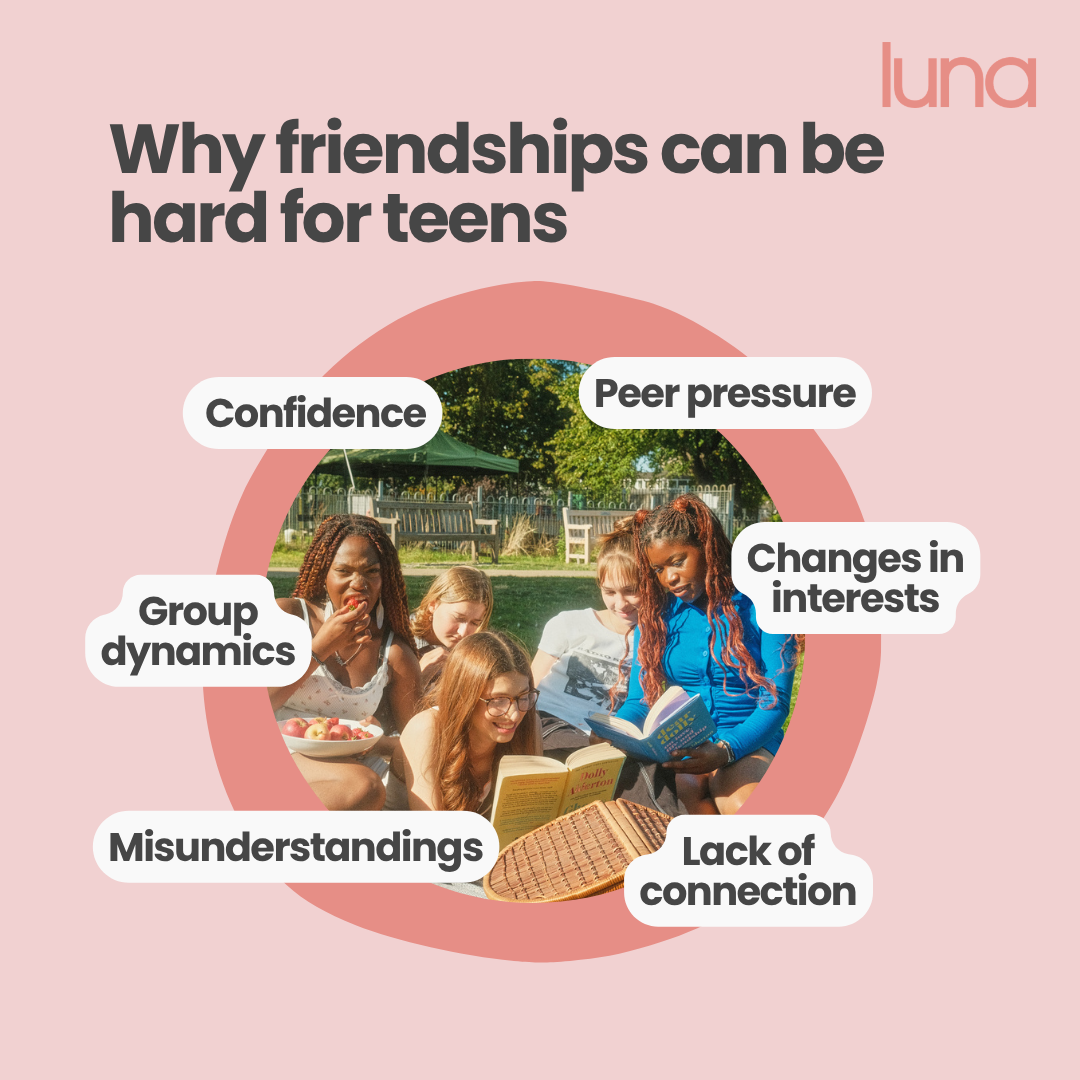
At this stage, friendships are often:
- Still developing and not always emotionally secure
- Influenced by peer pressure or group dynamics
- Affected by changing interests, schools, or identities
- Prone to misunderstandings, especially online
Some teens also outgrow friendships as they start to understand themselves better.
Your teen may simply not gel with the people they are making friends with, leading to repeated changes in friend groups before more stable connections form.
How can I help my daughter with friendships?
The most helpful support is usually calm, consistent reassurance, and giving your daughter space to talk without feeling judged.
Helping them build confidence and perspective can make it easier for them to navigate friendships over time.
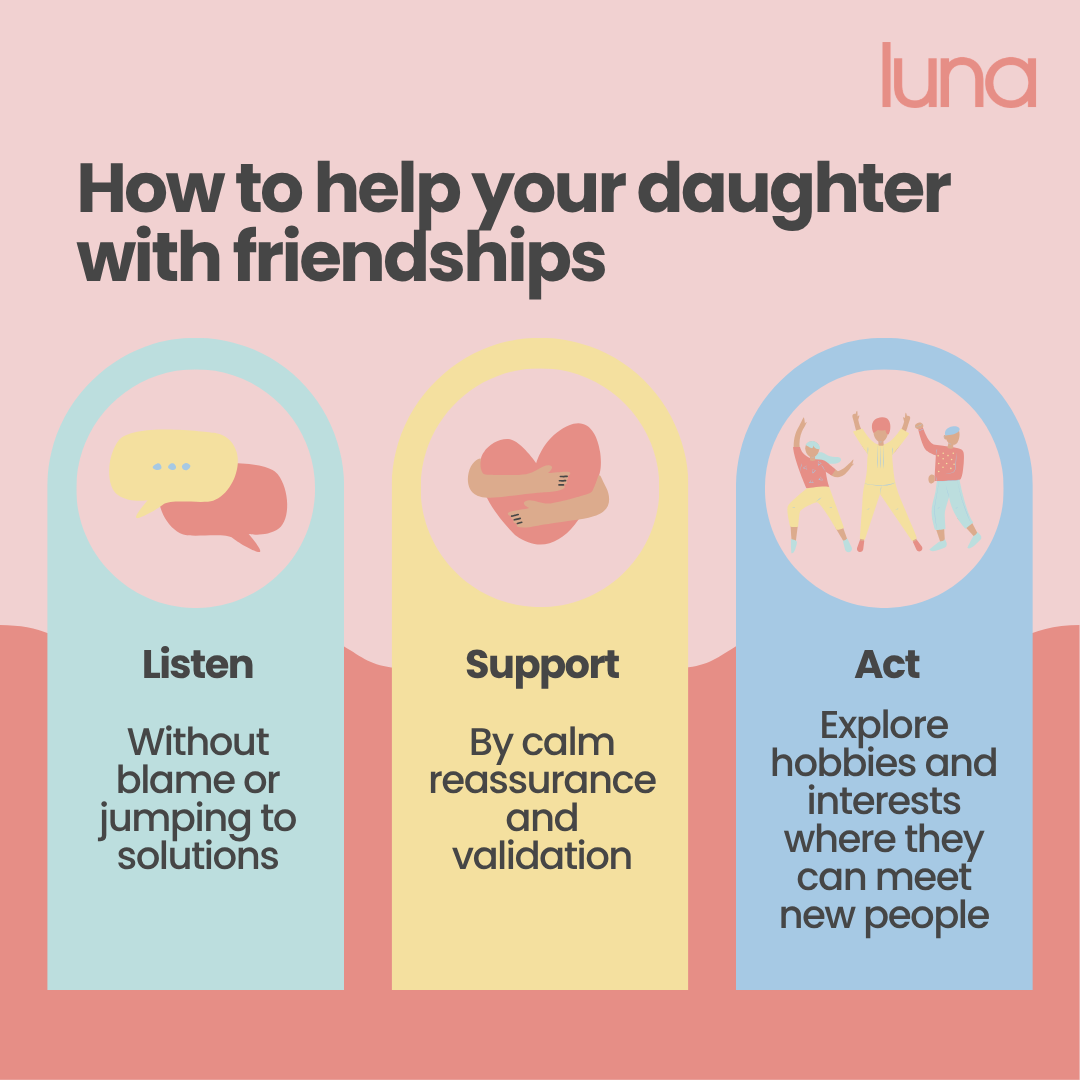
You can support them by:
- Listening without immediately trying to fix the situation
- Validating how they feel, even if the situation seems small
- Avoiding blame (towards them or others)
- Encouraging activities and hobbies for teens where they can meet like-minded peers
- Helping them build confidence in who they are
- Remind them that finding “their people” can take time
It can help to gently explore how your daughter feels about these friendship changes.
Do they feel hurt or rejected when friendships end?
Or do they sometimes feel a sense of relief, like the connection wasn’t quite right?
If they are feeling rejected, building their confidence and sense of self can be an important focus over time.
If it’s more about not feeling a real connection, it may be a good idea to help your teen make friends by finding new environments or activities where they are more likely to meet people who understand them.
How should I handle my daughter’s friendship problems?
Try to stay calm and supportive, even when situations feel upsetting or unfair.
It’s natural to feel protective when your daughter is struggling, but your role is less about solving the problem and more about helping them feel understood while they work through it.
Seeing your teen feeling left out can bring up strong emotions - worry, frustration, even a sense of helplessness.
That’s a completely understandable response. It reflects how much you care.
In the moment, it can help to gently separate those feelings from how you respond.
Staying steady and calm gives your daughter space to process what’s happened without feeling overwhelmed.
You might:
- Offer simple check-ins like “Do you want to talk about it?”
- Give them space if they don’t feel ready
- Avoid over-analysing or escalating the situation
- Wait until they ask before offering solutions
- Help them think through options if they want advice
It’s natural to want to step in, especially if they’re upset, but learning to navigate friendships is an important part of growing up.
Gentle, steady support often helps more than trying to fix things straight away.
Do neurodivergent girls struggle more with friendships?
Some girls with ADHD or autism, for example, can find friendships more challenging, particularly around communication, emotional regulation, and social cues.
However, this doesn’t mean they can’t form strong, lasting friendships - many do with the right understanding and support.
If your daughter is neurodivergent, you can support them by:
- Gently helping them talk through social situations so they can better understand what’s happening or even role play scenarios with them to help them practice
- Supporting them in recognising and managing strong emotions without judgement
- Encouraging turn-taking and listening skills in a calm, non-critical way
- Reassuring them if they feel misunderstood, and helping them put their feelings into words
- Helping them find environments or friendships where they feel accepted and comfortable
Understanding these social differences can help both you and your daughter approach friendships with more patience and self-awareness.
Will my daughter find the right friends?
Yes - for most teens, friendships become more stable and meaningful over time.
As your daughter grows in confidence and finds environments where they feel comfortable, they are more likely to form stronger, more supportive connections.
It’s important to remember that many teens go through friendship ups and downs, and the “right” friendships often come later, not early on.
Even though it’s hard to see them struggle now, these experiences are often part of how teens learn what they need from relationships, which is a really important life skill.
To further support your daughter through their teen years, you may want to introduce them to luna.
On luna, your teen can ask anonymous questions and read expert advice about friendships, growing up, and everything in between.
How we created this article:
luna's team of experts comprises GPs, Dermatologists, Safeguarding Leads and Junior Doctors as well as Medical Students with specialised interests in paediatric care, mental health and gynaecology. All articles are created by experts, and reviewed by a member of luna's senior review team.
Sources:
The Children’s Society “A guide to supporting young people with their friendships” | Accessed 13.04.26
https://www.childrenssociety.org.uk/sites/default/files/2020-10/friendship-guide-for-adults_0.pdfChildren’s Health Council “Ask the Expert: My Teenage Daughter Has No Friends” | Accessed 13.04.26
https://www.chconline.org/resourcelibrary/ask-the-expert-my-teenage-daughter-has-no-friends/Child Mind Institute “Helping Girls With ADHD Make Friends” | Accessed 13.04.26
https://childmind.org/article/helping-girls-with-adhd-make-friends/We'd love to keep in touch!
Sign up to our parent newsletter for emails on the latest teen trends, insights into our luna community and to keep up to date
By signing up, you are agreeing that we can use your email address to market to you. You can unsubscribe from marketing emails at any time by using the link in our emails. For more information, please review our privacy statement.