What does the new under-16 social media ban mean?
What the under-16 ban means

Updated October 2, 2026
In this article
In short
The government has confirmed it will ban under-16s from social media, using powers in the Children's Wellbeing and Schools Act 2026.
It follows a national consultation backed by most parents.
Messaging apps like WhatsApp are not included.
The first regulations are due before the end of 2026, with the ban confirmed to start in March 2027.
What has actually changed for my daughter right now?
Right now, nothing has changed on TikTok, Instagram, Snapchat or any other app your daughter uses.
The ban is not in force yet.
What changed is the government's position.
On 15 June 2026 it confirmed it will ban under-16s from social media, rather than only limiting certain features.
This followed its "Growing up in the online world" consultation, which ran from 2 March to 26 May 2026 and drew more than 116,000 responses.
Nine in ten parents who responded backed a ban for under-16s.
The legal power comes from the Children's Wellbeing and Schools Act 2026, which became law on 29 April 2026.
The same Act made the school phone ban statutory, so if you're wondering how the two connect, what the school phone ban means for your daughter covers it.
Which apps will my daughter be banned from?
The government plans to follow Australia's model, which covers the big social platforms but not messaging apps.
The apps expected to be restricted for under-16s include:
- Mainstream social media such as Instagram, YouTube, TikTok, Snapchat, Facebook and X
- High-risk features on other services, like livestreaming and contact from strangers, including in some games
Messaging services are treated differently.
WhatsApp and Signal are not expected to be included, so your daughter should still be able to message friends and family she already knows.
The government has said its focus is on the platforms and features that cause the most harm, not on stopping children going online altogether.
For the rules already in place, the Online Safety Act and your teen explains what platforms are already required to do.
What about my daughter if she's 16 or 17?
It has also confirmed plans for a default overnight curfew between midnight and 6am for 16 and 17-year-olds, during which platforms must switch off access.
Autoplay and infinite scrolling will be switched off by default too, alongside built-in breaks for AI chatbot use.
Like the other protections for this age group, 16 and 17-year-olds will be able to turn these settings back on themselves.
When will my daughter actually feel a difference?
Not immediately. The Culture Secretary has now confirmed the ban will come into force in March 2027. Platforms will then need time to put the changes in place.
The government intends to lay the first regulations before Parliament before the end of 2026.
Platforms will then need time to put the changes in place.
So while the direction is now clear, there's a window before anything actually changes on your daughter's phone.
If her phone use is already worrying you, that window can be useful. The signs of teen phone addiction covers what's worth looking out for.
Will my daughter have to prove her age?
Yes, age checks are central to how the ban will work, but the government says this won't mean handing over ID.
Platforms will be expected to use what the government calls highly effective age assurance, meaning a reliable way of checking someone really is 16 or over.
The government has said this will not require a digital ID, and will not mean handing over a passport or other government-issued document to use social media.
Ofcom, the regulator responsible for enforcing the rules, has been asked to set out the different age-check options that are accurate, reliable and fair.
There's also a quieter change worth knowing about: the Act allows the age of consent for data processing to rise from 13 to as high as 16, which affects how young your daughter can be to sign up at all.
What should I do differently at home right now?
Nothing has to change today, but some parents find this a useful moment to open a conversation.
The government itself has said parents and children don't need to take any action yet.
Some parents find a moment like this a natural way to start a conversation, rather than waiting for the apps to change first.
Young Minds points out that the most effective approach to social media isn't blocking or constant monitoring.
It's building the kind of relationship where she'll come to you if something online is making her feel worse.
It's also worth checking the settings you already have.
Most phones let you set app time limits and schedule downtime at night.
How phones affect your daughter's sleep is a well-evidenced place to start, as late-night scrolling and disrupted sleep are closely linked in teen girls.
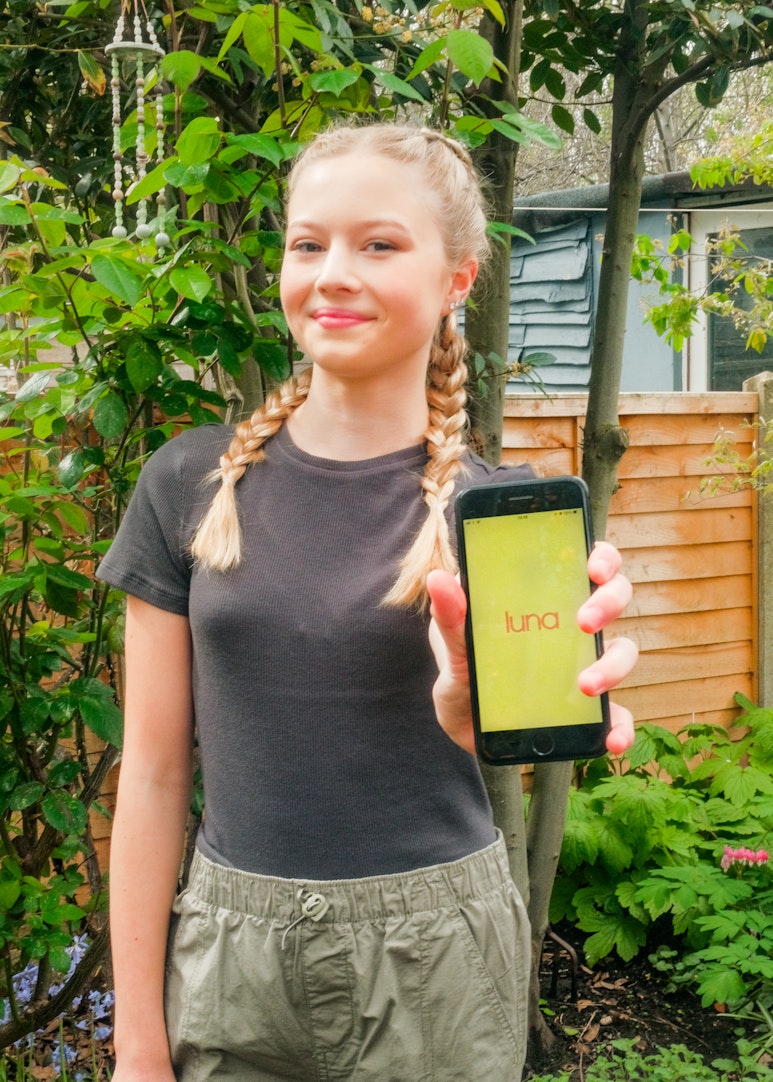
luna gives teen girls a space to explore health topics without algorithms built to keep them scrolling.
All the content is reviewed by medical experts, which makes it a different kind of screen time for her.
FAQs
Does this ban apply to WhatsApp?
No.
Messaging services like WhatsApp and Signal are not expected to be included, so your daughter should still be able to message people she already knows.
Is this the same as the school phone ban?
They're in the same Act but are separate measures.
The school phone ban became law on 29 April 2026.
The social media ban is a separate set of rules, now confirmed to take effect in March 2027.
Will my daughter need a digital ID or passport?
No.
The government has said age checks will not require a digital ID or a government-issued document.
Platforms will use other reliable ways to confirm age.
What if my daughter turns 16 before the ban starts?
The ban applies to under-16s.
If she's 16 or over by the time the rules take effect in spring 2027, she won't be caught by the access ban, though some feature changes may still apply to 16 and 17-year-olds.
Are AI chatbots included?
Sexualised AI chatbots will be blocked from access by anyone under 18.
The ban on social media itself focuses on under-16s.
What next?
This is a fast-moving area, and the government has said it will share more detail with families before the changes arrive in 2027.
For now, there's nothing your daughter needs to do.
In the meantime, luna can be a calmer part of the picture: an space built for teen girls where she can explore health and wellbeing topics at her own pace, with everything reviewed by medical experts.
How we created this article:
luna's team of experts comprises GPs, Dermatologists, Safeguarding Leads and Junior Doctors as well as Medical Students with specialised interests in paediatric care, mental health and gynaecology. All articles are created by experts, and reviewed by a member of luna's senior review team.
Sources:
GOV.UK "Fact sheet: new rules to protect children online" | 02.10.26
https://www.gov.uk/government/publications/fact-sheet-new-rules-to-protect-children-online/fact-sheet-new-rules-to-protect-children-onlineHouse of Commons Library "Proposals to ban social media for children" | Accessed 02.10.26
https://commonslibrary.parliament.uk/research-briefings/cbp-10468/Legislation.gov.uk "Children's Wellbeing and Schools Act 2026" | Accessed 02.10.26
https://www.legislation.gov.uk/ukpga/2026/21/contentsYoung Minds "Social media" | Accessed 02.10.26
https://www.youngminds.org.uk/parent/parents-a-z-mental-health-guide/social-media/GOV.UK "New social media curfews and crackdown on addictive features to better protect 16 and 17 year olds online" | 02.10.26
https://www.gov.uk/government/news/new-social-media-curfews-and-crackdown-on-addictive-features-to-better-protect-16-and-17-year-olds-onlineLBC "Social media ban for under 16s to come into effect next March, culture secretary confirms" | 02.10.26
https://www.lbc.co.uk/article/social-media-under-16s-date-culture-secretary-5Hjdj7f_2/We'd love to keep in touch!
Sign up to our parent newsletter for emails on the latest teen trends, insights into our luna community and to keep up to date
By signing up, you are agreeing that we can use your email address to market to you. You can unsubscribe from marketing emails at any time by using the link in our emails. For more information, please review our privacy statement.