What does the Online Safety Act mean for your daughter?
What's changed for your daughter
Updated July 9, 2026 • Medically reviewed by Dr. Emma Dickie
Medically reviewed by Dr. Emma DickieIn this article
- In short
- What is the Online Safety Act?
- What changed for my daughter in July 2025?
- How might my daughter's apps feel different now?
- Will my daughter have to prove her age?
- What's changing next for my daughter?
- What if my daughter uses a VPN to get around it?
- How do I talk to my daughter about it?
- FAQs
- What next?
In short
The Online Safety Act is a UK law that makes platforms protect children online.
Since July 2025, sites showing adult content have had to run strict age checks, and harmful material like self-harm and eating-disorder content must be filtered for under-18s.
Ofcom now enforces this with fines.
A separate under-16 social media ban is coming next.
What is the Online Safety Act?
It's a UK law designed to make the internet safer, especially for children and teens.
If you've seen it in the news and weren't quite sure what it actually does for your daughter, you're not alone.
The Act puts legal duties on social media platforms, search engines and websites to remove illegal content, keep children away from adult or harmful material, and offer easier ways to report things that don't feel safe.
It's regulated by Ofcom and is being rolled out in phases, so it hasn't all arrived at once.
What changed for my daughter in July 2025?
The biggest set of protections for families came into force on 25 July 2025.
From that date, sites and apps that fall under the law had to put proper safety measures in place, especially if children are likely to use them.
The main changes included:
- strict age checks on sites showing adult content
- filtering of content about suicide, self-harm, eating disorders, dangerous stunts or harmful substances for under-18s
- simpler tools for young users to report content that feels unsafe
- faster removal of anything illegal or harmful
These duties are no longer just on paper. Ofcom, the regulator, has since issued fines running into millions to sites that failed to check ages, and in March 2026 it told the platforms children use most to bring in stronger age checks.
How might my daughter's apps feel different now?
Her feed and some of her settings may have shifted, sometimes without her noticing why.
Some content, especially anything promoting unsafe behaviour or unrealistic standards, is filtered out more often than it used to be.
That's part of the law's aim to reduce pressure and protect wellbeing.
Many platforms have also added clearer ways to report harm or control who can contact her.
Whether or not she uses them, it helps to know they're there.
If she mentions content she "used to see" but doesn't anymore, that can be a natural opening to talk about what makes her feel supported online versus what feels overwhelming.
Will my daughter have to prove her age?
On some sites, yes.
Age checks are now a core part of the law.
Sites showing adult content are expected to use age verification, which might look like a facial age estimate, uploading photo ID, or confirming age through her phone network.
It's normal for teens to find this frustrating, especially over something they don't see as a big deal.
It can help to explain that these checks exist because content that feels harmless in the moment can still affect wellbeing over time.
For the settings already on her phone, an overview of iPhone parental controls walks through what you can adjust at home.
What's changing next for my daughter?
The law is about to go further.
In 2026 it was strengthened to allow a ban on under-16s using social media.
The Children's Wellbeing and Schools Act 2026 amended the Online Safety Act to make this possible.
The ban is expected to take effect in spring 2027, and messaging apps like WhatsApp are not included.
For the full picture on how that will work, the new under-16 social media ban explains what's coming and when.
The same 2026 Act also made the school phone ban statutory.
If that affects your daughter's day, what the school phone ban means for your daughter covers it.
What if my daughter uses a VPN to get around it?
Some teens try to sidestep the new rules with a VPN, which can hide where someone is and unlock content that would otherwise be blocked.
VPNs aren't illegal.
But using one to get past protections designed to keep young people safe carries real risks, especially if it means seeing harmful or unmoderated content.
If she brings up VPNs, it can be a useful moment to talk about why some things are restricted in the first place, rather than treating it as her trying to break a rule.
How do I talk to my daughter about it?
The law isn't about telling you how to parent, and no one knows your daughter better than you.
It just creates natural openings for a conversation, especially while it's in the news.
Some low-pressure questions that can help:
- have your apps changed much lately
- is anything new popping up, or disappearing, from your feed
- how are you feeling about all the online safety changes
Even a simple "just checking in, everything good?" lets her know you're there.
If her phone use is starting to feel like a worry rather than a one-off, the signs of teen phone addiction covers what's worth watching for.
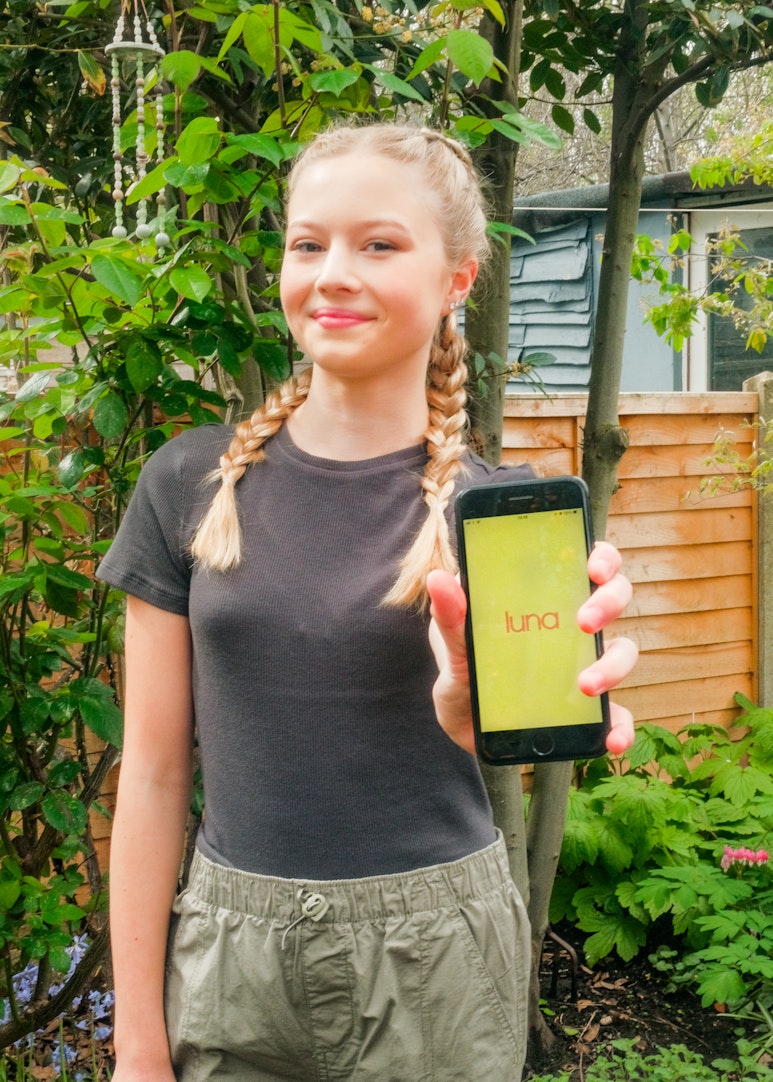
luna gives teen girls a space to explore online safety and wellbeing at their own pace, with everything reviewed by medical experts and no algorithms pushing content at her.
FAQs
Does the Online Safety Act ban social media for children?
Not by itself.
The Act set up safety duties and age checks.
The separate under-16 social media ban was made possible by the Children's Wellbeing and Schools Act 2026 and is expected in spring 2027.
Which sites and apps are affected?
Any service likely to be used by children, from social media and search engines to sites showing adult content.
The strictest age checks apply to adult content sites.
Is using a VPN illegal?
No.
VPNs are legal in the UK.
The concern is using one to get around protections that are there to keep young people safe from harmful content.
Do adults have to do age checks too?
Sometimes.
On sites that show adult content, everyone may need to confirm they're over 18, though many adults are verified through an existing account or payment method.
What next?
The Online Safety Act is still being rolled out, and more is due this year, including an Ofcom report on how well age checks are working, expected by the end of July 2026.
There's nothing your daughter needs to do right now.
In the meantime, luna can be a calmer corner of her screen time: a space built for teen girls to explore health and wellbeing, with everything reviewed by medical experts.
How we created this article:
luna's team of experts comprises GPs, Dermatologists, Safeguarding Leads and Junior Doctors as well as Medical Students with specialised interests in paediatric care, mental health and gynaecology. All articles are created by experts, and reviewed by a member of luna's senior review team.
Sources:
GOV.UK "Online Safety Act: explainer" | Accessed 09.07.26
https://www.gov.uk/government/publications/online-safety-act-explainer/online-safety-act-explainerOfcom "Online safety industry bulletin - March 2026" | Accessed 09.07.26
https://www.ofcom.org.uk/online-safety/illegal-and-harmful-content/online-safety-industry-bulletins/online-safety-industry-bulletin-march-2026Legislation.gov.uk "Children's Wellbeing and Schools Act 2026" | Accessed 09.07.26
https://www.legislation.gov.uk/ukpga/2026/21/contentsWe'd love to keep in touch!
Sign up to our parent newsletter for emails on the latest teen trends, insights into our luna community and to keep up to date
By signing up, you are agreeing that we can use your email address to market to you. You can unsubscribe from marketing emails at any time by using the link in our emails. For more information, please review our privacy statement.