Social media ban in the UK: what teens think
Hearing their voices
Updated April 23, 2026
In this article
- What do teens really think about the proposed social media ban?
- What is the proposed social media ban in the UK?
- How does social media impact teens?
- Do teens feel understood in the social media ban debate?
- What are the consequences of a proposed social media ban?
- What would teens prefer over a social media ban?
- Why should teens be included in decisions about social media?
Teens don’t see social media as simply “good” or “bad” - they recognise both the benefits and the risks. Most want safer, more supportive online spaces rather than a full ban.
Many also feel they are not being fully listened to in the current conversation, despite being the group most affected. We believe teens should be involved in the conversation.
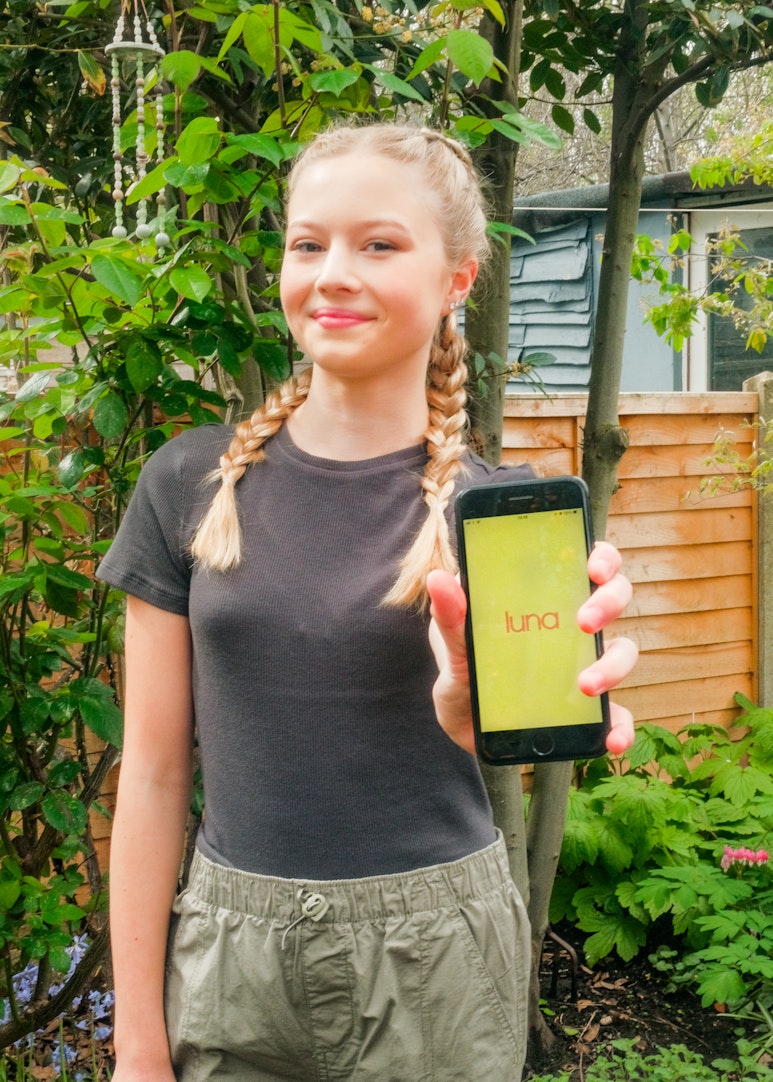
At luna, we have thousands of teens who use our app. So, we decided to ask them their thoughts on the proposed social media ban.
What they told us was clear: teens want to be part of the solution, not just the subject of it.
The UK government is currently exploring stronger rules around young people’s access to social media, including possible age restrictions and stricter safety requirements for platforms.
This is part of a wider effort to reduce online harm and better protect children and teens, following on from the Online Safety Act.
In practice, this could include:
- Raising or more strictly enforcing minimum age requirements
- Introducing stronger age verification measures
- Limiting certain features for younger users
These discussions are still ongoing, and no single approach has been finalised.
This is why consultations - including input from young people - are an important part of the process.
Social media plays a complex role in teens’ lives.
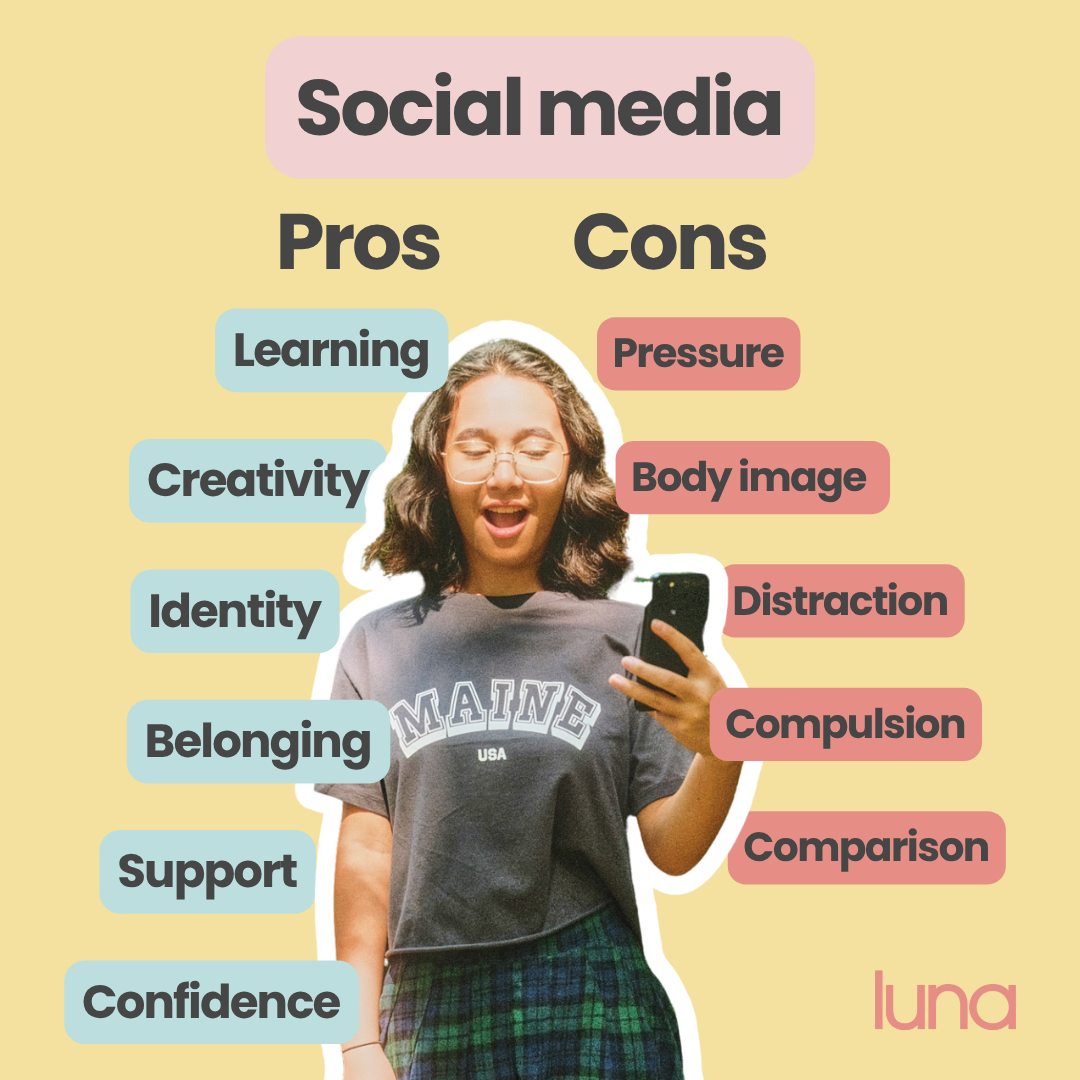
It can support connection, identity, and belonging, but it can also contribute to social pressure, comparison, and overuse.
Most teens experience both sides at the same time.
From our findings:
- 90% of teens use social media regularly
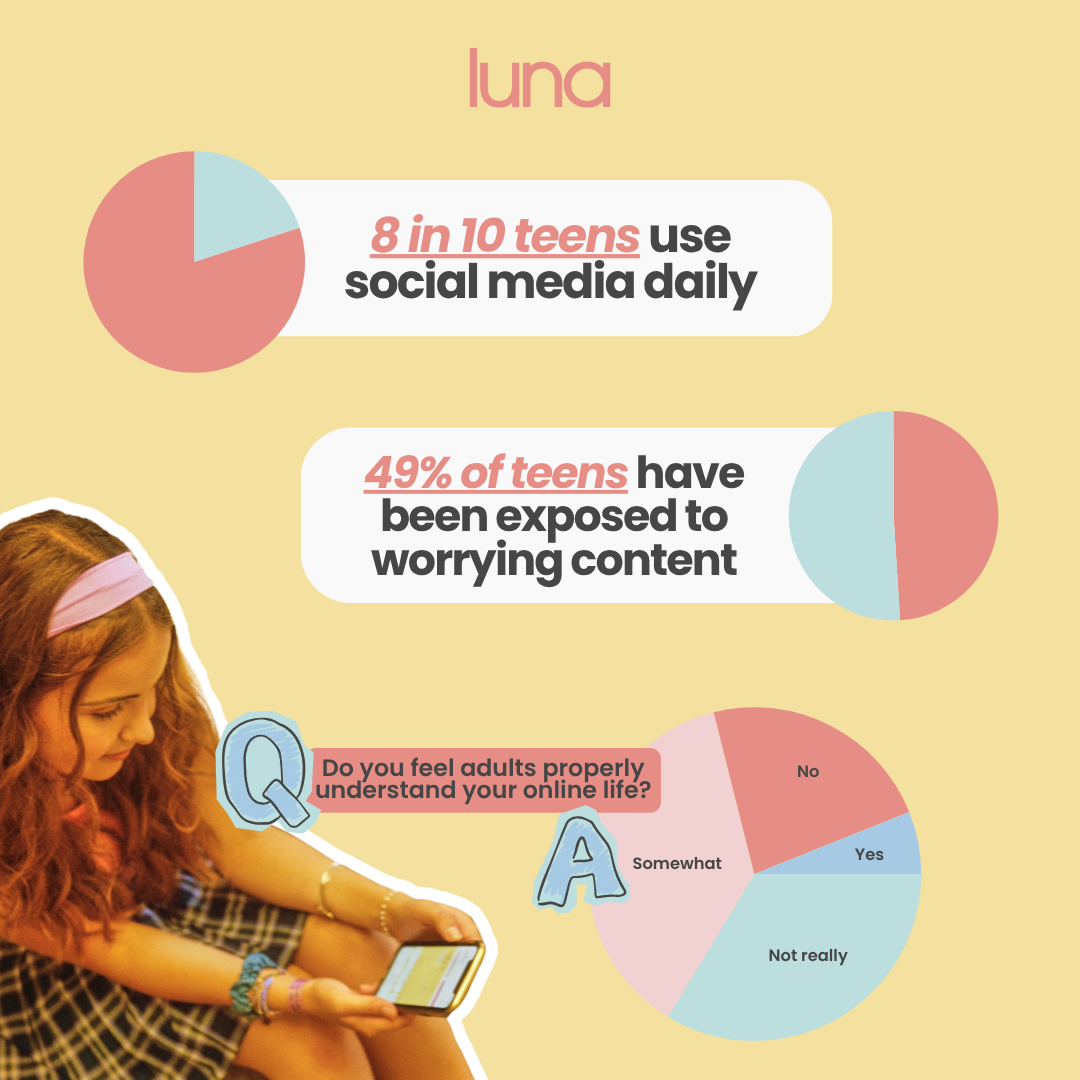
- 8 in 10 use it daily
Many teens get so much out of social media, from creativity and opportunity to learning and support.
One teen told luna, “I follow body positivity creators who helped me gain confidence.”
Another highlighted the educational side of it, saying, “It helped me understand my ADHD.”
However, many reported challenges:
- 61% compare themselves to others
- 56% feel addicted to their phone or scroll for too long
- 45% experience fear of missing out (FOMO)
- 44% say it distracts them from homework
- 42% feel body image pressure
- 33% have seen upsetting content
- 49% have been exposed to worrying content
This shows that social media is far more complicated than many of us want to believe.
For teens, it is simultaneously empowering and disempowering.
No, most teens feel their experiences are not fully understood by adults.
Many believe the current conversation oversimplifies social media and doesn’t reflect how important it is in their daily lives.
Only 6% of teens said they feel adults fully understand their online world.
One teen told luna that: “adults don’t really understand how we actually use social media.”
This gap matters. When young people don’t feel heard, solutions risk missing what actually works in real life.
Teens believe a full ban could lead to isolation, social exclusion, and workarounds rather than real change.
Many worry it would remove important connections without addressing the underlying issues.
Young people told us a ban could lead to:
- Loss of connection: “It would make it harder to stay in touch with people”
- Social exclusion: “I would feel left out”
- Workarounds: “If you ban it, people will just find another way”
- Emotional impact: “It would make me feel more isolated”
Most teens support a more balanced, age-appropriate approach rather than a full ban.
They favour gradual access, better safeguards, and support to use social media safely.
81% of young people believe ages 13 -14 is an appropriate time to begin accessing social media.
Many suggested a phased approach:
- Under 13 → restricted, child-safe environments
- 13–14 → access with strong safeguards
- 15–16 → increasing independence
- 16+ → full access
Instead of a ban, teens think policy should focus on:
- Safer platforms
- Better safety systems
- Education
- Balanced limits
As we found out, the majority of teens use social media, so their experiences are essential to shaping effective policies.
Including them leads to more realistic, balanced solutions that reflect how platforms are actually used.
At luna, we believe young people should have a seat at the table and contribute to the conversation.
We’re continuing to share teen perspectives as part of the wider conversation around social media use in the UK.
If you’d like to:
- Learn more about our findings
- Collaborate with luna
- Include teen voices or ambassadors in research, media, or policy discussions
You can contact us at hello@weareluna.app.
We believe teens deserve to be heard - and to help shape the decisions that affect them.
How we created this article:
luna's team of experts comprises GPs, Dermatologists, Safeguarding Leads and Junior Doctors as well as Medical Students with specialised interests in paediatric care, mental health and gynaecology. All articles are created by experts, and reviewed by a member of luna's senior review team.
Sources:
Gov.uk “Growing up in the online world: a national consultation” | Accessed 17.04.2026
https://www.gov.uk/government/consultations/growing-up-in-the-online-world-a-national-consultationWe'd love to keep in touch!
Sign up to our parent newsletter for emails on the latest teen trends, insights into our luna community and to keep up to date
By signing up, you are agreeing that we can use your email address to market to you. You can unsubscribe from marketing emails at any time by using the link in our emails. For more information, please review our privacy statement.