What does “almond daughter” mean?
And is your daughter one?
Updated January 8, 2026 • Medically reviewed by Dr. Emma Dickie
Medically reviewed by Dr. Emma DickieIn this article
- Quick summary
- Where the term “almond daughter” comes from
- What does it mean to be an “almond daughter”?
- What being an almond daughter doesn’t mean
- Where does the pressure come from?
- Is being an almond daughter dangerous?
- How to help your daughter if she relates to the “almond daughter” label
- What if you were an almond mum without realising it?
- You can help your daughter build a healthier future
Quick summary
- An almond daughter is a teen influenced by diet culture, food rules, and body-image pressure, often unconsciously internalised from family
- This mindset can affect her relationship with food, body image, and self-esteem, and may influence other teens online
- Parents can help through gentle conversations, positive language, and creating a food-neutral, supportive home environment
What does “almond daughter” mean?
It’s a phrase used to describe teens who internalise strict beliefs about food, weight, and self-worth, often picked up from family habits, social media, or broader diet culture.
Understanding this trend can help parents recognise the signs, support healthy habits, and break the cycle of body pressure.
Where the term “almond daughter” comes from
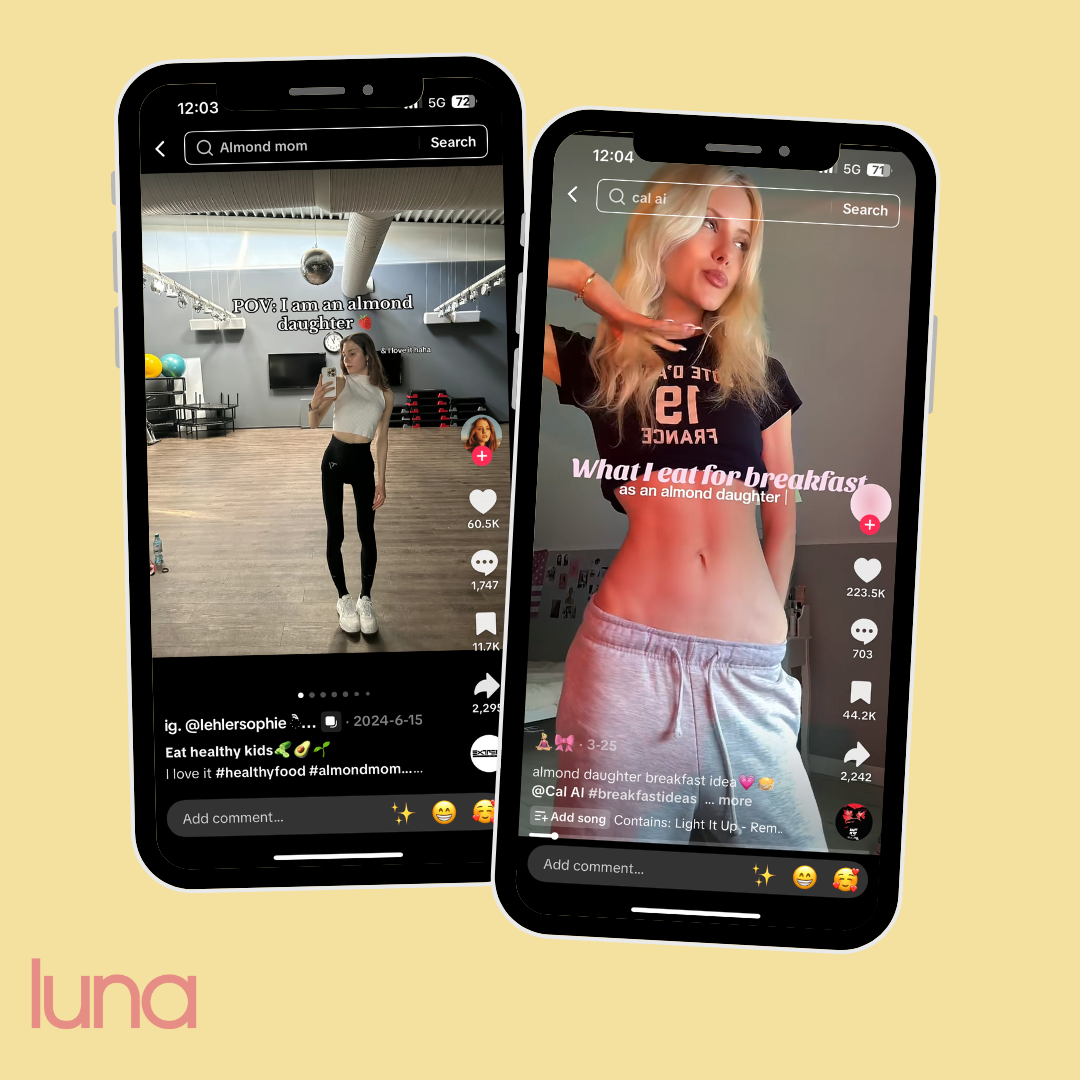
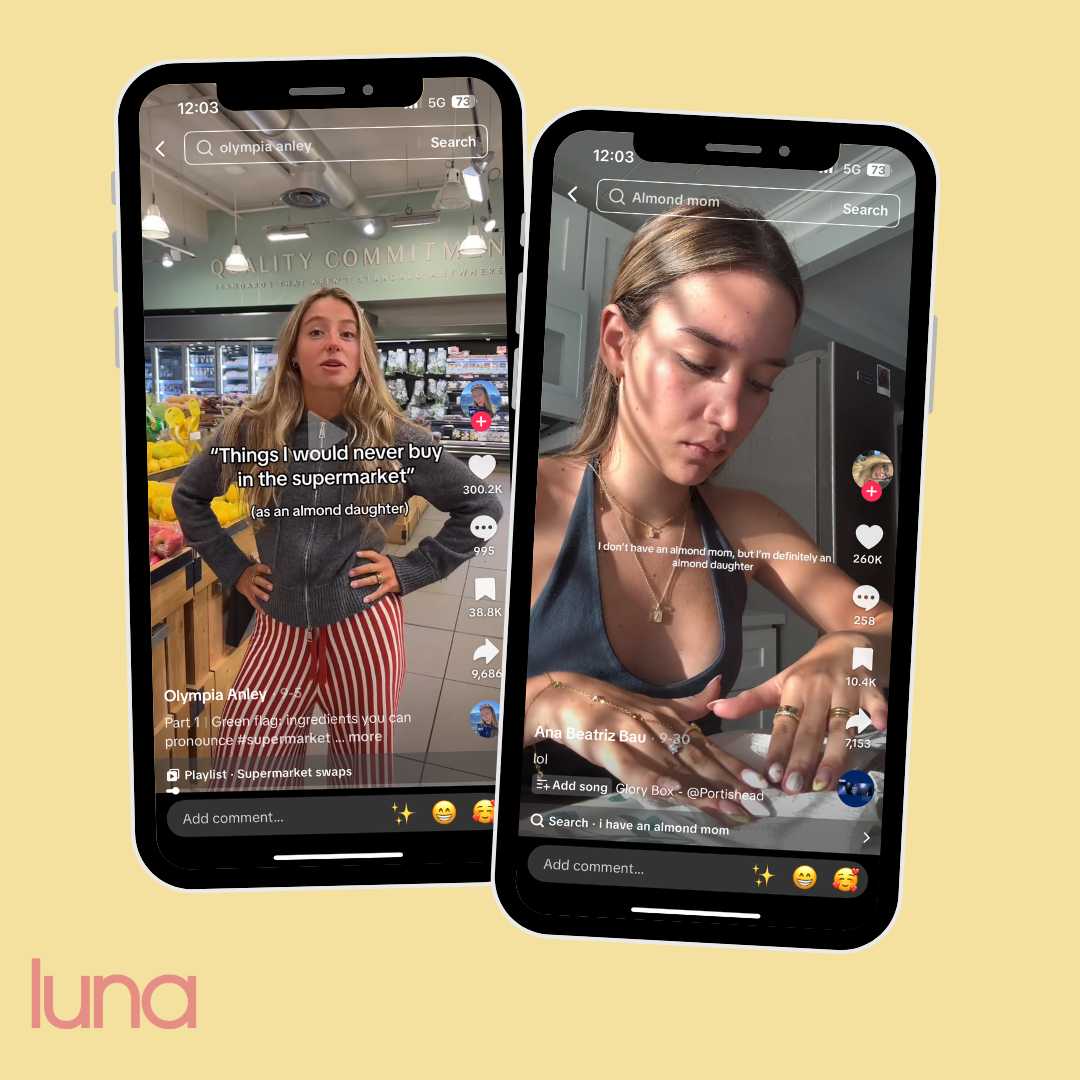
The term “almond daughter” stems from the “almond mum” trend.
Almond mums are parents (usually mothers) who unknowingly pass down diet-culture habits like calorie counting, food restriction, or praising thinness.
An almond daughter is the child who grows up internalising these same beliefs, often without realising how much they affect her relationship with food, body image, and self-worth.
Social media can make this worse, especially through trends like SkinnyTok or TikTok’s “chubby” filter, which distort perceptions of normal bodies and can push teens towards unhealthy comparisons.
What does it mean to be an “almond daughter”?
Signs your teen might be an almond daughter include:
- Thinks of food in terms of “good” vs “bad”
- Feels guilty for eating “too much,” snacks, or enjoying food
- Equates thinness with being disciplined or “doing well”
- Second-guesses genuine hunger or feels anxious eating freely
- Feels her value is tied to appearance
- Grew up hearing comments about weight, body shape, calories, or portion sizes
This mindset overlaps with many themes we hear daily from teens on luna – especially around body image struggles, summer body worries, and confusion about what healthy eating actually means.
If you’re concerned about how food rules or appearance pressure may be affecting your daughter’s confidence, our guide on body image issues in adolescence offers practical ways to help.
What being an almond daughter doesn’t mean
It doesn’t necessarily mean your daughter is:
- Vain
- Overly sensitive
- “Obsessed” with dieting
- Upset with her parent for being an “almond mum”
But it might mean they are more fixated on things like healthy eating, thinness and their overall body composition.
Social media makes this worse, especially through trends like SkinnyTok or TikTok’s “chubby” filter, which distort perceptions of normal bodies and can push teens towards unhealthy comparisons.
The important thing is recognising the pattern and knowing it can be unlearned.
Where does the pressure come from?
Most teens today are growing up in a culture saturated with:
- “What I eat in a day” videos
- Toxic body comparisons
- Body checking on social media
- Filters that distort body shapes
- Extreme diet trends like the salt water flush
- Aspirational aesthetics like Instagram Face or “clean girl” culture
- Confusing nutrition advice that contradicts NHS guidance
These influences can shape how they talk about food and how they feel in their own skin.
You can help balance that by reinforcing reliable information – for example, our guides on healthy eating for teenage girls and what vitamins teen girls actually need.
Is being an almond daughter dangerous?
Not in itself, but it can be a red flag for:
- Disordered eating patterns
- Low self-esteem
- Confusion around hunger cues
- Excessive exercise
- Fear of weight changes (including normal changes like when teens weigh more on their period)
It's also a concern in how it might influence other teens who are following their journey or lifestyle on social media, triggering others to follow an unhealthy routine.
If your daughter has a sudden increase in anxiety, rapid weight loss, or obsessive food tracking, it could be this, but it's also seeing a doctor to rule out medical causes.
For instance, hyperthyroidism in teens can cause appetite changes, weight shifts, and mood symptoms that look behavioural but aren’t.
How to help your daughter if she relates to the “almond daughter” label
You don’t need to “fix” everything overnight. Start with small, steady shifts that encourage a healthier mindset:
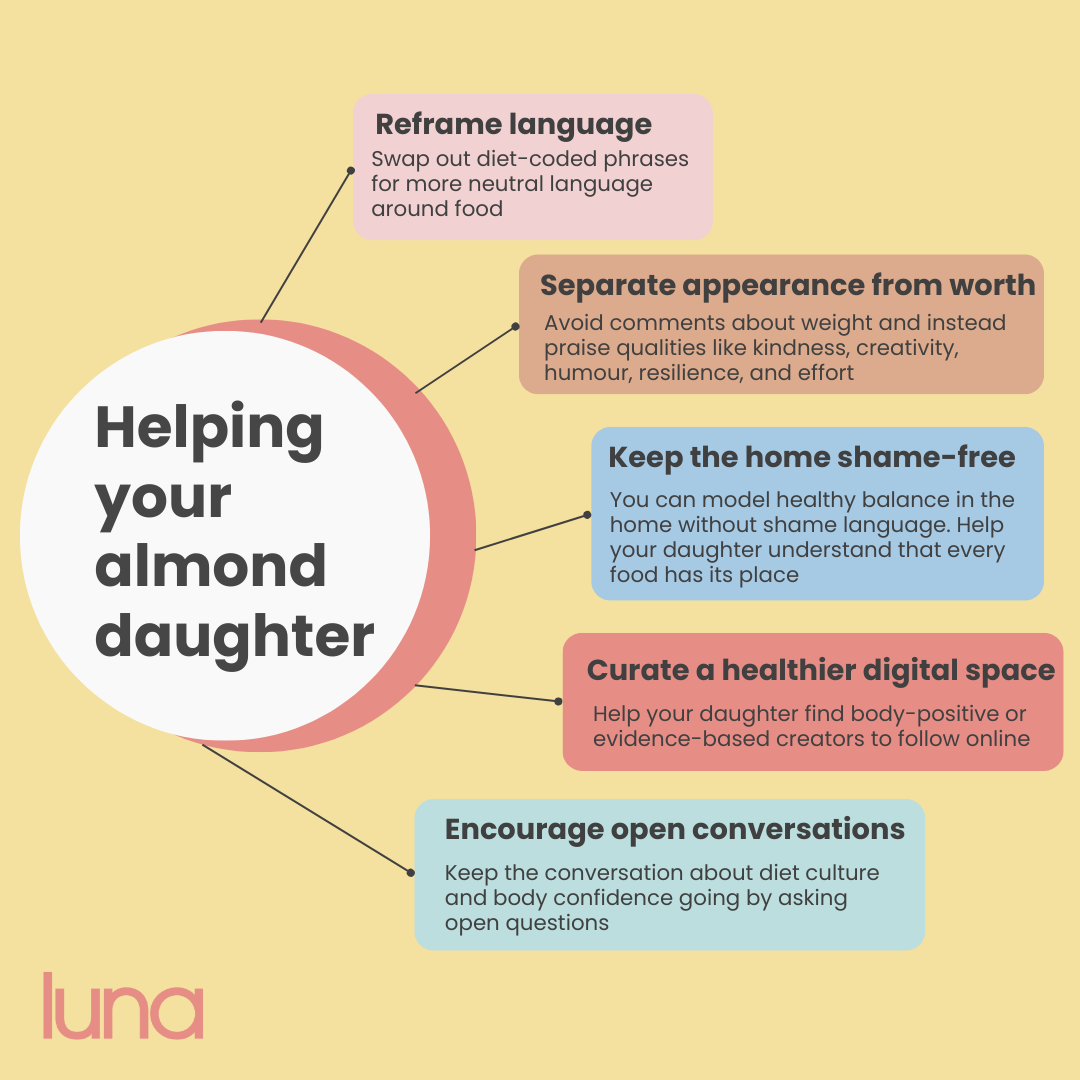
1. Reframe the language used at home
Swap out diet-coded phrases like:
- “Eating clean”
- “Being good today”
- “Do you really need that?”
For neutral or positive alternatives:
- “Food is fuel.”
- “All foods have a place.”
- “Let’s make sure you’re eating enough.”
This helps her rebuild trust in her body and its signals.
2. Separate appearance from worth
Avoid comments about weight – even “positive” ones.
Instead, praise qualities like kindness, creativity, humour, resilience, and effort.
3. Keep home food-neutral and shame-free
You don't need to force “healthy” eating, but you can model balance.
Our healthy eating for teen girls guide gives practical, realistic support without dieting language.
4. Help her curate a healthier digital space
Follow body-positive or evidence-based creators. Mute accounts promoting extreme diets or edited bodies.
Our guides on Instagram Face and SkinnyTok explain how these trends affect teens, and how to talk to them about it.
5. Encourage open conversations
Ask questions like:
- “How does social media make you feel about food or your body?”
- “Do you ever feel pressure to eat a certain way?”
- “What do you think healthy looks like for you?”
Teen girls often open up more when conversations happen casually, like during drives, walks, or shared activities.
What if you were an almond mum without realising it?
Give yourself grace. Most almond mums were doing their best with the information they had.
You can break the cycle by:
- Eating without guilt in front of your daughter
- Avoiding negative self-talk
- Modelling balanced habits (not restriction)
- Normalising body changes and weight fluctuations
- Challenging old thoughts out loud
This is one of the most powerful ways to support her healing – even more than conversations.
You can help your daughter build a healthier future
Being an “almond daughter” isn’t a life sentence.
With gentle conversations, reliable information, and a home where food isn’t moralised, she can grow into someone who:
- Eats without guilt
- Understands real nutrition
- Recognises harmful trends
- Appreciates her changing body
- Builds true confidence
And if she’s struggling silently – as many teens do – luna can help.
Our app gives teens a safe space to ask anonymous questions, learn about body image, and get medically-checked answers without judgment.
How we created this article:
luna's team of experts comprises GPs, Dermatologists, Safeguarding Leads and Junior Doctors as well as Medical Students with specialised interests in paediatric care, mental health and gynaecology. All articles are created by experts, and reviewed by a member of luna's senior review team.
Sources:
NHS “Advice for parents of healthy-weight children” | Accessed 03.12.25
https://www.nhs.uk/live-well/healthy-weight/childrens-weight/healthy-weight-children-advice-for-parents/NHS Healthier Together “Healthy eating” | Accessed 03.12.25
https://www.healthiertogether.nhs.uk/young-person/healthy-eatingWe'd love to keep in touch!
Sign up to our parent newsletter for emails on the latest teen trends, insights into our luna community and to keep up to date
By signing up, you are agreeing that we can use your email address to market to you. You can unsubscribe from marketing emails at any time by using the link in our emails. For more information, please review our privacy statement.