Should your daughter stay home from school in a heatwave?
Heat, school and your decision

Updated July 22, 2026 • Medically reviewed by Dr. Katie Knight
Medically reviewed by Dr. Katie KnightIn this article
- In short
- Does my daughter have to go to school in a heatwave?
- Is my daughter more at risk in hot weather than I am?
- What should the school be doing to keep my daughter safe?
- What are the signs of heat exhaustion I should recognise?
- When does it actually make sense to keep my daughter home?
- What should my daughter eat and drink to stay safe in the heat?
- FAQs
In short
Schools in England aren't required to close in hot weather, and attendance remains legally expected.
But children regulate temperature less efficiently than adults, meaning they can overheat faster.
Most healthy teenagers will be fine in a well-managed school.
The real question is whether her school is managing the heat safely, and whether she has anything that raises her risk.
Does my daughter have to go to school in a heatwave?
If you've been checking the weather app all morning trying to decide, you're far from alone.
Legally, unless she's unwell, the answer is yes.
The Department for Education is clear: schools don't normally close in hot weather because "school attendance is the best way for pupils to learn" and hot weather "can usually be managed safely."
There's no maximum temperature at which schools are legally required to close in England.
An absence that isn't medically justified may be logged as unauthorised, which counts toward the threshold for a penalty fine.
If she's already showing signs of being unwell before she leaves, such as dizziness, headache, nausea, that's a different picture.
A child who is genuinely ill can and should stay home.
Is my daughter more at risk in hot weather than I am?
Yes, to a degree.
Children's bodies are less efficient at regulating temperature than adults', and they can overheat faster, especially when physically active, not drinking enough, or sitting in a poorly ventilated room.
That said, healthy teenagers are not in the highest-risk group.
The UK Health Security Agency lists babies, over-65s, and people with underlying health conditions as most vulnerable.
The risk rises if your daughter has diabetes, a heart or breathing condition, or takes regular medication.
If that applies, a conversation with her doctor before a heatwave, rather than during one, is worth having.
What should the school be doing to keep my daughter safe?
Department for Education guidance sets out what schools should put in place when temperatures rise:
- Relaxing the uniform policy so pupils can wear loose, light clothing
- Encouraging pupils to drink more water than usual throughout the day
- Avoiding vigorous PE or physical activity between 11am and 3pm when the sun is strongest
- Opening windows and using fans if the temperature is below 35°C
- Keeping blinds closed on sun-facing windows to prevent classrooms overheating
If her school is insisting on blazers in 35°C, or running full PE sessions during peak heat, it's reasonable to contact the school office.
Most schools will have signed up to UKHSA weather-health alerts and should have a plan already in place.
What are the signs of heat exhaustion I should recognise?
Heat exhaustion and heatstroke are not the same thing.
It's worth knowing the difference before a heatwave, not while one is happening.
Signs of heat exhaustion include:
- Tiredness and weakness
- Dizziness or feeling faint
- Headache
- Nausea or vomiting
- Excessive sweating with pale, clammy skin
- A high temperature and intense thirst
If she comes home with these symptoms, move her somewhere cool, remove any unnecessary clothing, give her water to drink, and cool her skin with a damp cloth or cool spray.
According to the NHS, she should start to feel better within 30 minutes.
If she doesn't improve in 30 minutes or becomes confused, stops sweating, has hot red skin, a fast heartbeat, fast or shallow breathing, a seizure, or loses consciousness, call 999 immediately.
These are signs of heatstroke, which is a medical emergency.
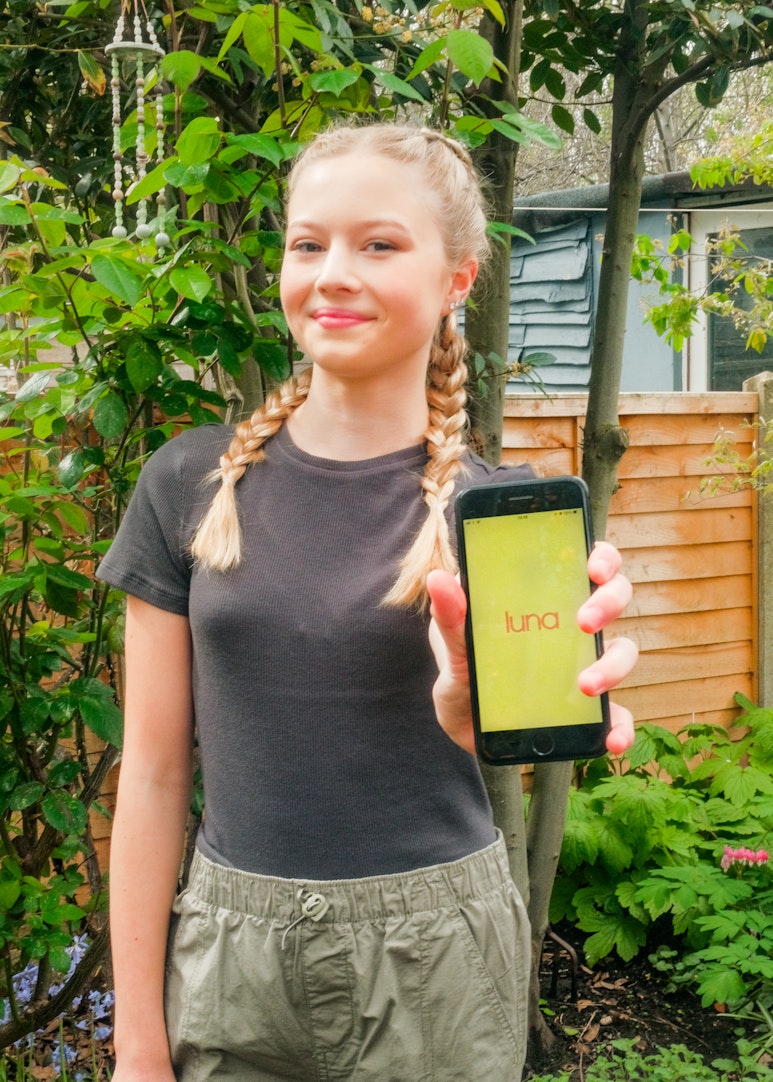
luna also gives teen girls a space to learn about their bodies, including how heat affects them, with content reviewed by medical experts.
When does it actually make sense to keep my daughter home?
There's no single temperature that gives you the answer, and the UK government hasn't set one.
A few things that genuinely shift the calculation:
- She has an underlying health condition that raises her vulnerability
- Your area has a red weather warning from the Met Office (the highest level, meaning health risk to all people, not just the vulnerable)
- Her school has no cooling measures and vigorous PE is happening during peak heat
- She's already showing signs of heat stress before she leaves the house
For most healthy girls at a school following the guidance, going in is the right call.
It's also worth thinking about patterns.
If school anxiety is already something your daughter finds difficult, a heatwave absence can sometimes make going back harder.
What should my daughter eat and drink to stay safe in the heat?
Hydration is the most important thing.
The NHS recommends drinking enough throughout the day that pee stays a pale straw colour, and in hot weather, that means more than usual.
Water and diluted squash are the best choices.
Sugary drinks and fruit juice can worsen dehydration.
Caffeine doesn't help either, so no energy drinks on a hot school day.
Sending her in with a refillable water bottle and reminding her to actually use it is the most practical prep you can do.
Cold, water-rich foods, such as fruit, yoghurt, salads, and cold meals, also help the body stay cool.
A hot, heavy meal at the hottest part of the day will probably make her feel worse.
FAQs
Will my daughter get fined if I keep her home during a heatwave?
The fine is triggered by unauthorised absences, not by the absence itself.
If the school marks the day as unauthorised, it counts toward the threshold for a penalty notice.
A call to the school that morning, explaining she's unwell in the heat and keeping a note of what was said, can reduce the risk of it being marked that way.
Schools have some discretion in how they log absences.
Is there a temperature at which schools have to close?
No.
There's no legal maximum classroom temperature in England.
The National Education Union recommends 26°C as the appropriate maximum for indoor learning, but this is guidance rather than law.
The decision rests with the headteacher.
My daughter has her period during this heatwave. Does that make things harder?
It can.
The symptoms of heat exhaustion, such as dizziness, nausea, fatigue, and cramping, overlap significantly with heavy period symptoms, so they can compound each other on a difficult day.
If her periods are already tough, a very hot day can tip things over. Managing school on her period can be hard enough on its own.
Trust your judgement on combining the two.
What if her school is still running PE sessions in full heat?
Contact the school.
The DfE and the Department of Health and Social Care guidance is explicit: "children should not take part in vigorous physical activity on very hot days."
You can reference the UKHSA guidance in your message.
It's an entirely reasonable thing to raise.
My daughter says all her friends are being kept home. Should I do the same?
It's worth separating the social pressure from the actual health picture.
If she's healthy, there's no red weather warning, and her school is making sensible adjustments, the evidence supports her going in.
If you do decide to keep her home, make it a genuine rest day somewhere cool rather than a day spent outside.
If you're looking for ideas to keep a teenager occupied during the summer, luna has a few.
If she does spend time outdoors, make sure she's protected from the sun too.
Our teen sunburn relief guide covers what actually works when the sun gets the better of her.
How we created this article:
luna's team of experts comprises GPs, Dermatologists, Safeguarding Leads and Junior Doctors as well as Medical Students with specialised interests in paediatric care, mental health and gynaecology. All articles are created by experts, and reviewed by a member of luna's senior review team.
Sources:
NHS "Heat exhaustion and heatstroke" | Accessed 23.06.26
https://www.nhs.uk/conditions/heat-exhaustion-heatstroke/NHS "Heatwave: how to cope in hot weather" | Accessed 23.06.26
https://www.nhs.uk/live-well/seasonal-health/heatwave-how-to-cope-in-hot-weather/UK Health Security Agency "Beat the heat: staying safe in hot weather" | Accessed 23.06.26
https://www.gov.uk/government/publications/beat-the-heat-hot-weather-advice/beat-the-heat-staying-safe-in-hot-weatherDepartment for Education "Hot weather and heatwaves: guidance for schools and other education settings" | Accessed 23.06.26
https://educationhub.blog.gov.uk/2026/06/hot-weather-and-heatwaves-guidance-for-schools-and-other-education-settings/We'd love to keep in touch!
Sign up to our parent newsletter for emails on the latest teen trends, insights into our luna community and to keep up to date
By signing up, you are agreeing that we can use your email address to market to you. You can unsubscribe from marketing emails at any time by using the link in our emails. For more information, please review our privacy statement.