When should your daughter see a doctor about her acne?
When pharmacy isn't enough for teen acne
Updated July 1, 2026 • Medically reviewed by Dr. Simon Tso
Medically reviewed by Dr. Simon TsoIn this article
In short
Mild acne with a few blackheads and spots can usually be managed with pharmacy products.
Your daughter should see a doctor if she has moderate or severe acne, develops nodules or cysts, if over-the-counter treatments haven't worked after two months, or if her acne is affecting her mood or confidence.
Untreated severe acne can cause permanent scarring, so it's worth acting on sooner rather than later.
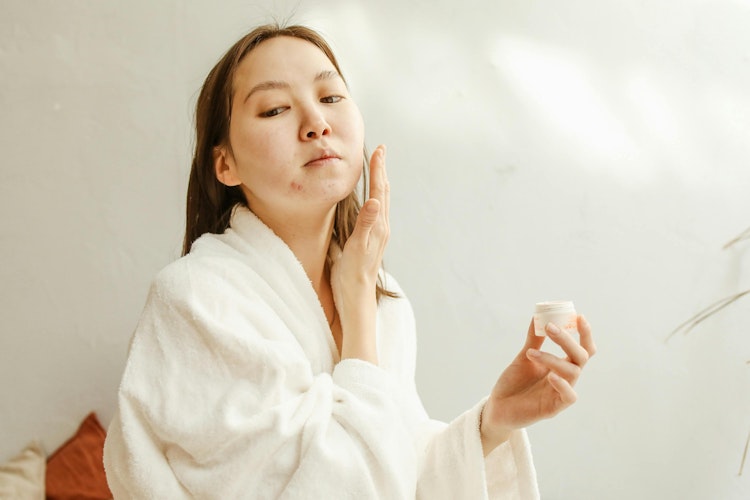
How do I know if my daughter's acne is mild, moderate or severe?
Acne is graded to guide treatment decisions.
Here's a rough guide:
- Mild: a small number of blackheads, whiteheads and spots, mainly on the face
- Moderate: more spots across the face, possibly the chest and back too; some papules and pustules
- Severe: widespread spots, painful nodules or cysts, or spots covering a large area of the face, chest and back
If your daughter's acne is severe, or she's developing nodules or cysts (the larger, harder, deeper lumps), she needs a doctor's prescription to prevent scarring.
What can a pharmacist help with?
To help your daughter manage acne that is mild, a pharmacist is a good first port of call and can save time.
They can recommend products containing benzoyl peroxide, which works as an antibacterial and helps reduce blocked pores.
It's available without a prescription and is often effective for mild breakouts.
You may also want to explore other treatments like pimple patches.
Give pharmacy treatments at least six to eight weeks before deciding they're not working.
In some clinical practices, they typically give the time frame of at least 4 weeks before a patient may notice any early signs of improvement; and at least 3-4 months before concluding a treatment for acne isn't working.
When should my daughter definitely see a doctor?
Book a doctor's appointment if:
- Over-the-counter treatments haven't made a difference after six to eight weeks
- She has nodules or cysts (large, painful lumps under the skin)
- Spots are appearing on her chest and back as well as her face
- She has existing acne scars or new spots that seem to be leaving marks
- She’s showing signs of low self-esteem and her acne is affecting her daily life
The NHS is clear: moderate or severe acne needs prescription treatment to prevent scarring.
Don't wait to see if it "sorts itself out" if the acne is significant.
What will a doctor prescribe?
A doctor has a wider toolkit than a pharmacist.
Depending on the severity, they might prescribe:
- Topical retinoids (help prevent pores blocking up)
- Topical hormonal treatment (to reduce sebum/oil production)
- Antibiotic gels or tablets (to tackle the bacteria driving inflammation)
- Azelaic acid (a gentler alternative to retinoids)
- The combined contraceptive pill (for girls with hormonal acne)
- Oral spironolactone (for girls with hormonal acne)
If prescription treatments don't work, a doctor can refer your daughter to a dermatologist who may offer different treatment.
For example, isotretinoin can only be prescribed by specialists.
What if her acne is affecting her mental health?
This is a valid medical reason to seek help, not just a cosmetic concern.
Acne that affects confidence, mood, or daily life is reason enough to see a doctor, even if the spots don't look "that bad" from the outside.
Doctors can address both the physical and emotional aspects of acne and refer on to appropriate support if needed.
FAQ
How long should pharmacy products be given before seeing a doctor?
Give any treatment, pharmacy or prescription, at least six to eight weeks before concluding it isn't working.
In some clinical practices, they typically give the time frame of at least 4 weeks before a patient may notice any early signs of improvement; and at least 3-4 months before concluding a treatment for acne isn't working.
Most acne treatments work gradually, not overnight.
If there's been no improvement at all after two months, it's time for a doctor's appointment.
Can a pharmacist prescribe stronger acne treatments?
In some areas, pharmacists working under Patient Group Directions can supply certain prescription treatments for acne without a GP referral.
It's worth asking your local pharmacy what they're able to offer as access varies depending on where you live.
What is a dermatologist and when would my daughter be referred?
A dermatologist is a skin specialist.
A doctor can refer your daughter if her acne is severe, if she has nodules or painful cysts, if she has significant scarring, or if prescription treatments tried so far haven't worked.
Isotretinoin, one of the most effective treatments for severe acne, is only available via a dermatologist.
If you're also thinking about what's going on with her skin routine, luna's teen skincare routine guide walks through what a sensible daily routine looks like at this age.
How we created this article:
luna's team of experts comprises GPs, Dermatologists, Safeguarding Leads and Junior Doctors as well as Medical Students with specialised interests in paediatric care, mental health and gynaecology. All articles are created by experts, and reviewed by a member of luna's senior review team.
Sources:
NHS "Acne overview" | Accessed 05.06.26
https://www.nhs.uk/conditions/acne/NHS "Acne diagnosis" | Accessed 05.06.26
https://www.nhs.uk/conditions/acne/diagnosis/NHS "Acne treatment" | Accessed 05.06.26
https://www.nhs.uk/conditions/acne/treatment/We'd love to keep in touch!
Sign up to our parent newsletter for emails on the latest teen trends, insights into our luna community and to keep up to date
By signing up, you are agreeing that we can use your email address to market to you. You can unsubscribe from marketing emails at any time by using the link in our emails. For more information, please review our privacy statement.