How do I build a hygiene routine with my daughter during puberty?
Practical hygiene habits for puberty
Updated June 2, 2026
In this article
In short
Puberty brings bigger sweat glands, more oil production, body hair, periods, and a heightened awareness of how she smells and looks.
A basic daily hygiene routine during these years covers five areas: body and face washing, deodorant, hair care, oral hygiene, and period management.
The most helpful thing you can do is make the conversation normal and make sure she has access to the products she needs without turning hygiene into a source of embarrassment or pressure.
Why does puberty change what she needs hygienically?
During puberty, girls develop larger sweat glands that respond to emotional and physical stress as well as heat.
Their skin produces more oil, which leads to greasy hair, acne, and changes in body odour.
These sweat glands release a different kind of sweat from the glands active in childhood, one that interacts with bacteria on the skin to cause the body odour that becomes noticeable from around age 9 to 12 onwards.
None of this is avoidable or a sign of poor hygiene. It's just biology, and it needs a different kind of routine than she had when she was younger.
What should a daily hygiene routine include?
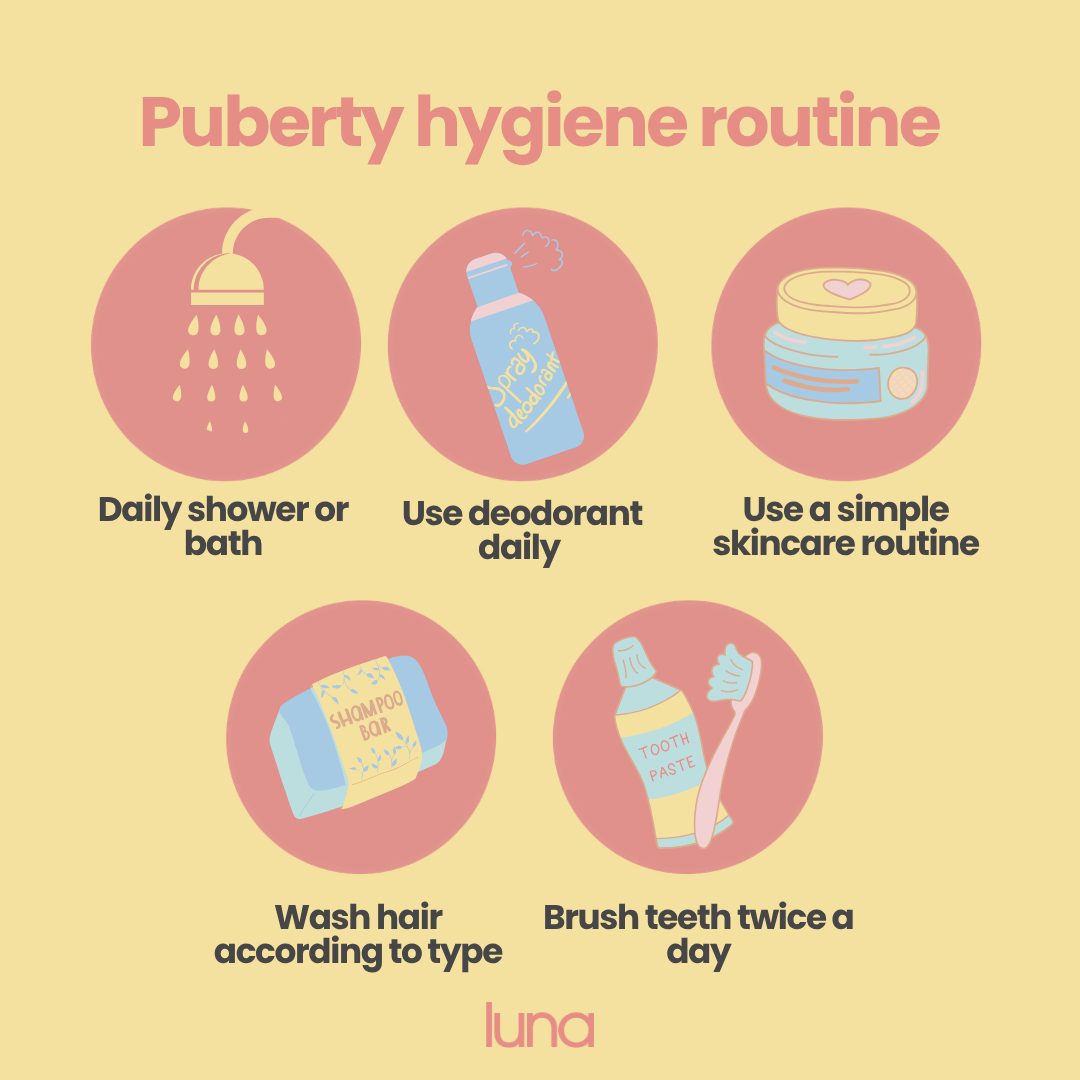
A solid foundation covers:
- Washing: daily shower or bath with a mild soap or shower gel. She should wash her armpits, feet, and groin area thoroughly. The vagina is self-cleaning and the vulva (external area) should be washed with plain water only, never soap or scented products inside
- Deodorant: once body odour starts, daily deodorant or antiperspirant under the arms. Antiperspirant reduces sweating; deodorant masks odour. Many products do both
- Face: a simple teen skincare routine includes washing the face twice a day with a gentle cleanser (or just water for very young skin) and a non-comedogenic moisturiser to help manage oil and reduce spots. If she wears makeup, removing it before bed is non-negotiable
- Hair: how often she needs to wash her hair depends on her hair type, but once oil production increases in puberty, most girls need to wash it more frequently than before
- Teeth: twice a day, two minutes each time, plus flossing
How do I have this conversation without embarrassing her?
Keep it matter-of-fact. Framing hygiene as just part of growing up, not a problem with her specifically, makes a real difference.
Some parents find it easiest to weave it into a natural moment, like a trip to a pharmacy to stock up on products.
Try saying something like: "Now your body's changing, you'll probably want some new products, let's get you set up with what you need." That's an action, not a lecture.
You should also avoid criticism and comparisons. Comments about smell or greasy hair in front of siblings or other family members are humiliating and can cause lasting damage to her confidence.
A quiet, private word at a neutral moment works far better.
What about period hygiene specifically?
Periods usually start between ages 8 and 14.
When they do:
- She'll need access to her preferred period product (pads, tampons, menstrual cup or period pants)
- She should change pads or tampons every four to eight hours (more frequently if flow is heavy)
- A period kit with a spare change of underwear and a spare product in her school bag
- Washing the vulva with plain water during her period is sufficient as scented wipes and washes are unnecessary and can cause irritation
Having a quiet conversation about periods before they start, so she knows what to expect, is far less stressful than explaining it after the fact.
What products does she actually need?
A basic puberty kit includes:
- Mild body wash or soap
- Gentle facial cleanser
- Non-comedogenic moisturiser
- Deodorant or antiperspirant
- Shampoo and conditioner
- Toothbrush and toothpaste
- Period products she's comfortable with
Don't overwhelm her with a 10-step skincare routine. Simple and consistent is better, as teens can use too much skincare and overdo it.
FAQ
How often should my daughter shower during puberty?
Daily is the general guidance once puberty is underway and body odour becomes a factor. Before full puberty, every other day is often fine.
After sports or intense exercise, she should shower as soon as practical, as sweat left on skin can contribute to body odour and acne.
My daughter refuses to shower regularly. What do I do?
This is very common and usually a combination of executive function challenges (the "getting started" problem) and not yet internalising why it matters.
Keeping the routine predictable helps: same time, same sequence. It can also help to give her agency over which products she uses and in what order.
If refusal is extreme or sudden, it's worth considering whether there's an emotional or sensory reason behind it.
At what age should she start using deodorant?
When body odour becomes noticeable, which can be as early as age 8 to 9 for some girls. There's no single right age. Follow her individual development.
luna's article on what age your teen should start using deodorant covers this in more detail.
For more on everything puberty involves for your daughter, luna's understanding the stages of female puberty is a comprehensive guide to what to expect and when.
How we created this article:
luna's team of experts comprises GPs, Dermatologists, Safeguarding Leads and Junior Doctors as well as Medical Students with specialised interests in paediatric care, mental health and gynaecology. All articles are created by experts, and reviewed by a member of luna's senior review team.
Sources:
NHS "Hygiene for young people and teenagers" | 02.06.2026
https://cambspborochildrenshealth.nhs.uk/child-development-and-growing-up/hygiene/hygiene-for-young-people-and-teenagers/NHS "Acne overview" | 02.06.2026
https://www.nhs.uk/conditions/acne/We'd love to keep in touch!
Sign up to our parent newsletter for emails on the latest teen trends, insights into our luna community and to keep up to date
By signing up, you are agreeing that we can use your email address to market to you. You can unsubscribe from marketing emails at any time by using the link in our emails. For more information, please review our privacy statement.