Why are teens mewing?
A guide to the mewing jawline trend

Updated July 21, 2026 • Medically reviewed by Dr. Emma Dickie
Medically reviewed by Dr. Emma DickieIn this article
Quick summary
- Mewing is a social media trend that claims to reshape the jaw, but there’s no scientific proof it works
- Some teens have been convinced by this trend and are trying it frequently, even in school
- If your teen is interested in mewing, chatting with them about the realities of mewing might help them to think critically about online trends
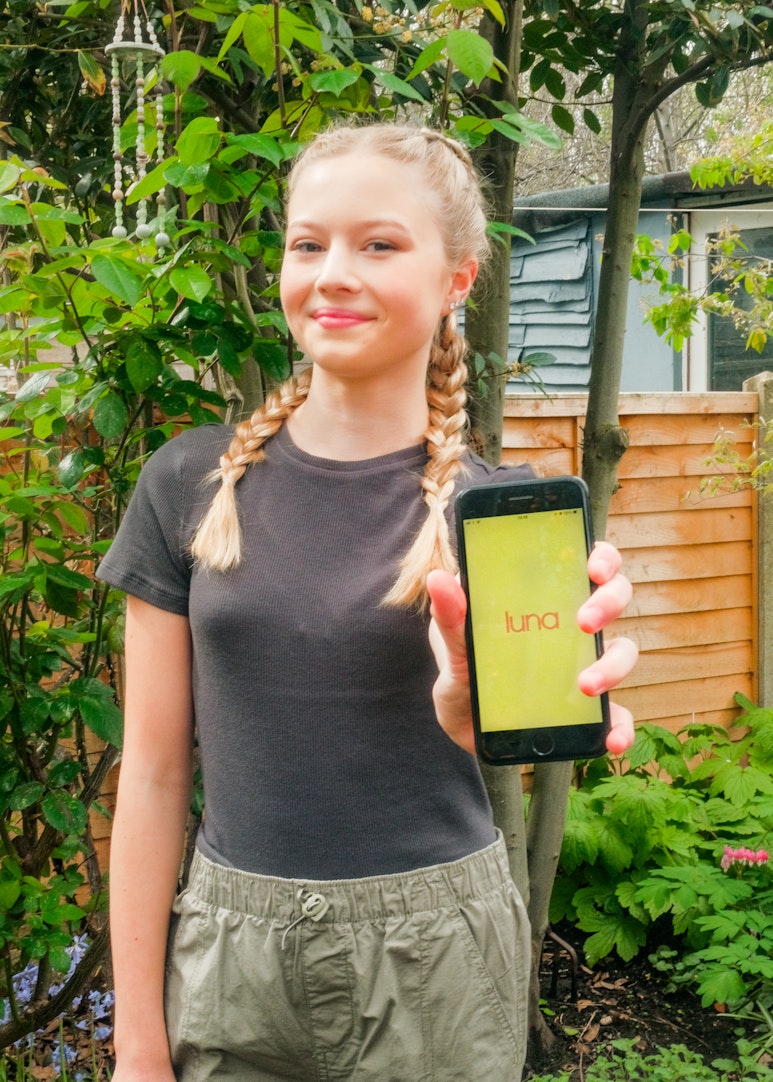
"Mewing" is a social media trend that's taken the teen community by storm.
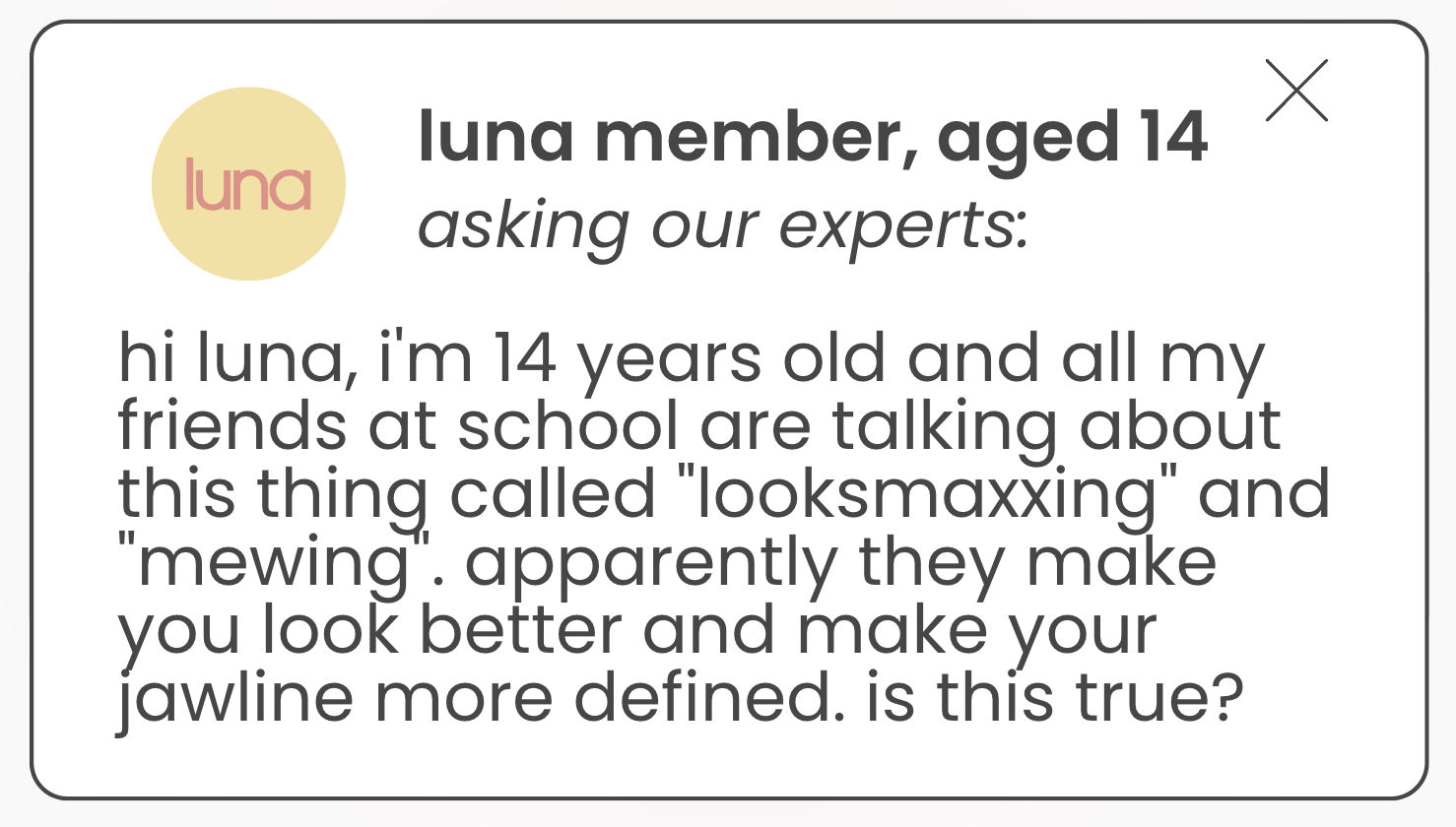
This came from Dr. John Mew and suggests that by flattening your tongue to the roof of your mouth, which changes how the jaw rests, you can solve issues like crooked teeth or jaw pain.
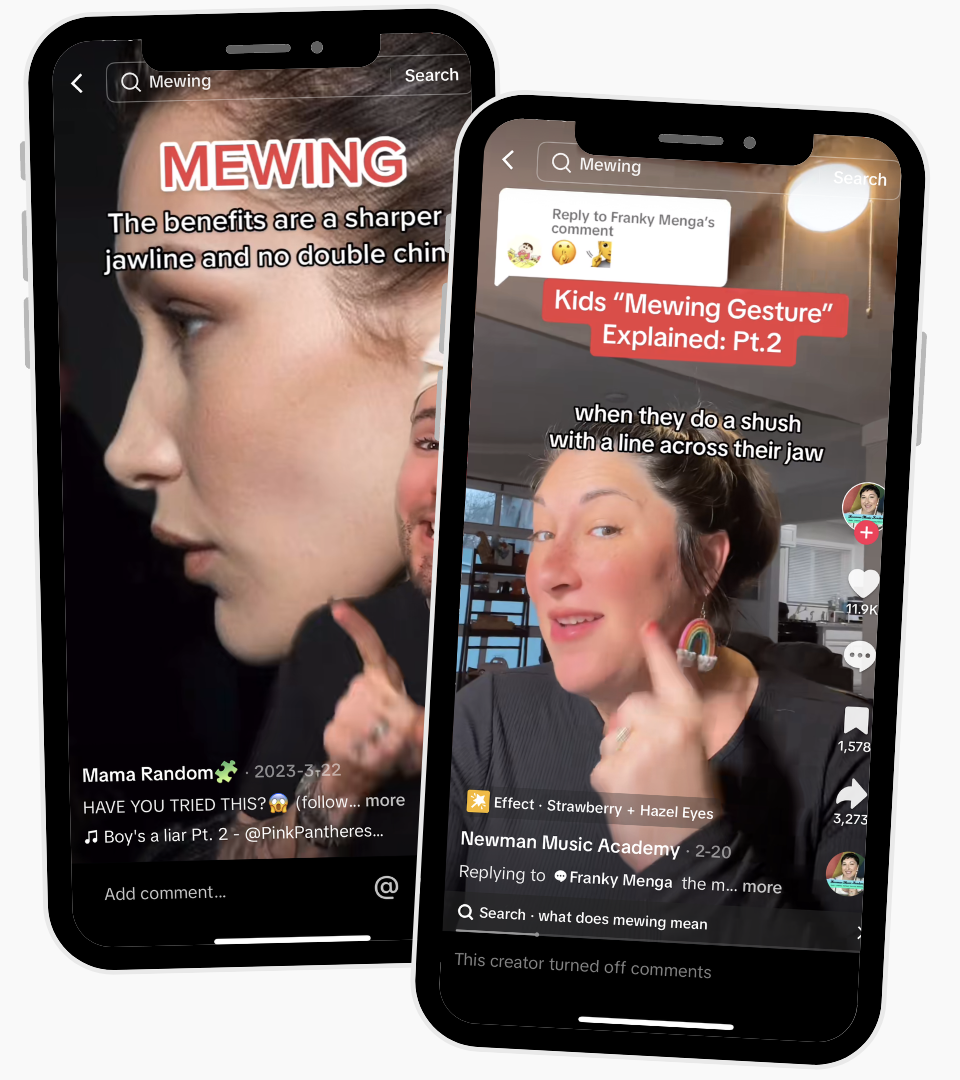
It's essentially being promoted on social media as a hack to improve how the jawline and chin looks.
Is there any truth to the mewing trend?
Dr. John Mew and his followers claim it works, but experts doubt its effectiveness – Dr. Mew even lost his dental licence for promoting it without strong proof!
So despite its popularity on social media, there is no clear scientific evidence to support “mewing”.
It may offer ideas for the future, but it's not a proven alternative to established dental procedures.
Why are we talking about mewing?
Whilst “mewing” may be harmless, teachers have been making reports that teens are "mewing" in the classroom.
According to teachers, when asked a question, teens are pointing to their jaws to indicate they can't answer because they're actively “mewing”.
It's hard to know exactly why some teens are doing this, but possible reasons are…
1️⃣ Teens are taking “mewing” too seriously, and don’t want to risk stopping to speak in case it doesn’t work
2️⃣ Teens are using it as an excuse to not participate in class, or to show that they don't care
Worried your teen is "mewing"?
If you have concerns they view the trend as fact or are doing it in the classroom, then it's a great opportunity to have a chat with them about “mewing” and debunk it.
If you’re not sure how to approach the conversation, here are some ideas…
1️⃣ Share a TikTok or reel where someone is promoting “mewing” and say: “what do you think of this?"
2️⃣ Share luna's article debunking mewing with them (make sure they have luna downloaded to access this) – here's a link to the app article if you need!
3️⃣ Casually mention “mewing” when together, like on a walk or in the car: “have you heard of mewing?"
How we created this article:
luna's team of experts comprises GPs, Dermatologists, Safeguarding Leads and Junior Doctors as well as Medical Students with specialised interests in paediatric care, mental health and gynaecology. All articles are created by experts, and reviewed by a member of luna's senior review team.
Sources:
Urie K Lee, Lindsay L Graves, Arthur H Friedlander, "Mewing: Social Media's Alternative to Orthognathic Surgery?" | Accessed 14.05.25
https://www.joms.org/article/S0278-2391(19)30349-0/fulltextWe'd love to keep in touch!
Sign up to our parent newsletter for emails on the latest teen trends, insights into our luna community and to keep up to date
By signing up, you are agreeing that we can use your email address to market to you. You can unsubscribe from marketing emails at any time by using the link in our emails. For more information, please review our privacy statement.