What to do while your daughter waits for CAMHS
Top tips to support her

Updated July 9, 2026
In this article
- In short
- How long will my daughter have to wait for CAMHS?
- What can I do while my daughter is waiting for CAMHS?
- What support can my daughter get from school while she's waiting?
- Should I look into private therapy while my daughter is waiting?
- What should I do if my daughter's mental health gets worse on the waiting list?
- FAQs
In short
Being told your daughter has been referred to CAMHS, Child and Adolescent Mental Health Services, but that there's a wait is one of the hardest positions to be in as a parent.
In England, over 550,000 children are on mental health waiting lists.
There are practical steps available in the meantime: through school, through her doctor, and through her.
How long will my daughter have to wait for CAMHS?
There's no single answer. It depends on your area and the type of support she needs.
The Royal College of Psychiatrists reported in February 2026 that 550,610 children and young people are on mental health waiting lists in England.
30% of them have been waiting for more than two years.
Waiting times vary significantly by postcode.
The NHS does have guidelines.
Young people experiencing psychosis should be seen within two weeks.
Those with an eating disorder should have first contact within four weeks, or within one week if urgent, and within 24 hours in an emergency.
For everyone else, the guideline is that no one should wait more than 18 weeks for treatment after being assessed.
However, these targets are sometimes missed in practice.
Calling your local CAMHS to confirm the referral has arrived and to ask about current waiting times is a reasonable first step.
What can I do while my daughter is waiting for CAMHS?
The frustration behind this question is real, and it's where most parents arrive pretty quickly.
YoungMinds is clear: waiting doesn't mean you're without options.
Some of the most useful things parents describe aren't about finding a substitute for therapy, but about keeping communication open, reducing pressure at home and school, and making the day-to-day more manageable while she waits.
It helps to understand how she might be feeling during this time.
Teens on waiting lists often feel anxious that support won't come, self-doubting about whether they've "made up" their struggles, and hopeless about whether things can change.
Knowing this is common makes it easier to meet those feelings directly rather than try to talk them away.
luna’s article on talking to your teen about mental health has practical guidance on starting those conversations without it feeling clinical or overwhelming.
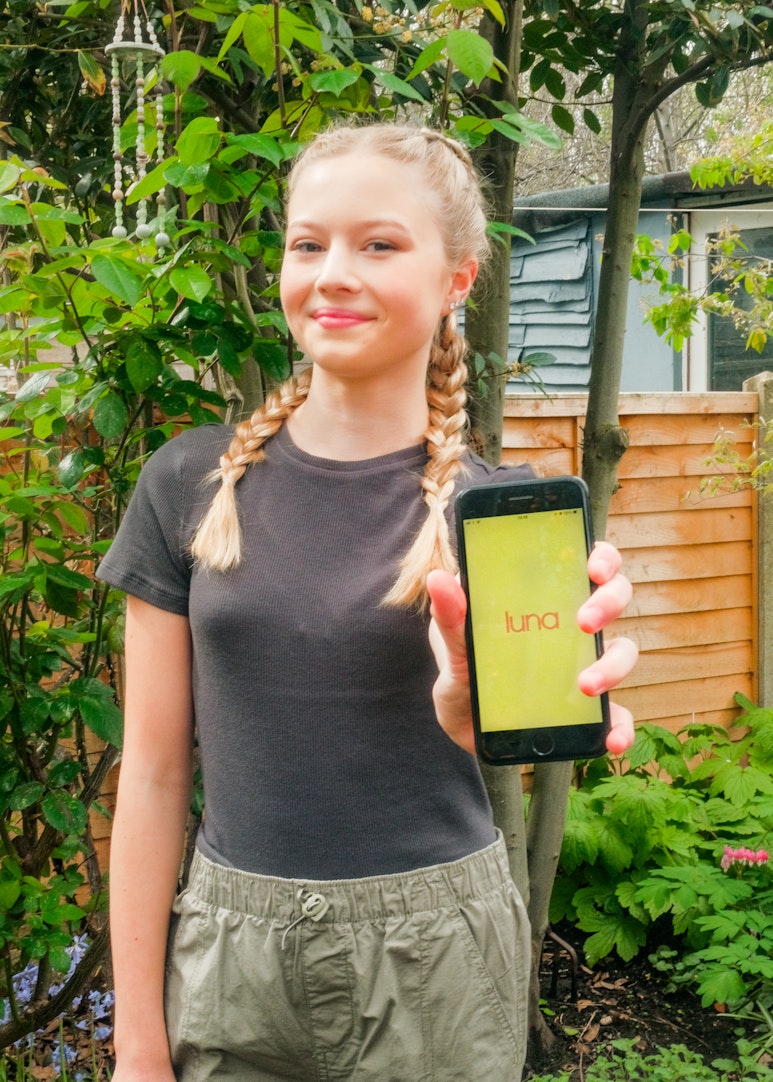
luna gives teen girls a space to explore mental health topics in their own time, with all content reviewed by medical experts, which can be a low-pressure starting point for her while she's waiting for her appointment.
Practical things parents find useful during the wait:
- Ask her doctor or CAMHS about bridge support, such as short-term counselling or local free mental health resources for teens
- Tell school she's on a waiting list, and ask what pastoral or emotional support they can offer
- Keep a written log of how she's doing week to week, so you have clear information to share when appointments do arrive
- Encourage self-care she actually wants to do, not a prescribed routine, just things that genuinely help her
- Know that YoungMinds runs a free Parents Helpline on 0808 802 5544 if you need to talk it through with someone
What support can my daughter get from school while she's waiting?
School can often offer more than parents realise, and it doesn't require a formal diagnosis.
YoungMinds recommends contacting school early, explaining the CAMHS referral, and asking what's available.
Many schools have a counsellor or therapist, and pastoral teams can offer regular check-ins and a trusted adult for her to go to.
The SENCO, Special Educational Needs Co-ordinator, can also be a useful contact, particularly if her mental health is affecting her ability to learn or attend.
If school anxiety is part of what's going on for her, how to help with school anxiety covers how to manage the relationship between home and school while you're waiting for more formal support.
Should I look into private therapy while my daughter is waiting?
It's worth exploring, but there's one thing to check first.
YoungMinds advises speaking to CAMHS before starting private therapy.
In some areas, accessing private support can affect where she sits on the NHS list.
Your local CAMHS team can tell you how it works in your area before you commit to anything.
If private therapy is financially viable, it's worth looking for a therapist with specific experience in adolescent mental health rather than general counselling.
The British Association for Counselling and Psychotherapy (BACP) has a searchable directory, and many therapists offer sliding-scale fees.
What should I do if my daughter's mental health gets worse on the waiting list?
If you notice a change, it's worth contacting both her doctor and the CAMHS service directly rather than waiting for the next scheduled appointment.
YoungMinds is explicit about this: if her mental health deteriorates, the referral can be reviewed.
She may be moved up if the clinical picture has changed significantly.
A clear log of what's changed and when makes it much easier to make that case when you call.
It's also worth knowing that signs of teenage anxiety can shift considerably over months.
What you saw when she was first referred might not be what you're seeing now, and that difference matters clinically.
The original referral doesn't necessarily capture her current situation.
If you're worried about her safety at any point, NHS 111 has a dedicated mental health option available 24/7. For an immediate risk, call 999 or take her to A&E.
FAQs
What does CAMHS actually do?
CAMHS provides specialist mental health support for children and young people up to age 18, including talking therapies, medication where appropriate, and support for anxiety, depression, self-harm, eating disorders, and the effects of trauma.
Teams typically include therapists, psychiatrists, psychologists, nurses, and social workers.
What if CAMHS decides not to see my daughter?
It's reasonable to ask for their reasoning in writing and for details of alternative services they recommend.
Her doctor can review the referral, and other involved professionals, such as school, can write supporting letters for a second look.
YoungMinds advises not giving up, and returning if her situation changes.
Can I do anything to speed up the wait?
Not directly, but if her situation has significantly changed since the referral was made, contacting both CAMHS and her doctor to flag this is worthwhile.
Changes in clinical need can affect how a referral is triaged.
If you haven't heard anything for several months, a call to confirm the referral is still active is also reasonable.
What free support is available while she's waiting?
YoungMinds recommends Youth Access, a national directory of free counselling for young people aged 11 to 25, and Hub of Hope, which lists local mental health charities across Britain.
Some local authorities offer Early Help services that include mental health support.
Your daughter's school may also have a free counsellor.
Childline is available 24/7 on 0800 11 11 for under-19s.
When should I take my daughter to A&E?
If she's in immediate danger or you believe she may harm herself, calling 999 or taking her to A&E is the right step.
NHS 111 (select the mental health option) is available 24/7 for urgent situations that aren't immediately life-threatening.
Papyrus runs a 24/7 helpline specifically for young people experiencing suicidal thoughts: call 0800 068 4141 or text 88247.
Waiting without being able to do much is one of the hardest parts of this.
You've already done the right thing by getting the referral in.
For the broader picture on supporting her day to day alongside the formal support she's waiting for, how to help your teen's mental health covers the everyday things that genuinely add up.
How we created this article:
luna's team of experts comprises GPs, Dermatologists, Safeguarding Leads and Junior Doctors as well as Medical Students with specialised interests in paediatric care, mental health and gynaecology. All articles are created by experts, and reviewed by a member of luna's senior review team.
Sources:
YoungMinds "Parents' guide to CAMHS" | Accessed 09.06.26
https://www.youngminds.org.uk/parent/parents-a-z-mental-health-guide/parents-guide-to-camhs/YoungMinds "What to do when your child is on a waiting list" | Accessed 09.06.26
https://www.youngminds.org.uk/parent/parents-a-z-mental-health-guide/what-to-do-when-your-child-is-on-a-waiting-list/Royal College of Psychiatrists "Half a million children on mental health waiting lists in England" | Accessed 09.06.26
https://www.rcpsych.ac.uk/news-and-features/latest-news/detail/2026/02/11/half-a-million-children-on-mental-health-waiting-lists-in-england-risk-turning-to-ai-chatbots-for-support--warns-rcpsychYoungMinds "Getting support from mental health services" | Accessed 09.06.26
https://www.youngminds.org.uk/parent/parents-a-z-mental-health-guide/getting-support-from-mental-health-services/We'd love to keep in touch!
Sign up to our parent newsletter for emails on the latest teen trends, insights into our luna community and to keep up to date
By signing up, you are agreeing that we can use your email address to market to you. You can unsubscribe from marketing emails at any time by using the link in our emails. For more information, please review our privacy statement.