Signs of autism in girls
And how to seek assessment

Updated January 21, 2026 • Medically reviewed by Dr. Emma Dickie
Medically reviewed by Dr. Emma DickieIn this article
Quick summary
- Autism in girls often looks different from autism in boys
- Many autistic girls mask symptoms, making signs harder to spot
- Understanding social, emotional, and sensory differences helps parents recognise patterns
It’s completely normal to notice differences in your daughter and wonder if something more is going on.
Autism in girls is frequently underdiagnosed, often because many girls are incredible at “masking”, which is when they imitate peers, hide stress, or push themselves to fit in socially.
However, teens with autism often tell luna they feel completely drained from “trying to act normal” all day.
Masking can lead to burnout, mental health difficulties, isolation, and low self-esteem.
Watching your teen struggle socially, emotionally, or with sensory sensitivities can be confusing and worrying.
As autism in girls is often subtler, they may not fit into the stereotypical ideas of what autism looks like and can get overlooked.
Recognising patterns early and understanding what autism can look like in girls helps you provide the support your teen really needs.
What are the signs of autism in girls?
Autism can show up in girls in ways that are subtle and easy to miss.
Many teens hide or mask differences, which can make it look like everything is “fine” on the outside.
Paying attention to repeated patterns, social challenges, or strong interests can give you a clearer picture of what’s really going on.
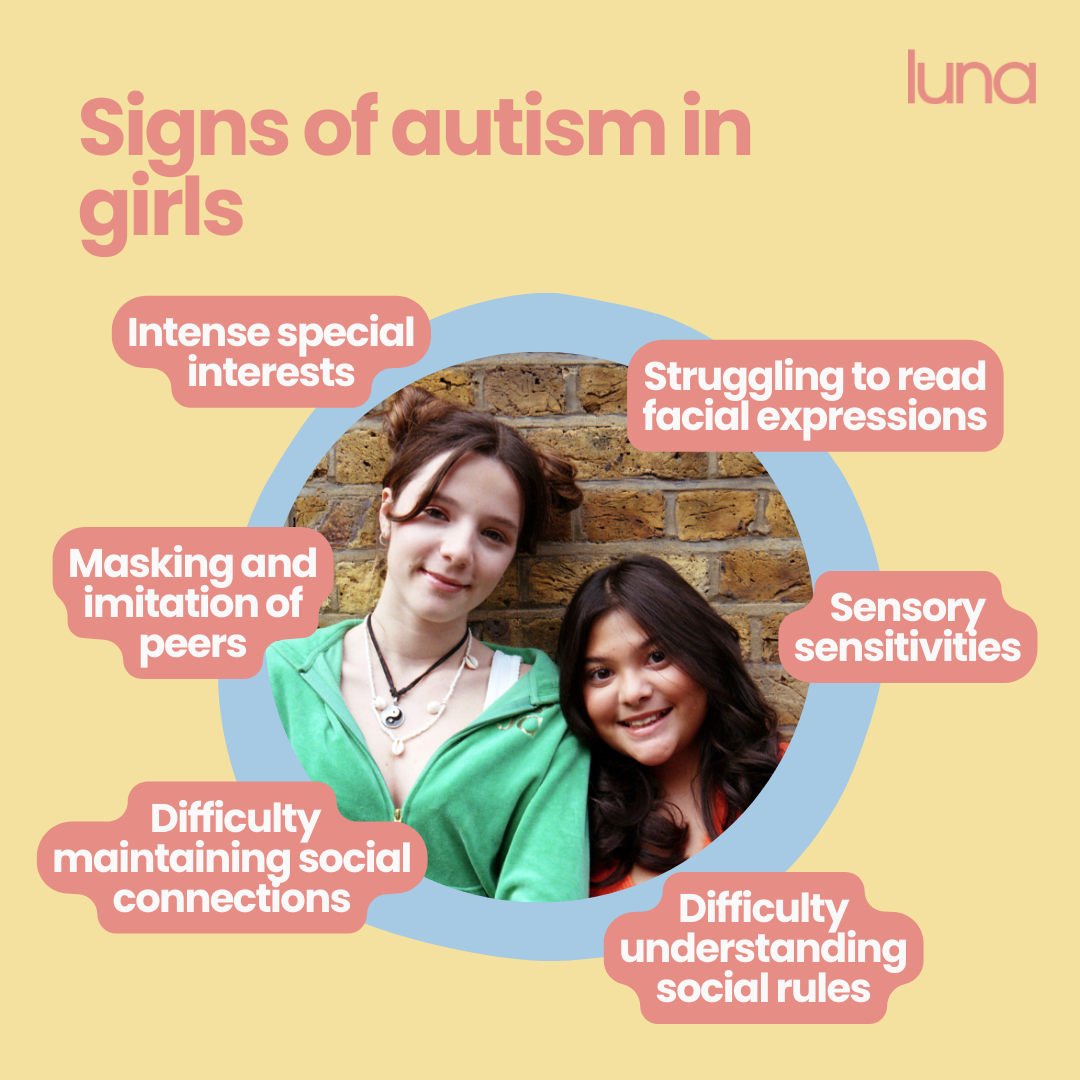
Common signs often include:
- Strong masking and imitation of peers
- Difficulty understanding social rules or unspoken expectations
- Intense, focused special interests
- Sensory sensitivities, like reacting strongly to sounds, textures, or lights
Some of these signs can look like typical behaviour.
For instance, a girl being obsessed with horses might seem like a “normal” interest, but in autistic girls, the focus is often much more intense and all-encompassing.
Girls often feel like they’re putting on a performance in social situations.
Even when they seem to “fit in,” it can be exhausting and leave them feeling different or isolated.
Understanding how these social struggles show up can help you respond with empathy instead of frustration.
Signs you might notice include:
- Feeling different but not knowing why
- Difficulty making friends or maintaining social connections
- Trouble following group conversations
- Struggling to read facial expressions or social cues
Many teens feel drained after social interactions, not because they don’t want to be social, but because they’re working extra hard to manage the expectations around them.
What behaviours indicate autism?
Some behaviours reflect the internal effort girls put into coping with social, sensory, or emotional differences.
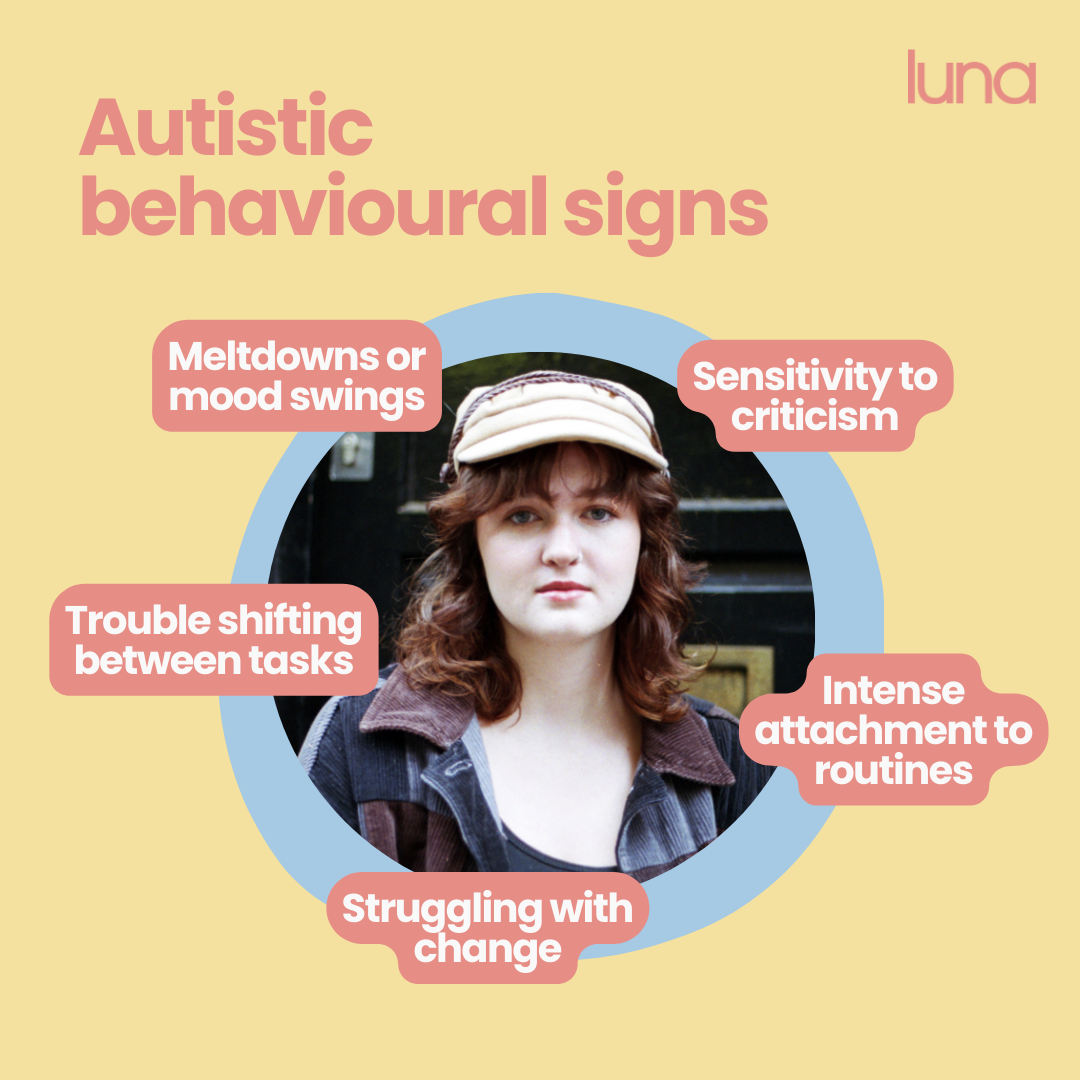
Behaviours to watch for include:
- Meltdowns or mood swings after holding emotions in all day
- Extreme sensitivity to criticism
- Trouble shifting between tasks or adapting to change
- Intense attachment to routines and predictability
Noticing these behaviours over time helps you understand that your teen may need extra structure, reassurance, or space to process her day.
When to test for autism
It can feel overwhelming to wonder whether a professional assessment is necessary.
While there’s no rush to label your teen, certain patterns over time can indicate that a formal evaluation could be helpful.
Signs it might be time to consider testing include:
- Long-term social or sensory challenges
- Burnout from masking her differences
- Emotional overwhelm or shutdowns
- Ongoing struggles at school or in social settings
Professional support can give both you and your teen tools to navigate daily life with more ease and understanding.
How parents can support their autistic teen
Supporting an autistic teen isn’t about changing who they are; it’s about helping them feel understood, safe, and capable.
Small adjustments and predictable routines can make daily life feel more manageable and less overwhelming.
Simple steps you can take include:
- Keep routines predictable and environments structured
- Offer sensory-friendly clothing or spaces when possible
- Use clear, calm, and gentle communication
- Validate her feelings and differences instead of pushing her to “act normal”
You can also introduce your teen to luna, which is packed full of expert-approved advice on autism (including managing periods with autism), stress, social interactions, emotions, and self-care.
Supporting your daughter’s neurodiversity
Autism in girls is often subtle and easy to miss, but recognising patterns early helps your teen feel seen and supported.
By tuning into her needs, offering predictability, and validating her experience, you can help her navigate adolescence with confidence and resilience.
For even more support, luna can help your daughter navigate neurodiversity, emotions, and social connections.
How we created this article:
luna's team of experts comprises GPs, Dermatologists, Safeguarding Leads and Junior Doctors as well as Medical Students with specialised interests in paediatric care, mental health and gynaecology. All articles are created by experts, and reviewed by a member of luna's senior review team.
Sources:
National Autistic Society "Autistic women and girls" | Accessed 07.01.25
https://www.autism.org.uk/advice-and-guidance/topics/identity/autistic-women-and-girlsNational Autistic Society "Masking" | Accessed 07.01.25
https://www.autism.org.uk/advice-and-guidance/topics/behaviour/maskingWe'd love to keep in touch!
Sign up to our parent newsletter for emails on the latest teen trends, insights into our luna community and to keep up to date
By signing up, you are agreeing that we can use your email address to market to you. You can unsubscribe from marketing emails at any time by using the link in our emails. For more information, please review our privacy statement.