Should you take your teenage daughter's phone away?
When every day becomes a battle

Updated September 18, 2026 • Medically reviewed by Dr. Emma Dickie
Medically reviewed by Dr. Emma DickieIn this article
In short
Taking your daughter's phone away can work as a short, clear consequence, but permanent removal usually backfires with teens.
Research following 1,187 families found that talking regularly about phone use reduced problematic use more than restriction alone.
Boundaries still matter: overnight charging outside the bedroom protects sleep and mood.
And if handover time triggers extreme distress, that reaction is worth exploring more fully.
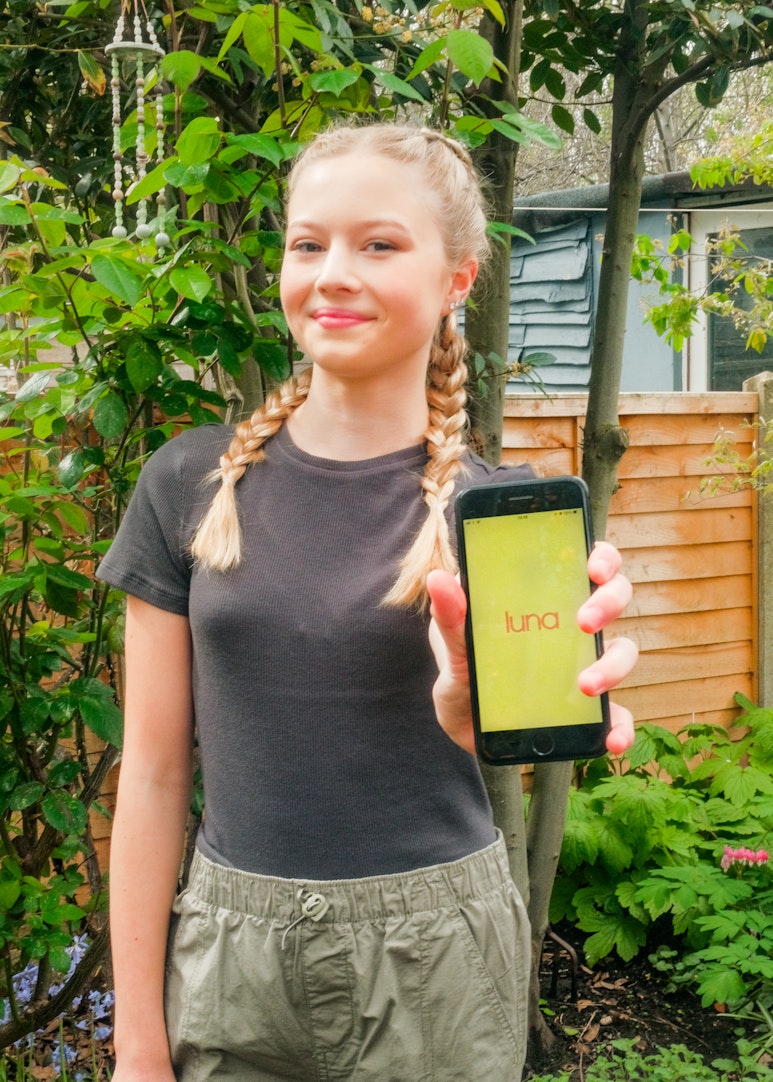
Should I take my teenage daughter's phone away for good?
For most families, no.
Removing the phone permanently tends to cut her off from how her friends actually communicate, and the research suggests it doesn't fix the underlying habit.
A study following 1,187 families over six months found that teens whose parents talked with them more about smartphone use showed less problematic use, while restriction on its own made little difference.
The same research found restrictive approaches work best for younger teens, around ages 10 to 12, and lose their effect as she gets older.
That doesn't mean anything goes.
The NSPCC is clear that every child is different and the decision sits with you, based on her maturity and circumstances.
A short, predictable consequence is a different thing from selling the phone or cancelling the SIM.
Losing the phone for an evening or a day after a clear rule is broken keeps the boundary, without removing her social lifeline entirely.
Why does my daughter get so angry when I take her phone?
Because to her, you're not taking a gadget; you're taking her social world.
Most teen friendships now run through group chats and social apps, so handover can feel like being shut out of the room where everything happens.
However, there's a physiological side too, and it may be linked to phone addiction.
YoungMinds notes that feeling irritable, anxious or low when not online is one of the signs that phone use has tipped out of balance, alongside disrupted sleep and dropping offline hobbies.
A review of studies covering 41,871 children and young people found that around 1 in 4 show problematic smartphone use, with roughly three times the odds of depression and anxiety and more than double the odds of poor sleep.
So a big reaction doesn't mean she's spoiled. It can mean the phone is doing a lot of emotional heavy lifting for her.
One more thing worth holding in mind: occasionally, panic about a parent taking or seeing the phone is really about something on the phone, like bullying or contact from someone she shouldn't be hearing from.
If your instinct says the reaction is out of proportion even for her, luna's guide on whether to check your teenage daughter's phone walks through how to approach it without breaking trust.
What works better than confiscating my daughter's phone?
The strongest evidence points to conversation plus structure, not removal.
Restriction alone tends to spark a nightly battle; agreed rules tend to outlast one.
Approaches the evidence supports:
- Agree the rules in a calm moment, not at 9pm with the phone in your hand. YoungMinds suggests setting shared digital boundaries as a household, so it feels like a team effort rather than a punishment.
- Charge phones outside the bedroom overnight, for the whole family. NHS sleep specialists recommend stopping screen use at least an hour before bed, because screen light suppresses melatonin, the hormone that helps her fall asleep.
- Let the technology be the bad guy. Built-in tools can switch apps off at a set time automatically, so the limit isn't a nightly negotiation with you. luna's guide to iPhone parental controls covers what's possible.
- Ask about her online life the way you'd ask about her day. In the six-month study, teens whose communication with their parents about smartphones increased reported less problematic use.
- Line up something to do instead. Phones fill empty evenings by default, and offline plans compete better than rules do.
If sleep is the main casualty in your house, it's worth reading up on how phones affect teenage sleep, because the 9pm handover often matters less than where the phone spends the night.
She may also be more open to changing habits when the information doesn't come from you.
luna gives teen girls a space to explore topics like sleep, mood and screen habits at her own pace, with content reviewed by medical experts.
When is taking my daughter's phone away the right call?
When a clear rule has been broken, a short and predictable phone confiscation is a reasonable consequence, and the NSPCC's advice supports parents setting firm boundaries around devices.
The key is that she knows in advance what triggers it and how long it lasts.
If things have escalated to aggression or violence at handover time, the behaviour is the thing to address, not just the phone.
Some parents find a longer reset helps: the phone goes away, and a basic handset for calls and texts takes its place while trust is rebuilt.
A reaction that extreme is also a signal worth taking seriously in its own right.
If her distress around the phone sits alongside changes in mood, sleep or friendships, luna's guide to the signs of teen phone addiction can help you work out what you're looking at, and a doctor can help if her low mood or anxiety seems to run deeper than the phone.
FAQs
How long should I take my daughter's phone away for?
Short and predictable beats long and dramatic.
A consequence she knew about in advance, lasting an evening or a day, keeps the boundary credible.
Open-ended bans tend to shift her energy into finding the phone rather than changing the habit.
Is my daughter addicted to her phone?
Possibly, though YoungMinds suggests talking about balance rather than addiction, which can feel alienating.
Signs that use has tipped too far include irritability when offline, disrupted sleep, dropped hobbies and slipping schoolwork.
Around 1 in 4 young people show problematic smartphone use in research, so she's far from alone.
Could her extreme reaction mean something is wrong on the phone?
It's uncommon, but yes, it happens.
Intense panic about losing or showing the phone can sometimes point to cyberbullying, hidden accounts or contact from someone unsafe.
A calm, no-blame conversation is the best starting point, and she's more likely to open up if she knows she won't be in trouble for telling you.
Should I swap her smartphone for a basic phone?
Some families find this a useful middle ground: she stays contactable, but the apps driving the conflict are gone.
It tends to work best as an agreed reset with a route back to a smartphone, rather than an open-ended punishment.
Where to go from here
Nightly phone battles don't mean you've failed, and they don't mean she's a bad kid.
They usually mean a very engaging device has met a still-developing teenage brain, and the household rules haven't caught up yet.
A calm conversation in a neutral moment is the best first step, and the evidence says it does more than any confiscation.
If she wants to understand for herself what scrolling does to her sleep and mood, luna gives her a judgement-free place to find out, with everything reviewed by medical experts.
How we created this article:
luna's team of experts comprises GPs, Dermatologists, Safeguarding Leads and Junior Doctors as well as Medical Students with specialised interests in paediatric care, mental health and gynaecology. All articles are created by experts, and reviewed by a member of luna's senior review team.
Sources:
NSPCC "Children, phones and online safety" | Accessed 22.06.26
https://www.nspcc.org.uk/keeping-children-safe/online-safety/children-phones-online-safety/YoungMinds "Social media" | Accessed 22.06.26
https://www.youngminds.org.uk/parent/parents-a-z-mental-health-guide/social-media/NHS "How to sleep well for teenagers" | Accessed 22.06.26
https://www.evelinalondon.nhs.uk/our-services/hospital/sleep-medicine-department/how-to-sleep-well-for-teenagers.aspxSohn S et al. "Prevalence of problematic smartphone usage and associated mental health outcomes amongst children and young people: a systematic review, meta-analysis and GRADE of the evidence" | Accessed 22.06.26
https://pmc.ncbi.nlm.nih.gov/articles/PMC6883663/Rosenberg H et al. "Effective parental strategies against problematic smartphone use among adolescents: a 6-month prospective study" | Accessed 22.06.26
https://pubmed.ncbi.nlm.nih.gov/38555777/We'd love to keep in touch!
Sign up to our parent newsletter for emails on the latest teen trends, insights into our luna community and to keep up to date
By signing up, you are agreeing that we can use your email address to market to you. You can unsubscribe from marketing emails at any time by using the link in our emails. For more information, please review our privacy statement.