What is popcorn brain?
Does your daughter have it?

Updated August 7, 2026 • Medically reviewed by Dr. Katie Knight
Medically reviewed by Dr. Katie KnightIn this article
What is popcorn brain?
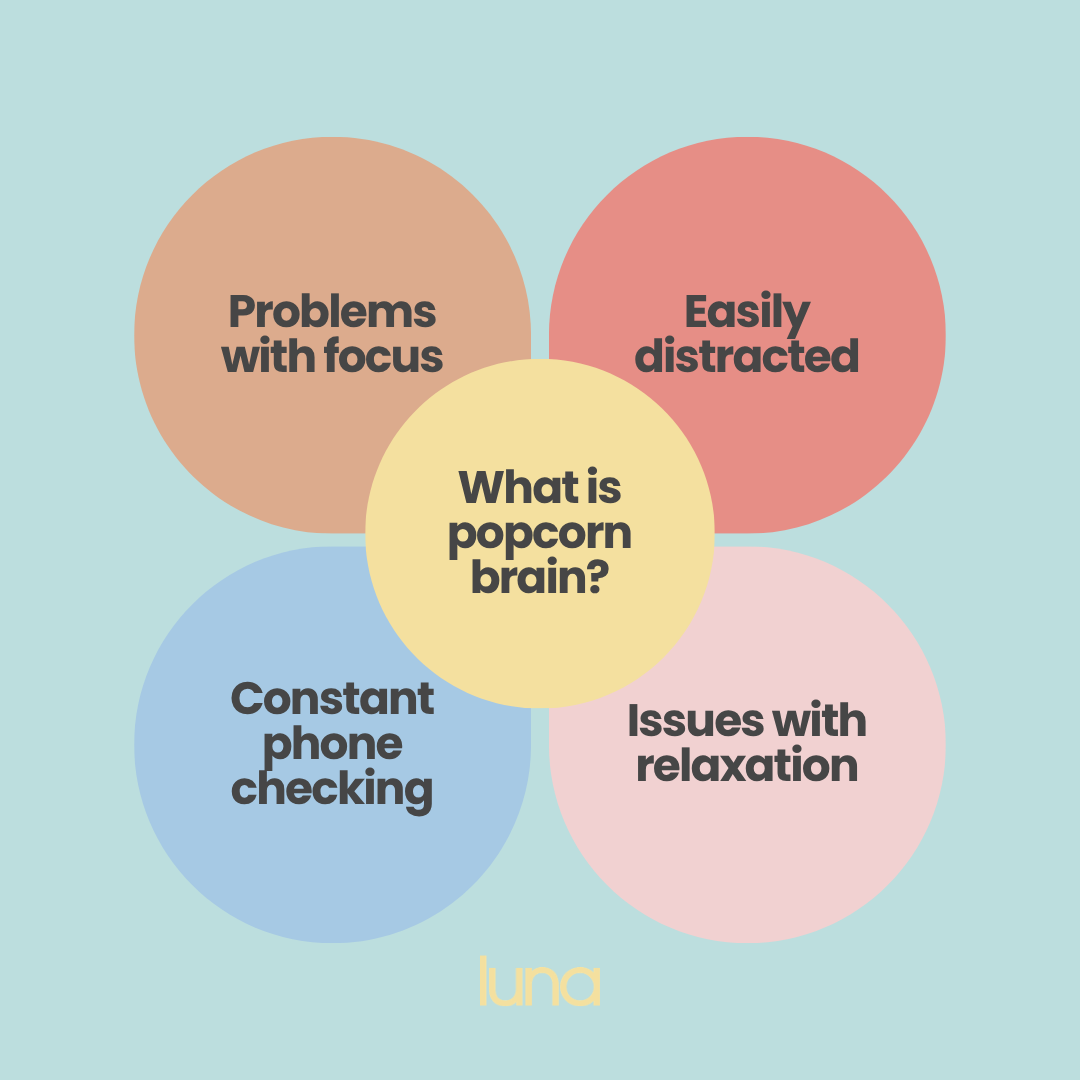
“Popcorn brain” is a non-medical term used to describe a feeling of constant mental distraction, where thoughts quickly jump from one thing to another.
It’s often linked to fast, high levels of stimulation, like social media or short-form content, which can make it harder for teens to slow down or focus.
The fast-paced online world makes the offline world feel slow and boring, and sometimes even frustrating.
You might notice your teen always checking their phone, switching quickly between apps, or struggling to stay engaged with anything that feels slower.
For many parents, it can feel like their teens' whole world is on their screen, and it can be hard to figure out what is normal and what may be a phone addiction.
But, through little steps of self-care, your teen can ease “popcorn brain” and navigate phone use in a healthy and productive way.
What are the symptoms of popcorn brain in teens?
Teens with “popcorn brain” may seem easily distracted, restless, or quick to lose focus, especially when they’re away from screens.
These behaviours are often linked to how their attention has adapted to fast, constant input.
If you’re noticing changes in your teen, it might look like:
- Constantly checking their phone, even without a clear reason
- Struggling to focus on homework or conversations
- Getting bored quickly with slower activities
- Jumping between tasks without finishing them
- Finding it hard to relax without scrolling, music, or background noise
- Their phone use is affecting sleep
It can be frustrating to see, especially if it feels like you’re competing with a screen for their attention.
But these patterns are very common, and they don’t mean your teen is lazy or not trying.
Why does popcorn brain happen?
“Popcorn brain” is often linked to constant, fast-paced stimulation, especially from things like social media, short videos, and notifications.
Over time, the brain can get used to quick bursts of information, making slower tasks feel harder to focus on.
For many teens, this isn’t about a lack of effort. It’s about what their brain has adapted to.
“Popcorn brain” is linked to:
- The brain releasing dopamine when you see something new
- How technology is designed to reel you in and keep you hooked
When the brain is used to quick rewards and constant input, everyday things like homework, conversations, or even relaxing can feel harder to stay with.
Is popcorn brain the same as ADHD?
No, “popcorn brain” is not the same as ADHD.
ADHD is a recognised condition that affects attention, behaviour, and regulation across many areas of life.
“Popcorn brain” is a general term often used to describe distraction linked to habits and environment.
There can be some overlap in how it looks, but:
- ADHD tends to be consistent across situations and over time
- “Popcorn brain” is often more noticeable around screen use and fast-paced content
- Attention may improve with small routine changes in “popcorn brain”
- ADHD usually involves a broader range of challenges
If you’re unsure and think your teen may have ADHD, it’s okay to trust your instincts and speak to a professional.
How can I support a daughter with popcorn brain?
Supporting your teen means helping them find a better balance between stimulation and rest, without making them feel criticised or controlled.
Small, steady changes are usually more effective than strict rules.
It can help to start from a place of understanding.
Teens today are growing up in a world designed to hold their attention - so these habits aren’t a personal failure.
You can support your teen by:
- Introducing gentle screen breaks rather than sudden limits
- Creating small pockets of calm, like screen-free time before bed
- Encouraging slower activities and hobbies for teens that they enjoy
- Keeping conversations open, rather than turning it into a conflict
- Exploring do not disturb functions with them
- Trying out mindful exercises together and fun things to do without screens
You don’t need to get everything “right”.
Even small changes can help your teen feel calmer, more focused, and less overwhelmed over time.
Should I be worried about popcorn brain?
“Popcorn brain” is not a medical condition, and in most cases, it isn’t something to worry about if you work with your teen to explore healthier screen habits.
If your teen is always on their phone and you are worried about “popcorn brain”, you may want to introduce them to better apps for teens, such as luna.
On luna, your teen can learn more about themselves and their wellbeing, track their cycles, and make the most out of their screen time.
How we created this article:
luna's team of experts comprises GPs, Dermatologists, Safeguarding Leads and Junior Doctors as well as Medical Students with specialised interests in paediatric care, mental health and gynaecology. All articles are created by experts, and reviewed by a member of luna's senior review team.
Sources:
Mayo Clinic "5 things to know about “popcorn brain”" | Accessed 14.04.26
https://mcpress.mayoclinic.org/mental-health/5-things-to-know-about-popcorn-brain/Patient "Popcorn brain: what it is, why it happens, and how to reset your focus" | Accessed 14.04.26
https://patient.info/features/mental-health/popcorn-brain-what-it-is-why-it-happens-and-how-to-reset-your-focusWe'd love to keep in touch!
Sign up to our parent newsletter for emails on the latest teen trends, insights into our luna community and to keep up to date
By signing up, you are agreeing that we can use your email address to market to you. You can unsubscribe from marketing emails at any time by using the link in our emails. For more information, please review our privacy statement.