My daughter wants to go vegan, what do I need to know?
What to swap, what to supplement
Updated May 18, 2026
In this article
- In short
- Why does my daughter want to go vegan?
- Is a vegan diet safe for a teenage girl?
- What's the difference between vegetarian and vegan?
- What nutrients does my vegan teen need most?
- What supplements does my vegan daughter need?
- What should a vegan teen girl eat in a day?
- How do I make sure she gets enough iron and B12?
- What if she's vegan and on her period?
- Should I take her to the doctor about going vegan?
- What if I think this is more than veganism?
- FAQ
- What to remember
In short
A vegan diet can be safe for teen girls if it's well planned and includes a daily B12 supplement. She'll also need enough iron, calcium, vitamin D, omega-3, and iodine, all of which are harder to get without dairy, eggs, or fish.
Build meals around beans, tofu, lentils, nuts, fortified plant milks, and wholegrains, and book a doctor's appointment for a baseline iron and B12 check.
Why does my daughter want to go vegan?
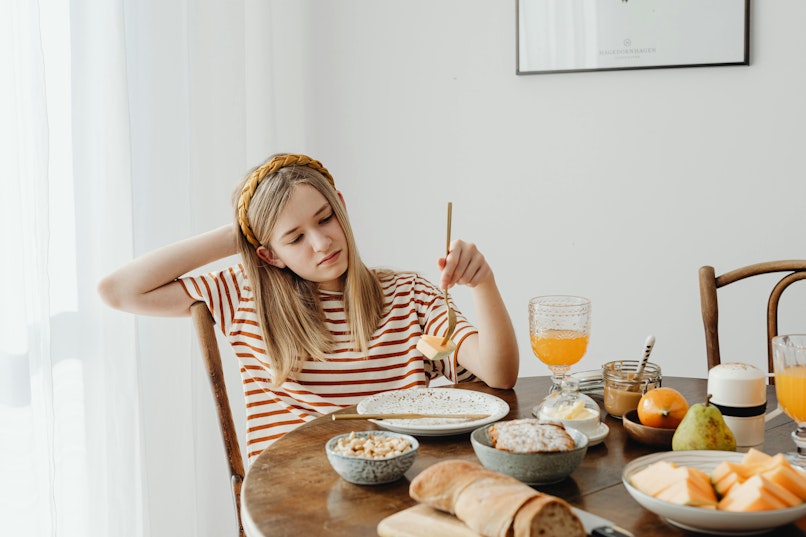
Most teen girls go vegan for ethical, environmental, or health reasons. Animal welfare is the most common driver, often followed by climate concerns or watching a documentary that shifted how she sees food.
You don't need to talk her out of it. Veganism is a values-led choice, and teens who feel listened to are more likely to make balanced food choices. Ask her what's behind the decision, and listen without judgement.
A small number of girls also use veganism to take more control over what they eat, which can sometimes mask restrictive eating. More on that below.
Is a vegan diet safe for a teenage girl?
Yes, a well-planned vegan diet can be safe for teenage girls, but it takes more thought than a vegetarian diet.
The vegan diet can meet nutritional needs at every life stage, including adolescence, as long as supplements and fortified foods are part of the plan.
When it comes to healthy eating, teen girls have higher needs than adults: they're still growing, building bone density, and losing iron through their periods.
Going vegan without the right supplements is where things go wrong, particularly with vitamin B12, which is only found naturally in animal foods.
What's the difference between vegetarian and vegan?
A vegetarian doesn't eat meat or fish, but still eats dairy and eggs. A vegan avoids all animal products: no meat, fish, dairy, eggs, or honey, and often no leather, wool, or animal-tested products either.
This matters nutritionally because dairy and eggs are major sources of B12, calcium, iodine, vitamin D, and good-quality protein for most teen girls. Once those are off the menu, supplements and fortified foods become essential.
What nutrients does my vegan teen need most?
Seven nutrients matter most for vegan teen girls: vitamin B12, iron, calcium, vitamin D, iodine, omega-3 fats, and protein.
These are the ones most commonly low or missing in a vegan diet.
Here's where to find them without animal products:
- Vitamin B12: a daily supplement is essential, plus fortified plant milks, fortified cereals, and nutritional yeast
- Iron: lentils, beans, tofu, fortified breakfast cereals, dark leafy greens, dried apricots, pumpkin seeds
- Calcium: fortified plant milks and yoghurts, calcium-set tofu, leafy greens, sesame seeds, pulses
- Vitamin D: a daily supplement, especially in autumn and winter, plus fortified plant milks
- Iodine: fortified plant milks, or a vegan supplement
- Omega-3s: flaxseeds, chia seeds, walnuts, rapeseed oil, or a vegan algae-based supplement
- Protein: beans, lentils, chickpeas, tofu, tempeh, edamame, nuts, seeds, quinoa, soya milk
What supplements does my vegan daughter need?
The NHS suggests that vegans should consider taking a daily vitamin B12 supplement. Vitamin D is also recommended for everyone in the UK during autumn and winter.
Many parents find a single daily multivitamin designed for vegans the easiest option. It usually covers B12, vitamin D, iodine, and omega-3s in one tablet. Look for one with at least 10 micrograms of B12 and 10 micrograms of vitamin D.
As B12 deficiency in teen girls can cause tiredness, brain fog, mouth ulcers, and, in serious cases, nerve damage that can become permanent, supplements are really important.
For more on supplements, read luna’s article on what vitamins a teenage girl should take daily.
What should a vegan teen girl eat in a day?
A balanced day for a vegan teen girl includes 3 meals plus 1 to 2 snacks, with a plant protein and an iron source at most meals.
Here's a simple example:
- Breakfast: porridge made with fortified soya milk, topped with banana, peanut butter, and a glass of orange juice
- Snack: soya yoghurt with berries and a handful of walnuts
- Lunch: wholegrain wrap with hummus, falafel, spinach, and roasted peppers
- Snack: fortified cereal with fortified plant milk
- Dinner: lentil and vegetable curry with brown rice, broccoli, and a sprinkle of pumpkin seeds
You don't need to cook separate meals. Most family dinners can be adapted by swapping the meat for tofu, lentils, beans, or tempeh, and using fortified plant milk in sauces.
How do I make sure she gets enough iron and B12?
Iron and B12 are the two biggest concerns for vegan teen girls. Iron because girls lose it every month with their period, and B12 because it's only found in animal foods.
To help with iron absorption:
- Pair iron-rich foods with vitamin C, like orange juice, peppers, kiwi, or tomato
- Avoid tea or coffee with meals, as they block iron absorption
- Choose fortified breakfast cereals where possible
- Include lentils, beans, tofu, and dark leafy greens daily
For B12, the only reliable answer is a daily supplement plus fortified foods. Fortified plant milks, breakfast cereals, and nutritional yeast all add to her intake, but they're not enough on their own.
Signs of low iron or B12 in teen girls include feeling tired all the time, looking pale, headaches, brittle nails, mouth ulcers, and pins and needles in the hands or feet.
If you notice these, book a blood test with her doctor.
What if she's vegan and on her period?
Periods make iron even more important for vegan teen girls, because she loses blood, and iron, every month. You can help at home by including iron-rich meals around her period, like lentil soup with a vitamin C-rich side, or a tofu and pepper stir-fry.
However, if she is particularly tired during her period, and if her periods are heavy, long, or painful, it is best to see a doctor.
Should I take her to the doctor about going vegan?
It's a good idea to book a doctor's appointment within a few months of her going vegan, especially if it's a big change from her usual diet. A simple blood test can check her iron, B12, vitamin D, and ferritin levels and give you both peace of mind.
Book sooner if any of the following apply:
- She's losing weight without trying
- Her periods are heavy or she's often exhausted
- She's becoming anxious or rigid around food
- She's cutting out more food groups over time, like gluten or sugar
- You're worried about her growth or energy levels
What if I think this is more than veganism?
Sometimes "going vegan" can be a way for a teen girl to start restricting food without raising alarm bells. This doesn't mean every vegan teen is heading toward an eating disorder, but veganism is a more restrictive diet, so it's worth knowing the difference.
Warning signs to watch for:
- Cutting out more and more food groups over time
- Counting calories or weighing food
- Skipping meals or eating much less than the rest of the family
- Missing periods or feeling cold all the time
- Wanting to lose weight or thinking she’s fat
- Becoming secretive, anxious, or rigid around food
- Exercising more than usual
If you're worried, speak to her doctor early. Eating disorders are treatable, and early intervention makes a real difference. Beat (the UK eating disorder charity) also runs a free helpline for parents.
FAQ
Can my daughter grow normally on a vegan diet?
Yes, as long as it's well planned and includes the right supplements. Vegan teens grow normally and hit puberty milestones at the same time as their peers.
Is veganism harder than vegetarianism for teen girls?
A little. Vegetarian teens still get B12, calcium, and iodine from dairy and eggs, so they often don't need supplements.
Vegan teens have to plan more carefully and take a daily supplement, but it's still very doable.
Do all vegan teens need supplements?
Yes. A daily B12 supplement is a good idea for all vegans. Vitamin D is also recommended for everyone in the UK in autumn and winter, and year-round for vegans.
What if she only eats beige food?
Picky eating plus veganism can mean she's living on pasta, chips, and toast. That's fine occasionally, but won't give her the iron, protein, or B12 she needs long-term.
Try adding one new vegan protein source a week, like hummus, baked beans, lentil pasta, tofu nuggets, or soya yoghurt.
Can she still eat out and at friends' houses?
Yes, and it's worth keeping it easy for her. Most restaurants now have vegan options, and friends' parents usually only need a heads-up.
Pizza without cheese, pasta with tomato sauce, falafel wraps, and bean burritos all work as easy social meals.
What to remember
Going vegan can be a positive, values-led choice for your daughter, and a good way to get her thinking about food and the world.
The main thing is the daily supplement, an iron-rich plate, and a quick doctor's check in the first few months.
How we created this article:
luna's team of experts comprises GPs, Dermatologists, Safeguarding Leads and Junior Doctors as well as Medical Students with specialised interests in paediatric care, mental health and gynaecology. All articles are created by experts, and reviewed by a member of luna's senior review team.
Sources:
NHS West Suffolk Hospital "Healthy eating for teenagers" | Accessed 18 May 2026
https://www.wsh.nhs.uk/CMS-Documents/Patient-leaflets/PaediatricDepartment/6297-1-Healthy-eating-for-teenagers.pdfNHS "The vegan diet" | Accessed 18 May 2026
https://www.nhs.uk/live-well/eat-well/how-to-eat-a-balanced-diet/the-vegan-diet/British Dietetic Association "Vegetarian, vegan and plant-based diet" food fact sheet | Accessed 18 May 2026
https://www.bda.uk.com/resource/vegetarian-vegan-plant-based-diet.htmlCleveland Clinic "Vitamin B12 Deficiency" | Accessed 18 May 2026
https://my.clevelandclinic.org/health/diseases/22831-vitamin-b12-deficiencyNHS "Iron (good sources of)" | Accessed 18 May 2026
https://www.mkuh.nhs.uk/patient-information-leaflet/good-sources-of-ironNHS "Eating disorders" | Accessed 18 May 2026
https://www.nhs.uk/mental-health/feelings-symptoms-behaviours/behaviours/eating-disorders/overview/We'd love to keep in touch!
Sign up to our parent newsletter for emails on the latest teen trends, insights into our luna community and to keep up to date
By signing up, you are agreeing that we can use your email address to market to you. You can unsubscribe from marketing emails at any time by using the link in our emails. For more information, please review our privacy statement.